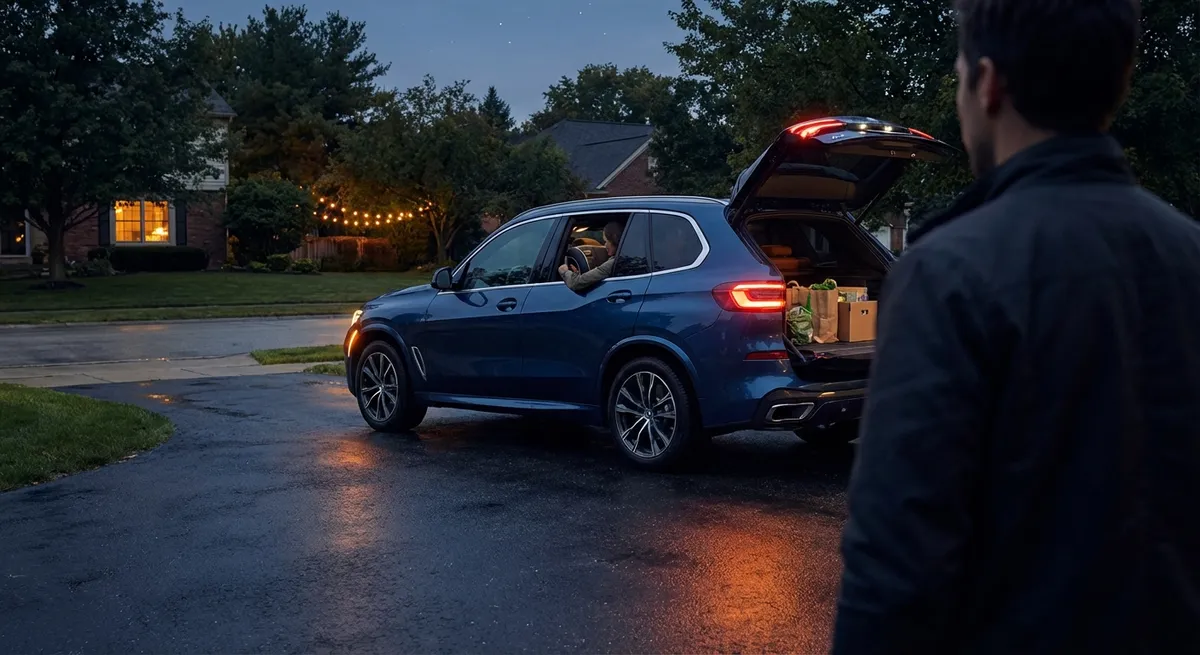
The 2025 BMW X5 xDrive40i sits at a critical crossroads in the luxury midsize SUV segment. It has to satisfy tech-savvy families, performance-oriented drivers, and buyers cross-shopping Audi, Mercedes-Benz, and Lexus—all while adapting to tightening emissions rules and rising expectations for interior tech. This review focuses on how the X5 xDrive40i performs as a real-world premium SUV: not just horsepower and screens, but comfort, long-term livability, and ownership value. Below are five key areas enthusiasts and serious shoppers should scrutinize before signing a lease or writing a check.
Powertrain and Performance: Inline-Six Strength With Mild-Hybrid Support
BMW’s 3.0-liter turbocharged inline-six (B58) remains the heart of the X5 xDrive40i, and in 2025 it continues with a 48‑volt mild-hybrid system integrated into the transmission. The engine produces around 375 hp and 383 lb-ft of torque (numbers can vary slightly by market), but the way it delivers that power matters more than the spec sheet. Peak torque arrives low in the rev range, making the X5 feel responsive in everyday driving—merging, passing, and uphill highway runs are handled with confidence and minimal drama.
The eight-speed ZF automatic transmission remains one of the benchmarks in the segment. In standard Comfort mode, shifts are almost imperceptible, optimizing for smoothness and fuel economy. Switch to Sport or Sport Plus and the transmission holds gears longer, downshifts more aggressively, and reacts quickly to throttle inputs. Enthusiasts will appreciate that the X5’s drivetrain still feels cohesive and predictable, with very little turbo lag and consistent throttle calibration.
The 48‑volt mild-hybrid system doesn’t turn the X5 into a fuel-sipping hybrid, but it does smooth out engine restarts, adds a small electric boost at low rpm, and allows short coasting phases with the engine off under light load. In real-world mixed driving, owners can expect fuel economy in the mid‑20s mpg (U.S.) if they’re disciplined, which is competitive for a six-cylinder, all-wheel-drive SUV of this size and weight.
Braking performance is strong and reassuring, with a firm pedal and good modulation. The X5 hides its mass reasonably well during spirited driving on back roads, though physics will remind you this is a roughly 4,800–5,000‑lb vehicle. Enthusiast buyers may want to prioritize the M Sport package, which typically includes larger wheels, sportier tuning, and, depending on region and options, upgraded brakes that resist fade longer under hard use.
Chassis, Ride Quality, and Handling: Comfort First, with a Dynamic Edge
The X5 xDrive40i’s chassis tuning aims at a sophisticated middle ground: more engaging than a Lexus RX, but more comfort-biased than a Porsche Cayenne. Standard steel springs and adaptive dampers provide a composed ride that soaks up broken pavement without feeling floaty. Body motions are well-controlled, especially in the default Comfort mode, where the X5 feels secure and settled at highway speeds.
For buyers who value long-distance comfort and towing stability, the available air suspension (market- and trim-dependent) is a key option to consider. It can automatically level the vehicle when loaded and may offer adjustable ride height—useful for loading cargo or tackling a steep driveway. Air suspension also enhances ride comfort over expansion joints and rough surfaces, though some enthusiasts prefer the slightly more connected feel of the steel-spring setup.
Steering is electrically assisted and on the lighter side in Comfort mode, making urban maneuvering easy. In Sport mode, weight increases and the steering feels more direct, but feedback is still somewhat filtered compared with older hydraulic BMW systems. For most buyers, this compromise is acceptable—precise, accurate, and easy to place on the road, if not brimming with analog feedback.
Optional active roll stabilization and rear-axle steering, where available, transform the X5’s dynamics more than most spec sheets suggest. Reduced body roll in corners and a tighter turning circle in parking lots give the SUV a more agile feel while maintaining highway stability. Car enthusiasts interested in spirited driving on twisty roads or mountain routes should prioritize test-driving a model equipped with these systems to decide if the added complexity and cost are worth the benefit.
Noise, vibration, and harshness (NVH) are managed well: wind noise is subdued, road noise is modest even on larger wheels, and the inline-six remains refined, only becoming vocal when pushed hard. For a daily driver that may log thousands of highway miles a year, this level of refinement is a tangible advantage over some performance-focused rivals that trade comfort for sharpness.
Interior, Technology, and Ergonomics: High-Tech Cabin with a Learning Curve
Inside, the 2025 X5 xDrive40i continues BMW’s recent design language: a wide curved display that fuses the digital instrument cluster and central touchscreen, minimal physical buttons, and a mix of premium materials such as leather, open-pore wood, and metal trim. Fit and finish are generally excellent, with tight panel gaps and a solid, “hewn from a single piece” impression that supports BMW’s premium positioning.
The BMW iDrive 8.5 (or similar latest version, depending on rollout) infotainment system runs across the large central touchscreen. It is powerful, feature-rich, and supports over-the-air updates, voice commands, and extensive customization. However, the interface can feel complex at first, with nested menus and a heavy reliance on touch controls. The traditional iDrive rotary controller—still present in the X5—is critical for using the system safely while driving, allowing you to navigate menus without always reaching for the screen.
Wireless Apple CarPlay and Android Auto are standard on most trims, making smartphone integration straightforward. The native navigation system is fast and clear, with excellent map graphics, traffic overlays, and intelligent routing, so it’s still worth using even if you typically rely on phone apps. Enthusiasts and detail-oriented owners will appreciate the configurable instrument cluster, which can display navigation, driver-assistance status, and performance-related information such as g-force or power usage (depending on configuration).
Ergonomically, the front seats are a highlight. Multi-way power adjustment, thigh support extenders, and optional ventilation and massage functions make the X5 a comfortable place to spend hours. The driving position is upright without feeling truck-like, and outward visibility is generally good, though the thick rear pillars and rising beltline make blind-spot monitoring and a 360‑degree camera system valuable additions.
In the second row, adults up to about 6 feet (183 cm) will find adequate legroom and headroom, although the optional panoramic roof’s frame can slightly reduce headroom for taller passengers. Seat comfort remains strong, and the bench can often recline and slide, allowing you to balance cargo and passenger space. The optional third row, where offered, is best viewed as an emergency or occasional-use feature—suitable for kids and short trips rather than full-time adult transport. Shoppers who truly need three-row practicality for adults should cross-shop larger SUVs or BMW’s own X7.
Practicality, Cargo, and Towing: Premium Utility with Some Trade-offs
Despite its luxury focus, the X5 xDrive40i retains a practical side. The cargo area is square and usable, with a relatively low load floor that simplifies lifting heavier items. Depending on whether you have the optional third row, cargo capacity behind the second row is generous enough for family road-trip luggage, strollers, or sports equipment. The split tailgate (where equipped) is a distinctive BMW feature: the small lower section can be folded down as a shelf or seat, while the main hatch lifts up, preventing items from rolling out when you open the tailgate. However, this design can extend the rear overhang when loading in tight spaces.
Tie-down points, underfloor storage, and available cargo rails with adjustable anchors help secure loads. Power-folding rear seats are often available and can be activated from the cargo area, making it easier to transform the interior for bulky items. With the rear seats folded, the X5 can carry bikes, flat-pack furniture, or large boxes without difficulty, though the sloping rear roofline means very tall or boxy objects may fit better in more utility-oriented SUVs.
Towing capacity is a strong point for the inline-six X5. Properly equipped, it can typically tow up to around 7,200 lbs (check your market’s official rating), which places it near the top of the midsize luxury SUV class. This makes the X5 a viable option for owners with medium-sized boats, dual-axle trailers, or track-day cars on a trailer. The stability of the chassis and available air suspension further enhance towing confidence, especially at highway speeds or on uneven roads.
Fuel economy, while respectable for the performance level, still reflects the realities of a powerful six-cylinder SUV. Potential buyers who primarily drive short urban trips or prioritize efficiency above all else may want to consider BMW’s plug-in hybrid X5 xDrive50e variant, which offers significant electric-only range and better overall consumption—albeit with added complexity and a higher price point. Enthusiasts who value engine response and sound, however, will likely prefer the immediacy and linearity of the xDrive40i’s gasoline six.
Safety, Driver Assistance, and Ownership Considerations
The 2025 X5 xDrive40i offers a comprehensive suite of active-safety and driver-assistance features. Standard equipment typically includes automatic emergency braking, lane-departure warning, blind-spot monitoring, rear cross-traffic alert, and a robust array of airbags. Optional packages layer on adaptive cruise control with stop-and-go, lane-keeping assist, traffic-jam assist, and automated parking functions. Together, these systems reduce fatigue during dense traffic and long highway drives, but they are not fully autonomous and still require attentive supervision.
The tuning of BMW’s advanced driver-assistance systems (ADAS) is generally conservative and polished. Adaptive cruise control maintains smooth following distances, and lane-centering systems steer gently rather than tugging at the wheel. Owners should invest time in customizing settings—sensitivity of lane-keeping, warnings, and steering assistance—so that the car behaves naturally for their preferences. Over-the-air software updates mean BMW can refine these systems over time, potentially improving functionality and reliability during the ownership period.
From an ownership standpoint, warranty and maintenance coverage are crucial factors. BMW typically includes a limited warranty and a separate maintenance plan covering scheduled service for a set period or mileage cap. These can significantly reduce early ownership costs, especially compared with some rivals that require buyers to pay out of pocket for every oil change and inspection from day one. However, after the included maintenance and warranty end, out-of-warranty repair costs at a BMW dealer can be substantial.
For shoppers planning to keep the X5 beyond the warranty period, it’s wise to investigate extended warranty options, reliability data, and common trouble spots from prior model years. While the B58 engine has earned a reputation for robustness in many applications, complex electronics, air suspension components, and high-end infotainment systems can drive repair costs upward as the vehicle ages. A pre-purchase inspection (for used models), careful option selection, and awareness of long-term maintenance needs will help ensure the X5 remains enjoyable rather than burdensome.
Resale value for the X5 xDrive40i tends to be strong within the luxury segment, especially when equipped with popular options (premium audio, driver-assistance packages, panoramic roof) but not overloaded with niche or ultra-expensive customizations that may not appeal to second owners. Enthusiasts and serious buyers should think strategically about configuration: choose equipment that enhances daily use and safety, and avoid combinations that inflate the sticker price without significantly improving the driving or ownership experience.
Conclusion
The 2025 BMW X5 xDrive40i delivers a well-judged blend of performance, comfort, technology, and practicality that keeps it near the top of the midsize luxury SUV class. The turbocharged inline-six and eight-speed automatic provide effortless power with respectable efficiency; the chassis strikes an appealing balance between composure and engagement; and the cabin mixes advanced tech with high-quality materials. Its downsides—complex infotainment, potentially high out-of-warranty costs, and a modest third row—are important but manageable for informed buyers.
For car enthusiasts, the X5 xDrive40i remains one of the few SUVs that can credibly replace a sport sedan without feeling like a compromise. For families and daily commuters, it offers comfort, safety, and utility in a refined package. Shoppers who prioritize a confident driving experience and premium feel, and who are willing to navigate the learning curve of modern BMW tech, will find the X5 xDrive40i a compelling choice in 2025’s crowded luxury SUV landscape.
Sources
- BMW USA – 2025 BMW X5 Official Page - Official specifications, features, and options for the X5 lineup
- U.S. Department of Energy – Fueleconomy.gov - EPA fuel economy ratings and energy use data for various BMW X5 powertrains
- IIHS – BMW X5 Crashworthiness and Safety Ratings - Independent crash test and safety evaluation results for the BMW X5
- Euro NCAP – BMW X5 Safety Assessment - European crash-test, active safety, and occupant protection data
- ZF Group – 8HP Automatic Transmission Overview - Technical background on the eight-speed automatic used in BMW and other premium vehicles
Key Takeaway
The most important thing to remember from this article is that this information can change how you think about Reviews.