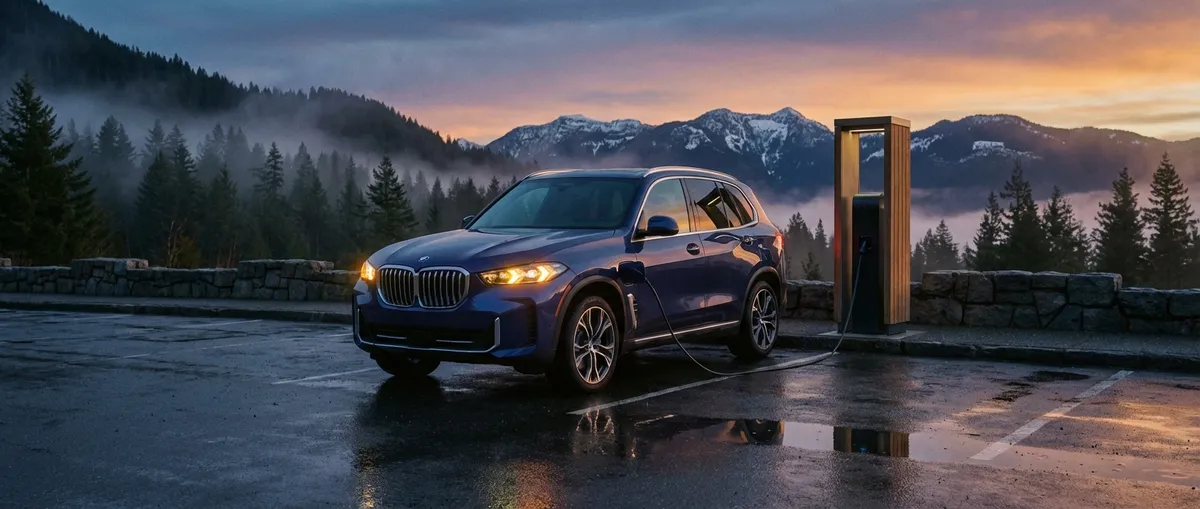
The 2025 BMW X5 xDrive50e arrives as one of the most technically interesting luxury midsize SUVs on sale, blending plug‑in hybrid efficiency with serious performance and long‑haul comfort. Rather than chasing the wild styling of some rivals, BMW has focused on incremental engineering gains: more power, more electric range, and a more polished cabin experience. For shoppers cross‑shopping traditional gas SUVs, full EVs, and hybrids, the X5 xDrive50e is a compelling “bridge” vehicle—provided you understand its strengths, trade‑offs, and what its specs mean in the real world.
Powertrain and Performance: Where the Numbers Actually Matter
Under the hood, the 2025 X5 xDrive50e combines a 3.0‑liter turbocharged inline‑six (B58 engine family) with an integrated electric motor housed within the 8‑speed automatic transmission. System output is approximately 483 horsepower and 516 lb‑ft of torque, a substantial jump over the previous xDrive45e. That power is distributed via BMW’s xDrive all‑wheel‑drive system, which uses an electronically controlled multi‑plate clutch to apportion torque between the front and rear axles.
From the driver’s seat, the result is immediate and linear thrust, especially in Hybrid and Sport modes where the electric motor fills in low‑rpm torque before the turbocharger is fully spooled. The 0–60 mph time lands in the mid‑4‑second range, putting it squarely in performance SUV territory without the high‑strung feel of a dedicated M model. Enthusiasts will appreciate the way the inline‑six still delivers a smooth, mechanical soundtrack under load, even as the electric motor handles much of the low‑speed duty.
The 8‑speed ZF‑based automatic remains a benchmark: upshifts are quick and decisive in Sport mode, yet nearly imperceptible in Comfort. Paddle response is immediate, with downshifts that match revs cleanly thanks to the interplay between engine braking and regenerative deceleration. For potential buyers who worry plug‑in hybrids are “soft” or disconnected, the xDrive50e drives much like a conventional high‑output X5—only with an extra layer of refinement and torque from the e‑motor.
Plug‑In Hybrid System and Real‑World Range
The technical centerpiece of the xDrive50e is its high‑voltage lithium‑ion battery, now with significantly more usable capacity than its predecessor (around 25–30 kWh gross, depending on market reporting). BMW targets an EPA‑estimated electric‑only range in the neighborhood of 40–50 miles, which is substantial for a performance‑oriented PHEV SUV and enough for many commutes without burning gasoline when charged daily.
In pure Electric mode, the X5 will operate as a rear‑biased EV at city and suburban speeds, with the gas engine staying off unless you demand full power or sustain higher freeway speeds. Acceleration in this mode is more than adequate for normal traffic; the electric motor alone produces well over 200 hp, so the SUV never feels sluggish. For buyers concerned about cold‑weather performance, expect some reduction in EV range due to battery temperature and HVAC loads, but the gas engine serves as a seamless fallback.
Charging is handled via an onboard AC charger (Level 2), with power levels typical for PHEVs—fast enough to replenish the pack overnight on a 240V home charger, but not designed as a DC‑fast‑charging road‑trip solution like a full EV. For most owners, the optimal pattern is predictable: plug in at home, use electric mode for local driving, and let the hybrid system take over for long distances. When the battery is depleted, the xDrive50e operates as a conventional hybrid, using the engine and remaining charge intelligently to optimize efficiency.
Importantly, this setup eliminates “range anxiety” while still offering a substantial reduction in fuel consumption and tailpipe emissions for daily use, especially in urban environments. For buyers in regions that offer tax credits or incentives for plug‑in hybrids, the overall cost of ownership can be notably better than a comparably quick pure gasoline X5.
Chassis, Handling, and Ride: Balancing Weight with Control
The X5 platform (known internally as G05, with its latest LCI update) remains one of the more dynamically competent architectures in the midsize luxury SUV segment. The xDrive50e’s plug‑in hardware does add weight—several hundred pounds over a non‑hybrid X5—but BMW uses that mass to its advantage where possible. The battery is mounted low in the chassis, helping keep the center of gravity down, which offsets some of the drawbacks of that extra curb weight.
Standard adaptive suspension tuning and available options like the two‑axle air suspension and active roll stabilization (depending on market and package) enable a dual personality. In Comfort mode, the X5 absorbs broken pavement with a level of composure appropriate for a luxury SUV; the ride is firm but controlled, not floaty. In Sport, damping stiffens and body movements tighten, reducing pitch and roll enough to make the vehicle feel smaller and more athletic than its actual dimensions.
Steering feedback remains more on the precise than the communicative side—this is a luxury PHEV, not a track car—but response is quick and linear off‑center. Optional rear‑axle steering (again package‑dependent) can further improve low‑speed maneuverability and high‑speed stability, making tight parking lots and highway lane changes easier for drivers transitioning from smaller vehicles.
Braking feel, often a weak point in hybrids due to the blend of friction and regenerative braking, is well‑calibrated here. Pedal travel is consistent, and the transition between regen and mechanical braking is smooth enough that most drivers will not notice distinct phases. Enthusiasts who are sensitive to pedal modulation may detect some non‑linearity at very low speeds, but overall the integration is among the better executions in the segment.
Interior, Tech, and Daily Usability
Inside, the 2025 X5 xDrive50e reflects BMW’s latest design language and iDrive 8.5 software environment. The curved display unit combines a 12.3‑inch digital instrument cluster with a 14.9‑inch central touchscreen, creating a single, sweeping glass panel. Resolution and brightness are excellent, and the system’s processor hardware enables smooth transitions, clean graphics, and responsive touch input.
iDrive 8.5 leans heavily on a combination of tiles, widgets, and a persistent climate bar, reducing the menu‑diving that early iterations were criticized for. Voice control is improved, and the familiar iDrive rotary controller remains on the center console for those who prefer tactile input, a nod to traditional BMW users. Wireless Apple CarPlay and Android Auto are standard, with quick device pairing and stable connections in most real‑world use.
Material quality is in line with segment expectations: leather, open‑pore wood, and metal accents create a premium but not overly flashy aesthetic. Seats are a highlight, with excellent long‑distance support, multi‑way power adjustment, and available ventilation and massage depending on trim and options. Rear seating remains adult‑friendly, with sufficient legroom and headroom, although the higher floor from the battery packaging is slightly more noticeable for taller occupants.
Cargo space is marginally impacted by the plug‑in hardware compared to non‑hybrid X5 variants but remains competitive in the class. The split tailgate design (where available) is both a convenience and a structural advantage, creating a useful loading platform and maintaining good body rigidity. From a day‑to‑day standpoint, the xDrive50e behaves like any other X5: easy to live with, straightforward to park with its surround‑view cameras, and quiet at highway speeds thanks to good NVH isolation and acoustic glass.
Safety, Driver Assistance, and Ownership Considerations
On the safety front, the X5 has historically performed well in crash testing from major agencies like the IIHS and NHTSA, and there is every indication the 2025 xDrive50e continues that trend on the same underlying structure. The standard safety suite includes forward collision warning, automatic emergency braking, lane departure warning, blind‑spot monitoring, and a robust set of airbags. Higher trims and packages add features like adaptive cruise control with stop‑and‑go, lane‑keeping assistance, and more advanced semi‑automated driving functions on limited‑access highways.
BMW’s driver assistance tuning tends to favor a more engaged driver, with systems that support rather than aggressively take over. Lane centering is competent but not as assertive as some competitors; this will appeal to drivers who dislike frequent steering interventions. Adaptive cruise is smooth in its acceleration and braking, although owners should expect the usual caveats around weather, lane markings, and sensor visibility.
From an ownership perspective, plug‑in hybrid complexity raises understandable questions about long‑term reliability. BMW backs the high‑voltage battery with a separate warranty (often 8 years/80,000–100,000 miles in many markets; check regional specifics), which adds confidence for buyers planning to keep the vehicle beyond a lease term. Routine maintenance remains similar to a conventional X5—oil changes, brake service, filters—but regenerative braking typically extends pad and rotor life under mixed driving.
For enthusiasts and buyers alike, the key ownership calculus revolves around charging behavior. Those who can install a Level 2 charger at home (or have consistent access to workplace charging) will realize the full economic and environmental upside of the plug‑in system. Drivers who rarely plug in will still enjoy strong performance, but their fuel economy will trend closer to a powerful gasoline SUV, making the xDrive50e’s extra weight and complexity less compelling.
Conclusion
The 2025 BMW X5 xDrive50e stands out as one of the most well‑rounded plug‑in hybrid SUVs available today, combining serious performance, appreciable electric range, and everyday luxury in a familiar, understated package. It does not attempt to reinvent the X5 formula; instead, it refines it with electrification that adds capability rather than compromise. For buyers who want EV‑like commuting with long‑distance flexibility—and who value precise driving dynamics as much as tech and comfort—the xDrive50e deserves a prominent place on the shortlist.
Sources
- BMW USA – 2025 BMW X5 Overview – Official specifications, powertrain details, and feature descriptions for the latest X5 lineup
- U.S. Department of Energy – FuelEconomy.gov Plug‑In Hybrid Electric Vehicles – Technical explanation of how PHEV systems work, including charging, range, and efficiency behavior
- IIHS – BMW X5 Crash Test Ratings – Independent safety evaluations, crash test results, and safety equipment notes for the X5 platform
- EPA – Green Vehicle Guide – Context on electrified vehicle benefits, emissions, and common misconceptions
- BMW Group – Tech Behind BMW Plug‑In Hybrids – Manufacturer overview of BMW’s plug‑in hybrid technology and system architecture
Key Takeaway
The most important thing to remember from this article is that this information can change how you think about Reviews.