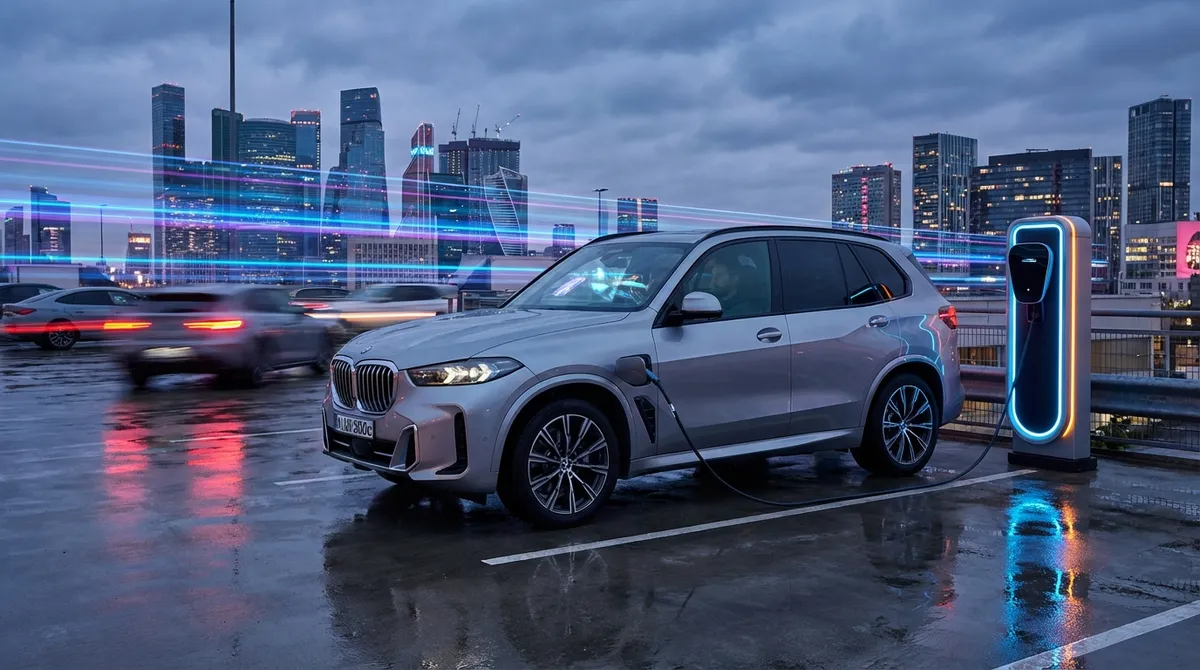
The plug-in hybrid SUV is evolving fast, and the 2025 BMW X5 xDrive50e sits right at the crossroads of power, efficiency, and high-end tech. Positioned between fully electric SUVs and traditional gas-powered luxury crossovers, this updated X5 PHEV is aimed at drivers who want serious performance without abandoning the fuel pump entirely. Below, we break down five core areas that matter most to enthusiasts and serious shoppers: powertrain and performance, real-world efficiency, chassis and driving dynamics, interior tech and comfort, and practicality as a daily family hauler.
Powertrain & Performance: Where Hybrid Meets Autobahn DNA
BMW’s latest plug‑in system in the xDrive50e pairs a 3.0‑liter turbocharged inline‑six (part of the B58 family) with a single integrated electric motor housed in the 8‑speed automatic transmission. Combined system output is around 483 hp and 516 lb‑ft of torque, a substantial bump over the previous 45e. The gasoline engine alone produces roughly 308 hp, while the electric motor contributes about 194 hp, though not simultaneously peak due to system management.
All‑wheel drive (xDrive) is standard, and the torque‑rich electric motor combines with the turbo six to deliver notably rapid acceleration. BMW reports a 0–60 mph time in the mid‑4‑second range, placing the xDrive50e within striking distance of dedicated performance SUVs. Power delivery is smooth and linear; in hybrid mode the transmission masks shifts well, and electric torque fills in low‑rpm gaps, which means brisk passing power without downshifting frenzy.
The high‑voltage battery pack, integrated under the floor, slightly lowers the center of gravity versus a purely ICE X5, helping stability in quick transitions. Drive modes (Hybrid, Electric, Sport, and configurable Individual settings) alter throttle mapping, shift logic, steering weight, and damping (when equipped with adaptive suspension). Enthusiasts will appreciate that Sport mode leans heavily on the combustion engine and battery assistance to maintain maximum output, keeping the powertrain on boil for mountain runs or freeway on‑ramp sprints.
Electric Range & Real‑World Efficiency: What Owners Can Expect
The 2025 X5 xDrive50e features a usable battery capacity of about 25.7 kWh, up from the previous generation, yielding an EPA‑estimated electric‑only range in the 35–40 mile neighborhood (final figures can vary slightly by wheel size and options). That’s enough for many commuters to cover daily errands without starting the gasoline engine, especially if home charging is available.
In Electric mode, the X5 can travel at highway speeds without the engine kicking in, as long as you don’t demand full-throttle acceleration. Around town, the SUV behaves like a refined EV: quiet, with instant torque and minimal vibration. For mixed driving, the hybrid system aims to prioritize electric propulsion at lower speeds and under light loads, gradually blending in the six‑cylinder when more power or sustained high‑speed cruising is required.
From a fuel-consumption standpoint, drivers who plug in regularly and stay mostly within the EV range can see very low gasoline use—often going weeks between fill‑ups. On long highway trips where the battery is depleted, you can expect fuel economy more in line with a conventional turbocharged inline‑six luxury SUV, though slightly boosted by the hybrid’s ability to recapture energy through regenerative braking and occasional engine-off coasting.
Charging is AC only, using a Type 2 / J1772-style connector in the North American market. On a Level 2 (240‑volt) charger at around 7.4 kW, a full charge typically takes roughly 3–4 hours. Level 1 (120‑volt) charging is far slower and best reserved for overnight top‑ups. There’s no DC fast charging support, which is typical for plug‑in hybrid SUVs; the expectation is that most owners will charge at home or at the office rather than rely on public infrastructure as a primary energy source.
Chassis, Handling & Ride: Balancing Comfort and Control
The G05-based X5 platform uses a double‑wishbone front and multi‑link rear suspension, tuned in the 50e for the added weight of the battery pack. Even with the extra mass, the chassis remains one of the more engaging in the midsize luxury segment. Steering is precise, with moderate effort and a reassuring on‑center feel at highway speeds. While not as communicative as a sports sedan, it communicates enough about what the front tires are doing to encourage spirited driving on back roads.
Adaptive M suspension and, in some markets, two‑axle air suspension are available or standard depending on trim and package selection. Air suspension allows variable ride height: dropping the body for improved aerodynamics and handling in Sport modes, while raising it slightly in rough or unpaved conditions. Electronically controlled dampers can stiffen in cornering to reduce body roll yet soften for straight‑line cruising, providing that dual personality buyers at this price point expect.
The xDrive all‑wheel‑drive system is rear‑biased under normal conditions, sending more torque rearward to deliver a traditional BMW feel in corners. When the system detects slip, it can route power forward rapidly, and the integrated electric motor’s torque vectoring effect helps stability on slick surfaces. Optional rear‑axle steering (on some markets/packages) further tightens the turning circle at low speeds and adds stability during high-speed lane changes.
Braking performance is solid, with regenerative braking blending into friction braking through a by‑wire pedal. Pedal feel has improved over earlier plug‑in models, though sensitive drivers may still notice a slight transition point between regen and mechanical brakes under heavy deceleration. For most, it feels natural after a short acclimation. With properly chosen tires—especially all‑season or performance‑oriented rubber—the X5 xDrive50e can confidently handle everything from highway commuting to spirited weekend drives.
Interior Tech, Infotainment & Driver Assistance
Inside, the 2025 X5 xDrive50e adopts BMW’s latest curved display setup, combining a 12.3‑inch digital instrument cluster with a 14.9‑inch central touchscreen under a single sweeping glass panel. The system runs BMW Operating System 8.5 (or newer), with a tile-based interface, customizable home screens, and extensive voice control under the “Hey BMW” assistant. Graphics are crisp, and responses to touch and voice inputs are quick.
Wireless Apple CarPlay and Android Auto are standard, integrating smartphone apps directly into the central display with minimal lag. Multiple USB‑C ports, optional wireless charging, and a high-quality audio system (with an available Harman Kardon or Bowers & Wilkins upgrade) cater to tech‑focused buyers. Native navigation incorporates real-time traffic and can optimize hybrid energy use by anticipating hills, speed limits, and urban zones, helping the X5 use its electric capability strategically.
Seating is supportive, with optional multi‑contour front seats offering adjustable thigh support and extensive power adjustments. Leather upholstery, open‑pore wood trims, and high-quality plastics create a genuinely premium atmosphere. Ambient lighting, configurable in multiple colors and animations, further refines the cabin feel at night. The available panoramic glass roof adds to the sense of space, though it can slightly impact headroom for very tall occupants.
On the driver-assistance front, the X5 xDrive50e offers a suite of features including adaptive cruise control with stop‑and‑go, lane‑keeping assistance, blind‑spot monitoring, rear cross-traffic alert, and traffic sign recognition. Higher-package options can add more advanced functions such as hands‑free driving in limited conditions (where legally permitted), automated lane changes, and parking assist that can even memorize low‑speed maneuvers like navigating a tight driveway.
Importantly, BMW tunes these systems to intervene smoothly and predictably. Lane centering tends to keep the vehicle within lane markings without feeling overly intrusive, although, as with all advanced driver-assistance systems, the driver must maintain attention and be prepared to take over at any moment. Over‑the‑air software updates allow BMW to refine functionality and add minor features over time, which can meaningfully change the ownership experience years into the vehicle’s life.
Practicality, Cargo & Ownership Considerations
Despite the additional hybrid hardware, the X5 xDrive50e maintains a practical layout that suits family use. Cargo capacity is only slightly reduced compared to non‑PHEV X5 models due to the battery packaging under the floor. The signature split tailgate design remains, with an upper hatch and a lower tailgate panel that can serve as a loading platform or makeshift bench. In practice, this design is highly useful for loading heavy items or organizing gear at a campsite or sports field.
Rear-seat space is generous for two adults and acceptable for three across, with good legroom and adequate headroom unless fitted with the largest glass roof and optional entertainment systems. The plug‑in hybrid variant may limit the availability of a third-row seat in some markets; shoppers needing seven-seat flexibility should confirm configurations with their local dealer, as the drivetrain and battery packaging can restrict this option.
Towing capacity remains competitive for a plug‑in hybrid, with ratings in the neighborhood of 5,000–5,500 pounds when properly equipped, sufficient for many small boats, camper trailers, and cargo haulers. However, sustained towing will significantly impact both electric range and fuel economy, as the system will rely more heavily on the combustion engine under high load.
From an ownership cost perspective, the xDrive50e can qualify for various local, state, or national incentives depending on the region, especially where plug‑in hybrids are encouraged through tax credits or reduced registration fees. Maintenance intervals for the gasoline engine remain similar to other BMW turbo sixes, but regenerative braking can reduce wear on brake pads and rotors over time. The high-voltage battery is typically covered under a long-term warranty (often around 8 years/80,000–100,000 miles depending on market), providing some peace of mind about the most expensive component in the hybrid system.
For buyers who can charge at home and make full use of the electric driving capability, the 2025 BMW X5 xDrive50e offers a compelling blend of near‑M‑level performance, electric commuting, and traditional long‑range flexibility. It stands out as a sophisticated solution for drivers not yet ready to commit fully to an EV but unwilling to settle for a purely combustion-powered SUV.
Conclusion
The 2025 BMW X5 xDrive50e demonstrates how far plug‑in hybrid SUVs have come: it’s quick, refined, and packed with technology, yet still delivers meaningful electric range for day‑to‑day driving. Enthusiasts get a strong, characterful inline‑six aided by instant electric torque, while families benefit from a comfortable, tech‑rich cabin and the practicality expected of a midsize luxury SUV. As long as you’re prepared to plug in regularly to unlock its full potential—and you value both performance and efficiency—the xDrive50e is one of the most compelling bridges between today’s gasoline world and tomorrow’s electrified mainstream.
Sources
- [BMW USA – 2025 BMW X5 Official Page](https://www.bmwusa.com/vehicles/x-models/x5/sports-activity-vehicle/overview.html) – Official specifications, equipment, and feature overview for the latest X5 lineup
- [U.S. Department of Energy – FuelEconomy.gov Plug‑In Hybrid Vehicles](https://www.fueleconomy.gov/feg/phevtech.shtml) – Technical explanation of how plug‑in hybrids work, charging details, and efficiency considerations
- [EPA – Green Vehicle Guide](https://www.epa.gov/greenvehicles/electric-vehicle-myths) – Context on electric and plug‑in hybrid vehicle benefits, range, and environmental impact
- [IIHS – BMW X5 Safety Ratings](https://www.iihs.org/ratings/vehicle/bmw/x5-4-door-suv) – Crash-test ratings and safety information for the BMW X5 platform
- [BMW Group PressClub – New BMW X5 and BMW X6 Press Release](https://www.press.bmwgroup.com/global/article/detail/T0407464EN/the-new-bmw-x5-and-the-new-bmw-x6) – Manufacturer technical details on powertrains, chassis, and technology updates
Key Takeaway
The most important thing to remember from this article is that this information can change how you think about Reviews.