BMW’s X5 has long been the benchmark for drivers who want an SUV that feels like a sports sedan with extra cargo space. For 2025, the plug-in hybrid variant—now badged X5 xDrive50e—gets more power, more electric range, and a deeper layer of tech. The result is an SUV that aims to satisfy enthusiasts, commuters, and tech-focused buyers in a single, quietly complex package.
This review focuses on what matters most to engaged drivers and informed shoppers: performance character, electric capability, chassis tuning, cabin tech and usability, and ownership realities.
Powertrain and Performance Character
Under the hood, the 2025 X5 xDrive50e pairs a 3.0‑liter turbocharged inline‑six with an electric motor integrated into the 8‑speed automatic transmission. Combined output is 483 hp and 516 lb‑ft of torque—substantial increases over the outgoing xDrive45e. BMW claims 0–60 mph in the low 4‑second range, putting this plug‑in hybrid squarely in performance‑SUV territory.
The turbo inline‑six, internally known as the B58, is one of BMW’s most refined modern engines. It uses a single twin‑scroll turbocharger, direct fuel injection, variable valve timing (Double VANOS), and fully variable valve lift (Valvetronic). The broad torque curve and rapid boost response are complemented by the instant torque of the electric motor, which fills any gap in the powerband. In real‑world driving, that translates to a seamless surge from just above idle to highway speeds.
The 8‑speed ZF automatic remains a highlight. Gear changes are quick but smooth, with well‑calibrated shift logic in Sport mode that anticipates downshifts on corner entry and holds gears under aggressive throttle. Paddle shifters add manual control, and the powertrain’s responsiveness will satisfy drivers who care about timing and feedback rather than just straight‑line numbers.
Braking feel is often a weak point in plug‑in hybrids because of the blending between regenerative and friction braking. In the X5 xDrive50e, brake pedal calibration is notably more natural than many rivals. The system transitions from regen to mechanical braking progressively, with consistent pedal travel. Enthusiasts will still detect some variability at the very top of the pedal stroke, but in typical spirited driving, the system is predictable and confidence‑inspiring.
Plug-In Electric Capability and Real-World Efficiency
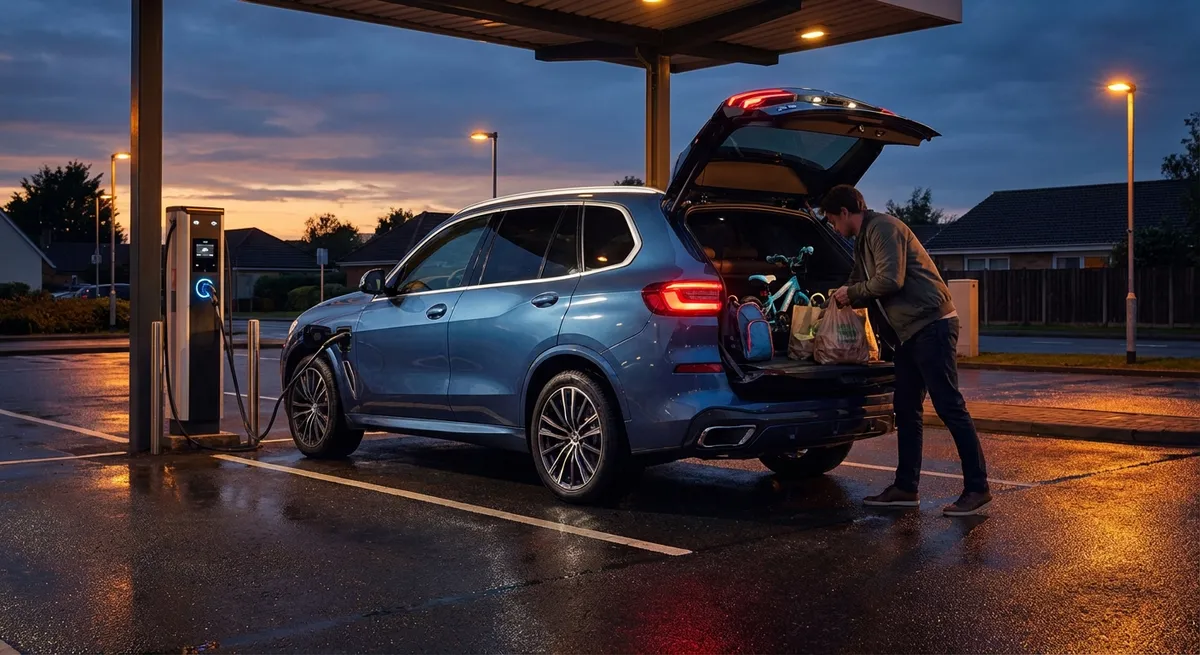
The X5 xDrive50e uses an enlarged lithium‑ion battery pack (around 25–29 kWh gross capacity, depending on specification and region), packaged under the cargo floor. BMW estimates an all‑electric range in the 35–40‑mile region on the EPA cycle, though final numbers may vary slightly by wheel size and equipment.
In everyday terms, this means many owners can complete a full weekday commute on electricity alone if they have access to home charging. The SUV defaults to hybrid operation, but BMW’s drive mode logic allows you to choose:
- Hybrid: Automatically blends engine and motor to maximize efficiency.
- Electric (EV): Prioritizes electric drive until the battery depletes or higher power is demanded.
- Sport: Keeps the gas engine on, using the battery to supplement performance.
The X5 xDrive50e supports AC charging up to 7.4 kW on a Level 2 charger. That’s sufficient for a full charge in roughly 3–4 hours from a 240‑V home wall box. There is no DC fast charging—typical for most PHEVs—so this is a vehicle optimized for overnight or workplace charging rather than highway rapid charging. For most buyers, the ideal routine is simple: plug in at home each night and treat gasoline as the backup, not the default.
Efficiency depends heavily on how often you charge. For drivers who plug in daily and frequently run within EV range, gasoline consumption can be minimal—BMW’s PHEVs in similar configurations have achieved triple‑digit MPGe in mixed short‑trip use. For long highway trips with a depleted battery, you can expect fuel economy roughly in line with a well‑tuned turbo six‑cylinder SUV, but with the benefit of electric torque for passing.
Chassis, Ride, and Handling Dynamics
BMW positions the X5 as the dynamic choice in the midsize luxury SUV segment, and the xDrive50e does little to undermine that reputation. Despite the additional mass of the battery pack, weight distribution remains close to BMW’s favored near‑50:50 front‑to‑rear balance. The hybrid hardware is packaged low in the chassis, which helps keep the center of gravity in check.
The standard xDrive all‑wheel drive system uses an electronically controlled multi‑plate clutch to shuffle torque between the front and rear axles. In most situations, it behaves as a rear‑biased system, only pulling in more front‑axle torque when traction requires it. Optional packages add air suspension and active roll stabilization, further sharpening body control.
On winding roads, the X5 xDrive50e feels composed and predictable, with steering that is precise if not brimming with feedback. BMW’s variable sport steering can adjust the ratio based on speed and steering angle, aiding low‑speed maneuverability without making high‑speed lane changes feel twitchy. Enthusiasts who prioritize steering feel over isolation may still prefer a lighter vehicle or something with a fixed ratio, but among midsize luxury SUVs, the X5 remains one of the more engaging options.
Ride quality is firmly controlled rather than plush. The standard suspension manages bumps with a solid, Germanic character—small imperfections are heard and felt but filtered; larger undulations are well‑damped. With the adaptive air suspension, you can soften the ride in Comfort mode or tighten body control in Sport mode. The additional weight of the battery actually helps settle high‑frequency motions, giving the PHEV a slightly more planted feel over broken pavement compared with some non‑hybrid variants.
Braking performance is strong, supported by sizeable rotors and multi‑piston front calipers on higher‑spec trims. Repeated hard stops will reveal the extra mass of the plug‑in system compared to a conventional X5, but fade resistance is good for an SUV of this class, and the hybrid‑specific cooling and regen strategies are well thought out.
Cabin Technology, Interface, and Everyday Usability
Inside, the 2025 X5 xDrive50e adopts BMW’s latest iDrive 8.5 infotainment suite, presented on a curved display that merges a 12.3‑inch digital instrument cluster with a 14.9‑inch central touchscreen. The system supports over‑the‑air updates, improved voice control, and a revised interface with more persistent climate controls than early versions of iDrive 8.
The interface is dense but powerful. Enthusiasts will appreciate the granular customization: drive modes can be tailored to separate steering, damping, and powertrain responses; the digital cluster can prioritize a classic layout with a tachometer or a more minimalist view. Head‑up display is available and integrates navigation prompts, speed, and driver‑assist information cleanly.
Physical controls haven’t disappeared completely. A row of shortcut buttons and a volume knob remain below the vents, and BMW retains its rotary iDrive controller on the center console, which many owners find more accurate than touch input when the vehicle is moving. That said, some frequently used functions—such as seat heating and more advanced climate options—still require diving into submenus.
Material quality is in line with premium expectations: soft‑touch surfaces, real leather or high‑grade synthetic options, open‑pore or high‑gloss wood, and aluminum trim depending on package. The M Sport package adds sport seats, a thicker steering wheel, and different trim finishes, giving the cabin a more performance‑oriented aesthetic.
From a practical standpoint, the plug‑in hybrid hardware does slightly impact cargo space due to the under‑floor battery. Load floor height is a bit raised compared to non‑PHEV X5s, and total volume is marginally reduced, though still generous for family use or road trips. Rear seat space remains unaffected: adults over six feet will find adequate leg‑ and headroom, and the bench backrest reclines for comfort.
Advanced driver assistance systems (ADAS) are comprehensive. Standard features typically include forward collision warning with automatic emergency braking, lane departure warning, blind spot monitoring, and parking sensors. Optional systems add adaptive cruise control with stop‑and‑go, lane‑keeping assistance, automated lane changes, and advanced parking assistance capable of automated maneuvers in tight spaces. Calibration is on the conservative side; the lane‑keeping system tends to gently nudge rather than aggressively steer, which many drivers may find more natural.
Ownership, Charging Strategy, and Buyer Profile
Where the X5 xDrive50e becomes particularly compelling is in its ownership profile. For buyers who can consistently charge at home or work, the plug‑in hybrid concept offers a meaningful reduction in fuel use and tailpipe emissions without committing to the charging infrastructure and range planning of a full EV.
The optimal owner is someone with:
- A daily commute under ~35–40 miles round‑trip.
- Dedicated off‑street parking suitable for installing a Level 2 charger.
- Regular longer trips where gasoline backup is convenient (vacations, work travel).
- An interest in performance and refinement, not just basic transportation.
For these drivers, the xDrive50e can operate as an EV for day‑to‑day errands and as a powerful, comfortable grand tourer when needed. The dual‑energy strategy also mitigates concerns about cold‑weather range loss or charging access on rural routes.
Total cost of ownership will depend on local electricity and gasoline prices, as well as incentives. In some markets, plug‑in hybrids qualify for federal or state tax credits, HOV lane access, or reduced registration fees. Insurance costs align with the premium SUV segment, and maintenance follows BMW’s typical schedule: longer service intervals but higher component costs than mainstream brands. The hybrid components and high‑voltage battery usually carry longer warranties (often 8 years/80,000–100,000 miles), offering some peace of mind.
Resale value is still an evolving story for plug‑in hybrids, but demand for electrified SUVs has been trending upward. The X5’s strong brand equity, combined with its balanced approach to electrification and performance, should help the xDrive50e hold value at least as well as other premium PHEVs—particularly in regions with supportive policy and infrastructure for electrified vehicles.
Conclusion
The 2025 BMW X5 xDrive50e stands out not by making the loudest performance claims or the longest EV range, but by integrating both into a genuinely cohesive daily‑driver package. Its powertrain delivers the sort of seamless, torque‑rich acceleration enthusiasts appreciate, while its electric capability meaningfully reduces fuel use for the right owner profile.
For potential buyers cross‑shopping high‑end midsize SUVs, the xDrive50e is most compelling if you can fully exploit its plug‑in nature. Used as intended—with regular charging and a mix of city and highway driving—it offers a rare combination: the character of a fast, refined BMW with real‑world efficiency that goes well beyond a conventional turbo‑six SUV. If that balance matches your driving reality, this is one of the most technically sophisticated and well‑rounded choices in today’s luxury SUV landscape.
Sources
- BMW USA – 2025 BMW X5 Overview – Official model information, powertrain specs, and feature highlights for the X5 lineup
- BMW Group – Powertrain Technology and Efficient Dynamics – Technical background on BMW’s hybrid systems, engines, and efficiency strategies
- U.S. Department of Energy – Plug-In Hybrid Electric Vehicles (PHEVs) – Explanation of PHEV operation, charging, and efficiency considerations relevant to owners
- EPA – Green Vehicle Guide – Context on emissions, efficiency metrics, and common misconceptions around electrified vehicles
- IIHS – Large SUVs Vehicle Ratings – Safety ratings and crash-test results for comparable large SUVs in the X5’s segment
Key Takeaway
The most important thing to remember from this article is that this information can change how you think about Reviews.