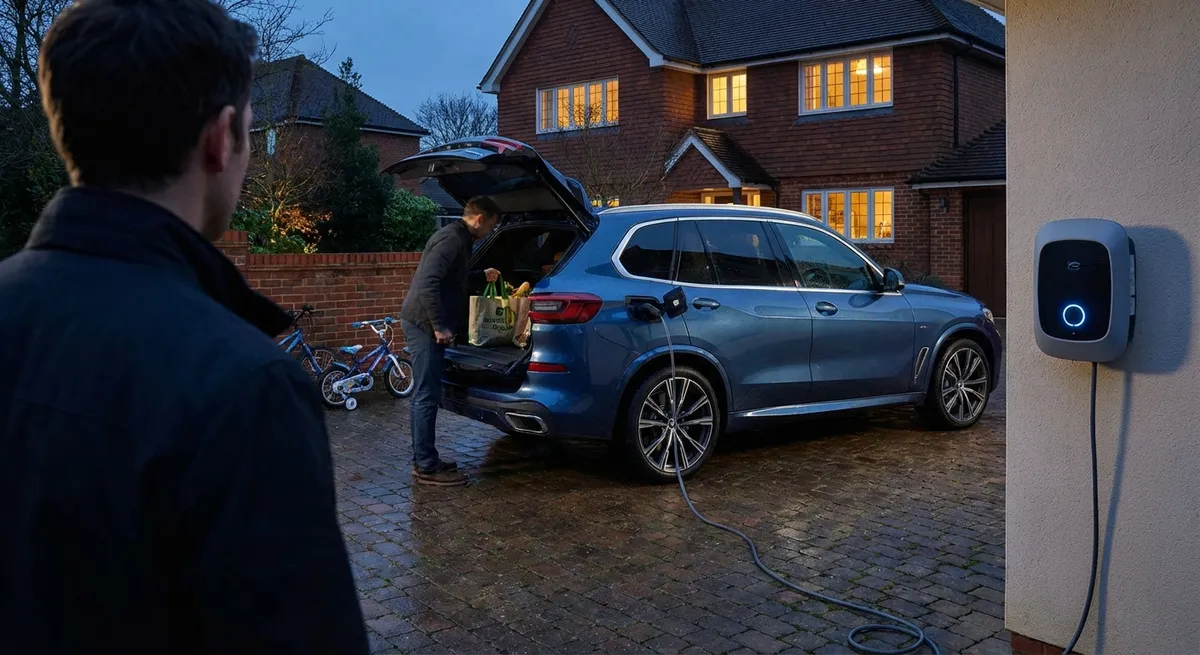
The mid-size luxury SUV segment is more competitive than ever, and plug‑in hybrids are quickly becoming the sweet spot between traditional gasoline power and full electrification. For 2025, the BMW X5 xDrive50e (BMW’s plug‑in hybrid variant) aims to deliver serious performance, meaningful electric range, and the kind of refinement that long-time X5 buyers expect. This is not a compliance car or an entry-level eco model; it’s a flagship powertrain option in one of BMW’s core SUVs.
This review focuses on five key areas that matter most to enthusiasts and serious shoppers: powertrain and performance, electric range and efficiency, chassis dynamics, interior tech and comfort, and ownership realities. If you’re weighing a plug‑in SUV against gasoline and EV alternatives, the 50e should be on your short list.
Electrified Powertrain: Performance Without the Penalty
Under the hood, the 2025 X5 xDrive50e combines a 3.0‑liter BMW TwinPower Turbo inline‑six (B58 family) with an integrated electric motor housed in the 8‑speed automatic transmission. System output is roughly 483 hp and 516 lb‑ft of torque, a significant jump over the previous 45e and comfortably above many non‑hybrid rivals in this class.
The combustion engine alone produces around 308 hp, while the electric motor adds up to about 194 hp. Because the peak outputs occur at different points in the rev and speed ranges, total system power is limited electronically to protect the driveline. The result is extremely linear, immediate thrust: the electric motor fills in low‑rpm torque, masking turbo lag and giving the SUV a strong initial shove off the line.
BMW claims a 0–60 mph time in the low 4‑second range, depending on wheel and tire configuration, which puts the 50e squarely in sports‑sedan territory despite its size and weight (well over 5,500 lb). Crucially, the hybrid system’s added mass is positioned low and near the center of the vehicle thanks to the underfloor battery, which helps stability.
Regenerative braking blends smoothly with the friction brakes in daily driving. Enthusiasts will appreciate that the brake pedal is predictable, with little of the mushy onset that plagues some PHEVs. In Hybrid and Sport modes, the powertrain’s behavior feels coherent and well‑tuned; the transmission is quick to downshift, and engine engagement from EV mode is subdued but noticeable, with a characteristic BMW inline‑six growl under load.
Real-World Electric Range and Efficiency
The 2025 X5 xDrive50e uses a lithium‑ion battery with a usable capacity around 25–29 kWh (larger than the previous generation’s pack), mounted under the rear floor. That capacity translates to an EPA‑rated all‑electric range that, in practice, can cover most daily commutes without burning gasoline.
In real-world mixed driving, many owners can expect somewhere in the 35–45 mile EV range window, depending on temperature, driving style, and wheel size. Urban and suburban use with frequent deceleration (allowing more energy recuperation) will favor longer EV operation, while consistent highway speeds will shorten it. Once the battery is depleted, the X5 transitions into a conventional hybrid mode, where the gasoline engine and electric motor cooperate for improved efficiency compared with a non‑hybrid X5.
Charging is AC only (no DC fast charging), with a maximum onboard rate around 7.4 kW on a Level 2 charger. That means a full charge from near empty takes roughly 3–4 hours on a 240V home or workplace unit, and more than 10 hours on standard 120V. This PHEV is designed around overnight or workday top‑offs, not rapid road‑trip charging like a full EV.
Enthusiast buyers who track energy use will find that the X5 50e rewards those who plug in consistently. Daily EV use followed by hybrid operation on longer journeys can dramatically reduce fuel consumption, sometimes seeing real-world averages in the 50–70 MPGe band over a tank, depending on charging frequency. Even when the pack is low, the hybrid system recaptures energy in stop‑and‑go conditions, keeping the gasoline engine off more often than you’d expect in slow traffic.
Chassis, Ride, and Handling: Luxury with a Lean Toward Sport
The xDrive50e comes standard with BMW’s xDrive all‑wheel‑drive system and a well-sorted suspension that balances comfort and agility. Many models can be equipped with the adaptive M suspension and optional two‑axle air suspension, depending on market and package choices. The combination is impressive: it allows the X5 to ride softly in Comfort mode yet tighten up body control noticeably in Sport.
Steering is electrically assisted and variable in ratio; while it doesn’t deliver old‑school BMW feel, it’s precise and well-weighted. Turn-in is quick enough that the SUV shrinks around you on a twisty back road, helped by the low‑mounted battery that reduces body roll. Optional Integral Active Steering (rear‑axle steering) further improves maneuverability at low speeds and stability at highway pace, making the X5 feel less cumbersome in tight city spaces.
The plug‑in’s additional mass is there, but masked. On rough pavement, the X5 50e feels planted, with vertical motions well‑controlled and minimal float. Large wheel options (21–22 inches) improve stance and steering response but do add some impact harshness over potholes and sharp expansion joints; buyers interested in maximum comfort may want to consider 20‑inch wheels with higher profile tires.
Braking performance is strong and confidence‑inspiring. The regenerative system captures energy as you decelerate, while the mechanical brakes step in progressively under harder stops. Fade resistance is more than adequate for spirited road driving, though repeated high‑speed braking on mountainous routes will remind you that this is still a heavy SUV. For towing, the X5 xDrive50e can be configured to pull up to roughly 5,900–7,200 lb (depending on region and equipment), but you should verify the exact rating and cooling package for your market before committing to heavy trailers.
Interior, Technology, and Everyday Usability
Inside, the 2025 X5 xDrive50e continues BMW’s move toward a minimalist, tech‑forward cabin anchored by the BMW Curved Display. This integrates a 12.3‑inch digital instrument cluster and a 14.9‑inch central touchscreen under one continuous glass surface, running BMW Operating System 8.x. Graphics are crisp, and processing is quick even with navigation, audio, and hybrid powertrain data running simultaneously.
The infotainment system supports over‑the‑air updates, a broad range of real‑time connected services, and both Apple CarPlay and Android Auto, typically in wireless form. BMW’s voice assistant can control many in‑car functions, including climate, navigation destinations, and drive modes, while a dedicated plug‑in hybrid menu shows energy flow, charging status, and efficiency stats in real time. Enthusiasts may appreciate detailed power and torque metering on the cluster and HUD (if equipped) when driving spiritedly.
Material quality is high: leather (or high‑grade synthetic options in some trims), metal accent pieces, and open‑pore wood or aluminum inlays create a premium atmosphere. Seats are multi‑adjustable with optional ventilation and massage; they provide solid lateral support without being overly firm—key for long-distance comfort. Rear-seat space remains generous despite the battery’s presence, with ample headroom and legroom for adults.
Cargo space is slightly reduced compared to non‑plug‑in X5 models because the battery eats into underfloor storage. However, the main load bay remains flat and useful, with rear seats that fold nearly flat in a 40/20/40 split. Families will find the cargo area fully adequate for strollers, luggage, or sports equipment. The split tailgate (where offered) remains a practical touch for loading heavy items or using the lower section as a seating surface at events.
Driver‑assistance tech is robust: available systems can include adaptive cruise control with stop‑and‑go, lane keeping assistance, blind‑spot detection, cross‑traffic alerts, and automated parking functions. The plug‑in’s powertrain interfaces with navigation in some modes, using route data to optimize where and when to deploy electric power for maximum efficiency.
Ownership, Costs, and Who the X5 xDrive50e Suits Best
Total cost of ownership for the 2025 BMW X5 xDrive50e depends heavily on how you use it. Buyers who can charge at home or work and who drive mostly within the EV range stand to benefit the most. In those scenarios, gasoline use can drop dramatically, and maintenance on the combustion side of the drivetrain is often less intensive due to fewer cold starts and lower average engine load.
However, the 50e carries a higher MSRP than comparable gasoline‑only X5 trims. In some markets, federal or local incentives for plug‑in hybrids may offset this premium, but these programs vary widely and are often subject to change. Insurance costs will reflect the vehicle’s luxury status and high parts prices, particularly for battery and electronic components, though BMW’s warranties (including a separate battery warranty that often extends 8 years/100,000 miles or similar) offer some peace of mind. Always verify current coverage details with the manufacturer or dealer.
Routine service intervals generally mirror those of other BMW models using the B58 engine: oil changes, brake fluid, and inspections at specified mileage or time intervals. Keep in mind that plug‑in hybrids can sometimes see lower brake wear due to significant regenerative braking, but brake components can still age due to corrosion or lack of use, especially in wet climates.
The X5 xDrive50e is best suited to:
- Drivers with access to reliable Level 2 charging.
- Enthusiasts who value strong performance but are not ready to commit to a full EV.
- Families needing a premium, mid-size SUV with real cargo capability.
- Owners who frequently mix city commuting with longer highway trips where hybrid operation shines.
If you mainly take long highway journeys without consistent charging access, a diesel (where available) or efficient gasoline X5 might make more sense. Conversely, if you have robust fast‑charging infrastructure and typically drive within a single battery charge per day, a full EV SUV may offer lower running costs and simpler maintenance.
Conclusion
The 2025 BMW X5 xDrive50e is one of the most compelling plug‑in hybrid SUVs currently on the market because it doesn’t ask you to compromise on performance, refinement, or practicality to gain electrification benefits. Its potent hybrid powertrain delivers genuine sports‑SUV acceleration, while its usable EV range can dramatically reduce day‑to‑day fuel consumption for drivers who plug in consistently.
Chassis tuning, interior execution, and technology integration are all in line with expectations for a premium mid-size SUV, and in many areas surpass them. The trade‑offs—added complexity, higher purchase price, and reliance on regular charging to realize full benefits—are real but manageable for the right buyer. For shoppers who want a luxurious, fast, and future‑leaning SUV that still behaves like a traditional X5 when needed, the xDrive50e hits a very attractive balance.
Sources
- [BMW USA – 2025 BMW X5 Plug‑in Hybrid Overview](https://www.bmwusa.com/vehicles/x-models/x5/plug-in-hybrid/sports-activity-vehicle/overview.html) - Official specifications, features, and powertrain details for the X5 plug‑in hybrid
- [U.S. Department of Energy – Fueleconomy.gov Plug‑In Hybrid Information](https://www.fueleconomy.gov/feg/phevtech.shtml) - Technical explanation of plug‑in hybrid systems, efficiency metrics, and charging behavior
- [IIHS – BMW X5 Crashworthiness and Safety Ratings](https://www.iihs.org/ratings/vehicle/bmw/x5-4-door-suv) - Independent safety evaluations and crash test data for the BMW X5
- [EPA – Green Vehicle Guide](https://www.epa.gov/greenvehicles) - Regulatory information, emissions standards, and fuel economy data for electrified vehicles
- [BMW Group Technology – Hybrid and Electric Drive Technologies](https://www.bmwgroup.com/en/innovation/bmw-i-and-electric-mobility/electromobility.html) - OEM background on BMW’s approach to electrified powertrains and battery systems
Key Takeaway
The most important thing to remember from this article is that this information can change how you think about Reviews.