The latest generation BMW X5 xDrive50e arrives at a moment when SUV buyers are demanding real performance, genuine efficiency, and a cabin that feels ready for the next decade. Positioned above the conventional gasoline models but below the full-electric iX, this plug-in hybrid SUV aims to be a bridge between worlds: classic BMW dynamics with meaningful electric range and tech-heavy refinement. For enthusiasts and serious shoppers alike, the 50e raises an important question: is this the sweet spot in the modern luxury SUV lineup, or a compromise that leans too hard on software and spec sheets?
Powertrain and Performance: More Than a Spec Sheet Upgrade
Under the hood, the X5 xDrive50e combines a 3.0‑liter turbocharged inline‑six (B58) with an integrated electric motor inside the 8‑speed automatic transmission. BMW has significantly reworked this system versus the outgoing 45e, and on paper the results are clear: total system output climbs to around 483 hp and 516 lb‑ft of torque, depending on market calibration. That’s a substantial bump that puts the 50e directly into traditional V8 territory in terms of acceleration, yet with better efficiency and smoother low‑speed response.
BMW claims a 0–60 mph time of around 4.6 seconds, and the way it delivers that performance is what will interest enthusiasts. The inline‑six still revs cleanly and sounds appropriately muted but purposeful, while the e‑motor fills in the torque curve from the first rotation. Launches feel immediate but controlled, and the all‑wheel‑drive xDrive system continuously shuffles torque to maintain traction rather than simply relying on stability control to clean things up.
On a twisty road, the added weight of the battery pack is noticeable but well managed. The center of gravity remains relatively low for an SUV of this size, and the standard adaptive suspension (with optional air suspension and active roll stabilization in some markets) gives the X5 a sophisticated, dual‑personality character: compliant and relaxed in Comfort mode, yet more buttoned down and responsive in Sport. Steering remains on the lighter side for BMW, but turn‑in is precise and body motions are well controlled, particularly on 20‑ or 21‑inch wheel setups.
For buyers cross‑shopping V8-powered rivals, the 50e’s powertrain feels every bit as quick in real‑world use, with the added benefit of silent, instant torque in low‑speed and urban environments. It’s a demonstration of how plug‑in hybrid architecture can enhance performance rather than simply apologizing for emissions.
Electric Range, Battery Tech, and Real‑World Efficiency
The heart of any serious plug‑in hybrid SUV is its battery, and BMW has made a major update here. The X5 xDrive50e carries a usable battery capacity of roughly 25.7 kWh, up from the prior model’s approximate 17 kWh pack. Official electric‑only range figures vary by region and wheel size, but you can expect an EPA rating in the neighborhood of 35–40 miles of EV driving, with some WLTP ratings extending further thanks to different test cycles.
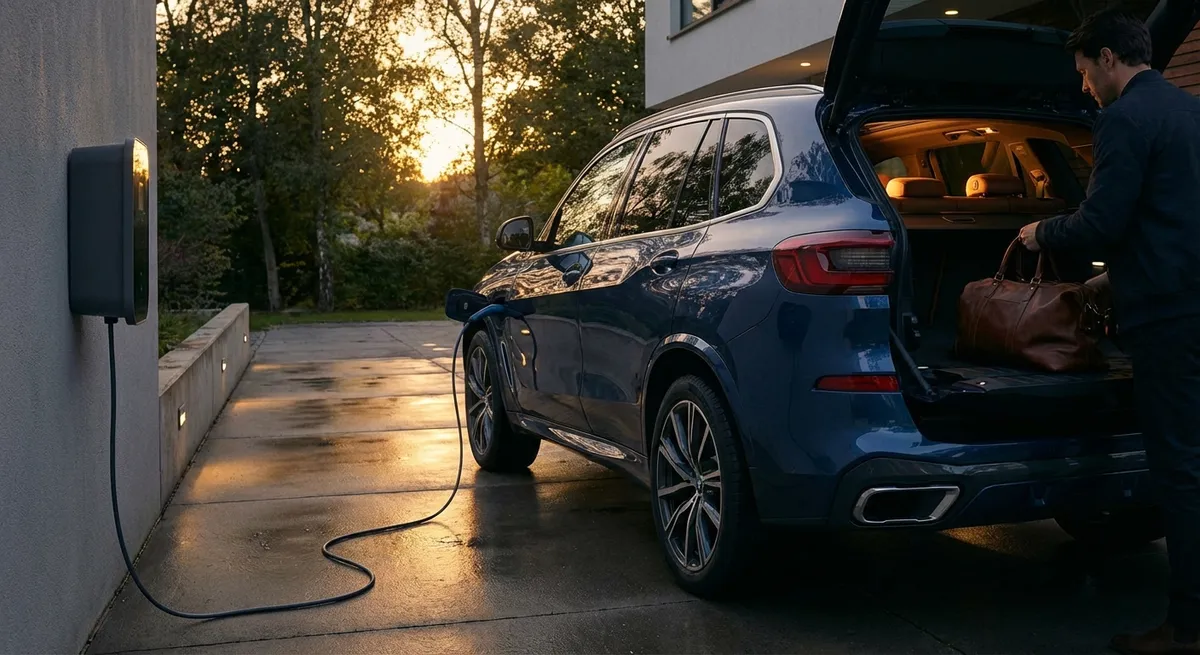
In practical daily use, that means many owners can complete their commute and local errands in electric mode without waking the engine, as long as they plug in consistently. For suburban buyers with home Level 2 charging, the X5 50e can function as a quasi‑EV during the workweek, switching into hybrid or gasoline‑assisted operation for longer weekend trips. This dual nature is what sets it apart from traditional gasoline SUVs and even some mild hybrids that can’t provide true engine‑off driving beyond very low speeds.
Charging capability tops out at around 7.4 kW on AC, so a full recharge from empty takes roughly 3–4 hours on a Level 2 charger. There’s no DC fast-charging option, but given the battery size, that omission is more about cost and weight efficiency than performance compromise. Owners who integrate charging into their routine—overnight at home or during longer office hours—will see the fuel savings add up, especially as gasoline prices fluctuate.
On highway trips where the battery is depleted, fuel economy figures typically revert to numbers similar to a well‑tuned turbo six-cylinder SUV. However, when driven as intended—with regular plugging in and strategic use of hybrid or electric modes—overall energy consumption can significantly undercut purely gasoline rivals. For buyers who want to reduce fuel bills and tailpipe emissions without surrendering long‑range flexibility or quick refueling, the X5 xDrive50e’s drivetrain architecture is one of the most compelling in the segment.
Interior, Technology, and Daily Usability
Inside, the X5 xDrive50e leans heavily into BMW’s modern tech aesthetic while retaining enough physical controls to keep traditionalists relatively comfortable. The centerpiece is the curved display array: a 12.3‑inch digital instrument cluster alongside a 14.9‑inch central touchscreen running BMW Operating System 8 (or later, depending on production timing). Graphics are crisp, response times are quick, and the system supports over‑the‑air updates along with deep integration of navigation, EV functions, and driver‑assistance features.
Drive mode selection, energy flow visualization, and charging settings are all accessible via the main screen and BMW’s familiar iDrive controller, though many functions are now touch‑centric. Some enthusiasts will miss the more button-heavy dashboards of earlier generations, but the 50e softens that transition with clever use of configurable shortcuts and a reasonably intuitive menu structure once you learn the logic. Wireless Apple CarPlay and Android Auto are standard in most markets, eliminating the friction between BMW’s native system and smartphone ecosystems.
Material quality is in line with expectations for a high‑end BMW SUV. Soft‑touch surfaces, solid switchgear, and well‑executed ambient lighting create a cabin that feels both tech-forward and premium. Optional features such as crystal‑style controls, high‑end leather upholsteries, and open‑pore wood trim elevate the sense of occasion. Seating comfort in the first two rows is excellent, with supportive cushions and broad ranges of adjustability. Unlike some rivals that push for a third row at all costs, the X5’s focus on two primary rows gives second‑row passengers generous legroom and headroom.
Cargo space is slightly reduced versus non‑PHEV X5 models due to the battery packaging beneath the cargo floor, but the compromise is modest. The split tailgate remains a practical highlight: the lower section can serve as a loading shelf or seating platform, while the upper section swings wide for easy access. For families or enthusiasts hauling gear—golf bags, camera equipment, or track‑day luggage—the X5 still delivers real-world usability without feeling oversized in parking lots or tight garages.
Driver Assistance, Safety, and Long‑Term Ownership Considerations
BMW equips the X5 xDrive50e with a broad suite of driver‑assistance technologies, many standard and others bundled into optional packages. Features typically include forward collision warning with automatic emergency braking, lane departure warning, blind‑spot monitoring, and rear cross‑traffic alert. Lane‑keeping assist, adaptive cruise control with stop‑and‑go functionality, and traffic‑jam assist are available or standard depending on region and trim, allowing semi‑automated driving in certain conditions.
These systems are designed to reduce fatigue and enhance situational awareness rather than fully take over driving duties. Enthusiast drivers may find the lane‑centering behavior a bit conservative, especially on winding roads, but BMW allows reasonably granular adjustment of intervention levels. The result is an assistance suite that can be tailored to your comfort level, from hands-on guidance in heavy traffic to minimal intrusion during spirited driving.
From a safety structure standpoint, the X5 family has historically performed very well in crash testing, and the latest model continues that trajectory with a rigid body shell, multiple load paths, and an array of airbags. As plug‑in hybrids add higher‑voltage electrical systems and heavier battery packs, OEMs like BMW are increasingly focused on crash energy management and isolation of the high‑voltage system in impacts. This engineering work happens largely behind the scenes but is crucial for long‑term confidence in PHEV ownership.
Ownership considerations for the 50e extend beyond basic maintenance. You’re managing a complex powertrain with both a turbocharged combustion engine and a sizable lithium‑ion battery pack. For many buyers, the combination offers the best of both worlds, but it also underscores the importance of a robust dealer network, updated diagnostic tools, and a clear warranty framework for the battery and e‑components. BMW typically backs the high‑voltage battery with a dedicated long‑term warranty, which will be a key reassurance for second‑ and third‑owners down the road and an important factor in residual values.
For enthusiasts who plan to keep the vehicle long term, understanding service intervals for both traditional components (oil changes, cooling systems, brakes) and hybrid-specific hardware (coolant loops for battery and power electronics, software updates) will be part of responsible ownership. As with any modern premium SUV, staying current with software and service bulletins can significantly improve the day‑to‑day experience.
Who the X5 xDrive50e Really Suits: Enthusiast, Commuter, or Family Hauler?
The 2025 BMW X5 xDrive50e targets a very specific, but growing, group of buyers: those who want authentic performance and luxury yet are not ready—or not able—to commit fully to an EV. For an enthusiast who enjoys spirited driving on weekends but spends weekday mornings crawling through urban traffic, the 50e’s ability to blend silent EV operation with strong hybrid acceleration is compelling. You get the tactility of a BMW chassis, the character of an inline‑six, and the immediate torque of an electric motor in a single package.
For commuters with reliable access to home or workplace charging, the 50e can dramatically reduce gasoline usage, turning short trips and school runs into almost entirely electric journeys. At the same time, long-distance flexibility remains intact: refuel in minutes at any gas station, rely on hybrid mode in regions where charging is patchy, and avoid the route‑planning anxiety that can accompany some EV road trips. Families will appreciate the cabin space, ride comfort, and safety tech, though those needing three usable rows may still look to larger alternatives.
The main trade‑offs revolve around complexity and cost. Compared with a conventional X5, you’re paying more up front and adding a layer of electrified hardware that will only pay off if you regularly plug in and exploit its capabilities. Compared with a full EV, you’re carrying around an engine that adds weight and requires traditional maintenance. For the right buyer, those compromises are not only acceptable but logical: they offer a practical bridge between today’s infrastructure and tomorrow’s all‑electric landscape.
In the end, the X5 xDrive50e feels less like a “transition product” and more like a fully realized interpretation of what a modern performance‑oriented family SUV can be. It is fast without theatrics, efficient without range anxiety, and technologically advanced without completely discarding the analog feel that has long defined BMW’s best efforts. For many Top SUV News readers, that balance could make the 50e the most interesting X5 in the lineup.
Conclusion
The 2025 BMW X5 xDrive50e stands out as a sophisticated plug‑in hybrid SUV that doesn’t treat electrification as a box‑ticking exercise. Its combination of a robust inline‑six, powerful electric motor, and enlarged battery yields genuine performance and meaningful EV range, all wrapped in a polished, tech‑rich interior. The trade‑offs—added complexity, reliance on charging habits, and a higher entry price—are real, but they’re also the price of accessing one of the most versatile drivetrains in the segment.
For enthusiasts who still enjoy the feel of an internal‑combustion engine yet recognize the advantages of electric torque, and for buyers who want a luxury SUV that can adapt to both current fuel realities and an increasingly electrified future, the X5 xDrive50e is not just a compromise—it’s a compelling choice. If you have regular access to charging and value both driving engagement and efficiency, this is one plug‑in hybrid SUV that deserves a very close look.
Sources
- BMW USA – 2025 BMW X5 Overview – Official product page with specifications, powertrain details, and feature highlights for the latest X5 lineup, including plug‑in hybrid information.
- BMW Group Global – BMW X5 Product Information – Corporate site offering technical background, drivetrain architecture explanations, and model positioning within BMW’s portfolio.
- U.S. Department of Energy – Fueleconomy.gov Plug‑In Hybrid Information – Explains how plug‑in hybrids work, typical range behavior, and factors affecting fuel and energy consumption in PHEVs like the X5 xDrive50e.
- IIHS – BMW X5 Crash Test Ratings – Independent crash safety results for recent BMW X5 models, including structural performance and available safety technology assessments.
- EPA – Greenhouse Gas Emission Standards for Light‑Duty Vehicles – Regulatory context that helps explain why manufacturers are expanding plug‑in hybrid and electrified SUV offerings.
Key Takeaway
The most important thing to remember from this article is that this information can change how you think about Reviews.