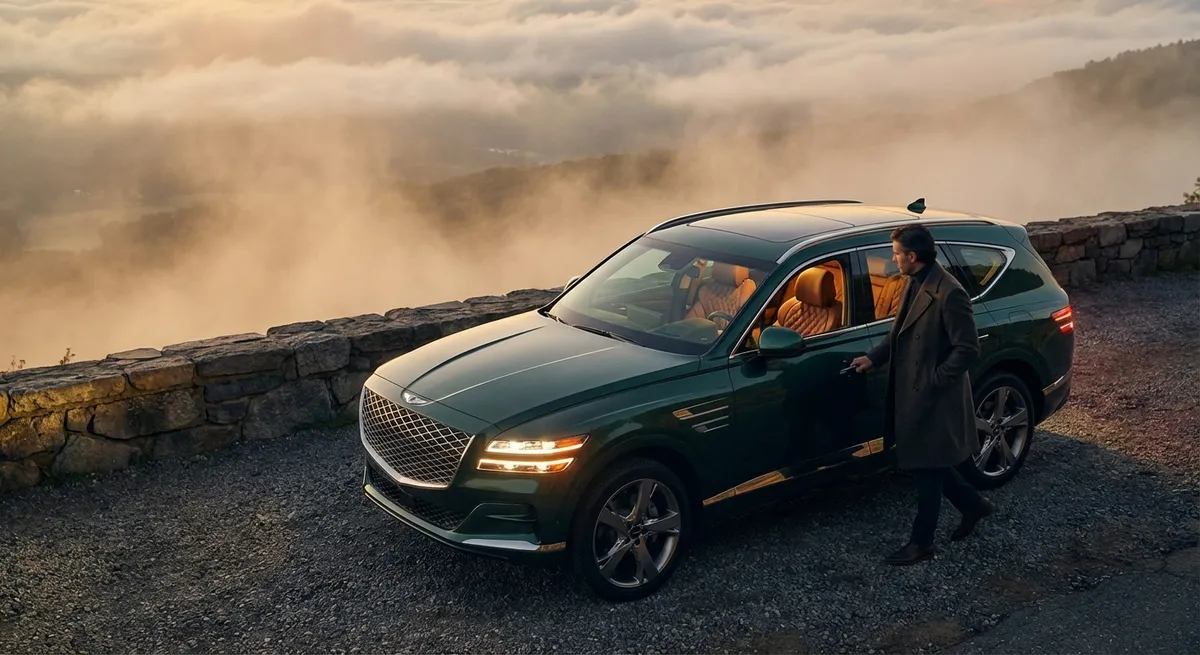
The 2025 Genesis GV80 has evolved from a newcomer to a legitimate benchmark in the midsize luxury SUV segment. For shoppers cross‑shopping German and Japanese stalwarts, the GV80 now demands serious consideration—not just on value, but on refinement, engineering, and long‑term livability. This review focuses on how the GV80 actually performs in the real world, with five key areas enthusiasts and informed buyers care about: powertrain and chassis dynamics, ride and NVH, interior tech and ergonomics, safety and driver assistance, and ownership value.
Powertrain, Performance, and Chassis Dynamics
Genesis offers the 2025 GV80 with two primary powertrains in most markets: a 2.5‑liter turbocharged inline‑four and a 3.5‑liter twin‑turbo V6. The 2.5T produces around 300 hp and 311 lb‑ft of torque, while the 3.5T delivers approximately 375 hp and 391 lb‑ft (output can vary slightly by market and tuning updates). Both engines are paired with an 8‑speed automatic transmission and rear‑bias all‑wheel drive on most trims.
The 2.5T is more than adequate for daily driving, with a torque plateau that comes on early and supports confident passing at highway speeds. Turbo lag is well‑managed; response is clean once the boost builds, though the calibration favors smoothness over immediacy. Enthusiasts will gravitate to the 3.5T: mid‑range thrust is robust, and the GV80 accelerates with an effortless, almost “big displacement” character. The 8‑speed gearbox is unobtrusive in normal use, with quick, near‑seamless shifts; select Sport mode and it holds gears longer and downshifts more readily, but it never feels as aggressive or dual‑clutch‑sharp as some performance‑oriented rivals—this SUV leans toward grand touring, not track‑day theatrics.
The chassis is where Genesis has done some of its best work. The GV80 uses a longitudinal engine layout and a rear‑wheel‑drive‑based platform, which helps deliver balanced handling and predictable behavior at the limit. Steering is electrically assisted and tuned on the lighter side in Comfort mode, with more weight (but only modest extra feedback) in Sport. There’s noticeable body roll if you push hard, but the roll is controlled and progressive, and the GV80 is easy to place in corners. Compared with some floatier luxury SUVs, it feels more disciplined; compared with the sharpest German offerings, it’s a touch softer and more relaxed.
Braking performance is strong and confidence‑inspiring, with multi‑piston front calipers on upper trims and well‑tuned pedal modulation. For buyers who care about real‑world performance, the GV80 delivers brisk acceleration, high‑speed stability, and the kind of composure that makes long interstate drives feel shorter—without asking you to tolerate a harsh ride.
Ride Quality, NVH, and Real‑World Comfort
Ride quality is one of the GV80’s core strengths. Depending on trim and market, the SUV is available with an electronically controlled suspension that can use road preview data from the front camera to pre‑adjust damping for upcoming imperfections. In practice, the system doesn’t eradicate sharp impacts from large potholes, but it noticeably smooths out expansion joints, ripples, and moderate‑size bumps at speed.
Genesis has clearly prioritized noise, vibration, and harshness (NVH) isolation. Double‑pane acoustic glass, extensive sound deadening, and careful sealing around the body structure make the cabin impressively quiet, even at 70–80 mph. Wind noise is low, and engine noise is well‑suppressed unless you really push the throttle; the V6 emits a subdued, refined growl under heavy acceleration but remains muted in cruising. Road noise varies slightly depending on wheel size and tire choice—larger 22‑inch wheels look striking but transmit more impact and tread noise than the more sensible 19‑ or 20‑inch options.
Seat comfort is another highlight. Front seats are wide, supportive, and offer multi‑way power adjustment, including available adjustable thigh support and side bolsters on higher trims. Optional massage functions and ventilation further enhance long‑distance comfort. In the second row, legroom is generous, and the seat back recline range allows passengers to find a relaxed posture. The optional third row is best considered occasional seating—usable for kids and short trips, but not competitive with true three‑row specialists. For most buyers, the GV80 works best as a very comfortable two‑row with an “emergency” third row when needed.
Overall, the GV80 strikes a well‑judged balance: it isolates occupants from the worst of the road without feeling disconnected, and it avoids the slightly synthetic “over‑filtered” sensation that some air‑suspension systems introduce. For daily commuting, family trips, and extended highway runs, the refinement level is genuinely high‑end.
Interior Design, Technology, and Ergonomics
Inside, the GV80 presents one of the most visually cohesive cabins in its class. The design language emphasizes horizontal lines, clean surfaces, and premium materials—real open‑pore wood, metal switches, and high‑quality leather or synthetic alternatives, depending on trim. The 2025 model continues Genesis’s move toward a more integrated display layout: a wide, curved screen spanning the instrument cluster and central infotainment area is available, combining a fully digital gauge display with a large central touchscreen.
Graphics are crisp, and the user interface is relatively intuitive once you learn the menu structure. Genesis offers both touchscreen control and a rotary controller on the center console, which helps reduce smudging and allows easy adjustments without overreaching. Wireless Apple CarPlay and Android Auto are increasingly available depending on market and trim; where they’re not, wired connectivity fills the gap. A premium audio system developed with Lexicon is optional and delivers strong clarity, wide staging, and good low‑frequency control—noticeably better than many “base” premium systems from rival brands.
Critically, Genesis has not sacrificed tactile controls for the sake of minimalism. Climate functions are mostly handled by a dedicated capacitive panel with haptic feedback and a few physical knobs, and key driving functions retain physical buttons. That blend makes the GV80 easier to operate on the move than some competitors that rely heavily on screen‑based menus. Storage is thoughtful: a deep center console bin, large door pockets, and a configurable cargo area with an available power‑folding second row.
From an ergonomic standpoint, the driving position is excellent. The steering wheel has a wide adjustment range, and the relationship between seat, wheel, and pedals feels natural for a wide variety of body types. Visibility is generally good, aided by large mirrors and available surround‑view cameras. The only potential drawback is the stylishly sloping rear roofline, which can slightly reduce rearward visibility and headroom for taller third‑row occupants.
Safety, Driver Assistance, and Structural Engineering
The GV80 has earned strong crash‑test ratings in most major markets, benefiting from a modern body structure that uses a mix of high‑strength steel and aluminum. Strategic reinforcement around the A‑ and B‑pillars, floor, and side sills contributes to both crash performance and torsional rigidity. That stiffness not only improves safety but also allows the suspension to work more precisely, supporting the refined ride quality described earlier.
Genesis equips the GV80 with a comprehensive suite of advanced driver‑assistance systems (ADAS) under its “Genesis Active Safety Control” or similarly branded umbrella. Standard or widely available features include:
- Forward Collision‑Avoidance Assist with pedestrian and cyclist detection
- Blind‑Spot Collision‑Avoidance Assist with active steering/braking intervention
- Lane Keeping Assist and Lane Following Assist (centers the vehicle in its lane on highways)
- Smart Cruise Control with Stop & Go and machine‑learning‑based “driving style” adaptation
- Highway Driving Assist (HDA), which combines adaptive cruise and lane centering on compatible roads
- Rear Cross‑Traffic Collision‑Avoidance Assist
- Driver Attention Warning and Safe Exit Assist
In use, the adaptive cruise and lane‑centering systems are among the better‑tuned in the segment, maintaining gentle steering corrections and smooth distance control without the abrupt braking, ping‑ponging, or intrusive alerts some systems exhibit. It’s still a Level 2 system—hands on the wheel and full driver supervision required—but it meaningfully reduces fatigue on long highway stretches.
Genesis also offers a feature set that appeals to tech‑savvy buyers, such as remote Smart Parking Assist in some markets, which can move the vehicle in and out of tight spaces using the key fob. Around‑view monitoring with 3D rendering gives a clear sense of surroundings, especially useful in urban parking situations and narrow driveways.
Ownership Value, Warranty, and Long‑Term Considerations
Where Genesis continues to differentiate itself is in overall ownership proposition. The GV80 typically undercuts many European rivals on price while offering a richer standard equipment list—particularly in terms of active safety features, interior appointments, and infotainment tech. For buyers who tend to add multiple option packages to reach a certain level of spec on German competitors, the GV80 often arrives at that point with fewer boxes to tick and a lower total transaction price.
Warranty coverage is a major factor as well. In the U.S., Genesis backs its vehicles with a 10‑year/100,000‑mile powertrain warranty and a 5‑year/60,000‑mile basic warranty, along with roadside assistance. This is substantially longer than the typical 4‑year/50,000‑mile coverage common in the luxury space and can significantly reduce perceived long‑term risk for buyers planning to keep the vehicle beyond the first lease term. Some markets also offer complimentary scheduled maintenance for a limited period, enhancing cost predictability in the early years.
Depreciation patterns for relatively young luxury brands can be a concern. Historically, Genesis models have depreciated faster than their established German counterparts, though that gap appears to be narrowing as brand recognition and product quality improve. For leasing customers, this is mostly baked into monthly payments through residual values. For cash buyers or long‑term owners, the strong warranty, lower initial purchase price, and solid quality reputation can offset a portion of the resale hit.
Running costs are about what you’d expect for a midsize luxury SUV with turbocharged powertrains. Fuel economy for the 2.5T is competitive, while the V6’s consumption is respectable given its power output but not exceptional. Tire and brake costs will scale with wheel size and driving style; buyers prioritizing long‑term costs should consider mid‑size wheels with higher‑profile tires for a better mix of comfort, grip, and replacement pricing.
From a long‑term livability perspective, the GV80 feels engineered to age gracefully: its design is conservative enough to avoid rapid stylistic obsolescence, and its tech stack, while rich, doesn’t rely on gimmicks that may feel dated in a few years. For many buyers, that combination—strong warranty, robust feature content, and a refined driving experience—adds up to a compelling ownership case.
Conclusion
The 2025 Genesis GV80 no longer competes simply as the “value alternative” in the luxury SUV field; it now stands on its own merits as a thoroughly engineered, genuinely premium product. Enthusiasts will appreciate the rear‑drive‑based chassis, strong turbocharged engines, and composed dynamics. Daily drivers and families will notice the quiet cabin, comfortable ride, and well‑executed safety and driver‑assistance systems. Factor in an industry‑leading warranty and strong standard equipment, and the GV80 emerges as one of the most complete packages in the midsize luxury SUV segment.
For shoppers accustomed to defaulting to the usual German or Japanese choices, the GV80 is worth a serious, back‑to‑back drive. It delivers the kind of refinement and engineering depth that makes it more than just a smart buy—it’s a genuinely satisfying SUV to live with.
Sources
- [Genesis GV80 Official Page – Genesis USA](https://www.genesis.com/us/en/models/luxury-suv-genesis/gv80) – Official specifications, features, and trim details for the GV80
- [IIHS – Genesis GV80 Safety Ratings](https://www.iihs.org/ratings/vehicle/genesis/gv80-4-door-suv) – Crash‑test results and safety evaluations from the Insurance Institute for Highway Safety
- [NHTSA – Genesis GV80](https://www.nhtsa.gov/vehicle/2024/GENESIS/GV80/SUV%252FAWD) – U.S. government safety ratings and recall information
- [Consumer Reports – Genesis GV80 Overview](https://www.consumerreports.org/cars/genesis/gv80/) – Independent reliability, owner satisfaction, and road‑test impressions (subscription may be required)
- [Edmunds – Genesis GV80 Review](https://www.edmunds.com/genesis/gv80/) – Market pricing data, expert reviews, and real‑world consumer feedback
Key Takeaway
The most important thing to remember from this article is that this information can change how you think about Reviews.