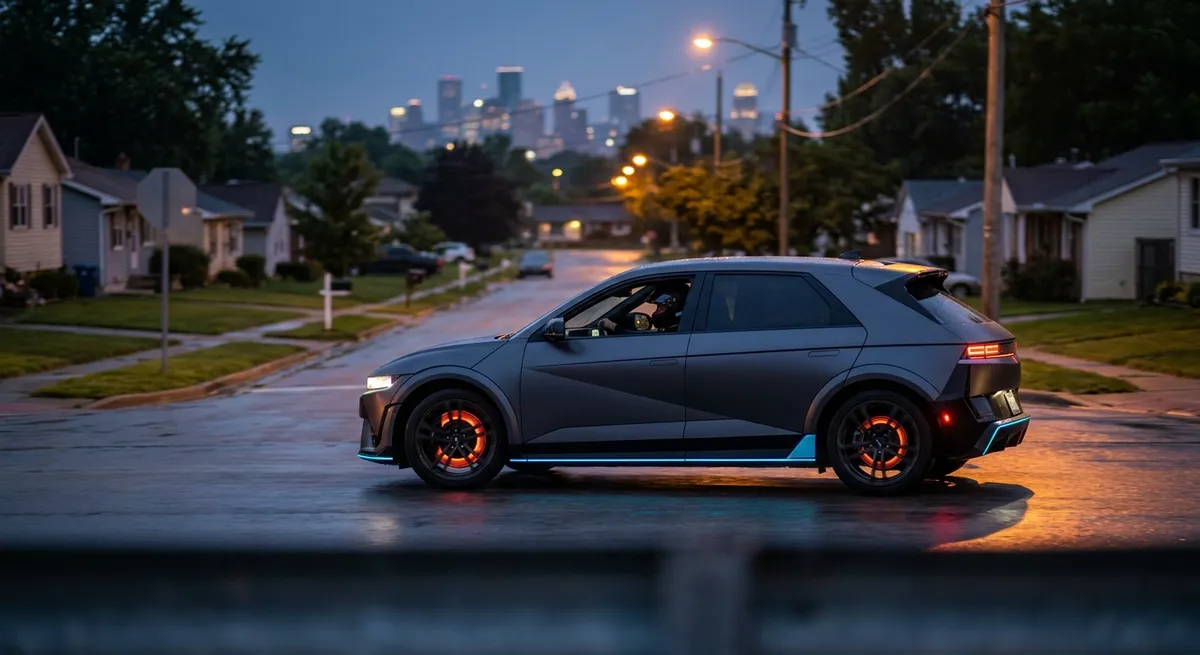
The Hyundai Ioniq 5 N isn’t just another performance variant of an electric crossover—it’s one of the first genuinely track-capable performance SUVs in the EV space. While the standard Ioniq 5 is a well-regarded family EV, the N treatment transforms it into a serious driver’s tool with hardware and software usually reserved for dedicated sports cars. This review looks at how well the Ioniq 5 N balances real-world usability with high-performance ambitions, and whether it justifies its enthusiast-friendly positioning.
Powertrain and Performance: An EV That Wants Track Time
Hyundai’s N division has taken the E-GMP platform and pushed it close to its limits. The dual-motor, all‑wheel‑drive setup delivers up to 478 kW (641 hp) and 770 Nm (568 lb‑ft) of torque in its most aggressive mode, placing it firmly in super‑SUV territory. The headline numbers—0–60 mph in roughly 3.2 seconds (with launch control) and a top speed around 162 mph—tell only part of the story.
What distinguishes the Ioniq 5 N is how the power is delivered and managed:
- N Launch Control optimizes traction by carefully modulating torque delivery across both axles, allowing the SUV to repeat strong launches without severe battery or thermal drop-off in short sessions.
- N Grin Boost temporarily overclocks the power output (for up to 10 seconds), a software-controlled overboost function that maximizes the motors’ potential while staying within thermal and durability limits.
- The high‑voltage 84 kWh battery (usable) supports repeated high‑output runs thanks to upgraded cooling, including enhanced cell and module cooling plates, a more aggressive coolant circulation strategy, and track-specific thermal management modes.
On track, the Ioniq 5 N feels more like a hot hatch on stilts than a typical SUV. The instantaneous torque, combined with aggressive torque vectoring, lets it rotate into corners rather than simply understeer. For buyers cross-shopping traditional performance SUVs with turbocharged gasoline engines, the Ioniq 5 N delivers comparable straight-line speed with much sharper low‑speed responsiveness.
Chassis, Handling, and Braking: Managing Mass the Smart Way
No performance EV can ignore physics; the Ioniq 5 N still weighs well over 2,100 kg (around 4,600+ lb). The engineering challenge is not to hide the weight, but to control it. Hyundai tackles this with a deeply integrated chassis package:
- N-tuned electronically controlled suspension offers multiple damping profiles, from relatively compliant road settings to much firmer track modes. Unlike many drive-mode systems that simply stiffen dampers and add artificial weight to the steering, the N setup meaningfully alters body control and roll behavior.
- A reinforced body structure—including additional welding points and structural reinforcements compared with the standard Ioniq 5—helps sharpen steering response and improve impact harshness over mid-corner bumps.
- e-LSD (electronic limited-slip differential) and N Torque Distribution continuously vary front/rear torque and side-to-side wheel torque to enhance corner exit traction and adjust the car’s attitude under power. Enthusiasts can even customize torque split preferences in the N menus.
- N Active Brake Cooling and high-spec friction brakes (larger diameter rotors, multi-piston front calipers) address one of the major weaknesses of most EVs on track: brake fade. Strong regenerative braking is layered with mechanical braking, with the system capable of blending both at high deceleration levels.
The result is an SUV that can sustain a surprising number of hard laps before performance begins to taper. Body roll is present but well controlled, and the steering, while electrically assisted and filtered, is reasonably communicative for a modern EV SUV. For daily driving, the comfort modes round off sharp edges, making the car far more livable than its track credentials might suggest.
Range, Charging, and Real-World Efficiency
Performance EVs inevitably pay a range penalty, and the Ioniq 5 N is no exception. The 84 kWh pack and performance tuning mean its range is lower than the more efficiency‑biased standard Ioniq 5 trims. Depending on market and testing cycle:
- Expect an EPA‑style rating (where applicable) that is notably below the most efficient Ioniq 5 variants, with real‑world mixed driving often in the 200–240 mile (320–385 km) range bracket if driven reasonably.
- Aggressive driving and track use will reduce range significantly, as sustained high‑power demand raises consumption and thermal load.
However, Hyundai’s 800‑volt E‑GMP architecture is a major advantage for usability:
- Ultra‑fast DC charging up to 350 kW (under ideal conditions) can take the battery from 10% to 80% in about 18–20 minutes, assuming a capable charger and optimal battery temperature.
- The N model includes track‑focused battery preconditioning, allowing the driver to heat or cool the battery to an optimal temperature before a session or a fast charge stop, improving both performance repeatability and charging consistency.
- Vehicle‑to‑Load (V2L) capability remains, which lets owners power tools, camping equipment, or even track‑side tire warmers or laptops from the vehicle’s high‑voltage battery through external outlets—useful for both lifestyle and enthusiast scenarios.
The key for buyers is to view the Ioniq 5 N as a performance EV with a practical range, rather than a long‑distance cruiser optimized for interstate efficiency. With fast‑charging infrastructure improving in many regions, the short, intense recharge capability offsets some of the raw range disadvantage, particularly for owners who primarily commute and occasionally travel.
Interior, Practicality, and Daily-Living Factors
Despite its performance focus, the Ioniq 5 N remains an SUV-shaped EV with genuine family usability. The boxy profile and long wheelbase help maximize interior space:
- Seating: Heavily bolstered N front seats offer better lateral support than the standard Ioniq 5, but they’re still comfortable enough for daily use. Rear legroom is generous, thanks to the 3,000 mm (118‑inch) wheelbase, and the flat floor aids three‑across seating.
- Cargo space: The squared‑off rear end yields a usable load area. While slightly compromised by the additional bracing and N-specific interior packaging, the cargo volume remains competitive with other compact‑to‑mid‑size crossovers. The front trunk is modest but handy for charging cables.
- Materials and design: The N cabin adds unique color highlights, performance‑oriented trim, and N‑branded controls, while otherwise retaining the minimalist design of the base car—dual widescreen displays, streamlined dash, and minimal physical buttons. Soft‑touch materials are used in key touchpoints, with more hard plastics lower in the cabin, in line with segment expectations.
- Noise and refinement: The N-focused tires and stiffer suspension mean more road noise and a firmer ride than a standard Ioniq 5, especially on rough asphalt. However, wind noise is well contained, and the inherent quietness of the EV powertrain keeps the cabin relatively refined when cruising.
From a usability perspective, this is not a stripped‑out track special; it’s a fully featured EV SUV that happens to be capable of serious pace. Families who want one car that can handle school runs, grocery duty, and occasional track events will find the practicality trade-offs acceptable.
Software, Driving Modes, and the “Fake” Engine Debate
Software is as critical as hardware in modern performance EVs, and Hyundai has leaned heavily into configurable driving experiences with the Ioniq 5 N. This isn’t just about toggling between Eco and Sport; it’s about tailoring how the car feels under your hands and feet:
- N e‑shift simulates an 8‑speed dual‑clutch transmission with virtual gears, complete with torque cut during “shifts.” While the motors are technically capable of seamless, gearless acceleration, this feature gives drivers a more analog sense of speed management and rhythm on track, mimicking traditional performance cars.
- N Active Sound+ pipes synthetic sound through the speakers, with selectable sound profiles ranging from engine‑inspired tones to more futuristic EV textures. Purists may dislike it, but it serves a functional purpose: providing auditory feedback about load and speed that EVs often lack.
- Custom N modes allow drivers to individually configure steering weight, damping, throttle mapping, brake regeneration, torque distribution, and sound settings. This granularity is rare even among high‑end performance SUVs.
- Driver assistance suite (including lane keeping assist, adaptive cruise control, and blind‑spot monitoring) remains largely intact, turning the Ioniq 5 N into a comfortable semi‑autonomous cruiser when desired.
The controversy around artificial shifting and artificial sound will be a personal decision point. For some enthusiasts, these systems help bridge the emotional gap between traditional internal‑combustion performance cars and EVs by recreating familiar cues. Others will prefer to disable them and enjoy the near‑silent, linear surge of electric power. The key takeaway is that Hyundai gives owners a high degree of choice instead of locking them into one interpretation of what a performance EV should feel like.
Conclusion
The 2025 Hyundai Ioniq 5 N stands out as one of the first EV SUVs genuinely engineered with repeated track use in mind, rather than merely chasing headline acceleration numbers. With its high‑output dual‑motor powertrain, robust thermal and braking systems, and deeply configurable software, it targets enthusiasts who want an electric performance vehicle without sacrificing the core practicality of a compact SUV.
Its compromises—reduced range compared with efficiency‑focused EVs, a firmer ride, and the polarizing nature of its simulated shifting and sound—are very much in service of driver engagement. For buyers who value that engagement and plan to exploit at least some of the N car’s capabilities, the Ioniq 5 N is one of the most compelling and technically interesting performance SUVs currently on the market, electric or otherwise.
Sources
- Hyundai Global: IONIQ 5 N World Premiere - Official technical overview and key specifications from Hyundai
- Hyundai USA: IONIQ 5 N Product Page - U.S. market details, features, and equipment information
- EPA Fuel Economy: Hyundai IONIQ 5 - Baseline efficiency and range data for the Ioniq 5 family (useful context for N variant expectations)
- Euro NCAP: Hyundai IONIQ 5 Safety Rating - Independent crash test and safety performance information for the platform
- SAE International – EV Thermal Management Overview - Technical background on EV thermal management challenges relevant to high-performance electric vehicles
Key Takeaway
The most important thing to remember from this article is that this information can change how you think about Reviews.