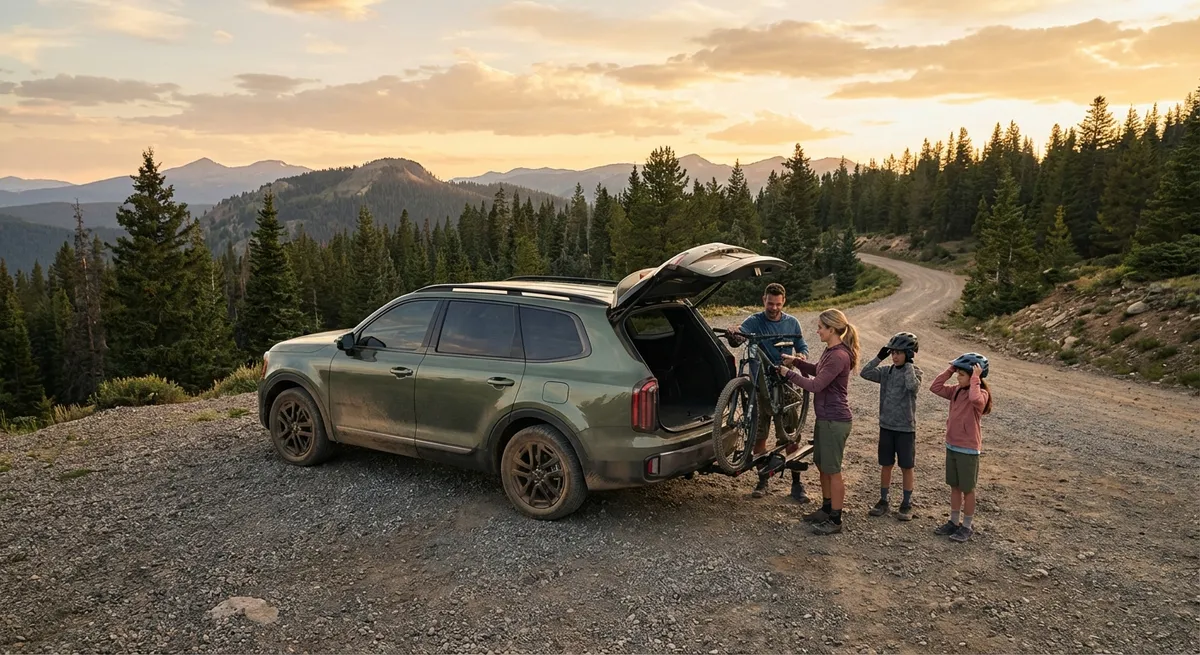
The Kia Telluride has evolved from an upstart to a benchmark in the three-row SUV segment, and the 2025 model doubles down on that reputation. For families, road‑trip regulars, and enthusiasts who care about chassis tuning as much as cupholder count, the Telluride offers an unusually well-rounded package. This review goes beyond brochure highlights to unpack how it actually performs, rides, and lives with daily—plus what you should know before you put one in your driveway.
Powertrain and Performance: Naturally Aspirated Confidence
Under the hood, the 2025 Kia Telluride continues with a 3.8‑liter V6 (Lambda II) paired to an 8‑speed automatic transmission. Output remains a healthy 291 hp at 6,000 rpm and 262 lb‑ft of torque at 5,200 rpm. On paper, that doesn’t sound dramatic in a world of turbocharged fours, but in practice the naturally aspirated character is a major part of the Telluride’s appeal.
Throttle response is linear and predictable, especially from a rolling start, where turbocharged rivals can sometimes feel laggy then surge. The V6’s power delivery ramps up smoothly, which is useful when merging with a full load of passengers and cargo. The torque peak arriving at higher rpm means you’ll occasionally hear the engine work when climbing grades or towing near the 5,000‑lb rated maximum, but the sound is refined rather than coarse.
The 8‑speed automatic is tuned for unobtrusive shifts rather than sportiness. It generally keeps the V6 in its sweet spot, dropping gears decisively for highway passes without excessive hunting. Sport mode holds gears longer and firms up throttle mapping, but even here the Telluride never pretends to be an on‑ramp hero—it’s tuned for confident, steady progress, not theatrics.
For buyers considering all-wheel drive, Kia’s available active on‑demand AWD system adds a center clutch pack that can vary torque distribution front-to-rear and offers selectable drive modes (Comfort, Sport, Smart, Eco, Snow) plus an AWD Lock function. Sport mode biases more torque rearward, subtly improving turn‑in and reducing understeer on sweeping ramps. Enthusiasts will appreciate that even with AWD, the curb weight stays competitive in the segment, preserving braking and handling composure.
Ride, Handling, and Noise: Long-Haul Comfort With a Calm Cabin
The Telluride rides on a unibody architecture with a front MacPherson strut and rear multi-link suspension. For 2025, Kia has focused on incremental refinements to bushing tuning and damper valving rather than headline-grabbing hardware changes, and the payoff is in real‑world comfort.
On broken urban pavement and expansion-joint-heavy interstates, the ride feels settled and controlled. Vertical body motions are well damped—there’s a single smooth rebound rather than the float or secondary bounce you get in some softer-tuned competitors. Impacts from potholes and sharp edges are muted rather than thumpy, particularly on trims with 18‑ or 20‑inch wheels; the 20s provide a slightly firmer initial hit but remain within a family-friendly comfort zone.
Steering is electrically assisted with a light to medium effort. It won’t thrill purists seeking granular road feel, but it’s accurate and consistent on-center, which pays dividends on long highway stretches. The Telluride tracks straight without constant micro‑corrections, reducing fatigue on multi-hour drives. Body roll is present but well managed, and the SUV settles quickly after lane-change maneuvers—important when you’re carrying kids, pets, and weekend gear.
Noise, vibration, and harshness (NVH) control is an area where the Telluride punches above its price. Laminated front glass, ample sound insulation, and careful sealing keep wind noise subdued even at 75+ mph. Road noise is impressively low, particularly on smoother asphalt, and engine noise only becomes prominent under heavy throttle. For families using the third row regularly, the quiet cabin makes it easier to converse from front to back without raising voices.
Buyers who prioritize an especially serene experience should test the upper trims, where acoustic materials and additional sound deadening are most comprehensive. For enthusiasts, the upshot is that the Telluride’s chassis and NVH tuning deliver a genuinely “big-car” sense of calm, which is often where more expensive luxury-branded competitors differentiate themselves.
Interior Layout, Materials, and Tech: Function First, But Not at the Expense of Feel
Step inside the 2025 Telluride and the focus on usable space and intuitive design is immediately apparent. The dashboard flows horizontally, emphasizing width, and the large digital display panel blends the instrument cluster and infotainment screen into a single, gently curved housing on most trims. Controls are predominantly physical where it matters—temperature, fan speed, volume, and seat heating/ventilation retain real buttons and dials, a welcome contrast to trend-chasing haptic-only setups.
Material quality is a standout at this price point. Soft-touch surfaces cover the upper dash and door tops, and the switchgear feels solid, with positive detents. Higher trims upgrade to Nappa leather, open‑pore wood‑style accents, and contrast stitching that visually lift the cabin without crossing into ostentatious territory. Hard plastics still appear in lower, high‑wear areas, but they’re textured to avoid a cheap appearance and seem robust enough to withstand family use.
Seating is a strong suit. Front seats are broad, with supportive cushions and long-haul-friendly backrests. Many trims offer both heating and ventilation in the first row, and heating for the second row. Buyers can choose between a three-person second-row bench or dual captain’s chairs; the latter improves third-row access and rear comfort at the cost of one seating position. The third row is realistically usable for adults on medium-length trips, with sufficient thigh support and headroom, provided the second row is not pushed all the way back.
Tech integration is modern but avoids overwhelming the driver. The central touchscreen (size varying by trim, typically in the 12+ inch class on higher grades) runs Kia’s latest infotainment software, with quick responses and a clear menu structure. Wireless Apple CarPlay and Android Auto are increasingly common across trims, and multiple USB‑C ports are distributed across all three rows, addressing one of the most common real‑world complaints—charging access.
For audiophiles, the available premium audio system (Harman Kardon in many trims) delivers a clean, well-balanced soundstage with good low‑end presence and minimal distortion at higher volumes. Sound staging favors front passengers slightly, but rear-seat reproduction remains strong, which is important for family movie streaming or long‑trip playlists.
Practicality, Cargo, and Towing: Real-World Utility, Not Just Numbers
On paper, the Telluride’s dimensions place it near the top of the midsize SUV segment, and the way that volume is used is one of its advantages. With all three rows in use, there’s still enough cargo space behind the third row for several carry‑on suitcases or a week’s worth of groceries—usefully more than some competitors that sacrifice trunk volume for an extended wheelbase feel.
Fold the third row flat, and the cargo bay becomes nearly minivan‑like, easily swallowing strollers, sports gear, and large boxes. With both second and third rows folded, the load floor is mostly flat, making it practical for home improvement runs or transporting larger items. The power liftgate available on mid and upper trims is programmable for height—helpful for shorter drivers or low garage ceilings.
Small-item storage has been thoughtfully addressed. The center console offers a deep bin, there are multiple cupholders in each row, and the door pockets can handle larger bottles. A subtle but worthwhile detail: some trims include a slightly rubberized tray for smartphones and small electronics, reducing the knocking and rattling that can grate on longer drives.
Towing capacity is rated at up to 5,000 pounds when properly equipped, with a factory tow package including a self-leveling rear suspension on some trims. This capacity is sufficient for small to mid-size camping trailers, boats, or utility trailers. Enthusiast buyers should note that while the V6 is robust, towing near the maximum in hilly terrain will have the engine working higher in its rev range. Transmission cooling and stability are solid, but payload limits must be respected—consult the specific door-jamb sticker of the vehicle you’re considering, as options and trims affect the available tongue weight and passenger/cargo combination.
Fuel economy remains competitive for the class, though not groundbreaking, with EPA combined ratings that generally land in the low‑20s mpg range depending on drivetrain and wheel choice. Buyers in regions with high fuel prices or primarily urban stop‑and‑go use may want to calculate their annual mileage and running costs carefully, especially if cross-shopping hybrid rivals.
Safety, Driver Assistance, and Ownership Considerations
Kia has made advanced safety technology a core component of the Telluride’s value proposition. The 2025 model continues to offer a wide suite of driver-assistance systems as standard or widely available, including:
- Forward collision warning with automatic emergency braking and pedestrian/cyclist detection
- Lane keeping assist and lane following assist (supporting gentle steering inputs to help center the vehicle)
- Blind spot monitoring with rear cross-traffic alert
- Adaptive cruise control with stop‑and‑go functionality
- Available highway driving assist (combining lane-centering and adaptive cruise where road markings and mapping support it)
In real-world use, these systems are generally well calibrated. Lane-keeping and lane-centering interventions are smooth rather than abrupt when road markings are clear, though they can occasionally “ping-pong” slightly in poorly marked construction zones. Adaptive cruise handles cut‑ins and speed changes predictably, and the stop‑and‑go function is particularly helpful in heavy traffic, reducing driver fatigue.
Crash-test performance has been strong in recent model years, with high ratings from both the IIHS and NHTSA, and the 2025 model is expected to maintain those results given the carry-over structure and safety engineering. Buyers should confirm the exact rating for the trim and lighting package they’re considering, as headlight design can influence IIHS scores.
Ownership factors remain a key strength. Kia’s warranty—often a 10‑year/100,000‑mile limited powertrain coverage (for original owners) and a competitive basic warranty—continues to be one of the longest in the industry. This, combined with the Telluride’s growing track record in the field, translates to strong residual values and high demand on the used market.
For enthusiasts and pragmatic buyers alike, the 2025 Telluride’s blend of refined ride, usable space, robust naturally aspirated powertrain, and comprehensive safety tech positions it as a long-term, low-drama companion rather than a short-lived trend purchase. It may not deliver the sharpest dynamics or flashiest tech gimmicks, but it nails the fundamentals of what a family SUV should be—and that balance is precisely why it continues to be one of the most compelling three-row options available.
Conclusion
The 2025 Kia Telluride doesn’t reinvent the midsize SUV formula; instead, it refines it in ways that matter to people who drive every day, not just on test drives. Its naturally aspirated V6 favors predictability over spec‑sheet bragging rights, the chassis tuning prioritizes stability and comfort over artificial sportiness, and the interior combines genuinely useful tech with thoughtful ergonomics. Add in strong safety credentials and a leading warranty, and you have a three-row SUV that feels engineered for long-term ownership rather than short-lived showroom appeal.
For car enthusiasts, the Telluride is a case study in how careful tuning and intelligent packaging can elevate what might otherwise be a commodity family hauler. For buyers, it remains one of the most well-rounded choices in the segment—worth seeking out, test‑driving thoroughly, and, in many cases, reserving ahead of time given ongoing demand.
Sources
- Kia Official Telluride Page - Manufacturer specifications, features, and trim details for the current Telluride lineup
- National Highway Traffic Safety Administration (NHTSA) - Crash-test ratings and safety information for the Kia Telluride
- Insurance Institute for Highway Safety (IIHS) – Kia Telluride - Independent safety evaluations, crashworthiness data, and headlight ratings
- U.S. Department of Energy – Fuel Economy: Kia Telluride - Official EPA fuel economy estimates and running cost comparisons
- Consumer Reports – Kia Telluride Overview - Long-term reliability insights, owner satisfaction data, and road-test impressions
Key Takeaway
The most important thing to remember from this article is that this information can change how you think about Reviews.