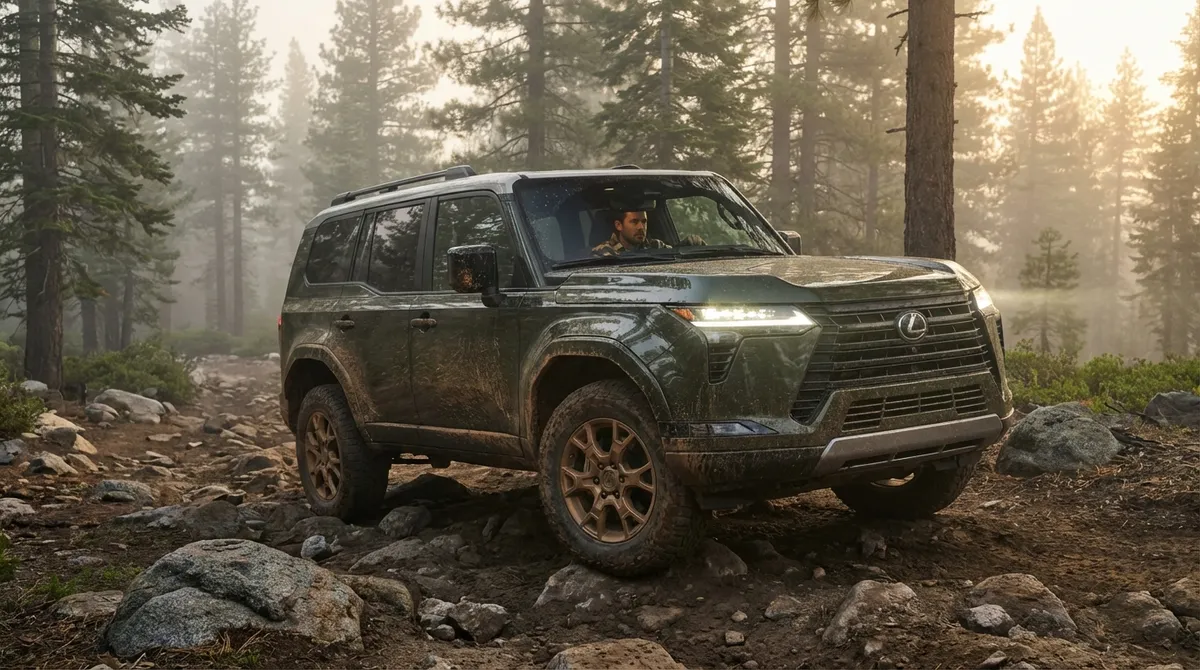
The 2025 Lexus GX 550 is one of the most talked‑about SUVs of the year, not because it’s the quickest or most high-tech, but because it revives something enthusiasts thought was fading away: a genuinely rugged, body‑on‑frame luxury 4x4 with real off-road hardware. While many competitors are shifting to softer, car‑like crossovers, the new GX doubles down on toughness while finally delivering the on-road refinement and technology buyers expect in a premium SUV. This review breaks down where the GX 550 excels, where it compromises, and what matters most if you’re considering it as a daily driver, family hauler, or overlanding basecamp.
Chassis and Suspension: A Proper Truck Underneath, With Real Refinement
Lexus kept the GX on a traditional body‑on‑frame architecture, now riding on Toyota’s TNGA‑F platform shared with the latest Land Cruiser and Tundra. That decision alone sets it apart from many midsize luxury rivals that have gone unibody (like the BMW X5 and Mercedes‑Benz GLE). For the buyer, this means:
- Towing and durability: The ladder frame layout and robust rear structure support a rated towing capacity around 8,000 pounds (configuration‑dependent), putting the GX at or near the top of its class for serious trailering. Compared with unibody SUVs that may flex more under load, the GX is tuned for repeated, heavy loads over time—ideal if you’re pulling boats, campers, or dual‑axle trailers.
- Wheel travel and articulation: Combined with a solid rear axle and long-travel suspension, the frame allows more controlled articulation in off‑road conditions. This pays dividends when climbing uneven obstacles, keeping more tires in contact with the ground for traction.
- Suspension tech: Most GX 550 trims use a double‑wishbone front suspension and a multi‑link rear setup with coil springs. Higher trims can be spec’d with adaptive variable suspension (AVS), which continuously adjusts damping force to strike a balance between body control and comfort. On-road, AVS helps tame body roll during cornering and reduces pitch under braking, making the GX feel more planted than its old-school construction might suggest.
- Ride quality: The trade‑off for body‑on‑frame rigidity is typically more vibration and a truck‑like feel. Lexus mitigates this with extensive sound deadening, hydraulic body mounts in certain areas, and sophisticated shock tuning. You still feel the heft and chassis character—especially over sharp impacts—but the overall impression is of a solid, insulated SUV rather than an agricultural truck.
- Ground clearance and geometry: Depending on trim and wheel/tire package, the GX offers generous ground clearance, with approach, departure, and breakover angles designed for legitimate trail work rather than mall parking ramps. Buyers interested in overlanding should note that the frame makes it easier to mount skid plates, rock sliders, and recovery points.
For enthusiasts, the GX’s platform is a plus: it’s designed to be used, modified, and loaded. For buyers prioritizing car-like nimbleness, there are smoother and more agile unibody options—but they won’t feel as bombproof.
Powertrain and Performance: Twin-Turbo Torque With a Purpose
Under the hood, Lexus has retired the old naturally aspirated V8 and replaced it with a 3.4‑liter twin‑turbocharged V6 (commonly referenced as a 3.5L in some materials) paired with a 10‑speed automatic transmission. For many, losing the V8 soundtrack is an emotional blow, but from a performance and efficiency standpoint, the new setup is a significant leap.
Key performance details and implications:
- Output and torque delivery: The twin‑turbo V6 produces around 349 horsepower and a robust 479 lb‑ft of torque (figures can vary slightly depending on final market specifications). More importantly, the torque arrives low in the rev range, which is ideal for pulling heavy loads, merging with traffic, or crawling off‑road where low‑rpm torque matters more than peak horsepower.
- Transmission behavior: The 10‑speed automatic is geared for both strong off‑the‑line response and relaxed highway cruising. Shorter lower gears help the GX get moving with authority despite its weight, while tall overdrive gears keep engine revs down at highway speeds to improve refinement and fuel efficiency. Drivers will notice the transmission prioritizes smoothness over aggressive downshifts, but manual control via steering‑wheel paddles or the gear selector can keep it in the powerband when needed.
- Full‑time 4WD system: The GX 550 uses a full‑time four‑wheel drive system with a locking center differential. Compared with part‑time systems, full‑time 4WD provides constant traction to all four wheels, improving stability in rain, snow, and loose surfaces without driver intervention. The center differential lock can be engaged for challenging off‑road conditions to ensure a fixed torque split between front and rear axles.
- Low‑range gearing: A two‑speed transfer case with low range is standard, an increasingly rare feature in modern SUVs. Low range multiplies torque at the wheels and allows the SUV to climb, descend, and maneuver over technical terrain at very low speeds without overworking the engine or brakes.
- Efficiency trade‑offs: While the twin‑turbo setup is more efficient than the outgoing V8, the GX remains a heavy, boxy, permanent‑4WD SUV. Buyers should expect fuel economy that lags behind unibody luxury crossovers with smaller turbo engines or hybrid systems. If maximum MPG is a priority, the GX is not the optimal choice; if dependable torque and capability matter more, the powertrain is well‑matched.
Enthusiasts will appreciate the controlled, muscular feel of the twin‑turbo V6 and its towing confidence. The character is more subdued than a V8, but in objective terms, the GX 550 is quicker, stronger, and more flexible in daily use.
Off-Road Capability: Hardware That Backs Up the Image
Many SUVs wear rugged styling cues without real substance behind them. The 2025 GX 550 is different: its hardware aligns with the adventurous image in the brochure. For buyers considering serious trail work or remote travel, the following features stand out:
- Locking differentials: In addition to the locking center differential, certain trims (particularly the Overtrail variants) offer an electronic locking rear differential. When engaged, it mechanically links the left and right rear wheels, ensuring both receive equal torque. This is crucial when one wheel is in the air or on very loose terrain, where open differentials would normally send most of the power to the wheel with the least traction.
- Multi‑Terrain Select and Crawl Control: Lexus includes advanced traction‑management systems tailored for off‑road surfaces. Multi‑Terrain Select allows the driver to choose modes like Mud, Sand, or Rock, adjusting throttle mapping, traction control, and wheel‑slip thresholds accordingly. Crawl Control functions like an off‑road cruise control, modulating throttle and braking at very low speeds so the driver can focus solely on steering through obstacles.
- Underbody protection and clearances: Skid plates protect vital components such as the engine oil pan, transfer case, and fuel tank. Higher‑spec models ride on all‑terrain tires with aggressive sidewalls and tread patterns, improving grip and puncture resistance. The combination of high ground clearance and carefully engineered approach and departure angles lets the GX crest ledges and inclines that would challenge many crossovers.
- Camera systems: A multi‑view camera system, including an under‑body or “transparent hood” style view on certain trims, helps the driver place the vehicle precisely over obstacles. For buyers less experienced off‑road, this visual assistance can significantly reduce the learning curve and the risk of underbody damage.
- Cooling and durability considerations: The twin‑turbo V6 and drivetrain have been packaged with towing and high‑load usage in mind, with enhanced cooling systems and airflow paths. This is important for extended climbs, hot climates, and heavy trailers—situations where many soft‑roaders can struggle or derate performance.
For the overlanding and 4x4 crowd, the GX 550 arrives as a rare combination: genuine Lexus build quality with drivetrain specifications that don’t require extensive aftermarket modification to be trail‑worthy. For casual owners, you might never test the limits of its capability, but knowing the vehicle can handle more than a gravel road can be a strong confidence booster.
Interior, Technology, and Practicality: Premium Cabin With Real-World Usability
Inside, the 2025 GX 550 sheds much of the dated feel of its predecessor and moves decisively into modern luxury territory, while still accommodating the practical needs of families and adventure‑minded buyers.
Highlights from a usability and tech perspective:
- Cabin layout and seating: The GX offers up to three rows of seating, with configurations that include captain’s chairs in the second row on certain trims. The seating position is upright, with excellent outward visibility—a traditional SUV trait that many drivers prefer. Materials include semi‑aniline leather, soft‑touch surfaces, and real metallic accents on higher trims, aligning with the Lexus luxury image.
- Cargo flexibility: While the third row is tighter than in some larger full‑size SUVs, it’s suitable for occasional adult use and more regular duty for children or shorter trips. With the third row folded, cargo capacity is generous and squared‑off, making it easier to load gear, luggage, or bulky camping equipment. Tie‑down points and available roof rails support lifestyle use cases like roof boxes, bike racks, or roof‑top tents.
- Infotainment and connectivity: A large central touchscreen (in the 14‑inch range on most trims) runs the latest Lexus interface, with wireless Apple CarPlay and Android Auto, cloud‑based navigation, over‑the‑air software update capability, and multi‑device Bluetooth pairing. Physical knobs and buttons are retained for critical functions like volume and climate controls, which will be appreciated by drivers who dislike fully touch‑only interfaces.
- Driver assistance and safety: Lexus Safety System+ is standard, bringing adaptive cruise control, lane‑keeping assistance, automatic emergency braking with pedestrian detection, and blind‑spot monitoring. In a tall, heavy SUV, features like rear cross‑traffic alert and a 360‑degree camera system are more than conveniences—they meaningfully reduce low‑speed risk in crowded areas or tight garages.
- Noise, vibration, and harshness (NVH): Extensive acoustic insulation, laminated glass, and careful body sealing create a notably quiet cabin at highway speeds, despite the all‑terrain capability and boxy shape. Even with more aggressive tire options, the GX maintains the isolation expected of a Lexus product, which is a major differentiator from some more utilitarian off‑roaders.
From a buyer’s standpoint, the interior successfully bridges “luxury daily driver” and “adventure platform.” It may not match the cutting‑edge screen real estate or minimalist design of some German rivals, but it offers a more tactile, functional environment that suits its mission.
Ownership Considerations: Pricing, Positioning, and Who the GX 550 Really Suits
Beyond specs and styling, it’s crucial to understand how the 2025 GX 550 fits into the market and whether it aligns with your real‑world use and budget.
Key ownership factors to consider:
- Pricing and value: The GX 550 is positioned squarely in the midsize luxury SUV segment, with pricing that reflects its premium brand status and hardware. While exact figures vary by trim and options, expect it to sit above mainstream body‑on‑frame SUVs and in line with or slightly under some European luxury competitors. However, few of those competitors combine similar luxury levels with true low‑range 4WD and locking differentials.
- Maintenance and reliability outlook: Toyota and Lexus have long reputations for above‑average reliability, especially in their body‑on‑frame SUVs. While the twin‑turbo V6 and new electronics are more complex than the outgoing V8, historical data from Lexus/Toyota trucks suggests strong long‑term durability if maintenance schedules are followed. For buyers planning to keep the vehicle beyond the warranty period or use it in remote areas, this reputation is a strong selling point.
- Depreciation and resale: Historically, GX models have held their value well, especially among buyers seeking capable, luxury 4x4s for off‑road or overlanding builds. Provided Lexus maintains limited supply and the market’s interest in adventure‑oriented SUVs remains high, the 2025 GX 550 is likely to continue that trend, mitigating some of the upfront cost through stronger residual values.
- Daily driving vs. dedicated adventure rig: As a daily driver, the GX’s size, fuel consumption, and truck‑like underpinnings are the main trade‑offs. Commuters in dense urban environments or those who rarely leave pavement may be better served by a unibody SUV. By contrast, buyers who frequently tow, travel long distances on rough roads, or explore off‑grid will find the GX’s design choices fully justified.
- Trim strategy and must‑have options: Enthusiast buyers will gravitate to trims with the locking rear differential, off‑road drive modes, and all‑terrain tires. More comfort‑oriented owners might prioritize adaptive suspension, premium audio, and second‑row captain’s chairs. Carefully matching trim to your actual usage—rather than simply chasing the highest spec—can optimize cost and ownership satisfaction.
In essence, the GX 550 is not a universal answer; it’s a focused solution. For shoppers who truly need its capabilities and appreciate its robust architecture, it offers a compelling blend of old‑school toughness and new‑school comfort that few rivals can match.
Conclusion
The 2025 Lexus GX 550 represents a rare kind of SUV in today’s market: a fully modern, tech‑forward luxury vehicle that still respects the fundamentals of serious off‑road engineering. Its body‑on‑frame chassis, full‑time 4WD with low range, and available locking differentials are backed by a torque‑rich twin‑turbo V6 and a cabin that finally feels contemporary and premium. It isn’t the most efficient or the most agile choice, and buyers focused purely on on‑road dynamics have better options. But for those who want an SUV that can comfortably handle school runs all week and then tackle muddy trails, rocky passes, or long‑distance expeditions on the weekend, the GX 550 lands in a sweet spot that few competitors occupy. Enthusiasts and serious utility seekers alike should keep it near the top of their shopping lists.
Sources
- [Lexus USA – 2025 GX Overview](https://www.lexus.com/models/GX) – Official specifications, trim details, and feature breakdown for the 2025 Lexus GX lineup
- [Toyota Global – TNGA‑F Platform Technical Overview](https://global.toyota/en/mobility/toyota-brand/features/tnga/) – Background on the body‑on‑frame platform architecture shared by Lexus and Toyota trucks
- [IIHS – SUV Safety Ratings](https://www.iihs.org/ratings/by-class/suv) – Independent crash test data and safety information for midsize and large SUVs
- [U.S. Department of Energy – Fuel Economy Data](https://www.fueleconomy.gov/feg/findacar.shtml) – Official EPA fuel economy ratings and comparisons across SUV segments
- [J.D. Power – Lexus Brand Dependability Study](https://www.jdpower.com/cars/ratings/dependability) – Long‑term reliability and dependability rankings for Lexus and competing brands
Key Takeaway
The most important thing to remember from this article is that this information can change how you think about Reviews.