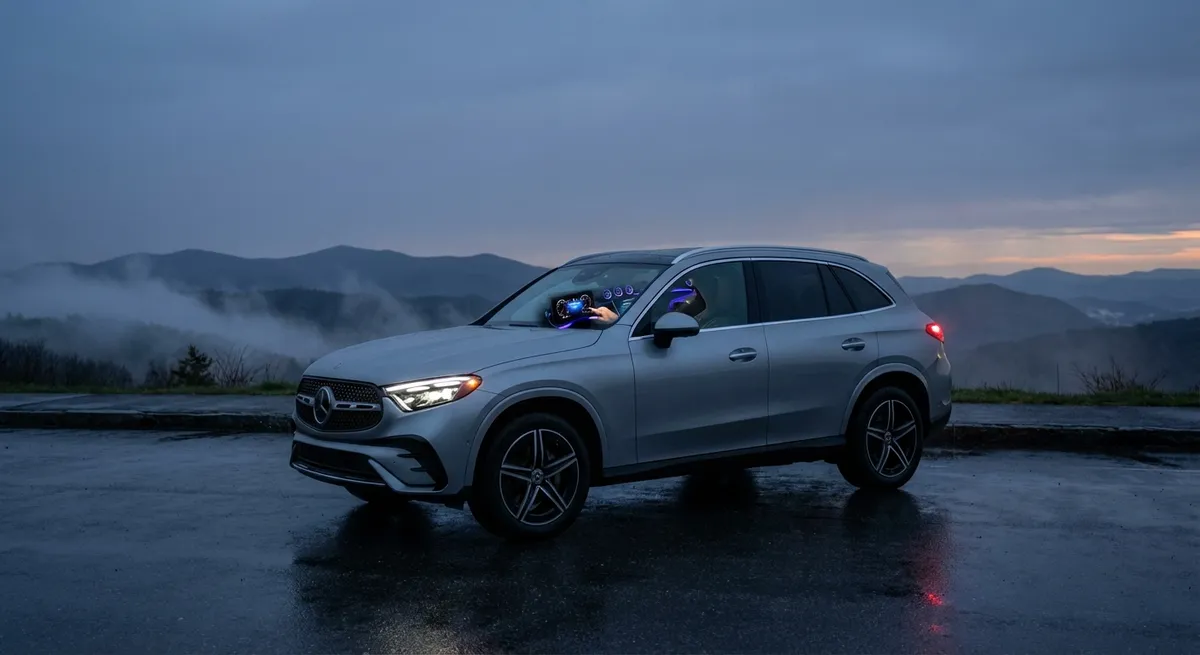
The compact luxury SUV segment has never been more crowded, but the 2025 Mercedes‑Benz GLC 300 4MATIC positions itself as the polished, tech-forward choice for buyers who prioritize refinement over raw aggression. For enthusiasts and daily drivers alike, the latest GLC blends a mild-hybrid turbocharged engine, a thoroughly digital cabin, and a tightly integrated suite of driver assists. This review focuses on how those elements work in the real world, with five core areas that matter most to discerning SUV shoppers: drivetrain character, ride and handling dynamics, cabin tech and ergonomics, practicality, and ownership value.
Powertrain & Performance: Mild Hybrid Subtlety Over Brute Force
Under the hood, the 2025 GLC 300 4MATIC continues with a 2.0‑liter turbocharged inline‑four (M254 engine) paired with a 48‑volt mild-hybrid system. The combustion engine delivers around 255 hp and 295 lb‑ft of torque, while the integrated starter‑generator can briefly add roughly 23 hp of electric boost during acceleration and smooth out start/stop transitions. Power is routed through a 9‑speed automatic transmission (9G‑TRONIC) to Mercedes’ 4MATIC all‑wheel drive system, which defaults to a rear‑biased torque split for better stability and more engaging dynamics.
In practical terms, this setup doesn’t attempt to mimic a high‑output performance SUV. Instead, it focuses on linear, torque‑rich acceleration that feels confident merging onto highways or passing at speed, especially when the mild hybrid’s electric boost fills in low‑rpm torque gaps. Throttle response in Comfort mode is deliberately measured; switching to Sport sharpens the mapping and holds gears longer, but the GLC still presents its performance as controlled and refined rather than dramatic. The 0–60 mph time in the low‑6‑second range is competitive for the segment, but enthusiasts will likely appreciate the engine’s smoothness and consistent pull more than any headline number.
The mild hybrid architecture also has functional benefits beyond acceleration. Coasting with the engine off at higher speeds is possible in certain drive modes, and the integrated starter‑generator restarts are nearly imperceptible, lending the SUV a premium, almost electric‑adjacent feel in traffic. Buyers cross‑shopping plug‑in hybrids or full EVs will note the GLC 300’s comparatively modest efficiency gains, but if you want a traditional gasoline experience with some electrified finesse—not a full commitment to charging infrastructure—this setup strikes a pragmatic balance.
Chassis, Ride Quality & Handling: Quiet Precision for Real-World Driving
The GLC 300 4MATIC rides on a refined version of Mercedes’ MRA platform, with a multi‑link rear suspension and a front four‑link setup tuned to emphasize comfort and composure. Most models in the U.S. will feature steel springs with adaptive damping available, while some markets offer optional air suspension. In its standard configuration, the GLC aims squarely at the “unflappable daily driver” target rather than the “corner‑carving crossover” niche.
On typical suburban and highway routes, the suspension excels at isolating sharp impacts and filtering out coarse asphalt. Body motions are well‑controlled, with minimal pitch under braking or acceleration and a carefully damped response to road undulations. Even with larger wheel options (19–20 inches), the ride quality remains impressively composed, though enthusiasts who prioritize steering feel and feedback will notice that Mercedes has clearly biased this setup toward comfort and stability.
Steering is light but accurate, with an electric power‑assist tune that emphasizes ease of maneuvering over communicative feedback. Turn‑in is clean, and the chassis remains neutral and balanced in moderate‑speed corners, helped by the standard all‑wheel drive system’s ability to shuffle torque for grip. When pushed, gentle understeer emerges predictably—appropriate for a family‑oriented luxury SUV—and the stability control system intervenes in a measured, unobtrusive way.
Noise, vibration, and harshness (NVH) levels are among the GLC’s strongest points. Triple door seals, acoustically optimized glass in higher trims, and careful body insulation result in a hushed cabin even at freeway speeds. Enthusiasts may wish for a more characterful exhaust note, but the subdued sound profile will be a major selling point for buyers who treat their SUV as a rolling office or long‑distance cruiser.
Cabin Tech & Ergonomics: The MBUX Interface Takes Center Stage
Step inside, and the GLC 300 4MATIC makes its case as a tech‑forward luxury product. The dashboard is dominated by a vertically oriented 11.9‑inch central touchscreen and a 12.3‑inch digital instrument cluster, both driven by the latest generation of the MBUX (Mercedes‑Benz User Experience) infotainment system. The display resolution is crisp, animations are fluid, and the UI can be customized with multiple layouts and widgets for key data such as navigation, media, and vehicle status.
Voice control—activated with “Hey Mercedes”—is more than a novelty. It can adjust climate settings, search for destinations, change radio stations, and access vehicle functions without the driver taking hands off the wheel for long. For potential buyers who are wary of overly complex menus, the combination of natural‑language voice commands and a relatively clean on‑screen hierarchy makes daily use manageable after a short learning curve. Wireless Apple CarPlay and Android Auto are standard on most trims, bringing phone integration up to contemporary expectations.
From an ergonomics standpoint, Mercedes’ approach is a mix of thoughtful design and tech‑driven compromise. The multi‑function steering wheel puts many commonly used controls within thumb’s reach, and the driving position offers a wide range of adjustment, with power seats, four‑way lumbar support, and memory settings available. However, the heavy reliance on the touchscreen and capacitive sliders for climate and some vehicle settings means fewer physical knobs and buttons. Enthusiasts who prefer tactile feedback may miss dedicated controls, especially for frequently used functions like temperature and fan speed.
Material quality is largely in line with segment expectations, with soft‑touch surfaces where hands rest most often, high‑quality upholstery options (MB‑Tex synthetic leather or genuine leather in higher trims), and available wood or metal‑look trim. Ambient lighting is configurable in multiple colors and zones, adding a sense of occasion during night driving without becoming distracting if configured conservatively. Overall, the cabin delivers a digital‑first experience but remains approachable enough for buyers transitioning from older, analog‑heavy vehicles.
Practicality, Space & Everyday Usability: Family-Friendly with a Premium Edge
For many buyers, the real measure of a compact luxury SUV is how it performs in day‑to‑day life: commuting, school runs, road trips, and the occasional home‑improvement run. The 2025 GLC 300 4MATIC offers a well‑judged balance of interior space and exterior footprint. Its overall length and wheelbase translate into generous front head‑ and legroom, while rear passengers enjoy adequate space for two adults or three children across the bench. The rear seatback angle and cushion support are comfortable for longer journeys, and available rear climate vents and USB‑C ports help keep passengers content and connected.
Cargo capacity is competitive, with a wide load opening and a relatively low cargo floor. With the rear seats up, the GLC can easily accommodate multiple suitcases or a week’s worth of family groceries; folding the 40/20/40‑split rear seats creates a flat load area suitable for bulkier items like bicycles or small furniture. The center folding section allows for longer items (such as skis) while still carrying two passengers in the rear — a practical detail that frequent travelers and active families will find useful.
Visibility from the driver’s seat is generally good, with a slightly raised seating position that gives the “SUV feel” without making the vehicle feel unwieldy in tight city streets or parking structures. Standard or available features such as a surround‑view camera, front and rear parking sensors, and active parking assist systems significantly reduce stress in urban environments. The optional head‑up display (where equipped) further enhances usability by projecting key information—speed, navigation prompts, driver‑assist alerts—into the driver’s line of sight.
Fuel economy, while dependent on driving style and configuration, benefits from the mild‑hybrid system and 9‑speed gearbox. For buyers upgrading from older V6 SUVs, the GLC 300 will likely feel like a step forward at the pump, especially on highway‑heavy commutes. The fuel tank size and efficiency combine to give a practical range that makes long‑distance travel realistic without frequent stops, which is crucial for families who regularly drive between cities or states.
Safety, Driver Assistance & Ownership Value: Quietly Sophisticated Protection
Safety and driver assistance are central to the GLC’s mission as a premium family SUV. The 2025 model leverages Mercedes’ longstanding focus on active and passive safety technologies. A suite of standard and available driver‑assist systems includes automatic emergency braking with pedestrian detection, active lane‑keeping assist, blind‑spot monitoring, adaptive cruise control (often branded as DISTRONIC), and traffic sign recognition, depending on market and package. In practice, these systems work together to reduce driver workload, especially in heavy traffic and on long highway stretches.
Adaptive cruise control with lane‑centering can maintain set speed, following distance, and lane position with minimal driver inputs, though hands must remain on the steering wheel. The tuning is generally conservative: acceleration is smooth, braking is measured, and lane‑centering feels confident on clearly marked roads. For enthusiasts, the key advantage is reduced fatigue; the driver remains in control but can delegate repetitive micro‑adjustments to the software. The emergency braking system and collision‑avoidance assist features add a backstop layer of protection, stepping in when the driver is distracted or when a situation develops too quickly for human reaction times.
On the passive safety side, the GLC benefits from a rigid passenger cell, energy‑absorbing crumple zones, and a comprehensive array of airbags. Recent generations of the GLC have performed strongly in crash tests conducted by organizations such as Euro NCAP and the IIHS, and the 2025 model is expected to maintain or improve this track record as updated results become available. Buyers concerned about long‑term child‑seat usage will appreciate clearly marked ISOFIX/LATCH anchor points and rear door openings that make installation and access relatively straightforward.
When evaluating ownership value, it’s important to recognize that the GLC 300 4MATIC sits firmly in the premium price bracket. You’re paying for brand image, design, and technology, but also for intangible qualities like NVH refinement, cabin ambiance, and safety‑development depth. Resale values for Mercedes’ compact SUVs historically remain strong, especially for well‑optioned models with popular colors and feature packages. Total cost of ownership will depend on local service pricing and warranty coverage, but scheduled maintenance plans and extended warranties are available from dealers and can provide predictable budgeting for buyers planning to keep the SUV beyond the basic warranty term.
For car enthusiasts and informed buyers, the value proposition is strongest if you fully use what the GLC does best: quiet, confident long‑distance capability; a modern, highly connected interior; and a balanced, comfort‑oriented chassis backed by serious safety engineering. It’s not a track‑day crossover, and it doesn’t pretend to be—but as a sophisticated, everyday premium SUV, it makes a compelling case.
Conclusion
The 2025 Mercedes‑Benz GLC 300 4MATIC is a study in restrained, intelligent evolution. Its mild‑hybrid powertrain favors smooth, torque‑rich performance over theatrics, the chassis prioritizes comfort without feeling detached, and the cabin is defined by a polished digital experience anchored by MBUX. For buyers who value refinement, technology integration, and comprehensive safety over headline performance figures, the GLC 300 stands out as a thoroughly modern compact luxury SUV.
Enthusiasts may look elsewhere for more visceral engagement or higher output engines, but many will appreciate the GLC’s underlying engineering discipline and everyday livability. As a family hauler, commuter, and long‑distance companion, it delivers the kind of quiet competence that often matters more than raw numbers—making it a smart, future‑ready choice in a very competitive segment.
Sources
- Mercedes‑Benz Official GLC SUV Page - Manufacturer specifications, features, options, and official imagery for the current GLC lineup
- IIHS – Mercedes‑Benz GLC Safety Ratings - Crash test results and safety evaluations for the GLC from the Insurance Institute for Highway Safety
- EPA – Fuel Economy Data for Compact SUVs - Official U.S. fuel economy ratings for 4WD small SUVs, useful for comparing the GLC to its competitors
- Euro NCAP – Mercedes‑Benz GLC - European crash test and safety assist performance data for the latest GLC generation
- Mercedes‑Benz MBUX Overview - Technical and conceptual background on the MBUX infotainment system and its capabilities
Key Takeaway
The most important thing to remember from this article is that this information can change how you think about Reviews.