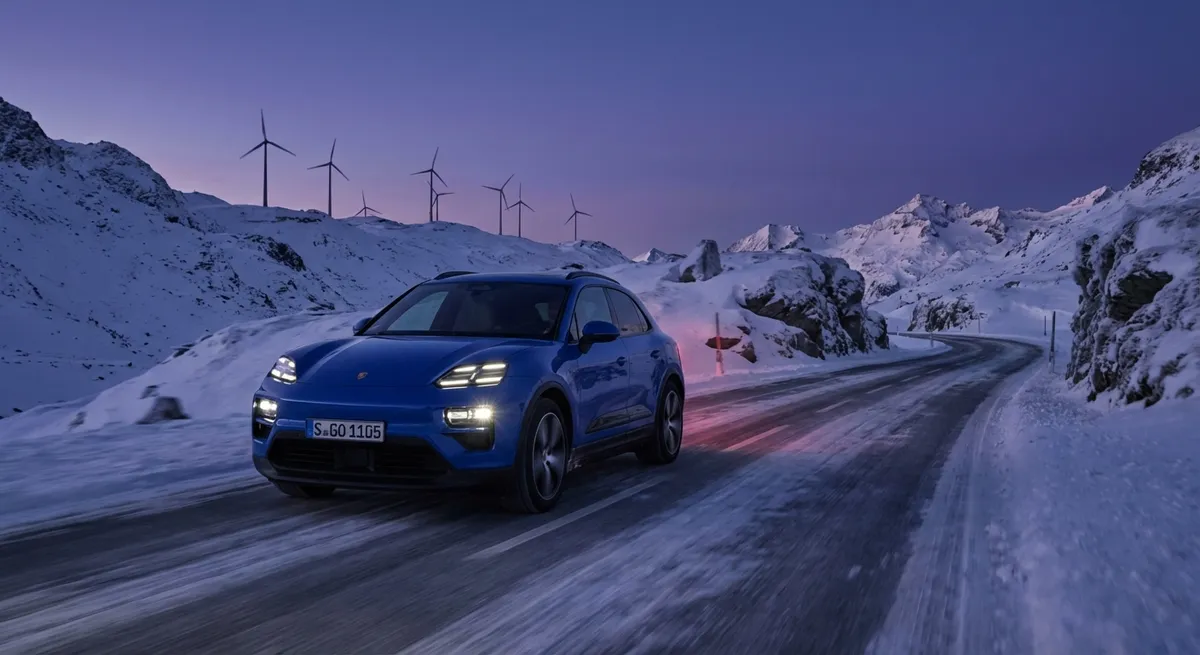
The Porsche Macan has long been a benchmark for “driver’s SUVs.” For 2025, Porsche takes a bold step by turning its compact performance SUV into a fully electric model. Rather than a simple powertrain swap, the Macan Electric (often referred to as Macan EV) rides on an all-new platform, introduces cutting‑edge 800‑volt architecture, and targets buyers who demand sports‑car responses with SUV practicality. This review focuses on what matters most to enthusiasts and serious shoppers: performance, range and charging, chassis sophistication, interior tech, and real‑world usability.
Powertrain and Performance: An SUV With Sports-Car Intent
The 2025 Macan Electric is built on the new Premium Platform Electric (PPE), co‑developed by Porsche and Audi. This skateboard‑style EV platform positions a large battery pack low in the chassis, enabling a near‑ideal weight distribution and a very low center of gravity for an SUV. Porsche is launching the Macan Electric with dual‑motor all‑wheel drive variants such as the Macan 4 and Macan Turbo, both using permanent magnet synchronous motors (PMSMs) for strong efficiency and repeatable performance.
Output varies by trim, with the Macan 4 already delivering performance that would rival prior gasoline Macan S models, and the Macan Turbo pushing into territory traditionally reserved for high‑end sports cars. With launch control engaged, the Turbo variant can produce over 600 hp and around 800 Nm (590 lb‑ft) of torque, enabling sub‑4‑second 0–60 mph times according to Porsche’s internal testing. What stands out is not just the raw acceleration but the way the Macan Electric delivers power: Porsche’s tuning emphasizes linear response, precise pedal calibration, and consistent performance even after repeated hard launches.
Enthusiasts will appreciate Porsche’s focus on thermal management. A sophisticated cooling circuit for both the battery and the motors allows for multiple acceleration runs and extended spirited driving with minimal performance degradation. Regenerative braking has been tuned to feel natural and predictable, rather than overly aggressive, and is integrated seamlessly with the friction brakes via a blended brake‑by‑wire system. On twisty roads, torque distribution between front and rear motors is constantly adjusted, prioritizing rear bias when the stability systems allow, resulting in a driving experience that feels more like a tall sports wagon than a traditional crossover.
For buyers cross‑shopping performance EVs such as the Tesla Model Y Performance or BMW iX3 (in markets where it’s offered), the Macan Electric emphasizes precision and consistency rather than just headline acceleration numbers. The steering, still hydraulically assisted in feel if not in mechanism, has been tuned to be weighty and communicative by EV standards. Combined with Porsche’s programming of the drive modes—Normal, Sport, Sport Plus, and Individual—the Macan Electric delivers a driving character that clearly aligns with the brand’s 911 and Taycan lineage.
Range, Battery, and Charging: 800-Volt Tech in a Compact SUV
Under the floor, the Macan Electric houses a lithium‑ion battery pack with a usable capacity of roughly 95 kWh (variant‑dependent), built from a modular array of prismatic cells. While official EPA figures may vary by wheel size and trim, Porsche is targeting a competitive real‑world range suitable for daily commuting, highway trips, and spirited backroad drives. Expect that range to be somewhat lower than the most frugal EV crossovers—this is a performance‑oriented vehicle with wide tires and substantial power—but still adequate for most owners’ needs.
The critical differentiator is the Macan Electric’s 800‑volt electrical architecture, a technology Porsche first introduced in the Taycan. This higher system voltage, compared with the more common 400‑volt setups, allows for significantly faster DC fast‑charging with lower current, improving both charge times and cable thickness/weight. On suitable high‑power DC fast chargers, Porsche claims peak charging rates up to around 270 kW, enabling a 10–80% charge in roughly 20–25 minutes under ideal conditions. This makes the Macan Electric one of the quickest‑charging SUVs in its segment when using a capable charger.
For buyers living in regions where ultra‑fast DC infrastructure is still sparse, the Macan Electric includes clever EV management. On 400‑volt fast chargers, the Macan can effectively split its battery into two virtual packs to charge them in parallel, improving compatibility and reducing charge times relative to many 400‑volt EVs. AC charging at home via a Level 2 wallbox (often up to 11 kW, depending on market and installation) will fully charge the pack overnight, which suits typical daily commuting profiles.
Battery thermal conditioning is integrated into the navigation and charging planner. When a fast charger is set as a destination, the Macan Electric preconditions the battery to an optimal temperature window, minimizing time spent at the charger. For long‑distance drivers, this integration makes road‑trip planning more predictable. Porsche’s warranty coverage on high‑voltage components and the battery pack is designed to reassure early adopters, with capacity retention guarantees over a defined mileage and time period, typically eight years or 100,000+ miles depending on region.
Potential buyers should factor in that real‑world range will heavily depend on driving style. Exploiting the Macan Turbo’s full performance or frequently cruising at high highway speeds will reduce range more noticeably than in less powerful EVs. Nonetheless, the balance between usable range and rapid DC recharge capability positions the Macan Electric as a highly practical daily driver for those with reliable access to charging at home or work.
Chassis, Handling, and Ride: Porsche DNA in an EV SUV
Porsche has invested heavily in making the Macan Electric feel like a true Porsche from behind the wheel. The PPE platform allows for a multi‑link rear suspension and a sophisticated front setup, with aluminum components used extensively to reduce unsprung mass. Many variants will offer Porsche Active Suspension Management (PASM) with adaptive dampers, and higher trims may include air suspension that can adjust ride height for different conditions: lower for improved aerodynamics and handling at speed, higher for rougher surfaces or steep driveways.
One of the standout technologies on the Macan Electric is the available rear‑axle steering. At lower speeds, the rear wheels turn opposite the front wheels to effectively shorten the wheelbase, improving maneuverability in tight urban environments and parking situations. At higher speeds, the rear wheels turn in the same direction as the fronts, enhancing stability in fast lane changes and long sweeping corners. Combined with torque vectoring by braking and by motor control, this contributes to an agility uncommon in compact SUVs—electric or otherwise.
The brake system features large, high‑performance discs with multi‑piston calipers on performance variants, carefully calibrated to blend regenerative and mechanical braking. Unlike some EVs that exhibit a disconnect between regen and friction, Porsche targets a consistent pedal feel regardless of state of charge or regen availability. The tuning prioritizes confidence on twisty roads and during repeated hard stops, which is crucial for a performance SUV weighing substantially more than its gasoline predecessor due to the battery pack.
Ride quality varies by wheel size and suspension configuration. The Macan Electric’s optional 20‑inch or 21‑inch wheels with performance‑oriented tires sharpen steering response and dry‑road grip but can introduce more impact harshness over poor pavement. Buyers prioritizing comfort over ultimate handling may prefer smaller wheel options with higher‑profile tires. In either case, Porsche’s adaptive suspension tries to preserve the brand’s characteristic blend of control and compliance, with Comfort modes softening the damping while Sport and Sport Plus reduce body roll and pitch.
Noise, vibration, and harshness (NVH) levels are well controlled. The absence of an internal‑combustion engine removes one sound barrier, so Porsche has added cavity insulation, laminated glass, and targeted sound deadening to keep road and wind noise in check. At highway speed, the cabin remains calm and refined, though the “soundtrack” can be tailored with optional electric‑motor sound enhancement if the driver prefers a more emotional experience. Enthusiasts who miss the vocal character of the gasoline Macan may find this synthetic sound less engaging, but Porsche offers it as a bridge between silent EV operation and the brand’s performance heritage.
Interior, Technology, and Ergonomics: Digital but Driver-Focused
Inside, the 2025 Macan Electric adopts Porsche’s latest digital cockpit, drawing heavily from the updated Cayenne and the Taycan. The driver faces a curved, free‑standing digital instrument cluster with crisp resolution and configurable layouts, allowing key information—speed, power usage, navigation, and driver‑assist status—to be prioritized according to preference. A central touchscreen handles most infotainment and vehicle functions, while an optional passenger display allows the co‑driver to access media or navigation without distracting the driver.
Porsche’s new infotainment system runs on Android‑based architecture, which improves app integration, navigation performance, and over‑the‑air update flexibility. Wireless Apple CarPlay and Android Auto are supported, and the system includes a dedicated EV management interface showing real‑time power flow, charging options, and range predictions. A head‑up display with augmented‑reality guidance is available, projecting turn‑by‑turn instructions and key alerts into the driver’s field of view.
Critically, Porsche has not abandoned physical controls entirely. Frequently used functions such as climate adjustment, drive mode selection, volume, and essential chassis settings are still accessible via dedicated buttons or tactile switches, reducing the need to dig through multiple touch menus while driving. The steering wheel features thumb‑wheel controls and a mode selector dial, making it easy to switch between Normal, Sport, and other configurations on the fly. This mix of digital and physical elements remains a strong point for buyers who prioritize intuitive ergonomics.
Materials and build quality are consistent with Porsche’s premium positioning. Soft‑touch surfaces, leather or high‑grade synthetic upholstery options, and well‑finished metals and trims dominate the cabin. Optional packages add features such as ventilated seats, upgraded sound systems from brands like Bose or Burmester, and extended leather or Race‑Tex (synthetic suede) coverings. Customization is extensive, though it can rapidly escalate the price; buyers should carefully evaluate which options add meaningful value versus purely aesthetic appeal.
On the driver‑assist front, the Macan Electric offers a comprehensive suite of safety and convenience systems, including adaptive cruise control with stop‑and‑go, lane‑keeping assistance, blind‑spot monitoring, traffic‑sign recognition, and automated emergency braking. More advanced semi‑automated highway driving functions and automated parking systems may be available as region‑specific options. Importantly, Porsche positions these as support systems rather than full autonomy; the Macan remains a driver‑centric vehicle where engagement, not automation, is the main theme.
Practicality, Packaging, and Ownership Considerations
While the 2025 Macan Electric puts performance front and center, it still needs to function as an everyday SUV. The PPE platform allows for better interior packaging than a conventional combustion‑based platform, with a flat floor in the second row and improved legroom relative to earlier Macan generations. Headroom remains adequate for most adults, though taller rear passengers may find the roofline a bit tight, especially with a panoramic glass roof fitted. The front seats offer ample adjustment and support, suitable for both long‑distance comfort and spirited driving.
Cargo capacity is competitive for the compact luxury SUV segment, with a rear load area sufficient for daily errands, weekend luggage, or golf bags. The electric powertrain also enables a small front trunk (frunk), useful for charging cables or smaller bags, though its volume is not as large as some more utilitarian EV crossovers. Split‑folding rear seats allow for expanded cargo space when needed, and the wide tailgate opening aids loading larger items. Buyers who frequently haul bulky cargo or require three child seats across may need to evaluate if the Macan’s compact footprint meets their needs or if a larger SUV is more appropriate.
Towing capacity for the Macan Electric, while present, will likely be more modest than that of large body‑on‑frame SUVs, and towing will have a significant impact on range, as with any EV. Owners intending to tow regularly should pay close attention to official towing ratings and real‑world tests as they become available. Roof‑rack compatibility and approved load ratings will also matter to those transporting bikes, skis, or cargo boxes on longer trips.
From an ownership perspective, running costs can be favorable compared with gasoline performance SUVs, particularly in markets with supportive electricity tariffs and EV incentives. Reduced routine maintenance—no oil changes, fewer moving engine parts, and regenerative braking slowing pad and rotor wear—translates into potentially lower service costs over the vehicle’s life. However, buyers should budget for higher‑priced performance tires and the possibility of more expensive wear components, given the vehicle’s weight and performance capability.
Depreciation and long‑term residual values remain important unknowns, as the EV market continues to evolve rapidly. Porsche’s brand strength and the Macan’s established reputation could help, but future competition, technology advances, and regulatory changes will influence resale values. Prospective owners may find leasing an attractive way to hedge against technological obsolescence, especially in the first generation of a new EV platform. Home charging installation, local fast‑charging availability, and any regional incentives or tax credits should all be factored into the total cost of ownership calculation.
Conclusion
The 2025 Porsche Macan Electric marks a pivotal moment for performance SUVs: a shift from combustion power to an all‑electric platform without sacrificing the driving character that made the Macan a favorite among enthusiasts. With dual‑motor all‑wheel drive, 800‑volt charging, sophisticated chassis technology, and a driver‑focused digital cabin, it aims to be both a compelling enthusiast’s choice and a usable daily SUV. The trade‑offs—higher weight, a premium price, and dependence on charging infrastructure—are real, but for buyers who want a compact SUV that feels genuinely engineered from the wheels up as an EV, the Macan Electric sets a very high bar. For many, it will be the first performance SUV that makes transitioning to electric not just acceptable, but deeply desirable.
Sources
- Porsche Newsroom – The new all‑electric Porsche Macan - Official technical overview and product details from Porsche
- Porsche Technical Information – 800‑volt technology in the Taycan - Background on Porsche’s 800‑volt architecture, relevant to the Macan EV’s charging system
- U.S. Department of Energy – Alternative Fuels Data Center: Charging Electric Vehicles - Explains home and public charging considerations and infrastructure
- EPA – Electric Vehicle Basics - General information on EV efficiency, range, and environmental impact
- Car and Driver – Electric Vehicle Ownership Guide - Practical guide to EV charging, road trips, and real‑world usage considerations
Key Takeaway
The most important thing to remember from this article is that this information can change how you think about Reviews.