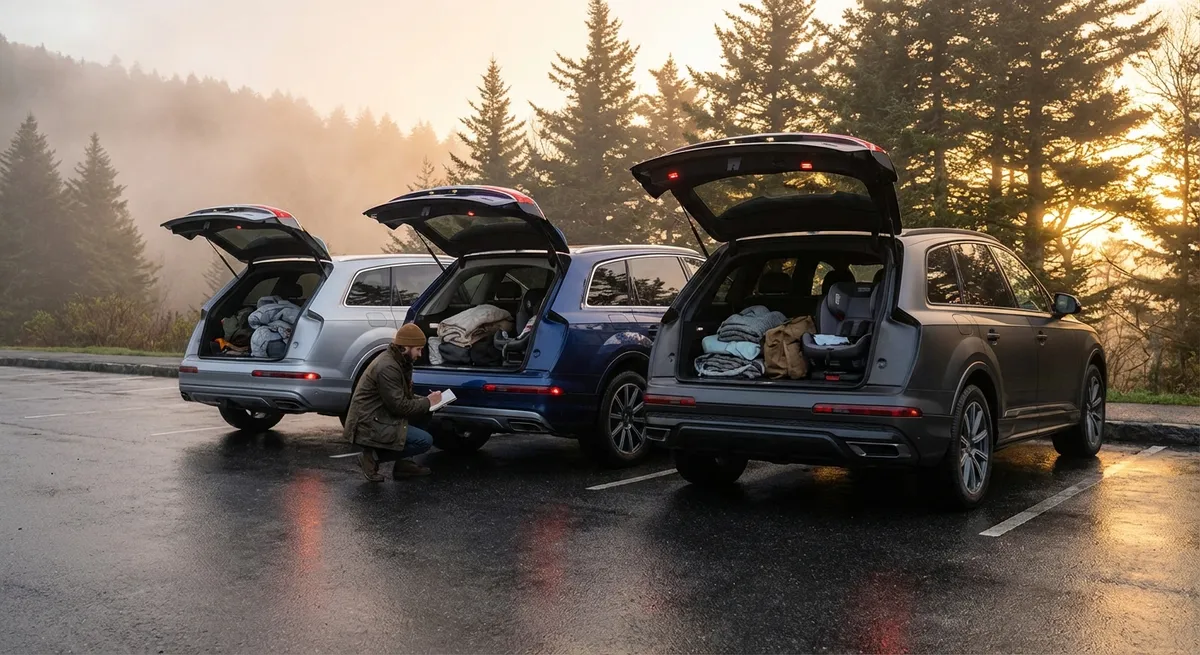
For 2025, the premium SUV segment is no longer just about leather seats and a big touchscreen. The newest models blend complex hybrid systems, adaptive suspensions, semi‑autonomous tech, and high‑end materials in ways that can make or break daily usability. This review‑oriented guide walks through five critical dimensions enthusiasts and serious shoppers should focus on when evaluating current luxury and near‑luxury SUVs. Instead of spec sheet trivia, we’ll look at how the underlying engineering translates into real‑world ownership.
1. Powertrains: Turbo, Hybrid, or Full Electric in Real Use
Modern SUVs offer a spectrum of drivetrains—downsized turbo gasoline, plug‑in hybrid (PHEV), mild hybrid, and fully electric (BEV). The technical choices made by manufacturers significantly impact performance, efficiency, and maintenance.
Turbocharged four‑ and six‑cylinder engines dominate the premium space because they allow smaller displacement with high specific output. A 2.0‑liter turbo in a midsize SUV can deliver 250–300 hp with 300–320 lb‑ft of torque available from low rpm, thanks to optimized boost control and direct injection. Reviewers consistently find that these engines feel strong in everyday driving but can exhibit lag or sudden surge if the calibration isn’t well‑sorted, especially in “Eco” modes. Buyers should pay attention to how smoothly the torque comes in and whether the transmission hunts for gears on light throttle.
Plug‑in hybrids combine a turbo engine with an electric motor and a battery typically in the 14–25 kWh range. In practice, that translates to 25–45 miles of electric‑only range in many 2025 models. The best systems integrate the motor into the transmission (rather than on a separate axle) to maintain natural shifting and AWD behavior. In road tests, the best PHEVs feel like torquey six‑cylinders when the battery is full, but it’s crucial to experience the SUV with a depleted battery as well; some systems revert to merely adequate performance and lower efficiency when operating as a conventional hybrid.
Full battery‑electric SUVs use large packs—often 75–120 kWh—and dual‑motor AWD configurations with system outputs ranging from 300 hp to over 600 hp. Beyond headline power, technical aspects that show up in reviews include inverter cooling (for sustained acceleration), thermal management of the battery (for stable fast‑charging and cold‑weather range), and the vehicle’s efficiency (measured in mi/kWh or kWh/100 km). Enthusiast reviewers increasingly highlight real‑world consumption at highway speeds, where aerodynamic drag and curb weight have the greatest impact. For potential buyers, it’s important to compare official EPA range with independent road tests at 70–75 mph, which often reveal 10–20% variance.
Across all architectures, calibration matters more than peak numbers. When you read or watch reviews, look for detailed comments on throttle mapping, drivetrain response in traffic, transition between electric and combustion power (for hybrids), and how the SUV behaves on long grades. These experiential insights often reveal more about the engineering quality than the brochure figures.
2. Ride, Handling, and Chassis Tuning: The Hidden Engineering That Defines Character
Nearly every premium SUV claims to “balance comfort and sportiness,” but the underlying hardware drives very different personalities. Reviewers pay particular attention to suspension design, weight distribution, and steering system technology.
Many current models use a front MacPherson strut and rear multi‑link setup, chosen for packaging efficiency and tunability. Where they diverge is in adaptive dampers and air suspension. Adaptive dampers alter compression and rebound characteristics in milliseconds via electronically controlled valves. In practice, well‑tuned systems broaden the usable range: “Comfort” can genuinely smooth broken pavement without excessive float, while “Sport” increases body control in corners and during hard braking. Air suspension adds height adjustability—beneficial for both entry/exit and off‑road clearance—but can introduce a slightly less connected feeling if the calibration is soft.
Chassis reviews frequently note body roll, turn‑in response, and mid‑corner composure. Heavier plug‑in and battery‑electric SUVs counteract their mass with lower centers of gravity (thanks to the battery pack) and advanced stability control strategies. Enthusiast‑oriented models may add active anti‑roll bars and rear‑axle steering. The former uses electric or hydraulic actuators to stiffen or relax the roll bars in real time, while the latter turns the rear wheels a few degrees in the opposite direction at low speeds (for tighter maneuvering) and in the same direction at higher speeds (for lane‑change stability). When executed well, reviews will describe a “smaller, more agile” feel than the dimensions suggest.
Steering feedback is another technical area that separates driving experiences. Most modern SUVs use electric power steering (EPS), which is tunable via software. Reviewers focus on on‑center stability, linearity as you add steering lock, and whether the wheel artificially self‑centers. Retro‑fitted “Sport” steering modes that simply add resistance without communication often feel artificial. Potential buyers should pay attention to whether professional tests mention precision and predictability, especially in emergency maneuvers and evasive lane changes.
Finally, braking performance under repeated stops is gained or lost in rotor sizing, pad compound, and—on electrified models—the blending between regenerative and friction braking. A well‑tuned system transitions seamlessly, maintaining predictable pedal feel even when the battery is full or very cold. Any comments in reviews about “grabby” low‑speed braking or inconsistent pedal travel can signal compromises in calibration.
3. Cabin Design, Ergonomics, and Material Execution
The interior is where owners spend all of their time, and recent premium SUVs showcase very different philosophies—from minimalist, screen‑dominated dashboards to more traditional combinations of physical controls and high‑end materials. Reviewers increasingly evaluate not just aesthetics but also ergonomics, build precision, and long‑term wear.
Material quality begins with the fundamentals: soft‑touch surfaces in key contact areas, consistent graining, and minimal color mismatch between panels. High‑end models use semi‑aniline leather, natural wood veneers, or real metal trim, while cost‑cutting shows up in lower door panels, seat backs, and the third row. Attention from reviewers to panel gaps around the center console, the steering column, and door cards often reflects how carefully the vehicle is assembled. Rattles or buzzes over rough pavement during early testing can be a red flag, especially in new-to-market platforms.
Seat design is both a comfort and health issue. Technically advanced seats offer multi‑way power adjustment (including thigh extension and adjustable side bolsters), lumbar support with multiple inflation zones, and, in some cases, massage functions. However, the true test is support over a two‑to‑three‑hour drive. Reviews that mention lower‑back fatigue, overly aggressive bolstering, or a too‑short seat cushion are warning signs if you plan frequent long trips. For tall occupants, measurement‑based data such as headroom and legroom—particularly in the second and third rows—should be cross‑checked against independent evaluations, since manufacturer figures don’t always reflect real‑world packaging.
Control layout has become a major differentiator. Some SUVs relocate most functions into a central touchscreen, while others retain physical switches for climate and key drive modes. From a usability standpoint, reviewers tend to favor clearly grouped physical controls for frequently used functions (volume, temperature, defrost, drive mode, traction control). Systems that bury climate or seat heating three layers deep in a menu may look sleek in photos but become frustrating on the road. Pay attention to how many operations require eyes‑off‑road interaction and whether voice controls reliably execute common commands.
Noise, vibration, and harshness (NVH) levels are another point of comparison. Premium SUVs often employ laminated glass, extensive acoustic insulation, and active noise cancellation. Road tests measure cabin sound at 70 mph and may compare different wheel and tire packages—the same model with large 21–22 inch wheels can be notably noisier and harsher than one on 18–20 inch rims. If cabin serenity is a priority, seek out reviews that mention wind noise around mirrors and A‑pillars, as these are common sources of intrusive sound.
4. Infotainment, Driver Assistance, and Software Maturity
New SUVs are effectively rolling computers, and the quality of the software stack now weighs as heavily in reviews as engine performance. Infotainment responsiveness, connectivity, and driver‑assistance reliability can fundamentally shape ownership satisfaction.
Infotainment systems are evaluated on hardware (screen resolution and brightness, processor speed, and input options) and software (menu structure, logic, and stability). Laggy responses, frequent freezes, or reboots noted by reviewers indicate under‑spec’d processors or immature software. Wireless Apple CarPlay and Android Auto are widespread in 2025; however, the stability of the wireless connection varies between brands. It’s worth noting when long‑term testers report frequent drops, audio desync, or incompatibility with certain phone models.
Navigation usability and real‑time traffic integration can be more important than many realize. Some systems use cloud‑based routing that incorporates historical traffic data, while others rely solely on live traffic feeds. Tech‑focused reviews sometimes mention whether map data integrates with driver assistance—for example, slowing proactively for curves or speed limit changes. If you drive in areas with inconsistent cellular coverage, onboard maps with local storage (not exclusively streamed) are a tangible advantage.
Driver‑assistance suites (often marketed under proprietary names) bundle adaptive cruise control, lane‑keeping assistance, blind‑spot monitoring, and sometimes hands‑free highway driving. The technical distinction lies in sensor sets (camera‑only vs. camera plus radar and sometimes lidar), processing capability, and how conservatively the system is tuned. Reviewers look at how naturally these systems behave in traffic: whether the adaptive cruise brakes too late, how smoothly it accelerates after a stop, whether lane‑keeping tugs at the wheel, and how reliably the vehicle can center itself without ping‑ponging.
Hands‑free systems that allow the driver to remove hands under certain conditions rely on high‑definition mapped highways and robust driver‑monitoring cameras. Independent tests often stress whether these systems disengage abruptly, how they handle cut‑ins, and whether they cope with faint or missing lane markings. Prospective buyers should read multiple reviews focused on long‑distance testing; subtle annoyances become significant over years of ownership.
Finally, over‑the‑air (OTA) updates can improve or, occasionally, degrade the experience. Some manufacturers treat OTA as a way to refine calibrations, add features, and fix bugs quickly. Others deploy updates less frequently or constrain them to the infotainment layer. When evaluating reviews, note whether testers mention meaningful improvements over time or recurring issues after updates. This speaks volumes about the maturity of the brand’s software development and validation processes.
5. Practicality, Efficiency, and Long‑Term Ownership Considerations
Beyond first impressions, a premium SUV’s usefulness and cost profile over five to ten years depend on factors that detailed reviews and technical reports can reveal: interior packaging, efficiency, durability, and maintenance strategy.
Cargo volume is the obvious spec, but real‑world usability includes load floor height, hatch opening dimensions, and how the third row folds. Many electrified SUVs package the battery under the floor, which can raise the cargo floor and reduce vertical space. Reviewers often test whether common items—strollers, bicycles, luggage for four—fit without contortions. Pay attention to whether the third row folds fully flat and if power‑fold mechanisms are reliable or slow; manual, well‑damped systems can be preferable to complex motors that may fail over time.
Towing capacity has become a differentiator, especially among midsize and full‑size SUVs. The limits of 5,000, 7,500, or even 8,000+ pounds are closely tied to engine torque, cooling system robustness, transmission design, and chassis stiffness. Critical aspects in reviews include stability at highway speeds with a trailer, transmission temperature behavior on long grades, and braking performance. For electrified SUVs, towing has an outsized impact on range—battery‑electric models can see range reductions of 40–60% when towing near their maximum. Enthusiast reviewers who tow in their tests provide valuable data absent from marketing materials.
Fuel economy and energy consumption are best understood in context. Official ratings from agencies like the EPA provide a baseline, but real‑world tests frequently show variation depending on driving style, climate, and wheel size. For plug‑in hybrids, the all‑electric range is only half the story; combined efficiency when operating as a hybrid is equally important if you take many long trips beyond EV range. Detailed reviews will often log long‑term consumption over thousands of miles, which is far more representative than short press‑drive impressions.
Long‑term ownership also hinges on maintenance requirements and reliability trends. Some premium brands use extended oil‑change intervals with synthetic oils and long‑life service parts, but turbocharged and high‑output engines can be sensitive to oil quality. Reviews from long‑term test fleets and reliability surveys often mention issues such as carbon buildup on direct‑injected engines, premature wear on air‑suspension components, and the cost of replacing large low‑profile performance tires. For plug‑in and battery‑electric SUVs, the length and terms of the battery warranty (often eight years or 100,000–150,000 miles) are important, as are any reported issues with high‑voltage components.
Finally, residual value and total cost of ownership benefit from looking at independent resale projections and historical depreciation trends. Newly introduced models or niche powertrains may see steeper early‑life depreciation until the market establishes confidence in their durability. Reviews that follow a model through several years of production can reveal whether early software bugs, mechanical issues, or perceived quality concerns were resolved—or not.
Conclusion
The 2025 crop of premium SUVs is defined as much by software, chassis tuning, and integration of complex systems as by traditional luxury markers. Evaluating powertrains in real‑world conditions, understanding the engineering behind ride and handling, scrutinizing cabin ergonomics and materials, and paying attention to the maturity of infotainment and driver‑assistance software all provide a clearer picture than any spec sheet. For enthusiasts and serious buyers alike, the most valuable reviews are those that connect the technical foundations of a vehicle to daily driving, long‑distance comfort, and long‑term ownership realities. Approaching your next SUV with this framework will make test drives more focused, spec comparisons more meaningful, and ultimately, your final choice better aligned with how you actually drive and live.
Sources
- U.S. Department of Energy – Fuel Economy Data & EV Information – Technical background on hybrid and electric vehicle efficiency, range, and energy use
- U.S. Environmental Protection Agency – Vehicle Emissions and Fuel Economy – Official testing procedures and ratings for fuel economy and greenhouse gas emissions
- IIHS – Crashworthiness and Vehicle Ratings – Independent safety and crash‑test data for SUVs across size and price classes
- Consumer Reports – Guide to Advanced Driver Assistance Systems – Detailed explanations and comparative evaluations of modern driver‑assistance technologies
- Society of Automotive Engineers (SAE) – Vehicle Electrification Resources – Technical perspectives on hybrid and electric powertrain architectures and standards
Key Takeaway
The most important thing to remember from this article is that this information can change how you think about Reviews.