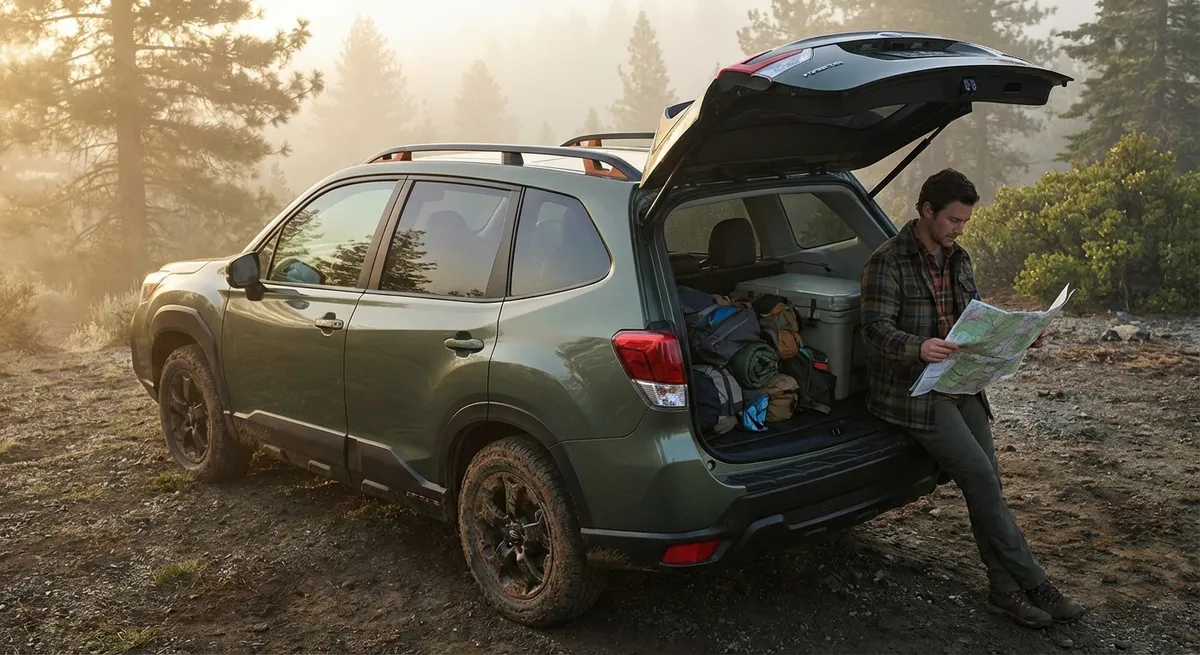
For 2025, the Subaru Forester returns to a segment that’s rapidly shifting toward electrification, bigger screens, and bolder performance numbers. Instead of chasing headline stats, the Forester doubles down on all-weather usability, packaging efficiency, and quietly refined engineering. For SUV shoppers who value capability and longevity over flash, this is still one of the most compelling compact crossovers on the market.
This review breaks down the 2025 Forester from the perspective of both enthusiasts and practical buyers, focusing on five key areas that matter in real-world use: powertrain and dynamics, all-weather capability, cabin and tech, efficiency and ownership costs, and safety and reliability expectations.
Powertrain and Driving Dynamics: Predictable, Not Pulse-Racing
The 2025 Subaru Forester remains centered around a naturally aspirated 2.5-liter horizontally opposed (boxer) four-cylinder engine. Output is in the neighborhood of 180–185 horsepower and roughly 175–178 lb-ft of torque, routed through Subaru’s Lineartronic continuously variable transmission (CVT) to all four wheels as standard.
From an enthusiast standpoint, the numbers won’t impress anyone cross-shopping turbocharged rivals like the Mazda CX-5 2.5T or Hyundai Tucson 1.6T. However, the character of the drivetrain is more nuanced than the spec sheet suggests:
- Flat torque delivery: The boxer engine’s low mounting position helps with both balance and NVH (noise, vibration, harshness). Torque comes on early and remains reasonably flat across the midrange, making city and suburban driving feel relaxed rather than strained.
- CVT calibration: Subaru has steadily revised its CVT tuning over the years. Simulated stepped “ratios” under moderate to heavy throttle reduce the “rubber band” sensation typical of early CVTs, and the transmission now feels more cooperative, especially in Sport mode.
- Chassis tuning: The Forester rides on the Subaru Global Platform, which provides increased torsional rigidity versus older generations. That rigidity allows for compliant suspension tuning without the body flex that used to plague tall crossovers. Lean is well controlled in corners, and impacts are absorbed with a mature, almost European smoothness.
- Steering feel: Electric power steering is light at parking speeds but firms up naturally on the highway. While true feedback is limited (as in most modern crossovers), the rack is precise and easy to place on narrow, winding roads.
- Noise control: Additional sound insulation and optimized window and door seals keep wind and road noise in check. The engine can sound coarse when pushed to the top of the rev range, but at steady cruise it settles into the background.
If you’re an enthusiast hoping for a factory turbo or a wilderness-ready performance variant, the Forester still doesn’t scratch that itch. But for buyers who prioritize predictable handling, comfortable long-distance manners, and a stable, confidence-inspiring feel, the 2025 model is one of the best-balanced options in its class.
Symmetrical AWD and Light Off-Road Ability: Real Traction, Real Limits
All Forester trims come standard with Subaru’s Symmetrical All-Wheel Drive system, one of its defining advantages in the compact SUV space. Unlike many rivals that offer front-wheel drive by default and add an on-demand rear axle, the Forester’s layout uses a longitudinally mounted boxer engine and a full-time, front–rear balanced AWD system.
Key technical and practical takeaways:
- AWD architecture: Symmetrical AWD maintains a near-even torque split in regular driving and can rapidly shift power front-to-rear and side-to-side as traction demands change. This makes the Forester feel planted on wet, snowy, or uneven surfaces versus systems that primarily react after slip occurs.
- X-MODE drive programs: Trims equipped with X-MODE gain traction-optimized modes (Snow/Dirt, Deep Snow/Mud) that adjust throttle response, transmission behavior, and traction control intervention. Hill descent control helps regulate speed on steep, loose declines, useful on unpaved trails or snowy driveways.
- Ground clearance: With around 8.7 inches of ground clearance, the Forester sits higher than many direct competitors. This allows for more generous approach and departure angles, clearance over ruts, and confidence traversing poorly maintained roads or mild fire roads.
- Off-road limits: Despite respectable numbers, the Forester remains a unibody, street-biased crossover with modest tire sidewalls and no low-range transfer case. Think “all-weather and light off-road” rather than “rock-crawling.” Deep mud, large rocks, and technical trails are best left to true body-on-frame SUVs or heavily modified rigs.
- Winter performance: Where the Forester really shines is in snow and ice. Pair Symmetrical AWD with proper winter tires and you have one of the most competent bad-weather daily drivers in the segment, with predictable breakaway and easy recovery dynamics.
For buyers who live in regions with real winters or frequent unpaved road use, the Forester’s AWD system and ground clearance are not just marketing—they’re tangible advantages that make daily driving safer and more stress-free.
Cabin, Space, and Technology: Function-First, With Modern Touches
The 2025 Forester’s interior doesn’t chase the ultra-minimalist, all-screen aesthetic of some newer rivals. Instead, it prioritizes visibility, ergonomics, and durable materials while integrating enough tech to feel current.
Highlights that matter to both enthusiasts and families:
- Driving position and visibility: Large windows, thin pillars (by modern standards), and a relatively upright seating position create an almost wagon-like sense of openness. For taller drivers, there’s ample headroom and legroom; shorter drivers benefit from excellent sightlines and logically placed controls.
- Rear-seat space: The Forester remains one of the roomier entries in the compact SUV class. Adults can sit comfortably in the rear with good knee and toe room, and the tall roofline helps avoid the “cocooned” feeling found in some sloping-roof competitors.
- Cargo practicality: With the rear seats up, cargo volume is generous and usefully shaped, with a wide, square opening. Fold the rear seats, and the flat load floor accommodates bulkier items like outdoor gear, pet crates, or home improvement supplies with ease.
- Infotainment and connectivity: Expect Subaru’s latest Starlink-based infotainment system, anchored by an 11.6-inch portrait-oriented touchscreen on most trims. Wireless Apple CarPlay and Android Auto, multiple USB-A and USB-C ports, and available premium audio (often Harman Kardon-branded) align the Forester with segment expectations.
- Physical controls where they matter: Subaru still retains hard buttons and knobs for critical functions like volume, tuning, and core climate controls. This approach is especially appreciated when driving on rough surfaces, where tapping tiny on-screen icons can be distracting.
- Material quality: While not ultra-luxurious, the materials feel solid and thoughtfully chosen for long-term wear. Higher trims offer soft-touch surfaces, contrasting stitching, and subtle trim upgrades that elevate the ambiance without veering into gimmicky design.
The net result is a cabin that feels engineered around everyday usability, road trips, and foul-weather commutes rather than show-floor theatrics, which will appeal to pragmatic buyers and long-term owners.
Efficiency, Ownership Costs, and Real-World Use
The Forester may not be a hybrid or EV, but its efficiency and long-term cost profile remain core reasons many buyers stick with the model across multiple generations.
Key points for shoppers analyzing the numbers:
- Fuel economy: The 2.5-liter/CVT/standard-AWD combination typically delivers EPA estimates in the high 20s mpg combined, with around 33–35 mpg on the highway and low-to-mid 20s in city driving, depending on trim and wheel/tire setup. Those are strong figures for a non-hybrid, always-on AWD SUV.
- Regular fuel and simple hardware: The engine runs on regular 87-octane gasoline and avoids complex forced-induction (turbocharging) hardware. For buyers planning to own their SUV past 100,000 miles, the relative simplicity can be appealing from both reliability and maintenance-cost perspectives.
- Maintenance intervals: Subaru’s maintenance schedules generally call for routine oil changes, filter replacements, and inspections at standard intervals, with CVT fluid service at manufacturer-recommended mileage. Adhering to these intervals is especially important for preserving drivetrain longevity and warranty coverage.
- Insurance and depreciation: Foresters tend to enjoy strong resale values, thanks to brand reputation, standard AWD, and high safety scores. Combined with competitive insurance rates relative to some performance-leaning rivals, the total cost of ownership is often lower than initial price tags suggest.
- Use-case versatility: Whether used primarily for daily commuting, weekend camping, or long highway stretches, the Forester delivers consistent, predictable efficiency. Its fuel economy advantage becomes especially notable for drivers in snowbelt states who would otherwise need AWD-equipped, less efficient alternatives.
While it doesn’t offer the hybrid bragging rights of a Toyota RAV4 Hybrid or a plug-in option, the 2025 Forester strikes a practical balance between straightforward gasoline engineering and real-world fuel savings.
Safety, Driver Assistance, and Long-Term Confidence
Safety has been one of Subaru’s strongest calling cards, and the 2025 Forester continues that tradition with extensive standard driver-assistance tech and a crash structure engineered for modern impact standards.
Core safety and confidence features include:
- Standard EyeSight Driver Assist Technology: Subaru’s stereo camera-based system typically includes adaptive cruise control, lane-departure warning, lane-keep assist, pre-collision braking, and pre-collision throttle management. Recent iterations provide smoother braking and more natural lane centering than earlier versions.
- Available blind-spot and rear support: Higher trims or option packages add blind-spot detection, rear cross-traffic alert, and reverse automatic braking, which are particularly helpful in crowded parking environments or for drivers in dense urban areas.
- Crashworthiness: The Subaru Global Platform was designed with high crash-energy absorption and passenger-cell integrity in mind. The Forester has historically performed well in IIHS and NHTSA testing, and there’s every reason to expect continued top-tier ratings as the 2025 results are finalized.
- Visibility as passive safety: Those expansive windows and relatively thin pillars not only make the cabin feel airy but also reduce blind spots, which is a crucial but often overlooked element of safety. Good outward visibility can prevent incidents before active systems ever need to intervene.
- Longevity and brand reputation: Subaru’s owner base is notable for high mileage and repeat purchases. While adherence to maintenance is always key, Foresters are frequently seen well past 150,000 miles in regular duty, reinforcing the model’s reputation as a long-haul, family-safe choice.
For buyers prioritizing family safety and long-term peace of mind, the 2025 Forester pairs modern active safety technology with a robust structural foundation and visibility that supports safer everyday driving.
Conclusion
The 2025 Subaru Forester isn’t trying to be the flashiest compact SUV, nor the quickest, nor the most digitally saturated. Instead, it leans into a clear identity: a highly usable, all-weather, visibility-rich crossover with a mature ride, thoughtful packaging, and a reputation for long-term durability.
Enthusiasts looking for big power figures or track-ready handling will likely be better served elsewhere. But drivers who prioritize confidence in bad weather, real-world fuel efficiency with standard AWD, practical cargo space, and a cabin built around function rather than fashion will find the Forester continues to be one of the most rational—and satisfying—choices in the segment.
For shoppers cross-shopping popular compact SUVs, the 2025 Forester remains a benchmark for balanced utility in an increasingly turbocharged and electrified era.
Sources
- Subaru Official Forester Page – Manufacturer specifications, trim details, and feature breakdown for the current Forester lineup
- IIHS – Subaru Forester Ratings – Crash test results, safety ratings, and structural evaluations from the Insurance Institute for Highway Safety
- U.S. Department of Energy – Fuel Economy Data – Official EPA fuel economy estimates for Subaru models, including recent Forester data
- NHTSA – Subaru Forester Safety Information – Federal crash test scores and safety recall information from the National Highway Traffic Safety Administration
- Consumer Reports – Subaru Brand Overview – Reliability trends, owner satisfaction data, and long-term performance insights for Subaru vehicles
Key Takeaway
The most important thing to remember from this article is that this information can change how you think about Reviews.