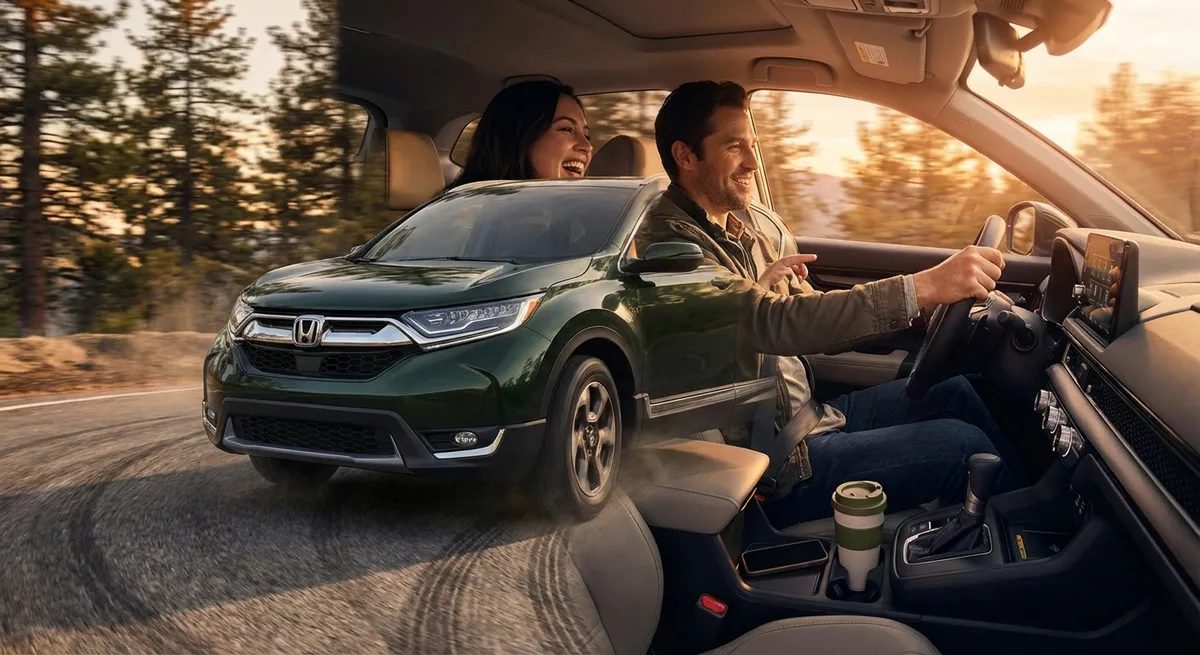
The 2025 Honda CR-V arrives in an SUV market obsessed with tech, torque, and touchscreens—but for many buyers, the real question is simpler: how does it actually drive, feel, and live with day to day? This review focuses on the core driving experience and ownership-relevant details rather than brochure headlines. From chassis tuning to real-world fuel economy and cabin usability, we’ll look at what the CR-V actually delivers and where it falls short for enthusiasts and practical buyers alike.
Powertrain and Real-World Performance
Honda offers the 2025 CR-V with two primary powertrains in most markets: a 1.5‑liter turbocharged inline‑4 with a continuously variable transmission (CVT), and a 2.0‑liter Atkinson‑cycle 4‑cylinder paired with two electric motors in the hybrid variant (marketed as CR-V Hybrid in the U.S., e:HEV elsewhere). On paper, both setups prioritize smoothness and efficiency rather than outright performance, but how they behave on the road diverges in important ways.
The 1.5T produces around 190 hp and 179 lb‑ft of torque, which is adequate for daily driving but can feel strained at highway passing speeds, especially with a full load or on steep grades. The CVT is tuned to simulate stepped ratios under moderate throttle, which helps avoid the classic “rubber band” feel, yet under heavy acceleration it still allows the engine to drone toward higher revs. Enthusiasts may find the response predictable but not especially engaging.
The hybrid, by contrast, feels stronger in typical urban and suburban use despite a similar peak horsepower rating (about 204 hp combined in U.S. spec). The electric motor’s instant torque gives it sharper initial response off the line and during mid‑range acceleration, making it feel more confident merging or darting through gaps in traffic. The hybrid’s e‑CVT (a planetary gearset with dual motors) prioritizes low‑rpm operation and tends to keep engine revs calmer, which contributes to a more refined character.
Real‑world performance aligns with independent instrumented tests: expect 0–60 mph in the low‑to‑mid 8‑second range for the hybrid and mid‑8s to low‑9s for the 1.5T, depending on trim and drivetrain (FWD vs AWD). For most buyers, the hybrid’s more natural throttle response, quieter operation, and better fuel economy make it the more satisfying powertrain, even if neither variant targets performance‑SUV territory.
Ride, Handling, and NVH: Where the CR-V Stands Out
Underneath the sheet metal, the CR-V rides on a front MacPherson strut and rear multi‑link suspension setup, with a relatively long wheelbase for the segment. This architecture, combined with Honda’s current philosophy of “global” platform tuning, yields a ride and handling balance that leans mature and composed rather than soft and floaty.
On typical city streets and secondary roads, the CR-V absorbs small imperfections cleanly, with only sharper potholes and expansion joints making it through as a brief thump. Body motions are well controlled; there’s limited pitch under braking and modest roll in corners. Honda’s use of a stiffer body structure and strategic chassis reinforcements pays dividends in the way the vehicle settles quickly after bumps rather than pogoing or oscillating. Enthusiasts will appreciate that the steering—while light and clearly electrically assisted—builds weight realistically as you wind into a corner, and the on‑center feel at highway speeds is stable, requiring minimal correction.
Noise, vibration, and harshness (NVH) levels are competitive, especially in the hybrid. Additional insulation, laminated front glass in higher trims, and active noise control help keep wind and road noise in check on the highway. The 1.5T can sound buzzy when the CVT calls for high revs, whereas the hybrid maintains a more subdued acoustic profile as it leverages electric assist. Road roar from coarse asphalt is present but not intrusive, particularly on trims with 18‑inch wheels. Larger 19‑inch wheels sharpen response slightly but introduce more impact harshness, something daily drivers may notice on rougher pavement.
Cornering behavior is safe and predictable rather than playful. Front‑end grip is solid for a family SUV, but this is a vehicle that communicates “security” more than “sport.” Emergency maneuvers feel controlled, and the electronic stability control intervenes smoothly. The AWD system is front‑biased and reacts quickly when slip is detected, improving traction in wet and light off‑road conditions without pretending to be a hardcore off‑roader.
Interior Functionality, Ergonomics, and Tech
Inside, the 2025 CR-V continues Honda’s recent design language with a low‑gloss, horizontal dashboard, a mesh‑covered air vent strip, and a generally uncluttered control layout. Materials up front are solidly in the “near‑premium mainstream” category: soft‑touch surfaces on the upper dash and door panels, harder plastics lower down, and tasteful use of metallic trim. Fit and finish are tight, with minimal panel gaps and a consistent feel across controls.
For potential buyers, the standout trait is packaging. The CR-V remains one of the most space‑efficient compact SUVs, offering generous legroom and headroom in both rows. The rear seat comfortably accommodates adults over six feet, and the seatback recline function improves long‑trip comfort. Cargo capacity is among the best in class: with the rear seats up, the load floor is low and wide, and folding the rear bench (split 60/40) yields a largely flat surface that can swallow bulkier items. Buyers cross‑shopping with some “coupe‑styled” SUVs will notice that the CR-V’s more traditional roofline translates directly into more usable volume.
Ergonomically, Honda has resisted the temptation to put every function into the touchscreen. Physical knobs for volume and climate control, along with well‑sized steering‑wheel buttons, make basic adjustments easy while driving. The standard infotainment system (7‑inch or 9‑inch touchscreen depending on trim) supports wired or wireless Apple CarPlay and Android Auto, with an interface that’s clean but not the most graphically advanced. Response times are generally quick, though some menus are nested deeper than necessary.
Instrumentation combines a partially digital cluster with an analog‑style speedometer, providing clear, legible information. The hybrid variant’s energy flow and power usage displays can help owners optimize efficiency, though most will likely set and forget. Higher trims add conveniences like a head‑up display, premium audio, and a power tailgate with hands‑free operation, but the core cabin experience remains focused on clear visibility, comfortable seating, and practical storage (large door bins, a configurable center console, and multiple USB‑C ports).
Safety, Driver Assistance, and Long-Term Ownership Considerations
Safety hardware and software are central selling points for the 2025 CR-V. Honda Sensing is standard across the lineup, bundling forward collision warning, automatic emergency braking, lane keeping assist, lane departure warning, adaptive cruise control with low‑speed follow, and traffic sign recognition. The latest tuning of these systems is more refined than earlier generations: lane centering is smoother, with fewer abrupt corrections, and adaptive cruise operates more naturally in stop‑and‑go traffic, though it can still be conservative when cutting in behind slower vehicles.
Independent crash test data from organizations like the IIHS and NHTSA for the latest generation CR-V show strong structural performance, with top scores in most major categories and favorable ratings for headlights and crash‑avoidance tech in many trims. This makes the CR-V a solid choice for safety‑focused families, especially when combined with its good outward visibility and logical control layout.
From a long‑term ownership standpoint, Honda’s reputation for reliability remains a key draw. The 1.5T engine and CVT combination did face earlier‑generation concerns about oil dilution in extreme cold climate use, but Honda addressed these issues with hardware and software updates, and the current iteration has not seen the same level of complaints. The hybrid powertrain, built around a naturally aspirated 2.0‑liter engine and proven electric motor architecture, is arguably the more robust choice; hybrid systems tend to reduce wear on friction components like brake pads thanks to regenerative braking.
Maintenance schedules are straightforward, with Honda’s Maintenance Minder system adjusting service intervals based on driving conditions rather than fixed mileages. The hybrid has slightly different fluid and inspection requirements but is not inherently more complex for owners. Resale value historically has been strong for CR-Vs, and hybrids often retain an even larger percentage of their value, especially when fuel prices are volatile.
Efficiency, Cost of Ownership, and Use-Case Suitability
One of the key differentiators between the 1.5T and hybrid models is efficiency. EPA estimates and independent real‑world testing consistently show the hybrid delivering notably better fuel economy—often by 6–10 mpg in mixed driving—compared with the gasoline‑only version. For urban and suburban commuters who do a lot of stop‑and‑go driving, the hybrid’s ability to operate on electric assist at low speeds compounds these gains, potentially saving hundreds of dollars per year in fuel costs depending on mileage and local prices.
Total cost of ownership extends beyond fuel. Insurance premiums for CR‑V models generally align with the segment average, with no major red flags. Tire replacement costs will vary by wheel size; trims with larger wheels and lower‑profile tires will incur higher replacement costs, something worth considering if you prioritize long‑term operating expenses over aesthetics. The hybrid’s friction brakes may last longer due to regenerative braking, slightly reducing maintenance frequency there.
Use‑case suitability is where buyers should think carefully. If you tow regularly, note the CR-V’s modest tow ratings (typically around 1,500 lbs in U.S. spec), which are fine for small utility trailers, bikes, or light recreational gear but not ideal for larger campers. Families who frequently travel with four or five passengers and full luggage will appreciate the CR-V’s interior volume but might consider stepping up to a larger three‑row if they need more flexibility.
For commuters, the hybrid is the clear pick: quieter, more efficient, and more responsive in low‑to‑medium‑speed driving. Enthusiasts who prioritize steering feel and chassis coherence over raw power will find the CR‑V competent and satisfying in its own measured way, though drivers seeking genuinely sporty dynamics or punchy acceleration may gravitate toward turbocharged competitors with higher output or performance‑oriented trims. Overall, the CR‑V remains one of the most well‑rounded compact SUVs, with ride comfort, space, and efficiency as its core strengths.
Conclusion
The 2025 Honda CR‑V doesn’t chase headline performance numbers or flashy gimmicks. Instead, it doubles down on a balanced chassis, thoughtfully packaged interior, strong safety credentials, and especially in hybrid form, excellent real‑world efficiency. For most buyers in the compact SUV segment—families, commuters, and practical enthusiasts—it delivers a driving experience that feels mature, composed, and easy to live with over the long haul. Those who want a sharper, more performance‑oriented SUV may look elsewhere, but as an all‑rounder that does nearly everything well, the 2025 CR‑V remains a benchmark contender.
Sources
- Honda Official CR‑V Page - Manufacturer specifications, trims, features, and technical details for the current CR‑V lineup
- U.S. EPA Fuel Economy – Honda CR‑V - Official fuel economy ratings and comparative data for gasoline and hybrid CR‑V models
- Insurance Institute for Highway Safety – Honda CR‑V - Crash test results, safety ratings, and crash‑avoidance evaluations
- National Highway Traffic Safety Administration (NHTSA) – Honda CR‑V - Federal safety ratings, recall information, and testing data
- Consumer Reports – Honda CR‑V Overview - Long‑term reliability insights, owner satisfaction data, and comparative road test impressions
Key Takeaway
The most important thing to remember from this article is that this information can change how you think about Reviews.