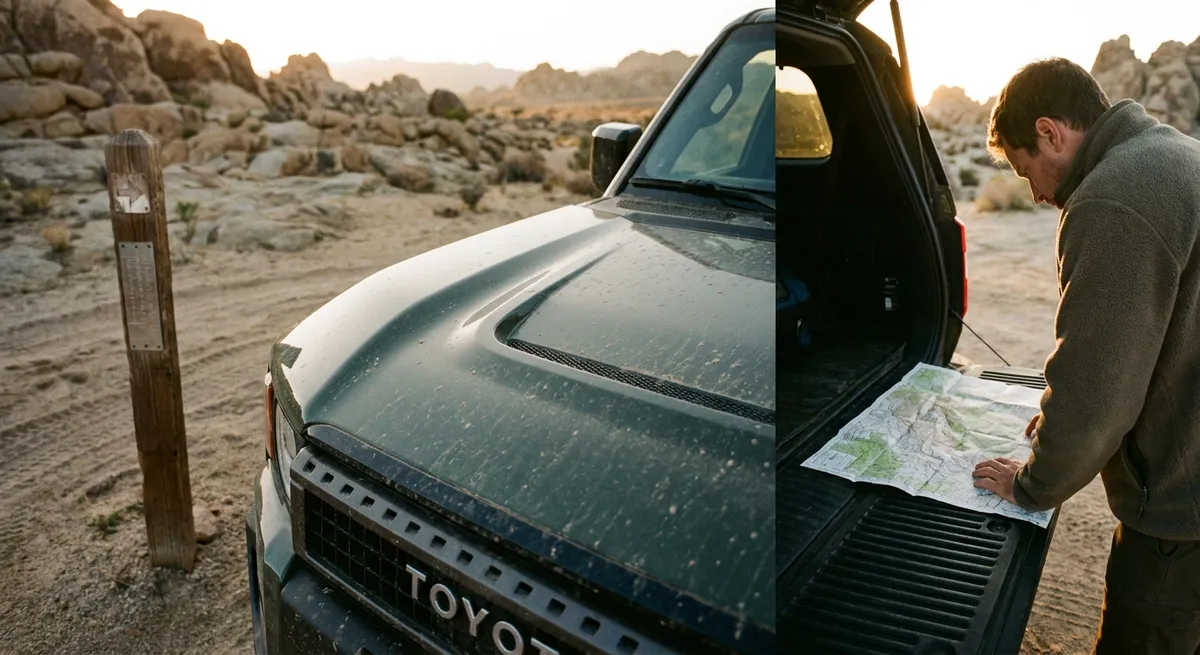
The Toyota Land Cruiser name carries serious weight with SUV enthusiasts, but the 2025 U.S.-spec model returns in a very different form: smaller, more efficient, and laser-focused on off-road utility. Instead of chasing full-size luxury, this Land Cruiser leans into rugged credibility with modern hybrid tech and a surprisingly approachable price point for such an iconic badge. For buyers cross-shopping hard-use family SUVs and true adventure rigs, understanding where this Land Cruiser excels—and where it compromises—is critical.
Powertrain and Performance: Turbo-Hybrid with Real-World Muscle
Under the hood, the 2025 Land Cruiser abandons the traditional V8 in favor of Toyota’s i-Force Max turbo-hybrid system. It pairs a 2.4-liter turbocharged four-cylinder gasoline engine with an electric motor integrated into an 8‑speed automatic transmission. Combined output is about 326 horsepower and 465 lb-ft of torque—numbers that, on paper, beat the old V8’s torque delivery while using less fuel.
The electric motor fills in low-rpm torque, which is a big deal off-road and when towing. You get strong, immediate pull from a stop, helpful when climbing steep grades on loose surfaces or merging onto the highway with a full load of passengers and gear. Enthusiasts used to naturally aspirated response will notice the character change: the turbo-four is more vocal and works harder at the top of the rev range, but the hybrid assist masks lag in most daily-driving scenarios.
An 8-speed automatic shifts cleanly and is geared for both low-speed control and relaxed highway cruising. Crucially, Toyota retains a full-time 4WD system with a center locking differential, low-range transfer case, and available rear locking differential. This separates the Land Cruiser from soft-road crossovers with “on-demand AWD” that rely on traction control rather than mechanical lockup.
The hybrid system’s packaging does add some mass, but the torque advantage is more important for most use cases: pulling a small to mid-size trailer, climbing technical trails at low speed, or carrying camping gear over mountain passes. For buyers coming from older Land Cruisers or 4Runners, the performance feels less about high-rpm grunt and more about immediate, low-end shove—arguably a better match for how these vehicles are actually used.
Chassis, Suspension, and Off-Road Hardware
Beneath the squared-off bodywork, the 2025 Land Cruiser shares its ladder-frame platform with the global Land Cruiser Prado and related Tacoma/4Runner architecture. That means a proper body-on-frame design, which offers higher torsional strength and easier repairability after heavy off-road use compared with unibody crossovers.
Front suspension uses an independent double-wishbone setup, while the rear sticks with a solid axle and coil springs. This combination favors durability and articulation in rugged conditions, even if it can’t match the absolute on-road refinement of some unibody luxury SUVs. Toyota’s tuning aims for a middle ground: firm enough to control body motions on-road, compliant enough to keep tires in contact with uneven surfaces off-road.
Key off-road specs will interest enthusiasts:
- Ground clearance: Approximately 8.5–9.0 inches, depending on tires and trim
- Approach angle: Roughly in the low 30-degree range
- Departure angle: High 20s, with relatively short overhangs
- Breakover angle: Competitive for this class, aided by a moderate wheelbase
Standard full-time 4WD continuously splits torque between front and rear, with a locking center differential available to force a 50:50 split for maximum traction. Low range is engaged via a transfer case, not a software mode, which matters when crawling over rock shelves or descending steep grades. A rear locking differential (on higher trims) ensures both rear wheels turn at the same speed, critical when one wheel lifts or loses contact.
Toyota’s Crawl Control system functions like an off-road cruise control: you set a low target speed, and the vehicle manages throttle and braking to maintain it while you focus on steering. Multi-Terrain Select adjusts throttle mapping, traction control, and ABS logic for surfaces like mud, sand, or rock. While some purists prefer purely mechanical systems, these electronic aids lower the skill threshold and help prevent wheelspin damage on fragile surfaces.
For buyers planning extensive overlanding builds, the ladder frame and solid axle rear are welcome news—suspension upgrades, armor, and recovery points integrate more naturally than on crossovers. However, the hybrid packaging may complicate some aftermarket exhaust and underbody modifications, so serious builders will want to stay tuned to specialist shops as the platform matures.
Interior, Ergonomics, and Everyday Usability
Inside, the 2025 Land Cruiser deliberately steps away from the plushness of the prior 200 Series and aligns more closely with a “modern utility” theme. Surfaces are durable rather than decadent, with robust switchgear, large physical buttons, and materials chosen to survive long-term use, pets, kids, and outdoor gear. It feels intentionally crafted for owners who are going to use, not merely admire, their SUVs.
The seating layout is strictly two-row in the U.S. market. That’s a controversial choice for families coming from three-row crossovers, but it aligns with how most Land Cruisers are actually used in adventure and towing roles. In return, you get a generous cargo area and rear seats that offer adult-friendly legroom and headroom. The rear seatbacks fold nearly flat, creating a broad, usable load floor for camping gear, bikes, and recovery tools.
Ergonomically, Toyota strikes a balance between digital and analog:
- A large central touchscreen (12.3 inches on most trims) runs Toyota’s latest multimedia system with wireless Apple CarPlay and Android Auto.
- Critical controls—4WD selector, locking differentials, drive modes—are placed physically, close to the shifter, with clearly labeled rotary knobs and buttons.
- Climate controls get their own dedicated panel, which is ideal when wearing gloves or focusing on the trail rather than swiping through menus.
Visibility is a strong point. The upright windshield, relatively thin pillars, and squared edges make it easier to place the vehicle on tight trails or in crowded urban parking structures. Available multi-view cameras (including underbody and front-facing off-road views) enhance situational awareness when cresting hills or navigating rock gardens.
Noise insulation is good but intentionally not as soft and hushed as a full-luxury SUV. Tire and wind noise are noticeable at highway speed, especially on off-road–oriented rubber, but not intrusive. Enthusiast buyers who appreciate the tactile connection to the environment may view this as a positive; shoppers expecting a Lexus-quiet experience should adjust expectations or consider Toyota’s premium sibling models.
Technology, Safety, and Driver Assistance
The 2025 Land Cruiser brings Toyota’s latest driver-assistance and infotainment technologies, aimed at both safety and convenience without overwhelming the driver. Toyota Safety Sense (TSS) is standard, with features including:
- Pre-Collision System with Pedestrian Detection: Uses camera and radar to detect vehicles, pedestrians, and cyclists, applying automatic braking if needed.
- Dynamic Radar Cruise Control: Maintains distance to the vehicle ahead; on many trims, it works down to low speeds in traffic.
- Lane Departure Alert with Steering Assist and Lane Tracing Assist: Provide steering input to help keep the vehicle centered in its lane, though they should be viewed as assistance, not automation.
- Road Sign Assist: Reads speed limit and some road signs, displaying them in the instrument cluster.
For SUV buyers who frequently tow or head off-road, the camera and monitoring suite may be even more important than the highway-oriented aids. Available systems include:
- Panoramic View Monitor with multiple selectable angles, including front, side, and “bird’s-eye” views for tight spaces.
- Off-Road Camera Views, showing what’s directly in front of the vehicle when the hood blocks your line of sight—valuable for rock crawling and steep ledges.
- Trailer Assist Features on select models that help with hitch alignment and provide enhanced rear visibility.
Infotainment is anchored by Toyota’s latest software platform, featuring over-the-air update capability for maps and features, voice recognition that responds to natural language prompts, and integration with connected services such as remote start, door lock/unlock, and vehicle status via a smartphone app (subscription terms vary by region). While not as graphically elaborate as some European rivals, the interface favors clarity and responsiveness over flashy animation, which many buyers will prefer.
Safety ratings from agencies like NHTSA and IIHS are still rolling in for this new platform, but Toyota’s track record with body-on-frame SUVs is strong, and the extensive use of high-strength steel and modern crash-structure engineering is meant to compensate for the heavier architecture. As always, buyers who prioritize safety should look closely at independent crash-test results once fully available.
Ownership Experience, Efficiency, and Value Proposition
From an ownership and cost-of-use perspective, the 2025 Land Cruiser positions itself strategically between heavy, thirsty luxury SUVs and smaller, less capable crossovers. The hybrid powertrain’s efficiency is a clear advantage: while exact EPA numbers vary by trim and tire choice, fuel economy is notably better than the outgoing V8-powered global Land Cruisers and U.S.-market Sequoias of old.
For buyers who regularly rack up highway miles or undertake long overland trips, reduced fuel stops and lower operating costs add up quickly. The hybrid’s regenerative braking also cuts wear on brake components, especially in hilly terrain where long descents are common. However, the added complexity of turbocharging plus hybrid components raises understandable questions about long-term durability—questions Toyota partially addresses through its extensive hybrid experience and warranty coverage on hybrid-related components.
Maintenance schedules are similar to other recent Toyota trucks and SUVs: oil changes, inspections, and fluid services at manufacturer intervals, with hybrid system checks integrated into routine visits. Historically, Toyota body-on-frame SUVs have built strong reputations for exceeding 200,000 miles with proper care, and resale values tend to reflect that durability. Enthusiasts who plan to keep their vehicles for a decade or more should find this reassuring, though early data on this specific hybrid system in heavy-frame-duty use will take years to accumulate.
Value-wise, the Land Cruiser no longer competes directly with $80,000-plus luxury giants. Instead, it slots into a price band where buyers may be comparing it to fully optioned midsize crossovers, off-road-specialized trims of domestic SUVs, or lightly used premium models. What differentiates it is a unique combination of:
- Proven ladder-frame construction and genuine off-road hardware
- A modern, torque-rich hybrid system that reduces running costs
- Toyota’s widespread dealer network and parts availability
- A heritage nameplate with strong community and aftermarket support
For the right buyer—someone who truly intends to off-road, tow, or build an overland rig rather than merely commute—the 2025 Land Cruiser offers a focused tool rather than a fashion statement. Its compromises in outright luxury and third-row practicality are deliberate tradeoffs in favor of capability, efficiency, and durability.
Conclusion
The 2025 Toyota Land Cruiser marks a pivotal moment for one of the SUV world’s most respected names. By shrinking the footprint, embracing hybrid power, and doubling down on mechanical off-road capability, Toyota has repositioned the Land Cruiser as a serious, everyday-usable adventure platform rather than a pure status symbol. It may not satisfy traditionalists who miss the old V8 and three-row format, but for buyers who genuinely value trail competence, torque-rich efficiency, and long-haul robustness, this new generation delivers a compelling, technically sophisticated package.
Enthusiasts and potential owners should approach it not as a downsized luxury flagship, but as a modern, hybrid-powered interpretation of what made the original Land Cruisers legends: go-anywhere durability, mechanical honesty, and a clear mission. In that context, the 2025 Land Cruiser is not a compromise—it’s a recalibration.
Sources
- [Toyota USA – 2024–2025 Land Cruiser Product Information](https://www.toyota.com/upcoming-vehicles/landcruiser/) - Official specifications, features, and technical overviews from Toyota for the latest U.S.-market Land Cruiser
- [Toyota Global – Land Cruiser Heritage and Technical Background](https://global.toyota/en/mobility/toyota-brand/features/landcruiser/) - Historical context and engineering philosophy behind the Land Cruiser lineup
- [U.S. Department of Energy – Fuel Economy of Light-Duty Vehicles](https://www.fueleconomy.gov/feg/hybridtech.shtml) - Technical explanation of hybrid technology, efficiency benefits, and real-world considerations
- [IIHS – Vehicle Safety and Crashworthiness Research](https://www.iihs.org/ratings) - Independent safety ratings and methodology for evaluating SUV crash performance and driver-assistance systems
- [SAE International – Fundamentals of Modern SUV Chassis Design](https://www.sae.org/news/2020/01/suv-design-engineering) - Engineering-focused discussion of ladder-frame vs. unibody SUV platforms and their tradeoffs
Key Takeaway
The most important thing to remember from this article is that this information can change how you think about Reviews.