Consumer spec sheets make modern SUVs look surprisingly similar: comparable horsepower, similar cargo numbers, and overlapping fuel‑economy ratings. But beneath the marketing gloss, the architecture of an SUV—its platform, drivetrain layout, and structural philosophy—creates real‑world differences that matter for buyers who care about how a vehicle drives, what it can tow, and how long it will last.
This comparison‑focused guide cuts past trim packages and option bundles to examine five core technical areas where SUVs quietly diverge. Understanding these distinctions will help you evaluate test drives more critically, interpret manufacturer claims, and choose the right configuration for the way you actually use your vehicle.
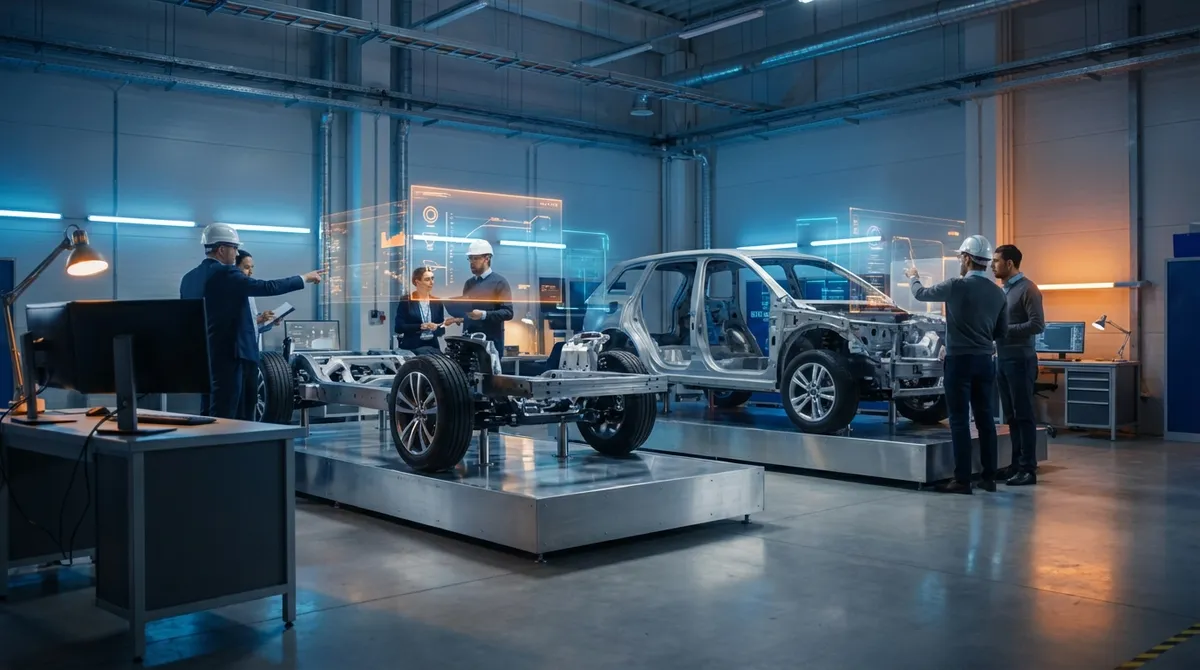
1. Unibody vs. Body‑on‑Frame: The Foundation of How an SUV Feels
Most modern SUVs fall into one of two structural camps:
- Unibody (monocoque) – The body and frame are a single integrated structure, similar to a car.
- Body‑on‑frame – A separate ladder frame carries the powertrain and suspension, with the body mounted on top.
How They Compare in the Real World
Ride and handling
- Unibody SUVs (e.g., Honda CR‑V, BMW X3, Hyundai Palisade) typically offer:
- Better torsional rigidity for a given weight, which sharpens steering response.
- Lower center of gravity because there’s no heavy ladder frame under the cabin.
- More car‑like ride quality, especially with independent rear suspension.
- Body‑on‑frame SUVs (e.g., Toyota 4Runner, Chevrolet Tahoe, Ford Expedition) usually:
- Feel more “trucky,” with more vertical body motion over bumps.
- Have more flex between body and frame on rough terrain, which some off‑roaders prefer for durability.
Towing and payload
- Body‑on‑frame platforms can more easily integrate heavy‑duty crossmembers and solid rear axles, often resulting in:
- Higher towing capacities (commonly 7,000–9,000+ lb in full‑size SUVs).
- Higher payload ratings, important if you carry passengers plus gear or tongue weight from a trailer.
- Unibody SUVs increasingly tow respectably (3,500–5,000+ lb in many midsizers), but their ultimate ceiling is usually lower.
Off‑road durability and modification potential
- Body‑on‑frame designs:
- Tolerate repeated impacts and twisting better in extreme off‑road use.
- Make it simpler to add aftermarket bumpers, winches, and rock sliders tied directly into frame rails.
- Unibody SUVs:
- Can handle light to moderate off‑roading when engineered for it (e.g., skid plates, reinforced subframes).
- Are more sensitive to structural changes; poorly executed lifts or heavy accessories can alter crash performance and NVH (noise, vibration, harshness).
Interior packaging
- Unibody structures let engineers carve out a flatter floor, more usable third rows, and better fuel‑tank and battery placement.
- Body‑on‑frame layouts must accommodate frame rails, often raising the cabin floor and cargo load height.
Who should prefer what
- Choose unibody if you prioritize ride comfort, handling precision, and efficiency.
- Choose body‑on‑frame if your primary concerns are heavy towing, frequent trail use, or long‑term robustness in rough conditions.
2. Front‑Drive vs. Rear‑Drive DNA: Why the Axle That Leads Matters
Even in the era of sophisticated AWD systems, the native drivetrain layout—front‑wheel drive (FWD‑based) versus rear‑wheel drive (RWD‑based)—has a distinct influence on how an SUV behaves.
FWD‑Based SUVs (Transverse Engines)
Common in compact and many midsize crossovers:
- Engine mounted transversely (sideways).
- Default layout is FWD, with AWD offered via an on‑demand rear axle.
- Examples: Toyota RAV4, Nissan Rogue, Subaru Forester (with standard AWD but still a transverse architecture), Kia Sorento (FWD‑based).
Pros:
- More interior space for a given footprint because the engine and transaxle are compact.
- Typically lighter and more fuel‑efficient.
- Lower drivetrain losses, as power path is shorter and simpler in FWD mode.
Cons:
- Under heavy acceleration, especially in powerful trims, FWD‑based platforms can exhibit torque steer (mainly in FWD versions).
- Weight bias toward the front can mean more understeer when driven hard.
- Towing capacity and rear axle robustness are often more limited than RWD‑based platforms.
RWD‑Based SUVs (Longitudinal Engines)
Found in many midsize and full‑size SUVs:
- Engine mounted longitudinally (front‑to‑back).
- Default layout is RWD, with optional 4WD or AWD.
- Examples: Mercedes‑Benz GLE, BMW X5, Jeep Grand Cherokee (RWD‑based versions), Ford Explorer (current generation).
Pros:
- Better weight distribution and more natural handling at the limit.
- Stronger rear driveline components, supporting higher towing ratings.
- Smoother power delivery and more stable behavior when fully loaded or towing uphill.
Cons:
- Slightly heavier with more complex drivelines.
- Less space‑efficient; transmission tunnel and driveshaft can intrude into cabin space.
- In slippery conditions, RWD‑only models need good tires and traction control tuning to feel secure.
AWD Variants: Not All Systems Are Equal
Even when both layouts feature AWD/4WD, the torque path differs:
- FWD‑based AWD typically sends power to the rear axle only when needed, via electronically controlled clutches.
- RWD‑based AWD can start with a rear‑biased torque split and send power forward as traction demands.
This affects:
- How an SUV feels on wet roads (more neutral with rear bias vs. more plow‑prone with front bias).
- How easily it can rotate into a corner under power.
- How predictable it feels in snow or on loose surfaces.
Buyer takeaway: When cross‑shopping, look beyond “AWD” in the brochure. Ask: Is the underlying platform FWD‑ or RWD‑based, and what’s the default torque split?
3. Suspension Philosophies: Comfort, Control, and Capability Compared
Suspension architecture is the hidden determinant of how an SUV rides, corners, and deals with rough surfaces. Comparing spec sheets reveals jargon like “multi‑link,” “torsion beam,” or “air suspension,” but the design logic is what matters.
Rear Suspension: Torsion Beam vs. Independent Multi‑Link
Torsion beam (semi‑independent)
- Common in smaller, cost‑sensitive SUVs.
- Left and right wheels are linked by a U‑shaped beam that can twist.
- Pros:
- Compact, inexpensive, durable.
- Leaves space for a low, flat cargo floor.
- Cons:
- Less ability to keep each rear wheel perfectly upright (optimal camber) during hard cornering.
- Ride can be less composed over broken pavement when the rear wheels are affected together.
Independent multi‑link or double‑wishbone
- Each rear wheel moves largely independently.
- Multiple arms control wheel motion in various planes.
- Pros:
- Better ride isolation, especially on uneven roads.
- More precise handling and tire contact patch control.
- Cons:
- More complex and expensive to build and maintain.
- Takes up more underbody space, which can complicate third‑row and fuel‑tank packaging.
Advanced Systems: Adaptive Dampers, Air Springs, and Active Roll Control
Premium SUVs often combine several technologies:
- Adaptive (electronically controlled) dampers
- Valving changes in milliseconds based on sensors.
- Can soften for comfort or firm up in corners and during aggressive driving.
- Air suspension
- Replaces steel coils with air springs.
- Allows ride‑height adjustment:
- Lower at highway speeds for aero efficiency and stability.
- Higher for off‑road clearance.
- Active anti‑roll bars
- Use electric or hydraulic actuators to reduce body roll in corners without needing very stiff passive bars that hurt ride quality over bumps.
Off‑Road‑Oriented Suspensions
Off‑road SUVs may add:
- Long‑travel shocks to absorb big hits.
- Tuned bump stops and jounce controls for repeated compression.
- Articulation‑friendly setups, sometimes with:
- Solid rear axles for durability and traction.
- Disconnecting sway bars to increase articulation over obstacles.
Comparative implications:
- For primarily on‑road driving, a well‑tuned independent suspension with adaptive dampers often delivers the best blend of comfort and control.
- For serious off‑roading or heavy towing, simpler but stout hardware (solid axles, heavy‑duty coils/leafs) may be more durable and predictable.
Buyer tip: When comparing SUVs, don’t just ask “Does it have independent rear suspension?” Ask how the system is tuned and whether adaptive or air components are available—and consider long‑term maintenance costs against the benefits.
4. Powertrain Strategies: Turbo vs. NA, Hybrid vs. Traditional
SUV engines now represent a spectrum from naturally aspirated V6s to downsized turbo‑fours, mild hybrids, full hybrids, plug‑in hybrids, and full battery‑electric setups. The headline power numbers rarely tell the whole story.
Turbocharged Four‑Cylinder vs. Naturally Aspirated V6
Turbocharged inline‑four
- Smaller displacement (often 1.5–2.5L) with forced induction.
- Strengths:
- Strong low‑rpm torque from boost, offering good around‑town response.
- Better official fuel‑economy ratings, especially in lab cycles, thanks to smaller displacement under light loads.
- Trade‑offs:
- Real‑world economy can suffer under constant boost (e.g., highway towing, aggressive driving).
- More thermal and mechanical stress; long‑term reliability depends on engineering and maintenance.
- Turbo lag, though much improved, is still perceptible in some calibrations.
Naturally aspirated V6
- Larger displacement (3.0–3.8L common) without turbos.
- Strengths:
- Linear power delivery and immediate throttle response.
- Often more robust feel when towing or climbing at sustained high loads.
- Trade‑offs:
- Higher curb weight and typically worse fuel economy ratings.
- May need higher RPM to access peak torque, which some drivers find less relaxed.
Buyer lens: If your use case is mostly commuting with occasional moderate loads, a modern turbo‑four can be excellent. If you routinely tow or drive in mountainous regions with a full cabin, a naturally aspirated V6—or a well‑engineered turbo‑six—may feel more effortless and consistent.
Hybrid and Plug‑In Hybrid SUV Powertrains
Conventional (non‑plug‑in) hybrids
- Combine a gas engine with one or more electric motors and a small battery.
- Benefits:
- Substantial city and stop‑and‑go fuel savings due to engine shut‑off and electric assist.
- Smoother low‑speed operation in traffic.
- Considerations:
- Battery usually too small for significant electric‑only range.
- Complex packaging but often proven, especially from long‑time hybrid makers.
Plug‑in hybrids (PHEVs)
- Larger battery with charge‑from‑the‑wall capability.
- Can often drive 20–50+ miles on electric power alone.
- Benefits:
- For short daily commutes, fuel consumption can be minimal.
- Full hybrid backup for long trips—no range anxiety.
- Considerations:
- Heavier, which can affect handling and cargo capacity.
- Towing ratings sometimes reduced versus conventional versions.
- Need consistent charging access to realize full benefits.
Full Battery‑Electric SUVs
- Eliminate the combustion engine entirely.
- Characteristics:
- Instant torque and very smooth power delivery.
- Battery mounted low in the chassis, lowering center of gravity.
- Trade‑offs:
- Range and DC fast‑charging infrastructure are key planning factors.
- Towing can significantly reduce range.
- Curb weights are often 1,000+ lb higher than comparable ICE models.
Cross‑shopping advice: When comparing SUVs with different powertrain approaches, go beyond peak horsepower claims. Look at:
- Torque curve (where in the rev range torque peaks and how long it’s sustained).
- Gross combination weight rating (GCWR) and tow ratings if you plan to haul.
- Real‑world fuel‑economy tests from independent sources, especially for turbocharged and hybrid models.
5. Off‑Road Systems vs. On‑Road Tech: Matching Capability to Reality
Many SUVs advertise “all‑terrain” capabilities, but the technical hardware and software support range from cosmetic to truly expedition‑ready. Understanding how systems compare helps you avoid paying for unused capability—or under‑buying for your needs.
Mechanical Off‑Road Hardware
Key comparative items:
- Transfer case type
- Single‑speed AWD: Good for slippery roads; lacks low range.
- Two‑speed transfer case (with low range): Essential for serious rock crawling, slow‑speed descents, heavy off‑road towing.
- Locking differentials
- Center locking or fixed torque split prevents all torque migrating to a spinning axle.
- Rear (and sometimes front) locking differentials mechanically force equal torque to both wheels on an axle, critical in deep mud or rock.
- Approach, breakover, and departure angles
- Determine how easily an SUV clears obstacles without body or bumper contact.
- Ground clearance
- Static ride height and, if available, maximum raised height with air suspension.
Software and Drive Modes
Modern SUVs increasingly rely on electronics to manage traction:
- Terrain‑select systems adjust:
- Throttle sensitivity.
- Transmission shift logic.
- ABS and traction‑control thresholds.
- AWD torque distribution pattern.
- Hill‑descent control uses ABS to regulate downhill speed on steep grades.
- Torque vectoring by brake can simulate a limited‑slip differential by braking a spinning wheel to send torque across an axle.
Comparative nuance:
- A vehicle with true lockers and low range will outperform a cosmetically rugged crossover in demanding off‑road situations, regardless of how many “modes” the latter offers.
- Conversely, if your “off‑road” driving is mostly unpaved county roads and winter conditions, a refined AWD crossover with good tires and strong traction software will likely be safer and more comfortable day‑to‑day.
On‑Road Driver‑Assist and Safety Technology
While off‑road systems get the marketing flair, on‑road ADAS (advanced driver‑assistance systems) can be more relevant to daily safety:
- Adaptive cruise control (ACC) with stop‑and‑go.
- Lane keeping assist and lane centering.
- Automatic emergency braking with pedestrian and cyclist detection.
- Blind‑spot monitoring and rear cross‑traffic alert.
- Highway semi‑automated driving in some premium models.
When comparing:
- Check whether features are standard or bundled into expensive packages.
- Look up independent safety ratings (IIHS, NHTSA) to validate manufacturer claims.
- Evaluate the calibration quality on test drives—some systems are smoother and less intrusive than others.
Practical match‑up:
- Heavy off‑road focus: Prioritize mechanical hardware (low range, lockers, clearance, underbody protection).
- Mixed use with real winters and light trails: Look for robust AWD plus all‑weather tires, with a sensible suite of driver aids.
- Primarily urban/suburban commuting: Software‑driven safety and comfort tech can matter more than rock‑crawling credentials.
Conclusion
Spec sheets often compress SUVs into a handful of headline numbers, but true differentiation lies deeper—in platform design, drivetrain orientation, suspension architecture, powertrain strategy, and the balance between off‑road hardware and on‑road technology.
By framing your comparisons around these five technical areas instead of just trims and touchscreen sizes, you can:
- Quickly separate car‑like crossovers from truck‑based workhorses.
- Understand why two “similar” SUVs feel completely different on a test drive.
- Avoid over‑ or under‑buying capability relative to how you actually drive, tow, and travel.
The most satisfying SUV isn’t the one with the longest option list; it’s the one whose underlying engineering is aligned with your real‑world use. Use these comparison points as a checklist, and you’ll approach showrooms and spec sheets with a far more strategic eye.
Sources
- [U.S. Department of Energy – Vehicle Technologies Office](https://www.energy.gov/eere/vehicles/vehicle-technologies-office) – Technical overviews of powertrains, efficiency technologies, and drivetrain layouts
- [IIHS – Vehicle Ratings](https://www.iihs.org/ratings) – Independent crash‑test and safety‑feature evaluations for SUVs and crossovers
- [NHTSA – 5‑Star Safety Ratings](https://www.nhtsa.gov/ratings) – Federal safety ratings and recall information for new vehicles
- [SAE International – Ground Vehicle Standards](https://www.sae.org/standards/content/j2807_201908/) – SAE J2807 towing standard used by many manufacturers for rating SUV tow capacity
- [Toyota Global Newsroom – TNGA Platform Information](https://global.toyota/en/mobility/tnga/) – Example of modern unibody platform engineering, packaging, and performance goals
Key Takeaway
The most important thing to remember from this article is that this information can change how you think about Comparisons.