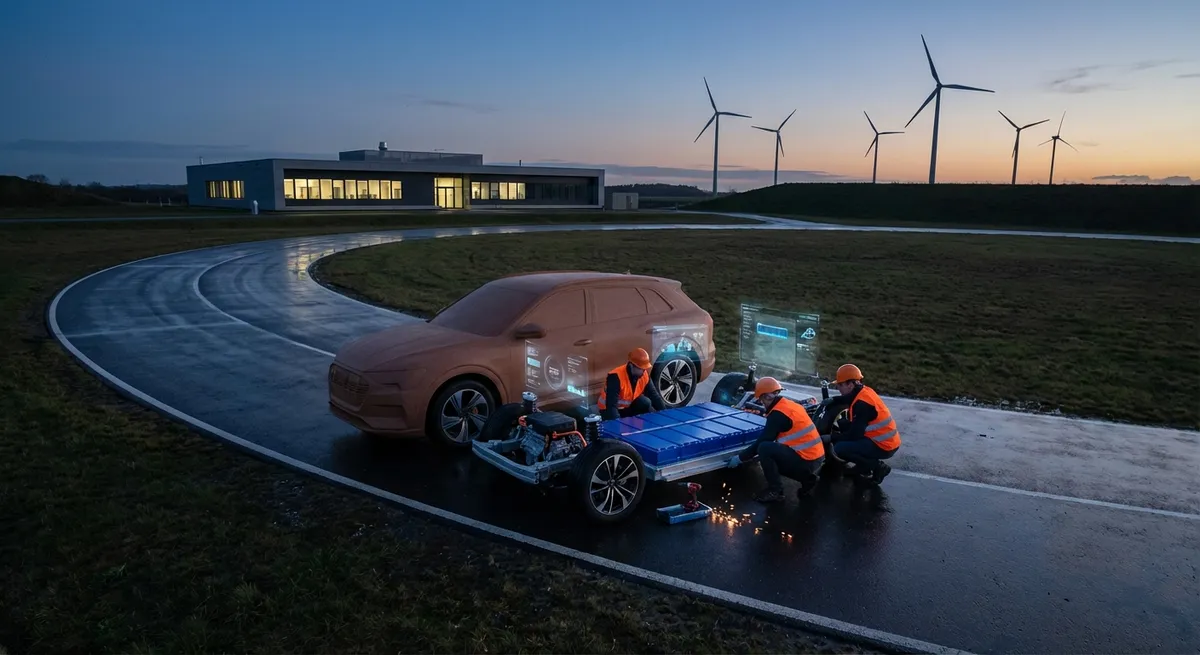
Electrified SUVs are entering a new phase, and it has nothing to do with bigger touchscreens or trendy light bars. The real transformation is happening under the floor: in the battery pack. From chemistries and cell formats to manufacturing footprints and recycling pipelines, global automakers are quietly rewriting their battery strategies—and the impact on SUV buyers over the next 3–7 years will be substantial.
This industry shift is about more than range figures on a spec sheet. It affects long‑term reliability, resale value, performance in extreme weather, charging behavior on road trips, and the kinds of SUVs automakers can profitably build and sell. Understanding what’s happening in the battery world today will help SUV shoppers read between the lines of tomorrow’s product announcements and marketing claims.
1. The Chemistry Shake‑Up: NCM vs. LFP vs. What Comes Next
For the past decade, most electric SUVs have relied on nickel‑rich lithium‑ion chemistries—typically variations of NCM (nickel cobalt manganese) or NCA (nickel cobalt aluminum). These chemistries deliver strong energy density, which means more range for a given pack size. But they come with trade‑offs: higher cost due to nickel and cobalt, increased sensitivity to high temperatures, and stricter thermal management demands.
Industry news over the last 18 months shows a clear pivot toward lithium iron phosphate (LFP) for a growing share of mass‑market EVs and SUVs. LFP batteries generally have lower energy density than nickel‑rich packs, but they’re cheaper, more thermally stable, and more tolerant of frequent fast charging and high state‑of‑charge operation. Tesla has already deployed LFP widely in its standard‑range vehicles, and Ford, Stellantis, and others have announced LFP strategies for future models, including SUV variants. Chinese battery giant CATL has been central in supplying LFP technology, and Western automakers are rapidly building local capacity to reduce supply‑chain risk.
For SUV buyers, that chemistry choice matters. An NCM‑equipped performance SUV may boast higher range and stronger acceleration with a similar pack footprint, but an LFP‑equipped family SUV might offer lower cost of entry, potentially longer cycle life, and more predictable durability in hot climates. Looking further out, solid‑state and sodium‑ion chemistries are moving from lab to pilot scale. Toyota, for example, has signaled aggressive solid‑state timelines later in the decade, while CATL and others are pushing sodium‑ion cells as a low‑cost solution for urban‑focused EVs and perhaps future compact SUVs. Shoppers should expect spec sheets to become more explicit about chemistry and should understand that “kWh” alone no longer tells the full story.
2. Cell‑to‑Pack and Structural Packs: Why Packaging Matters for SUVs
Beyond chemistry, the physical layout of cells inside the battery pack is undergoing a revolution. Traditional packs used a hierarchical structure: hundreds or thousands of small cylindrical or pouch cells grouped into modules, which then formed a pack. This modular design simplified repairs and standardized components, but it added weight, cost, and volume.
Emerging designs like cell‑to‑pack (CTP) and structural battery packs are changing that calculus. CTP configurations eliminate most or all of the intermediate module structure, integrating cells more directly into the pack. Tesla’s 4680 cylindrical cells and structural pack concepts, BYD’s “Blade Battery” LFP packs, and new prismatic CTP designs from CATL and others all pursue the same goals: higher volumetric efficiency, lower manufacturing cost, simpler assembly, and improved rigidity.
For SUVs, packaging efficiency is particularly important. Taller vehicles already face aerodynamic penalties, so reclaiming internal volume and reducing mass wherever possible directly benefits real‑world range and handling. A more structurally integrated pack can stiffen the chassis, improving ride and body control—especially meaningful for large three‑row or off‑road‑oriented SUVs. However, the flip side is serviceability: more integrated packs may be harder or more expensive to repair after severe damage. As these designs proliferate, potential buyers should pay attention to how automakers describe pack repairability, warranty coverage, and crash‑repair procedures, because what’s good for stiffness and cost may not always be ideal for modular replacement.
3. Domestic Battery Plants and the New SUV Supply Chain
Battery strategy is no longer just a technical question—it’s an industrial policy story. The U.S. Inflation Reduction Act (IRA), the EU’s Green Deal Industrial Plan, and similar regional initiatives are pushing automakers to localize battery production. Nearly every major brand with SUV ambitions has announced or broken ground on battery plants in North America and Europe, often as joint ventures with established cell manufacturers like LG Energy Solution, SK On, Panasonic, and CATL.
These giga‑scale factories are not just press‑release fodder; they determine which SUVs will qualify for consumer tax credits and how stable pricing can be over the model’s lifecycle. In the U.S., for example, eligibility for federal EV tax credits increasingly depends on where the battery components and critical minerals are sourced and processed. That means an electric SUV built in North America with locally produced cells may carry a stronger value proposition than a similar import, even if the vehicles appear comparable on paper.
For enthusiasts and buyers, this shift impacts more than purchase incentives. Localized production can reduce lead times, make mid‑cycle updates (like improved chemistries or cell formats) easier to integrate, and potentially improve parts availability and warranty turnaround. At the same time, this rapid build‑out poses execution risks: ramp‑up challenges at new plants can limit supply, constrain certain trims, or delay promised range and performance improvements. Monitoring which SUV programs are tied to mature vs. greenfield battery plants will provide clues about real‑world availability and pricing stability.
4. Fast Charging Curves, Thermal Management, and Road‑Trip Reality
Automakers have learned that a headline “350 kW fast‑charging capability” doesn’t tell the whole story—especially for heavy, high‑profile SUVs. The industry conversation is shifting from peak charging power to sustained charging curves and thermal management strategy. Many next‑generation packs will prioritize maintaining higher power for a larger portion of the state‑of‑charge window, not just hitting an impressive number for a few minutes at low charge levels.
Battery and SUV platform engineers are increasingly designing packs with optimized cooling plates, advanced coolant routing, and integrated pre‑conditioning controlled by the navigation system. Hyundai‑Kia’s E‑GMP platform, GM’s Ultium architecture, and upcoming platforms from Volkswagen Group and others all emphasize thermal management as a core performance attribute. For SUVs, which are more likely to be loaded with passengers and cargo or towing, this is critical: sustained high load generates heat, and poor thermal design can dramatically limit repeat fast‑charging performance on long drives.
The industry trend is toward packs that are designed from day one for repeated DC fast charging, particularly in fleet and high‑mileage use. Software also plays a major role: charging curves are increasingly managed dynamically based on pack temperature, state of health, and even driver charging habits. Enthusiast buyers should look beyond maximum kW figures and seek detailed charging profiles—how long the vehicle can maintain 150–200 kW, how quickly it tapers above 50–60% state of charge, and whether the vehicle supports automatic pre‑conditioning when a DC fast charger is set as a navigation destination. These details will separate genuinely road‑trip‑ready electric SUVs from those that only shine in brochures.
5. Second‑Life, Recycling, and the Long‑Term Value of Electric SUVs
As early EVs age and more high‑volume electric SUVs hit the market, end‑of‑life battery strategies are becoming a central industry focus. Automakers and suppliers are building out both second‑life and recycling ecosystems to capture residual value from packs and to meet tightening regulatory requirements. The EU Battery Regulation and parallel efforts in North America and Asia are pushing for higher material recovery rates for lithium, nickel, cobalt, and copper.
Companies like Redwood Materials in the U.S. and Li‑Cycle in North America and Europe are scaling hydrometallurgical and other advanced recycling processes that can recover a high percentage of critical materials with relatively low energy input compared to primary mining. Several automakers—including Ford, GM, and Volkswagen—have announced strategic partnerships with such recyclers, essentially closing the loop for future SUV packs. Second‑life applications, such as stationary storage for solar energy or grid services, allow packs with reduced automotive range to continue generating value before final material recovery.
For SUV owners, this evolving ecosystem has two important implications. First, stronger recycling and second‑life markets can support better long‑term residual values, because the pack retains material value even after the vehicle’s useful life. Second, regulatory pressure and corporate sustainability targets are likely to influence the chemistries and pack designs chosen for upcoming models—favoring those that are easier to disassemble, sort, and process. When shopping, it’s worth noting which brands publicly detail their battery lifecycle strategy and provide transparent warranty terms (e.g., 8‑year/100,000‑mile coverage with specific state‑of‑health thresholds). Those with robust, clearly described programs are better positioned to support owners through a full decade of SUV use.
Conclusion
The next wave of electric and electrified SUVs will be defined less by exterior styling and more by the quiet evolution of their battery technology and supply chains. Chemistry choices will shape cost, durability, and performance; advanced pack architectures will influence handling and repairability; localized manufacturing will determine incentive eligibility and pricing stability; smarter thermal and charging strategies will decide road‑trip viability; and end‑of‑life ecosystems will affect long‑term value and sustainability.
For enthusiasts and buyers, staying informed on these battery trends is no longer optional. Understanding how an automaker’s battery roadmap aligns with your priorities—whether that’s high‑performance capability, total cost of ownership, long‑distance usability, or environmental footprint—will be critical in choosing the right SUV as the market rapidly transitions. In an industry where kilowatt‑hours are the new horsepower, the real story is happening inside the pack.
Sources
- U.S. Department of Energy – Alternative Fuels Data Center: Batteries for Electric Vehicles - Technical overview of EV battery chemistries, performance, and lifecycle considerations
- International Energy Agency – Global EV Outlook 2024 - Industry‑wide data on EV adoption, battery trends, and policy impacts
- U.S. Department of the Treasury – Clean Vehicle Credits Guidance - Details on how battery sourcing and assembly affect U.S. EV tax credit eligibility
- European Commission – Batteries Regulation - Regulatory framework for battery sustainability, recycling, and material recovery in the EU
- Redwood Materials – Battery Recycling and Materials Recovery - Industry example of large‑scale lithium‑ion battery recycling and closed‑loop material strategies
Key Takeaway
The most important thing to remember from this article is that this information can change how you think about Industry News.