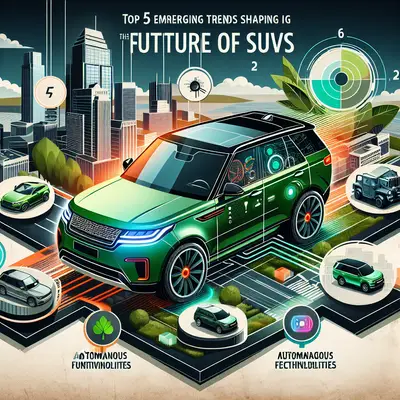
Global automakers are reshaping their SUV portfolios faster than most shoppers realize. From platform consolidation and new battery chemistries to software-defined vehicle architectures, the next 24–36 months will bring one of the most significant transitions the SUV segment has seen in decades. For buyers planning an upgrade between now and 2026, understanding these underlying shifts can be the difference between owning a future-proof SUV and driving a model that ages quickly in resale value and technology support.
Below, we break down five key industry moves shaping the next wave of SUVs—what manufacturers are doing, the tech behind it, and what it means when you walk into a showroom or spec a vehicle online.
1. Platform Consolidation: Fewer Architectures, More Variants
Automakers are aggressively consolidating their SUV lineups onto fewer “multi-energy” platforms that can support internal combustion (ICE), hybrid, plug-in hybrid (PHEV), and full battery-electric (BEV) drivetrains. This shift is driven by cost, regulatory pressure, and the need to reduce time-to-market for new models.
On the engineering side, this means shared hard points (such as suspension mounting, crash structures, and steering geometry) across compact, midsize, and sometimes three-row SUVs. A single flexible architecture can now deliver front-, rear-, or all-wheel drive; different wheelbases; and varying battery pack sizes. Expect to see more SUVs where the ICE and EV versions look nearly identical because they share the same core platform and body-in-white, with the main differences buried in the floorpan and underhood packaging.
For buyers, platform consolidation has two implications. First, it tends to improve quality and refinement, because each platform gets more investment and longer development cycles. Chassis tuning, NVH (noise, vibration, harshness) countermeasures, and advanced driver assistance systems (ADAS) are spread across more vehicles, and bugs tend to be ironed out faster. Second, it can limit truly unique models: brands are more likely to differentiate with software, interior design, and powertrain tuning rather than bespoke hardware.
If you are cross-shopping multiple SUVs from the same manufacturer, dig into which models share a common platform and what generation it is. Newer architectures usually bring stronger passive safety performance, higher electrical system capacity (important for future software features), and better packaging for hybrid and EV variants.
2. EV and Hybrid SUV Roadmaps: Fewer Niche EVs, More “Core” Hybrids
The EV correction of 2024–2025 is pushing automakers to recalibrate their SUV electrification plans. Instead of flooding the market with multiple niche electric SUVs, brands are refocusing on a smaller number of high-volume electric models while expanding conventional hybrid and plug-in hybrid offerings in their best-selling segments.
For EV SUVs, expect a clear split: premium long-range models on dedicated BEV platforms (with 800-volt architectures, flat-floor battery designs, and high-rate DC fast charging), and mainstream models on multi-energy platforms that share components with ICE siblings. Battery chemistries are also diversifying—lithium iron phosphate (LFP) packs are appearing in entry SUVs for cost and durability benefits, while nickel manganese cobalt (NMC) chemistries remain for performance or long-range variants.
At the same time, hybrid SUVs are set to become the default “practical choice” in many markets. Manufacturers are re-engineering their 8-speed and CVT gearboxes to integrate more compact and powerful electric motors, along with higher-voltage battery packs that can support meaningful EV-only driving in urban conditions. PHEV SUVs, in particular, are moving from 20–30 miles of electric range toward 40–60 miles, helped by improved energy density and more efficient thermal management.
For potential buyers, the key decision isn’t just EV vs. ICE anymore—it’s selecting the right degree of electrification aligned with your charging access and driving pattern. If you have predictable commutes and home charging, a PHEV SUV can effectively operate like an EV most days while providing long-distance flexibility. Conversely, if highway road trips dominate your usage, a fuel-efficient hybrid SUV with robust ADAS and a high-capacity 12V/48V electrical architecture may be more pragmatic than a first-generation BEV from a brand still scaling its charging ecosystem.
3. Software-Defined SUVs: Hardware Is Frozen, Features Are Fluid
Across the industry, SUVs are rapidly becoming “software-defined vehicles,” where much of the driving experience and feature set is controlled by code rather than dedicated physical modules. Centralized domain controllers, higher-bandwidth in-vehicle networks (such as automotive Ethernet replacing older CAN-only topologies), and over-the-air (OTA) update capability are now core design requirements.
In a traditional SUV, infotainment, powertrain control, ABS/ESC, and ADAS often ran on separate electronic control units (ECUs) with limited ability to evolve post-sale. In emerging SUV architectures, these functions are managed by a smaller number of high-performance processors, frequently built around ARM or custom automotive SoCs with dedicated AI accelerators. This makes it possible to roll out new driver-assistance behaviors, refine shift logic or torque vectoring, and even add cabin features (like upgraded voice assistants or new UI layouts) years into ownership.
The trade-off is that SUVs are now deeply tied to a brand’s software roadmap, not just its mechanical reliability. For enthusiasts and long-term owners, two questions become critical: how long the manufacturer commits to providing OTA support (and security patches), and whether core capabilities are locked behind ongoing subscription models. Some brands are experimenting with paywalled features—like enhanced adaptive cruise, advanced navigation, or even performance modes—unlocked for a monthly fee rather than included at purchase.
From a technical due diligence standpoint, ask whether the SUV supports full-vehicle OTA (including powertrain and safety systems) or only infotainment updates. Also consider whether the vehicle uses a proprietary operating system or one based on widely adopted platforms (such as Android Automotive OS), which may influence long-term app support and developer interest. A software-defined SUV with a strong back-end cloud infrastructure can age much more gracefully than a mechanically similar model saddled with obsolete software.
4. Advanced Safety and Sensor Suites: Radar, Cameras, and Now Lidar
Safety technology has quietly become one of the most aggressive battlegrounds in the SUV segment. Regulators and rating agencies are raising the bar: automatic emergency braking (AEB) with pedestrian detection, lane-keeping assist, and blind-spot monitoring are increasingly expected even in mainstream SUVs. At the same time, automakers are diverging on sensor strategy—some doubling down on camera-centric systems, others layering radar and even lidar for higher-confidence perception.
On the hardware side, many new SUVs are deploying multiple long-range and short-range radars to improve object detection in poor visibility and at highway speeds. High-resolution forward cameras, sometimes paired with infrared night vision sensors, feed more sophisticated AI-based vision algorithms for lane detection, traffic sign recognition, and vulnerable road user identification. A growing minority of premium SUVs are integrating roofline or grille-mounted lidar units, not for full autonomy, but to enhance depth perception and redundancy in complex scenarios such as multi-lane urban intersections.
For buyers, it is no longer enough to check a box for “driver-assistance package.” The implementation details matter. Some systems are purely assistive and require constant driver input on the steering wheel; others support hands-free operation on mapped highways using high-precision GPS and pre-validated road data. The quality of lane centering, the smoothness of adaptive cruise in cut-in traffic, and the ability to recognize cyclists or stationary obstacles at night can vary dramatically between brands, even if the spec sheets look similar.
When evaluating a new SUV, look beyond the marketing names (“ProPilot,” “Drive Assist,” etc.) and review independent testing from safety organizations and automotive publications. Check whether the vehicle supports automatic emergency braking in reverse, junction-crossing AEB, and cyclist detection—key features that are becoming part of future testing protocols. Also confirm whether new safety functions can be enabled via OTA updates as regulatory standards evolve.
5. Materials, Aerodynamics, and Efficiency: The Hidden Engineering Race
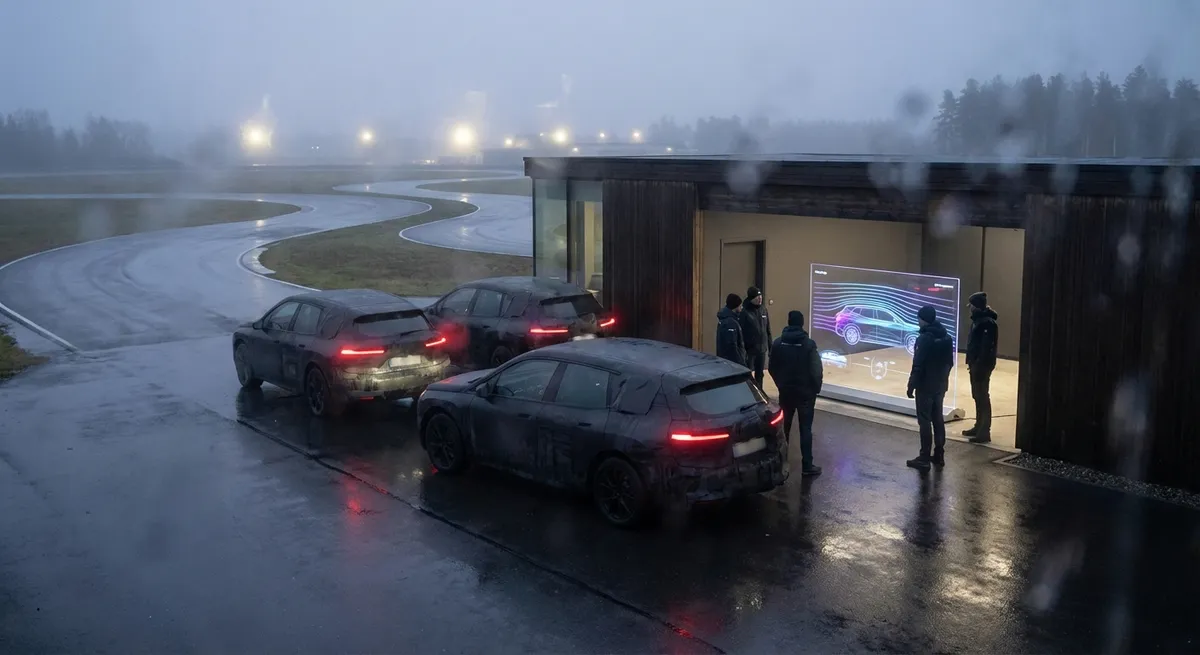
While powertrains and software get most of the headlines, a quiet revolution in materials and aerodynamics is reshaping SUV engineering. With tightening global CO₂ and fuel economy standards, every kilogram and every fraction of drag coefficient (Cd) matters. Engineers are finding efficiency gains in places many buyers overlook: underbody paneling, active grille shutters, wheel design, and mixed-material body structures.
Modern SUVs increasingly rely on multi-material architectures that combine high-strength steels, aluminum, and—in some premium cases—composites or carbon fiber-reinforced plastics in localized areas. Tailored blanks and hot-stamped components allow structures that are both lighter and stronger in crash-critical zones. At the same time, more attention is being paid to aero devices typically associated with sports cars: carefully shaped rear spoilers, side air curtains, and flush glazing to reduce turbulence around the A-pillars and mirrors.
The impact of these changes is substantial. A reduction in drag coefficient from, for example, 0.33 to 0.28 can yield meaningful gains in highway fuel economy or EV range, especially in taller, boxier SUV profiles. Low-rolling-resistance tire compounds and optimized wheel bearings further trim losses, though they can sometimes trade off against steering feel or ultimate grip—something enthusiasts should consider if they value dynamic performance.
From a purchasing standpoint, examine the manufacturer’s published drag coefficient and curb weight for the trims you’re considering, not just the base model. Roof rails, larger wheel packages, and off-road tires can erode efficiency gains. Also look for technical details such as active aero elements, underbody shielding, and the use of high-strength steel or aluminum in the body and suspension. These clues reveal how seriously the brand has engineered the SUV for long-term efficiency, which directly affects operating cost and, increasingly, regulatory compliance and taxation in certain markets.
Conclusion
The SUV market is entering a transition phase where the most important changes are not always visible from the driver’s seat on a quick test drive. Consolidated platforms, diversified electrification strategies, software-defined architectures, sophisticated sensor suites, and quietly optimized aerodynamics are all shaping what SUVs will look like in 2026 and beyond.
For enthusiasts and practical buyers alike, staying informed about these industry shifts turns a complex marketplace into a strategic opportunity. Instead of chasing badge prestige or short-lived features, focus on the underlying platforms, electrical architectures, safety sensor strategies, and efficiency engineering that will determine how your next SUV performs—and holds value—over the next decade.
Sources
- IIHS – Advanced driver assistance and crash prevention technology - Detailed overview of current ADAS features and their real-world safety impact
- U.S. Department of Energy – Alternative Fuels Data Center: Hybrid and Plug-In Electric Vehicles - Technical background on hybrid, PHEV, and EV powertrains and efficiency considerations
- National Highway Traffic Safety Administration (NHTSA) – Vehicle Safety Ratings & NCAP - Up-to-date information on safety testing protocols and ratings for SUVs and other vehicles
- International Energy Agency – Global EV Outlook - Industry-wide data and projections on electrification trends, including SUV adoption and policy drivers
- BMW Group – “Software-Defined Vehicle” Technical Insights - Manufacturer perspective on centralized computing, OTA updates, and software architectures in modern vehicles
Key Takeaway
The most important thing to remember from this article is that this information can change how you think about Industry News.