Choosing an SUV today isn’t about picking the biggest screen or the longest feature list—it’s about understanding how all those specs translate into real-world driving, ownership cost, and long-term value. With dozens of models overlapping in size, price, and performance, serious shoppers need a comparison framework that goes deeper than brochure headlines. This guide breaks down five critical comparison angles that cut through marketing noise and help you decide which SUV truly fits your needs.
1. Platform and Chassis: What’s Underneath Changes Everything
When comparing SUVs, start with what you can’t see: the platform and chassis. Two similar-looking models can behave completely differently on the road because of their underlying architecture.
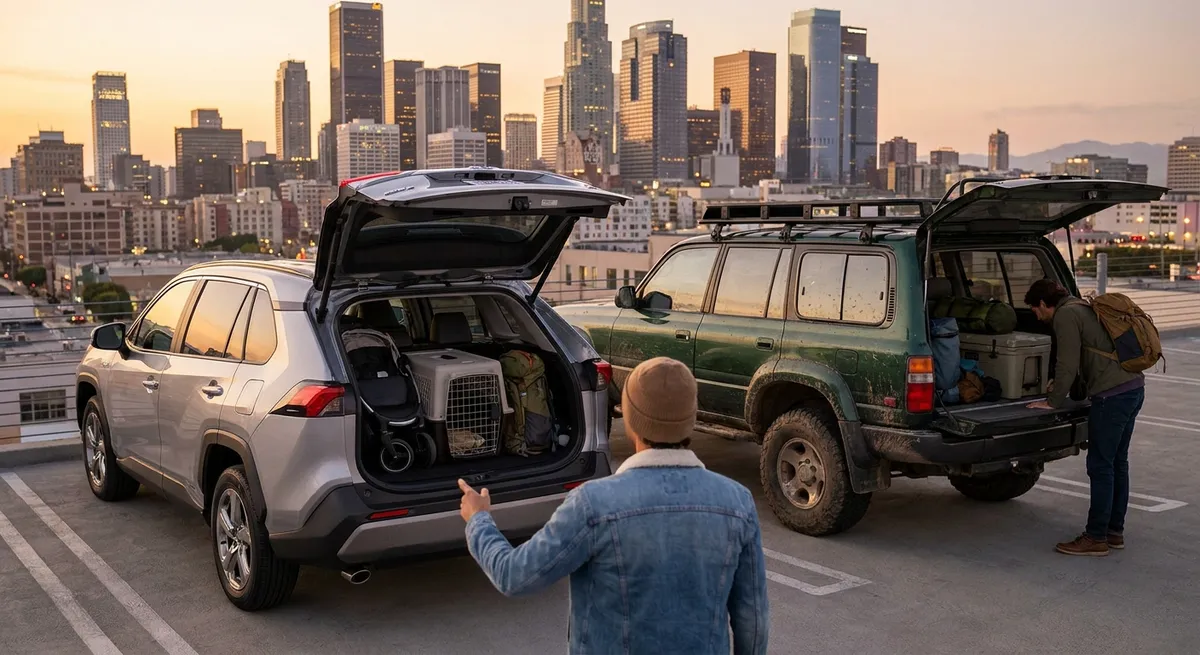
Unibody SUVs (crossovers) such as the Honda CR‑V or Toyota RAV4 use car-like platforms, typically with MacPherson strut front suspensions and multi-link rears. These generally offer lower weight, better fuel economy, and more refined on-road manners. They’re ideal for commuters who prioritize ride comfort, NVH (noise, vibration, harshness) suppression, and efficiency over extreme durability.
Body-on-frame SUVs like the Toyota 4Runner or Ford Bronco use a separate ladder frame, closer to a pickup truck. This brings higher torsional rigidity for towing and off-road impacts, but also adds weight and can reduce handling precision and fuel economy. When comparing two SUVs, verify their construction type and pay attention to curb weight and wheelbase: a longer wheelbase often improves high-speed stability and rear legroom, but can hurt tight maneuverability and breakover angle off-road.
Also compare front and rear suspension designs. A fully independent rear suspension (IRS), used by many modern midsize SUVs, generally improves ride quality and cornering, especially on imperfect pavement. Solid rear axles are more common on serious off-road and tow-focused models and can take more abuse but may feel less composed over small bumps at speed. These structural details will matter more over years of driving than a slightly larger touchscreen or an extra USB port.
2. Powertrain Character: More Than Horsepower and 0–60 Times
Powertrain comparisons should go deeper than peak horsepower. Look at the entire torque curve, transmission behavior, and driveline layout to understand how an SUV will feel in daily use.
Gasoline engines typically rev higher and can feel more responsive at the top end. Turbocharged four-cylinders, now common in compact and midsize SUVs, deliver strong low‑rpm torque but may require premium fuel and show greater real-world consumption when pushed. Naturally aspirated V6 engines often offer smoother power delivery and less turbo lag but at the expense of peak efficiency.
Compare torque output at low rpm (for example 1,500–2,500 rpm) rather than just maximum horsepower at 5,000+ rpm. That low-end torque matters for stop‑and‑go traffic, hill starts, and towing. Pay attention to transmission type: traditional torque-converter automatics (8‑ to 10‑speed) generally offer more natural shift feel, while CVTs focus on efficiency but can feel less engaging. Dual‑clutch transmissions may deliver quicker shifts but can hesitate at low speeds, which some buyers dislike in heavy traffic.
Drivetrain choice is another major differentiator. Front‑wheel drive (FWD) platforms can free up interior space and help efficiency, but all‑wheel drive (AWD) or four‑wheel drive (4WD) systems are critical if you regularly deal with snow, gravel, or steep unpaved roads. Compare whether the SUV uses a simple on‑demand AWD system (often reactive) or a more advanced setup with a rear‑axle or center locking feature and selectable drive modes (e.g., snow, sand, mud). Check rated towing capacity, gross vehicle weight rating (GVWR), and combined fuel economy to see how the powertrain and driveline balance performance and efficiency for your intended use.
3. Real-World Space and Packaging: Dimensions Versus Usability
Spec sheets list length, width, and cargo volume, but those numbers can mislead if you don't understand how space is packaged. Smart comparison shoppers look at measurements that reveal how people and gear actually fit.
Start with legroom and headroom in both rows (and the third row, if applicable). A compact SUV with efficient packaging can rival a larger model that has a sloping roofline or thickly padded seats. Pay special attention to second-row shoulder room and the floor hump size; a flat floor and wider cabin can make three-abreast seating tolerable for adults, not just children. In three-row SUVs, compare third-row hip and legroom plus seat height; if your knees are at chin level, that extra row is more emergency seating than true family space.
Cargo area comparisons require more nuance. Manufacturers often quote cargo volume “behind the second row” or “behind the third row,” usually measured to the roof according to SAE standards. Look at the length of the load floor with rear seats folded, the presence of a step or slope in the floor, and whether the seats fold flat. A lower liftover height makes loading heavy items or pets easier; it’s a small ergonomic factor that has large day-to-day impact.
Also examine visibility and glass area. A more upright greenhouse with larger windows and thinner pillars can make a smaller SUV feel airy and easier to place in tight spaces, while heavily raked rear windows and thick D‑pillars (common in style-forward models) can hinder rearward visibility and cargo height. Compare turning circle diameter as well; a shorter turning radius makes a big difference in city maneuvering, parking garages, and tight driveways, even if overall length is similar.
4. Dynamics, Safety Systems, and Driver Assistance Calibration
Two SUVs can share nearly identical safety and driver-assistance feature lists, yet feel dramatically different because of tuning and calibration. When comparing models, it’s not enough to tick boxes like “lane-keep assist” or “adaptive cruise control”—you need to understand how they behave in practice and how the chassis supports those systems.
Start with independent crash test scores. Look at both NHTSA and IIHS where available, noting differences in small overlap crash performance and side-impact ratings. The IIHS “Top Safety Pick” and “Top Safety Pick+” designations can be useful shorthand, but dig into headlights evaluations and crash-avoidance system ratings as well. Poor headlight performance or inconsistent automatic emergency braking results should weigh into your decision.
On the dynamics side, compare tire sizes, wheel diameters, and curb weight, as these directly influence ride and handling. Larger wheels with low-profile tires can improve steering response but often worsen ride quality on rough roads. Heavier SUVs usually feel more planted at highway speeds but might be less nimble in city driving; power-to-weight ratio and braking distance measurements (from instrumented tests, when available) provide a clearer picture than engine output alone.
Driver-assistance systems vary widely. Some lane-centering systems gently nudge the wheel and are easy to live with, while others ping-pong within the lane or are too aggressive, leading owners to disable them. Adaptive cruise control performance in stop‑and‑go traffic is another key differentiator—compare whether the system can go to a full stop and resume automatically, and how smoothly it modulates braking and acceleration. Reading comparison tests and owner feedback about these systems can be as important as reading about horsepower and infotainment screens.
5. Ownership Economics: Warranty, Depreciation, and Long-Term Costs
Initial purchase price only tells part of the story when comparing SUVs. Total cost of ownership over 5–10 years can diverge dramatically between models that seem similar at first glance.
Start with warranty coverage. Compare basic bumper-to-bumper and powertrain warranty lengths, as well as corrosion coverage and roadside assistance provisions. Longer powertrain warranties can be particularly valuable on turbocharged or hybrid powertrains with more complex components. OEM-recommended maintenance intervals and whether scheduled service is included for a limited time (as some brands offer) also influence early ownership costs.
Fuel economy comparisons should go beyond the combined EPA figure. Look at city and highway ratings separately and consider your actual driving pattern. For example, a model optimized for highway cruising might underperform in short-city-trip usage. For electrified SUVs, compare EPA-rated electric range (for plug-in hybrids) and DC fast-charging speeds (for EVs), as these will dictate how often you rely on gasoline or public charging infrastructure.
Depreciation and resale value can be decisive. Historical data from similar models and brands often show that some SUVs retain a higher percentage of their value at 3–5 years, offsetting a slightly higher purchase price. Insurance premiums, which are influenced by vehicle size, crash repair costs, and theft rates, also vary across models; getting a few quotes before deciding can reveal hidden differences.
Finally, consult reliability and owner satisfaction data from long-running surveys. These highlight trouble spots such as transmission issues, infotainment glitches, or premature wear in suspension components. An SUV that costs a few dollars less per month in fuel but is prone to expensive out-of-warranty repairs may not be the better long-term choice. Weighing warranty coverage, projected maintenance, fuel/energy costs, and expected resale value will give you a more accurate comparison than price tags alone.
Conclusion
Meaningful SUV comparisons require looking past marketing bullets and digging into fundamentals: the platform beneath the bodywork, the shape of the torque curve, how space is packaged, the behavior of safety and driver-assistance systems, and the economics of owning the vehicle long term. By structuring your comparisons around these five pillars, you’ll quickly see which SUVs are optimized for towing versus commuting, which prioritize comfort over capability, and which balance performance with predictable ownership costs. That deeper view transforms a crowded marketplace into a set of clearly differentiated choices—so the SUV you pick is the one that genuinely fits your life, not just your driveway.
Sources
- [NHTSA – Vehicle Safety Ratings](https://www.nhtsa.gov/ratings) - Official U.S. government crash-test ratings and safety information for comparing SUVs
- [IIHS – Ratings & Safety Research](https://www.iihs.org/ratings) - Independent crash tests, headlight evaluations, and crash-avoidance system assessments
- [U.S. Department of Energy – Fuel Economy Guide](https://www.fueleconomy.gov/feg/findacar.shtml) - Official EPA fuel economy, range, and energy cost data for gasoline, hybrid, PHEV, and EV SUVs
- [Kelley Blue Book – 5-Year Cost to Own](https://www.kbb.com/car-advice/5-year-cost-to-own-awards/) - Analysis of depreciation, fuel, insurance, and maintenance to compare long-term SUV costs
- [Consumer Reports – Car Reliability & Owner Satisfaction](https://www.consumerreports.org/cars/) - Long-term reliability, road-test results, and owner feedback for various SUV models
Key Takeaway
The most important thing to remember from this article is that following these steps can lead to great results.