The SUV market is entering one of its most volatile and innovative phases in decades. Semiconductor supply is stabilizing but still reshaping product strategies, new emissions rules in the U.S. and Europe are forcing automakers to rethink engines and platforms, and the early hype-cycle of electric SUVs is settling into a tougher, more pragmatic reality. For enthusiasts and serious buyers, these shifts aren’t abstract headlines—they directly affect what gets built, how much it costs, and how long you’ll want to keep it.
This industry briefing breaks down five major forces currently reshaping the SUV landscape, with a focus on what they mean for powertrains, technology, pricing, and long-term ownership.
1. From Crisis to Control: How the Chip Shortage Changed SUV Tech for Good
The acute semiconductor crisis of 2021–2023 has eased, but it permanently changed how SUVs are engineered and equipped.
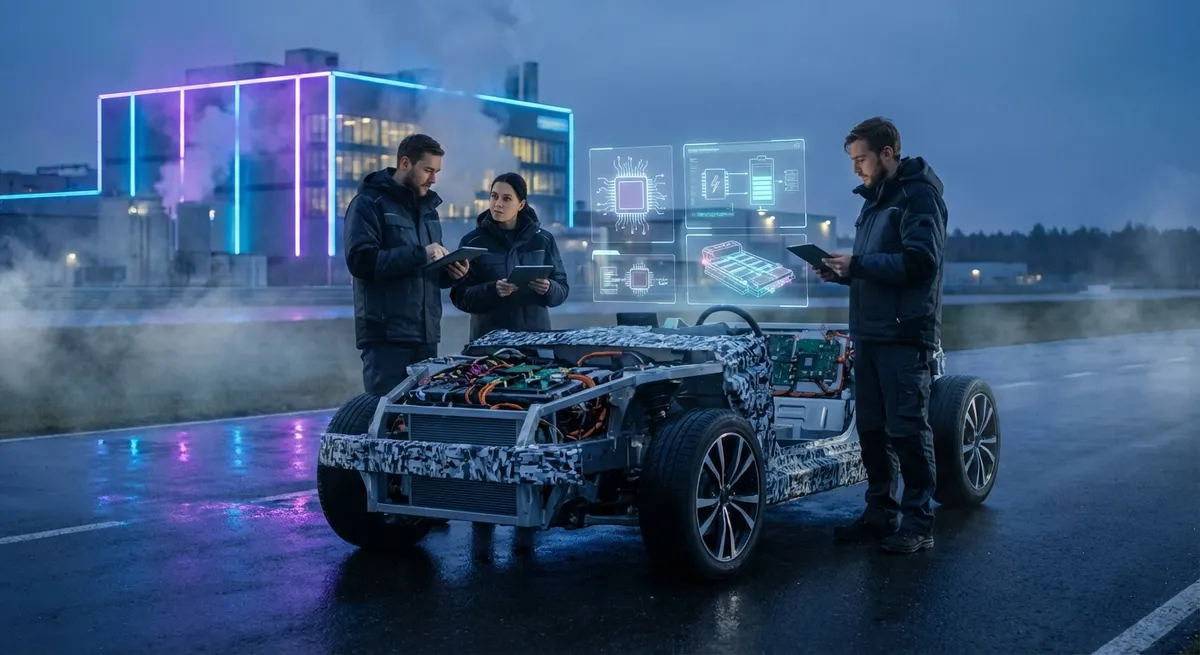
Automakers are moving away from dozens of small, distributed electronic control units (ECUs) toward centralized, “domain” or “zonal” architectures. Instead of a separate module for every system—infotainment, ADAS, climate, power seats—new platforms consolidate functions into a handful of powerful computing hubs. For SUVs, this allows more flexible tuning of off-road modes, traction control, adaptive dampers, and driver-assistance features via software updates, without redesigning hardware.
Crucially, OEMs have started “de‑contenting” lower trims—fewer complex features like gesture controls or unnecessary touch surfaces—to reduce semiconductor dependence and simplify manufacturing. Many brands are also entering long-term procurement agreements directly with chipmakers (e.g., STMicroelectronics, NXP, TSMC) instead of relying solely on Tier 1 suppliers, aiming to secure allocations for high-margin vehicles like SUVs.
For buyers, this means current and upcoming SUVs are more software-defined and more updateable than pre-2020 models, but with sharper trim walk differentiation. Base models may be more bare-bones than you remember, while upper trims gain more advanced displays, L2+ driver assistance, and connected services that can be upgraded over time—often for a subscription fee. Enthusiasts should watch how long brands promise OTA (over-the-air) support, since it will affect longevity of tech features in a way similar to smartphone OS support cycles.
2. Emissions Crackdown: Why Powertrain Strategies for SUVs Are Rapidly Splitting
Regulatory pressure is accelerating a split in SUV powertrain strategies between major regions.
In the United States, the EPA’s final 2027–2032 light-duty vehicle emissions standards push automakers to significantly lower fleet average CO₂ and pollutant output. While the rule is technology-neutral on paper, the math heavily favors electrification—plug‑in hybrids (PHEVs) and full battery electrics (BEVs). SUVs are central to this because they dominate U.S. sales; manufacturers are increasingly using hybrid and PHEV SUVs to offset trucks and performance models that are harder to fully electrify.
In the European Union, the Euro 7 regulation (a contentious successor to Euro 6) and the planned 2035 phaseout of most new ICE-only light vehicles are driving an even faster shift. Many brands are planning their last generation of pure ICE platforms now and designing SUVs on BEV-first architectures, with ICE and PHEV variants often sharing the same core structure and crash systems. This allows them to amortize R&D across multiple powertrains while meeting progressively tighter fleet targets.
For buyers, expect:
- More high-efficiency turbocharged four-cylinder engines replacing V6 units in midsize SUVs, often paired with 48‑volt mild-hybrid systems.
- Increased availability of PHEV SUVs with usable electric-only ranges (30–50+ miles / 50–80+ km WLTP) targeting urban commutes.
- A gradual decline in naturally aspirated large-displacement engines outside of niche or off-road focused models.
Enthusiasts who value long-term mechanical simplicity might favor the last generation of robust, mostly mechanical powertrains, while those focused on running costs and access to low-emission zones (especially in Europe) should pay close attention to PHEV developments and charging infrastructure in their area.
3. The EV SUV Reality Check: Right-Sizing Batteries and Rethinking Range
The first wave of electric SUVs focused on maximum range and performance, often with very large battery packs (90–120+ kWh). Current industry news suggests a correction: automakers are moving toward more moderate pack sizes, higher efficiency, and diversified chemistries.
Several manufacturers are introducing lower-cost trims with lithium iron phosphate (LFP) batteries. LFP offers lower energy density than nickel manganese cobalt (NMC/NCA), but better cycle life and lower cost per kWh—ideal for city-focused compact SUVs and fleet vehicles where 220–280 miles (350–450 km) of real-world range is acceptable. For mid- and full-size electric SUVs, OEMs are refining aerodynamics, drive unit efficiency, and thermal management to achieve similar or better range with smaller packs, reducing weight and cost.
Charging infrastructure developments are equally important. The expansion of high-power DC fast charging networks in North America and Europe, plus industry convergence on the North American Charging Standard (NACS) in the U.S., improves the day-to-day usability of EV SUVs. Automakers are also bringing bi-directional charging (V2H/V2G) into mainstream models, allowing an SUV to power a home during outages or feed energy back into the grid where regulations permit.
For potential EV SUV buyers, the pivot means:
- Don’t evaluate models on rated range alone; examine efficiency (mi/kWh or kWh/100 km) and usable battery capacity.
- Watch which brands are supporting 800‑volt architectures or advanced thermal management that allow repeated high-rate fast charging without dramatic degradation.
- Consider your charging profile: home charging access, local electricity prices, and DC fast charger availability will matter more than absolute pack size for most drivers.
The performance EV SUV segment isn’t going away, but a more balanced, efficiency-first design philosophy is taking hold—particularly in the compact and midsize categories.
4. Software-Defined SUVs: From ADAS Arms Race to Function-on-Demand
SUVs are at the forefront of the automotive shift to software-defined vehicles (SDVs). This is visible not only in infotainment stacks (Android Automotive, custom Linux-based systems, and proprietary OS variants) but in how advanced driver-assistance systems (ADAS) are deployed and monetized.
The latest industry trend is “function-on-demand”: vehicles ship with hardware capable of advanced features—adaptive cruise with lane centering, automatic lane changes, advanced off-road telemetry—but the full feature set may be locked behind software activations, time-limited trials, or subscriptions. Some brands are already testing paywalled upgrades like higher-capacity towing modes, enhanced off-road navigation, or performance boosts via motor/inverter tuning.
On the safety side, regulatory attention is tightening. European regulators, NHTSA in the U.S., and other authorities are scrutinizing how Level 2 and Level 2+ systems are marketed and how reliably driver monitoring is enforced. Expect more SUVs with camera-based driver monitoring systems, stricter hands-on-wheel requirements, and clearer limitations in user interfaces.
Technically, new SUV platforms are incorporating:
- Centralized compute units with automotive-grade SoCs capable of running multiple virtualized domains (infotainment, ADAS, body control).
- High-bandwidth Ethernet networking replacing older CAN bus-only architectures.
- Redundant sensor suites (radar + camera, sometimes LiDAR on premium models) enabling more robust perception in adverse conditions.
For enthusiasts and buyers, the implications are twofold. First, long-term value will depend heavily on the manufacturer’s software support roadmap—how often they update maps, ADAS, and infotainment, and for how many years. Second, the resale market may begin to distinguish between vehicles with permanently unlocked feature sets and those relying on subscriptions that future owners might not maintain, affecting desirability of certain trims.
5. Pricing Pressure and “Right-Sizing”: Why the Middle of the SUV Market Is in Flux
After years of steady price inflation driven by supply shortages, premium content, and a shift toward larger vehicles, automakers are now confronting more price-sensitive consumers, higher interest rates, and intensifying competition from new entrants—particularly Chinese brands in Europe and other global markets.
Manufacturers are responding in several ways:
- Introducing more compact and subcompact SUVs with premium touches but fewer cylinders and smaller footprints, targeting urban buyers who want SUV styling without full-size ownership costs.
- Rebalancing equipment packages: instead of fully loaded high trims only, more “value-focused” mid-trims with essential safety/tech and fewer luxury add-ons are returning.
- Tightening incentives and lease programs in some regions while selectively discounting slow-moving EV SUVs to maintain volumes.
At the same time, there is a clear stratification between rugged, body-on-frame or off-road-biased SUVs (often commanding strong pricing) and road-focused crossovers. Body-on-frame and serious off-road hardware—two-speed transfer cases, locking differentials, robust skid plating—are increasingly positioned as enthusiast or lifestyle products, while the majority of volume sits in unibody crossovers optimized for efficient commuting and light adventure.
For potential buyers, this reshuffling means the most interesting value may appear in:
- Midsize unibody SUVs with strong standard safety suites and mid-level tech, avoiding the cost of top trims while retaining core capability.
- Previous-generation platforms that remain in production alongside new architectures, often at relatively attractive pricing with proven drivetrains.
- Lease deals on EV SUVs where automakers are aggressively managing residual values and tax-credit passthroughs (in markets like the U.S.) to keep payments competitive.
Enthusiasts should also watch how depreciation patterns change as software-defined features and battery health become more critical to used values—inspection checklists now arguably need to include software version status and detailed battery reports, not just mechanical condition.
Conclusion
The SUV segment in 2025 is shaped less by individual models and more by structural shifts: post-crisis semiconductor strategy, tightening emissions regulations, a more mature EV market, the rise of software-defined architectures, and aggressive price and product repositioning. For car enthusiasts, this era offers some of the most technically sophisticated SUVs ever built, but also demands more attention to long-term software support, regulatory context, and charging or fuel ecosystems.
For buyers planning a purchase in the next few years, the key is alignment: match your needs—daily range, towing, off-road use, tech tolerance, and budget—to where each brand is heading, not just where it has been. The SUVs that age best will likely be those designed with efficient, flexible platforms, robust software lifecycles, and powertrains that sit on the right side of emerging regulations. Staying informed on these industry currents will help you choose an SUV that remains compelling and capable well into the next decade of rapid change.
Sources
- [U.S. Environmental Protection Agency – Multi-Pollutant Emissions Standards for Model Years 2027 and Later Light-Duty and Medium-Duty Vehicles](https://www.epa.gov/regulations-emissions-vehicles-and-engines/final-rule-multi-pollutant-emissions-standards-model-years) - Official overview of upcoming U.S. light-duty vehicle emissions regulations and their impact on automakers’ fleets
- [European Commission – CO₂ emission performance standards for cars and vans](https://climate.ec.europa.eu/eu-action/transport/emissions-cars-and-vans_en) - Details EU CO₂ targets for passenger vehicles and the pathway toward 2035
- [International Energy Agency – Global EV Outlook](https://www.iea.org/reports/global-ev-outlook-2024) - Comprehensive analysis of global EV market trends, including SUVs, battery chemistries, and charging infrastructure
- [McKinsey & Company – The software-defined vehicle: Automotive’s new value-creation engine](https://www.mckinsey.com/industries/automotive-and-assembly/our-insights/the-software-defined-vehicle) - Industry-focused examination of SDV architectures, monetization models, and implications for manufacturers and consumers
- [KPMG – 24th Annual Global Automotive Executive Survey](https://kpmg.com/global/en/home/insights/2023/12/global-automotive-executive-survey.html) - Executive perspectives on EV adoption, pricing pressures, and regional market strategies across the SUV and broader automotive sector
Key Takeaway
The most important thing to remember from this article is that this information can change how you think about Industry News.