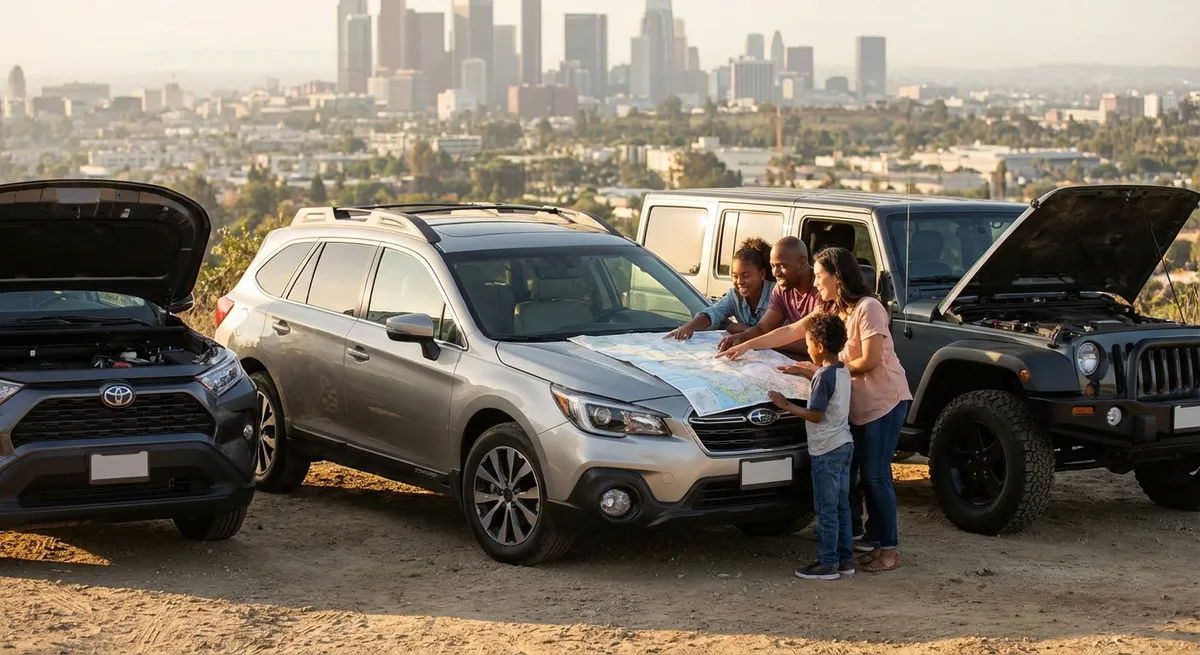
Choosing an SUV is no longer as simple as “bigger is safer” or “AWD is better.” Powertrains, platforms, and chassis tuning have evolved so quickly that two SUVs with similar dimensions can behave like completely different species on the road. For enthusiasts and informed buyers, the real decision starts with one key question: Where will this SUV actually live—downtown, in the suburbs, or on unpaved roads?
This comparison breaks down how different SUV layouts and engineering choices stack up in the real world. Instead of focusing on brand hype, it looks at the technical trade-offs that matter to people who care about how their SUV drives, feels, and lasts.
1. Unibody vs. Body-on-Frame: How Your Commute and Cargo Shape the Choice
The foundational split in SUV design is between unibody and body-on-frame construction. Understanding the difference is crucial before comparing trims, options, or powertrains.
Unibody SUVs integrate the body and frame into a single structure, like most modern cars. This typically yields better torsional rigidity, lower curb weight, and improved crash energy management. For city and suburban drivers, that translates into more precise steering, reduced body flex over potholes or speed bumps, and better fuel efficiency. Ride quality is usually more refined because the suspension doesn’t have to fight a separate ladder frame. Most crossovers and premium “soft-roaders” fall into this camp.
Body-on-frame SUVs mount the body on top of a separate ladder or boxed frame, similar to pickups. This design excels at towing, payload, and low-speed durability. If you frequently tow over 5,000 pounds, carry heavy loads, or run rough access roads for work or recreation, body-on-frame platforms handle sustained stress better and are often easier to repair after hard use. The trade-off is higher weight, a higher step-in, and more body motion in corners and during braking.
For urban-focused drivers, a unibody SUV is usually the better match: tighter turning circles, easier parking, and a less “truck-like” feel. For rural owners or frequent towers, body-on-frame still offers advantages that can’t be replicated by software or driving modes. The key comparison isn’t “which is better,” but which architecture aligns with how you’ll actually use the vehicle 90% of the time.
2. Drivetrain Showdown: FWD, RWD, AWD, and 4×4 in Real Conditions
Many buyers treat “AWD” as a single feature, but the underlying layout and hardware matter as much as the badge. The same SUV nameplate can behave very differently depending on whether it’s front-, rear-, or four-wheel biased.
Front-wheel drive (FWD) SUVs dominate the compact and midsize crossover segment. They’re packaging-efficient (more cabin space for a given footprint), lighter, and generally more fuel-efficient. In typical city and suburban driving, FWD is predictable and stable, especially in wet conditions. However, under hard acceleration or when heavily loaded, FWD can struggle with traction and feel nose-heavy, particularly on icy inclines or when towing.
Rear-wheel drive (RWD) SUVs, more common in premium and performance-oriented models, deliver more balanced weight distribution and better traction under acceleration because the driven wheels are carrying more of the vehicle’s weight. Enthusiasts often prefer RWD-based platforms for their steering feel and cornering behavior. In poor weather without appropriate tires or traction aids, though, pure RWD can be more demanding, especially on steep, slick roads.
All-wheel drive (AWD) and four-wheel drive (4×4) are where the comparison gets nuanced. Many unibody crossovers use on-demand AWD systems that are primarily FWD but can send torque rearward when slip is detected. These are ideal for commuters in variable climates who don’t need low-range gearing but want confidence in rain, light snow, or gravel. Traditional 4×4 systems, more common in body-on-frame SUVs, may offer a transfer case with selectable high and low ranges, mechanical locking differentials, and more robust driveline components. They shine in slow, technical terrain or when pulling heavy loads on unpaved grades.
The smartest way to compare is to map system type to your use case. If your SUV will see mostly asphalt with occasional storms, a FWD-based AWD system is generally sufficient. If you regularly tow, drive steep unpaved roads, or plan serious trail work, a RWD-based 4×4 with low range and at least one locking differential offers substantially more control and resilience.
3. Suspension and Tires: Where Comfort, Control, and Capability Diverge
Beneath the styling and spec-sheet numbers, suspension design and tire selection determine how an SUV actually feels over broken pavement, expansion joints, and unmaintained roads. The differences between setups are critical for buyers who notice more than just ride height.
Most unibody SUVs use independent suspensions at all four corners (often MacPherson struts up front and multi-link setups in the rear). This approach allows each wheel to react individually to bumps, improving both comfort and grip on inconsistent surfaces. Suburban and highway drivers benefit from reduced impact harshness and better lane-change stability. Within that category, adaptive dampers and air springs add another layer: they can vary firmness or ride height to balance comfort with handling, or lower the vehicle for easier loading and improved aerodynamics.
Body-on-frame SUVs may pair an independent front suspension with a solid rear axle, particularly in models targeting towing and off-road use. A solid axle can better handle high loads and large articulation events but may transmit more harshness over broken pavement and feel less composed at high speeds on undulating roads. Coil-sprung solid axles are generally more comfortable than leaf-sprung designs, but both will feel more “truck-like” than fully independent setups when unloaded.
Tires can either complement or undo good suspension engineering. Highway terrain (H/T) tires are optimized for low rolling resistance, comfort, and quiet operation—ideal for commuters who rarely leave pavement. All-terrain (A/T) tires offer more aggressive tread patterns and stronger sidewalls for off-pavement grip, but they’re often louder and less efficient. Some performance-oriented SUVs use summer or performance all-season tires, which yield sharper steering and shorter braking distances on dry and wet tarmac but can be compromised in snow or mud.
When comparing models, don’t just look at “off-road package” or “sport package” names. Examine whether the suspension tune and tire choice match your realities: frequent highway trips, badly maintained city streets, or genuine off-road exploration. The most capable spec on paper can feel punishing in daily use if it’s overbuilt for your environment.
4. Interior Packaging vs. Cargo Analytics: How Space Really Works Day to Day
On paper, cargo volume and legroom measurements look straightforward. In practice, how that space is shaped and accessed makes just as much difference as the raw numbers, especially when comparing city, suburban, and outdoor-oriented SUVs.
Urban-oriented SUVs often prioritize a compact footprint and tight turning circle over maximum cargo volume. Here, vertical space, seat folding mechanics, and door aperture size matter more than a headline cubic-foot figure. A tall, square opening, low load floor, and flat-fold second row can make grocery runs, strollers, and small furniture much easier to handle than a swoopy roofline with a higher liftover height, even if the latter claims slightly more total volume.
Suburban family SUVs typically balance passenger and cargo needs. Third-row availability is common, but the usability of that row is highly variable. Some models offer adult-capable third rows with sliding second rows and thoughtful step-in design; others are best reserved for short trips or children. When comparing, pay attention to third-row access (tilt-and-slide mechanisms), the presence of LATCH anchors where you actually need them, and how much cargo space remains behind the third row with all seats up. Families transitioning from minivans should be especially critical here.
Adventure-oriented SUVs may sacrifice some rear-seat comfort or third-row accommodations to support gear storage and durability. Fold-flat floors with tie-down points, underfloor storage for recovery gear, and roof load ratings are more relevant than an extra inch of rear legroom. Some off-road models also provide 40/20/40 split rear benches, which allow long items (like skis or fishing rods) to pass through the middle while still seating two rear passengers comfortably.
Smart buyers don’t just compare the numbers; they compare the geometry. Tailgate height versus garage clearance, rear door opening angle for child seat installation, and whether the cargo area can realistically fit a bicycle or dog crate without complex disassembly all matter. The right packaging is the one that aligns with what you load into the vehicle most weeks of the year, not just during a once-a-year road trip.
5. Efficiency, Range, and Operating Costs Across Use Cases
With the rise of electrified powertrains, comparing SUVs across city, suburban, and off-road roles now demands more than simply checking fuel economy stickers. How and where you drive can swing running costs more than the label suggests.
For urban drivers, hybrids and plug-in hybrids (PHEVs) often provide the best real-world balance. Stop-and-go traffic plays to the strengths of regenerative braking and electric assist, significantly cutting fuel consumption compared to pure gasoline engines of similar size. PHEVs can handle short commutes on electric power alone if regularly plugged in, but their advantage disappears if they’re never charged and lug around depleted battery packs as dead weight. If you don’t have reliable home or workplace charging, a conventional hybrid might be the more honest fit.
Suburban drivers who log steady highway miles will see a different pattern. Traditional gasoline turbocharged engines can be very efficient at constant speeds, and diesel (where available) still offers excellent long-range economy and towing performance. Full battery electric SUVs deliver their best operating cost benefits when daily mileage is predictable and charging access is convenient, but high-speed highway driving and cold climates can noticeably reduce rated range. Comparing your actual weekly mileage and charging options is more instructive than simply chasing the highest advertised range figure.
For off-road and remote-area use, energy availability becomes a core factor. Gasoline and diesel are still easier to refuel quickly in sparsely populated regions, and long-range EV off-road touring currently requires careful planning around charging infrastructure and terrain-related range loss. That said, electrified powertrains provide excellent low-speed torque control, which is a major advantage on technical trails, and some modern 4×4 EVs and PHEVs include sophisticated traction and torque vectoring strategies that would be difficult to mirror mechanically.
Total cost of ownership also includes maintenance and consumables. Hybrids and EVs typically experience lower brake wear due to regenerative braking, though tire replacement costs can be higher due to vehicle weight and performance-oriented fitments. Turbocharged engines and complex 4×4 drivetrains may have higher long-term service demands. Comparing your intended annual mileage, towing habits, and local fuel or electricity prices will give a more accurate picture than simply looking at the initial purchase price or a single EPA or WLTP figure.
Conclusion
The modern SUV landscape is less about “big vs. small” and more about matching architecture and engineering choices to a specific daily reality. Unibody versus body-on-frame, FWD-based AWD versus RWD-based 4×4, independent suspension versus solid axles, hybrid versus conventional powertrains—each combination favors a distinct environment: dense cities, sprawling suburbs, or demanding backcountry.
For enthusiasts and serious buyers, the best comparison isn’t between badges but between use cases. Start with where and how you drive, then evaluate chassis, drivetrain, suspension, packaging, and efficiency against that backdrop. The SUV that fits your world will feel better, cost less to run, and stay satisfying long after the novelty of a new purchase has worn off.
Sources
- [U.S. Department of Energy – Fuel Economy Guide](https://www.fueleconomy.gov) - Official efficiency data and operating cost comparisons for gasoline, hybrid, plug-in hybrid, and electric SUVs
- [IIHS – Vehicle Size and Structure](https://www.iihs.org/topics/suvs) - Research and crash-test insights on SUV body design, safety performance, and structural differences
- [SAE International – Understanding Powertrain Layouts](https://www.sae.org/news/2019/03/powertrain-layouts) - Technical overview of FWD, RWD, and AWD configurations and their dynamic implications
- [NHTSA – Tires and Fuel Efficiency](https://www.nhtsa.gov/equipment/tires) - Information on how tire types and rolling resistance affect safety, efficiency, and performance in SUVs
- [EPA – Green Vehicle Guide](https://www.epa.gov/greenvehicles) - Regulatory and technical background on emissions, hybridization, and EV considerations for SUV buyers
Key Takeaway
The most important thing to remember from this article is that this information can change how you think about Comparisons.