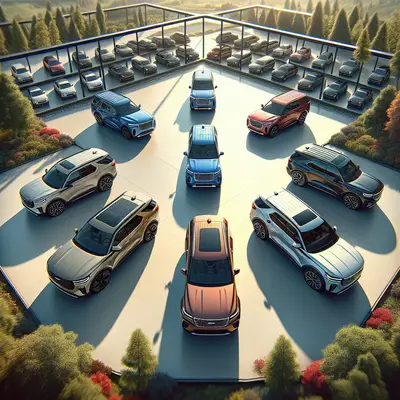
The SUV segment has fractured into two clear personalities: the polished “city SUV” built for urban life and commuting, and the rugged “adventure SUV” designed to tackle trails, towing, and tough weather. On the surface they look similar—raised ride height, hatchback practicality, and available all-wheel drive—but under the sheet metal they’re engineered for very different missions. Understanding where those differences really matter will help you avoid overbuying capability you’ll never use—or underbuying an SUV that struggles when you finally point it toward the mountains.
This comparison breaks down five critical areas where city-focused and adventure-focused SUVs diverge: platform and chassis tuning, drivetrains and traction systems, packaging and cargo flexibility, durability and running costs, and real-world efficiency and range. Each point includes specific technical details enthusiasts will appreciate, and practical guidance for shoppers cross-shopping crossovers with more serious off-road machines.
1. Platform & Chassis: Comfort-Tuned Crossover vs Purpose-Built Off-Roader
Underneath the styling, most city SUVs are car-based crossovers, while true adventure SUVs often sit on more rugged underpinnings. That distinction shapes everything from ride quality to turning radius.
City-oriented SUVs typically ride on unibody platforms shared with compact or midsize cars. The body and frame are integrated into a single structure, which improves torsional rigidity, reduces weight, and allows engineers to finely tune ride and handling. Combined with independent front and rear suspensions—often MacPherson struts up front and multi-link setups in the rear—these vehicles emphasize low NVH (noise, vibration and harshness), precise steering, and predictable on-road behavior. Stabilizer bars are tuned for flatter cornering, and spring and damper rates are calibrated to mask potholes and speed bumps rather than boulders and ruts.
Adventure SUVs, especially those marketed with strong off-road credentials, tilt in a different direction. Some retain a unibody structure but add reinforced subframes, skid plates, and additional bracing to withstand torsional loads during articulation. Others use traditional body-on-frame construction, where a separate ladder frame supports the drivetrain and suspension. This design accepts higher loads from towing and severe off-road use and better resists damage from impacts, but it typically adds mass and slightly dulls on-road agility. Off-road–focused suspensions may use higher ride heights, longer-travel dampers, and softer spring rates to keep tires in contact with uneven ground, resulting in more body motion and lean on pavement.
Approach, breakover, and departure angles tell you quickly where an SUV fits on the spectrum. City SUVs often have lower bumpers, side skirts, and longer overhangs for aero efficiency and styling, limiting approach angles to the teens or low 20 degrees. Adventure SUVs push bumpers higher, shorten overhangs, and sometimes integrate high-clearance fascias, enabling approach angles well into the 30s or beyond. Ground clearance follows suit: ~6–8 inches is common in city crossovers, while serious adventure SUVs can clear 9–11 inches or more, often with available air suspension to adjust height for highway or trail.
For buyers who spend 90% of their time on pavement, the unibody, car-like platform of a city SUV translates directly into better ride comfort, less fatigue on long commutes, and more confident emergency maneuvers. For drivers who regularly encounter unpaved roads, deep snow, or technical trails, the reinforced chassis and off-road geometry of an adventure SUV prevent underbody damage and expand where you can safely drive.
2. Drivetrains & Traction Systems: Smart AWD vs Locking Hardware
The simplest way to think about city vs adventure SUV drivetrains is “predictive software” versus “mechanical redundancy.” City SUVs rely heavily on electronics to place torque where it’s needed; adventure SUVs often add hardware that works even when traction is scarce and wheel speeds are mismatched.
City-focused SUVs are overwhelmingly front-wheel-drive-based platforms with optional all-wheel drive. These AWD systems are usually “on-demand” or “part-time” in the sense that the vehicle defaults to FWD for efficiency and only sends torque rearward when slip is detected or predicted. A multi-plate clutch or electronically controlled coupling on the rear differential engages within milliseconds, and stability/traction control brake individual wheels to simulate limited-slip behavior. Some systems use drive modes (Snow, Sport, Eco) to alter throttle mapping, shift logic, and torque distribution strategy, but they rarely feature true low range or locking differentials.
Adventure SUVs, especially those with a true off-road mission, add more depth. Many use rear- or four-wheel-drive-based architectures with a proper transfer case. This can provide selectable 2H (rear drive), 4H (high-range four-wheel drive), and 4L (low-range four-wheel drive) modes. Low range multiplies torque at the wheels by using a lower gearset in the transfer case, essential for controlled rock crawling or pulling heavy loads from a standstill on steep grades. Mechanical locking differentials—either center, rear, or both—ensure that an axle or front/rear pair of wheels receives equal torque even if one wheel is completely unloaded, a situation that would defeat most brake-based traction aids.
Adventure-oriented all-wheel-drive systems have also become more sophisticated. Some employ torque-vectoring rear differentials that can overdrive an outer wheel to help rotate the vehicle in corners and maintain stability on loose surfaces. Off-road drive modes (Mud/Ruts, Sand, Rock) adjust ABS, traction control thresholds, throttle response, transmission mapping, and even differential lock behavior. Hill descent control, crawl control, and trail turn assist are software layers that simplify technique-heavy maneuvers for less-experienced drivers.
For shoppers, the key question is use case. If your toughest conditions are wet highways, occasional gravel driveways, or light snow, a city SUV’s predictive AWD with quality all-season or winter tires is more than sufficient and usually more fuel-efficient. If you intend to tow at max capacity, cross deep snowpack, or tackle trails where wheel lift is routine, a genuine low-range transfer case, locking differential(s), and more robust cooling for the transmission and engine become non-negotiable.
3. Interior Packaging & Cargo: Urban Efficiency vs Gear-First Flexibility
Inside the cabin, the priorities of city and adventure SUVs diverge just as clearly. City SUVs optimize daily ergonomics, rear-seat comfort, and tech-forward dashboards; adventure SUVs often sacrifice some sleekness for durability and utility.
City-focused SUVs aim to feel like well-appointed sedans with more headroom. You’ll see lower cargo floors for ease of loading groceries and strollers, rear seats that recline and slide for better legroom, and wide door openings for painless child-seat installation. Infotainment is often a centerpiece: large touchscreens, digital instrument clusters, wireless smartphone integration, and premium audio. Materials lean soft-touch and upscale, with greater emphasis on design continuity and ambient lighting. Noise insulation—acoustic glass, extra floor insulation, and door seals—is prioritized to reduce wind and tire noise at highway speeds.
Adventure SUVs design the cabin around equipment and flexibility. Fold-flat seats, higher and more squared-off rooflines, and boxier cargo areas optimize both volume and shape for bulky items like coolers, recovery gear, bikes, and camping equipment. Tie-down points, configurable cargo rails, underfloor storage bins, and 12V/120V outlets in the rear show up more frequently. Surfaces are engineered to be cleaned easily—rubberized flooring, durable seat fabrics or leather, and fewer high-gloss surfaces that can scratch or glare in sunlight. In some models, you’ll see options like washable cargo mats with raised edges, integrated air compressors, or even built-in load scales on tailgates.
Another difference is seating architecture. City SUVs tend to keep seat bolsters moderate and cushions softer to favor shorter urban trips and comfort over aggressive support. Adventure SUVs, especially those intended for long-distance overlanding, may use firmer seat foam and slightly more structured bolstering to reduce fatigue on all-day drives over variable terrain. Roof racks, trailer wiring pre-installed, and integrated tow hitches also reflect an expectation that owners will use the vehicle’s capacity regularly.
For buyers, looking at the cargo area and rear seat tells you more than the marketing brochure. If your life revolves around city errands, school runs, and business travel, focus on low liftover height, rear seat comfort, and tech integration. If your weekends involve mountain bikes, kayaks, dogs, or long road trips to trailheads, pay more attention to cargo height, tie-downs, roof load ratings, and whether the rear suspension sags excessively when loaded.
4. Durability, Service, and Ownership Costs: Light Duty vs Heavy Use
Durability is where the real-world cost of choosing the wrong SUV shows up over years, not days. Both categories can be reliable, but they’re optimized for different stress profiles.
City SUVs are generally engineered around lighter-duty cycles: stop-and-go commuting, highway cruising, and occasional full-load scenarios. Components such as wheel bearings, suspension bushings, and control arms are sized accordingly—robust enough for typical potholes and curbs but not constant high-impact articulation. Engines and transmissions are tuned for efficiency with relatively tight thermal margins, relying on active grille shutters, low-viscosity oils, and aggressive shift strategies to hit fuel economy targets. For most owners, this yields low operating costs, long service intervals, and fewer unscheduled repairs—assuming the vehicle isn’t used chronically outside its design intent.
Adventure SUVs factor in harsher duty cycles: corrugated dirt roads, temperature extremes, heavy towing, and prolonged low-speed operation where airflow over radiators is limited. Radiators, transmission coolers, and differential housings may be larger; skid plates and rock rails protect vulnerable components; and suspension arms are often more overbuilt. Some models offer “off-road packages” that upgrade shocks, springs, and tires while also adding underbody protection and cooling enhancements. All of this adds weight and cost but drastically reduces the likelihood of damage when used in rough environments.
Maintenance profiles differ as well. Adventure SUVs may specify more frequent differential and transfer case fluid changes if used off-road or for towing, and off-road tires often wear faster and cost more to replace than the all-season tires common on city SUVs. On the other side, city SUVs with smaller, turbocharged engines can face carbon buildup or overheating issues if maintained poorly or frequently driven under heavy loads beyond their comfort zone.
From a cost-of-ownership perspective, city SUVs often win for drivers who stay on pavement and adhere to regular maintenance: lower tire costs, lighter consumable wear, and usually better fuel or energy efficiency. For owners who expect long-term reliability under strenuous use—rutted access roads, regular towing near max capacity, or frequent deep-snow travel—adventure SUVs may have higher upfront and ongoing costs but can save money by avoiding damage or premature component failures.
5. Efficiency, Range & Powertrains: Urban Economy vs Off-Road Reserves
The last major divide lies in how these SUVs use energy. City SUVs chase efficiency and emissions compliance first; adventure SUVs accept some efficiency penalties for robustness and off-road usability.
City SUVs commonly use smaller displacement engines—often turbocharged four-cylinders—or hybrid and plug-in hybrid powertrains. These setups provide adequate power for merging and passing while keeping curb weight and fuel consumption down. Continuously variable transmissions (CVTs) and multi-speed automatics (8–10 speeds) are tuned to keep engines in their most efficient operating band. Aerodynamic elements like active grille shutters, smooth underbody panels, and lower ride heights further reduce drag. Electrified versions capitalize on regenerative braking and engine stop-start to cut consumption in stop-and-go traffic, which is their main arena.
Adventure SUVs prioritize accessible torque over laboratory-cycle fuel efficiency. You’ll see larger displacement engines—inline-sixes, V6s, and sometimes V8s—or hybrids tuned more for towing and off-road torque than pure economy. Gearboxes often feature wider ratio spreads, including very low first gears for crawling and strong engine braking on descents. Tire selection is a major differentiator: all-terrain or mud-terrain tires use more aggressive tread blocks, softer compounds, and reinforced sidewalls, all of which increase rolling resistance and aerodynamic drag, cutting efficiency noticeably at highway speeds.
Range considerations also change depending on mission. City SUVs with smaller fuel tanks or EV packs sized for daily commuting make sense when charging or refueling is readily available. Adventure SUVs frequently offer larger fuel tanks, auxiliary fuel options, or EV/hybrid systems with off-road-calibrated energy management to ensure reliable power far from infrastructure. In plug-in hybrids, an adventure-oriented calibration may reserve a higher battery state of charge for low-speed EV operation on trails, where quiet and precise control are advantages.
For buyers evaluating total cost and practicality, matching powertrain to realistic usage is critical. If your mileage is mostly urban or suburban, a smaller turbo engine, hybrid, or even a compact electric SUV minimizes operating costs and emissions while still providing enough all-weather traction. If your routine includes towing heavy trailers, frequent elevation changes, or long distances between fuel stops, prioritize torque ratings, cooling capacity, and tested towing capability over headline fuel economy numbers.
Conclusion
Choosing between a city SUV and an adventure SUV is less about badge or marketing and more about being honest with how and where you drive. City SUVs deliver car-like comfort, efficiency, and tech in a practical package optimized for paved roads and daily life. Adventure SUVs trade some refinement and economy for tougher chassis hardware, genuine off-road capability, and durability under sustained stress.
For enthusiasts, the right choice comes down to character and use case. If your SUV will spend its life in traffic, on interstates, and in parking garages, a well-engineered city crossover will feel more refined and cost less to run. If you regularly chase remote campsites, tow heavy gear, or live where winter and unpaved roads are part of daily reality, an adventure SUV’s ground clearance, low range, and protective hardware are more than marketing—they’re insurance.
Before deciding, look past styling and spec-sheet buzzwords. Examine the platform, suspension design, driveline layout, off-road geometry, and maintenance requirements. Match them to your actual driving patterns, not just your aspirations, and you’ll end up with an SUV whose personality genuinely fits your life.
Sources
- U.S. Department of Energy – Vehicle Efficiency & Fuel Economy - Official fuel economy data and drivetrain information for comparing SUVs across segments
- IIHS – Vehicle Ratings - Crash test results and safety evaluations for a wide range of city and adventure-oriented SUVs
- NHTSA – Towing and Cargo Safety - Guidance on towing capacities, loading, and how chassis design affects safe usage
- Jeep – 4x4 Systems Explained - Manufacturer overview of transfer cases, low range, and traction systems typical of adventure SUVs
- Toyota – AWD and 4WD Technologies - Technical breakdown of on-demand AWD vs more advanced four-wheel-drive systems used in SUVs
Key Takeaway
The most important thing to remember from this article is that this information can change how you think about Comparisons.