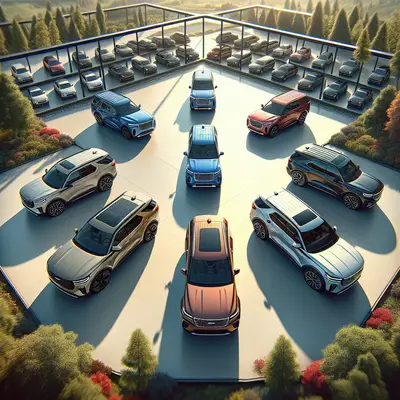
Most SUV buyers today are pulled in two very different directions: the comfort and efficiency needed for urban commuting, and the toughness and capability required for weekend adventures. Automakers have responded with an increasingly split SUV market—on one side are city-focused crossovers, on the other are adventure-oriented SUVs that borrow heavily from off-road heritage. Understanding how these two philosophies differ beneath the styling is critical if you want an SUV that matches how you actually drive, not just how you imagine you might drive twice a year.
This comparison breaks down key technical and practical differences between city SUVs and adventure SUVs, giving enthusiasts and serious shoppers five focused areas to evaluate before they commit.
1. Platform and Suspension: Unibody Comfort vs. Body-on-Frame Strength
The most fundamental distinction between SUV types is the underlying platform.
Most city-focused SUVs use a unibody construction, where the body and frame are a single, integrated structure (similar to modern sedans and hatchbacks). This approach:
- Reduces weight, improving fuel efficiency and acceleration
- Increases torsional rigidity, which can sharpen handling on paved roads
- Allows for better packaging, with more interior space relative to exterior size
- Enables more sophisticated independent rear suspension setups that favor comfort
Adventure-focused SUVs historically use body-on-frame construction—essentially a separate ladder frame with the body bolted on top, like traditional pickup trucks. This configuration:
- Tolerates higher torsional loads and impacts when off-roading
- Simplifies mounting heavy-duty tow hardware, skid plates, and recovery points
- Can be easier to repair after serious off-road use or body damage
- Often trades on-road refinement and ride quality for toughness and durability
An increasing number of “adventure” models now blend these worlds with unibody construction but off-road-optimized suspension, reinforced subframes, and specialized drive modes. Even so, there’s a noticeable ride and handling divergence:
- City SUV tuning: Softer springs and bushings, quicker steering racks, and electronically controlled dampers focused on absorbing potholes and freeway expansion joints.
- Adventure SUV tuning: Higher ride height, longer wheel travel, stiffer anti-roll bars or specialized sway-bar disconnects, and shocks designed to manage repeated compression over rough terrain.
For a driver who spends 90–95% of their time on pavement, a unibody city SUV will almost always feel more composed, quieter, and less fatiguing. For anyone planning serious off-pavement mileage or frequent towing on rough roads, the added mass and simpler geometry of a body-on-frame or off-road-oriented setup can be worth the on-road sacrifices.
2. Powertrains and Drivetrain Systems: Efficiency vs. All-Condition Capability
Where and how you drive should directly guide what’s under the hood and how many wheels are driven.
City SUVs typically emphasize:
- Smaller displacement engines (often 2.0L–2.5L) with turbocharging
- Mild-hybrid assistance or full hybrid systems to capture stop‑start traffic efficiency
- Continuously variable transmissions (CVT) or multi-speed automatics tuned for smoothness
- Front-wheel drive (FWD) as standard, with all-wheel drive (AWD) as an optional upgrade
This configuration prioritizes fuel economy and low NVH (noise, vibration, harshness). Modern hybrid city SUVs can deliver real-world fuel economy rivaling sedans, especially in urban conditions with frequent braking and short trips.
Adventure SUVs, in contrast, emphasize:
- Higher-displacement engines, often with an emphasis on torque at low rpm
- Turbo-diesel options in some markets for sustained low-end pulling power
- Heavy-duty automatic transmissions with robust cooling for towing and off-road use
- Standard 4WD or advanced AWD systems with low-range gearing in true off-road models
The drivetrain systems differ in critical ways:
- On-demand AWD (city SUVs): Typically front-biased, sending power to the rear only when slip is detected. Great for rain, light snow, and gravel but not designed for sustained, high-load off-road conditions.
- Full-time or part-time 4WD (adventure SUVs): Often includes a transfer case with low range, lockable center differential, and in some cases locking front/rear differentials. These components dramatically increase control and traction on steep, loose, or technical terrain—but add weight and complexity.
Buyers need to be realistic about usage. If your SUV spends nearly all its life on paved roads with occasional ski trips on plowed highways, a modern FWD-based AWD system is usually more than adequate. If your plans include remote trails, overlanding, or towing in challenging conditions, a vehicle with a proper 4WD system and low range moves from “nice to have” to essential.
3. Ground Clearance, Angles, and Tires: The Geometry That Actually Matters
A lot of SUVs look rugged, but their physical geometry tells the real story.
Three key measurements define how an SUV interacts with varying terrain:
- Ground clearance: Distance between the lowest point of the vehicle (often the differential housing or exhaust section) and the ground.
- Approach angle: How steep an obstacle you can climb without the front bumper contacting.
- Departure and breakover angles: How steep a descent you can manage and how much the vehicle can “crest” a ridge without scraping its underside.
City SUVs often have:
- Ground clearance in the 6.5–8.0 inch (165–203 mm) range
- Modest approach/departure angles due to lower bumpers and longer overhangs
- Aerodynamically optimized lower fascias that are vulnerable to scrapes off pavement
Adventure SUVs typically offer:
- Ground clearance from 8.5–10+ inches (216–254+ mm), sometimes with air suspension height adjustments
- Shorter front and rear overhangs, improving approach and departure angles
- Skid plates protecting vital components: engine oil pan, transfer case, fuel tank
Tire specification is another subtle but crucial divider:
- City SUV tires: Often lower-profile, all-season compounds optimized for quietness, rolling resistance, and wet-weather braking. They perform well on pavement but can be puncture-prone and lose traction quickly in deep mud or loose rock.
- Adventure SUV tires: Typically taller sidewalls and all-terrain or off-road tread patterns. These handle sharp rocks and rough surfaces better, with improved self-cleaning in mud and snow, at the cost of more road noise, slightly worse fuel economy, and sometimes longer braking distances on dry pavement.
When comparing models, don’t stop at brochure photos. Look directly at:
- Stated ground clearance and angles from official specs
- Whether underbody skid protection is standard or requires an off-road package
- Tire size, speed rating, and tread classification (all-season vs. all-terrain)
Road-biased buyers should prioritize tire performance in wet braking and emergency maneuvers; off-pavement adventurers should prioritize sidewall strength, load rating, and tread pattern suitable for their typical terrain.
4. Interior Design and Packaging: Urban Practicality vs. Expedition Readiness
Inside the cabin, priorities diverge just as much as on the chassis.
City SUVs typically focus on:
- Maximizing passenger and cargo volume relative to footprint
- Low, flat load floors that make daily errands and family duties easy
- Flexible seating (split-fold, sliding second row, sometimes a small third row)
- Extensive in-car tech: large infotainment screens, app integration, driver-assistance suites
- Premium materials tuned for perceived quality—soft-touch surfaces, detailed stitching, ambient lighting
They are optimized for daily life: school runs, parking structures, parallel parking, tight urban garages. Wide door openings, lower step-in height, and large glass areas matter more here than the ability to mount jerry cans and recovery boards.
Adventure SUVs lean toward:
- More vertical seating positions to improve outward visibility off-road
- Higher step-in height (sometimes mitigated by side steps, which can themselves be a liability off-road)
- Cabins designed to accommodate gear: tie-downs in the cargo area, 12V/120V outlets, configurable storage solutions
- Materials selected for durability and cleanability over luxury feel—rubberized surfaces, washable floor coverings, and seat fabrics that can withstand wet gear and dust
- Optional features like auxiliary switches, mounting points for radios or navigation hardware, and factory wiring provisions for rooftop accessories
There is also a weight and payload trade-off. Adventure SUVs often have:
- Higher payload ratings, allowing for more passengers, gear, and aftermarket add-ons without exceeding gross vehicle weight rating (GVWR)
- Roof structures rated for dynamic loads sufficient for rooftop tents and heavy racks
When comparing, check:
- Payload capacity, not just total cargo volume
- Roof load ratings (dynamic and static, if available from the manufacturer)
- Rear-seat comfort and ingress/egress if you regularly carry adult passengers
- Whether folded seats form a flat load floor—a big deal if you camp inside the vehicle or transport bulky equipment
A city SUV configured with all the tech and comfort options can be wonderful for daily use, but if you intend to bolt on hundreds of pounds of off-road accessories, you need to know the platform’s payload and roof limits can safely handle it.
5. Ownership Costs, Reliability Stress, and Resale Profiles
The cost differences between a city SUV and an adventure SUV show up long after the purchase.
Operating costs and wear items:
- City SUVs on road-biased tires, with lighter drivetrains and simpler AWD systems, generally return better fuel economy and lower running costs.
- Adventure SUVs consume more fuel largely due to higher curb weights, off-road tires, and less aerodynamic profiles.
- Heavy-duty 4WD components, locking differentials, and skid plates add complexity and can increase maintenance or repair costs if damaged off-road.
Stress and reliability:
- Unibody city SUVs primarily see loads from potholes, speed bumps, and highway miles—conditions for which they’re optimized.
- Adventure SUVs that are actually used off-road endure frequent full-suspension travel, repeated impact loads, heat cycles in drivetrain fluids, and more frequent exposure to dust and water. Even when well-engineered, this can accelerate wear if maintenance is not kept strictly up to date.
Resale value differs by usage pattern:
- City-focused SUVs with low mileage and documented maintenance typically hold value well in mainstream segments, especially hybrids and efficient models as fuel costs fluctuate.
- Adventure-oriented SUVs often hold value strongly when stock or lightly modified and not visibly abused, particularly in regions with active outdoor and off-road communities.
- Heavily modified or visibly trail-used vehicles can see polarized resale outcomes—very attractive to a niche buyer, but less appealing to the general market.
Practical considerations for buyers:
- Factor in real-world fuel use, not just EPA or WLTP figures—off-road tires and roof racks can significantly reduce economy.
- Consider insurance costs; some performance-oriented or specialty off-road trims may carry higher premiums.
- Look at regional demand: in some markets, rugged SUVs command surprising resale strength; in others, city crossovers dominate used-market liquidity.
If your lifestyle requires genuine off-road capability, the higher operating costs of an adventure SUV can be a justifiable trade-off. If not, you’re likely paying for and carrying around capability you’ll rarely use—and that money might be better spent on advanced safety tech, a higher-quality interior, or a more efficient powertrain in a city-oriented model.
Conclusion
The modern SUV landscape is no longer one-size-fits-all. What looks like a simple choice between “two similar SUVs” often hides a fundamental difference in engineering philosophy: city-biased crossovers tuned for comfort, efficiency, and technology, versus adventure-oriented SUVs built for load, durability, and rough terrain.
The right decision starts with a clear-eyed assessment of how you genuinely drive, not just how you’d like to imagine using your vehicle. By comparing platform and suspension design, powertrains and drivetrain systems, off-road geometry and tires, interior packaging, and ownership costs, you can align the SUV you choose with the life you actually live. That’s how you avoid overbuying capability you never tap—or underbuying and finding out the hard way that your SUV’s tough looks are only skin-deep.
Sources
- U.S. Department of Energy – Fuel Economy Guide - Official fuel economy data and comparisons for SUVs and crossovers
- IIHS – SUV Vehicle Ratings - Crash test and safety ratings for various SUV types and sizes
- SAE International – Vehicle Architecture Overview - Technical discussion of unibody vs. body-on-frame construction in light trucks and SUVs
- Toyota Global – 4WD and AWD Systems Explained - Detailed look at different all-wheel and four-wheel-drive technologies
- National Park Service – Vehicle Recommendations for Backcountry Access - Guidance on vehicle capability and preparation for off-pavement travel
Key Takeaway
The most important thing to remember from this article is that this information can change how you think about Comparisons.