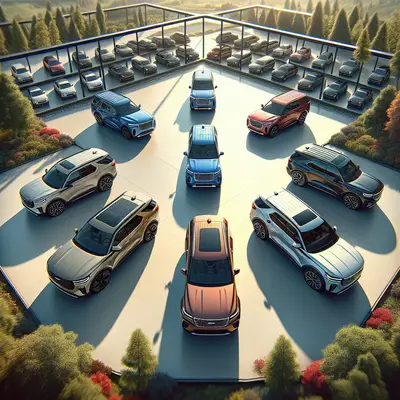
Choosing an SUV today isn’t just about picking a brand or a badge—it starts with choosing the right segment. Compact, midsize, and full‑size SUVs can look similar in photos, yet differ dramatically in space, driving dynamics, costs, and long‑term usability. For many buyers, the wrong segment choice is the first (and most expensive) mistake.
This comparison breaks down how these three core SUV segments stack up in real‑world use, with an emphasis on technical details and ownership realities that enthusiasts and serious shoppers care about.
1. Size and Packaging: What the Tape Measure Doesn’t Immediately Tell You
On paper, compact, midsize, and full‑size SUVs are separated primarily by overall length and wheelbase, but how that space is packaged matters even more than the raw numbers.
Compact SUVs typically measure around 175–182 inches in length with wheelbases in the 104–108 inch range. They usually offer two rows of seating and prioritize urban maneuverability and weight savings over outright interior volume. Ground clearance often sits around 7–8 inches, enough for light off‑pavement use but not hardcore off‑roading.
Midsize SUVs stretch closer to 185–195 inches with wheelbases around 112–118 inches. This extra length allows for either a spacious two‑row layout or an optional third row. The key advantage here is a more flexible cargo area: many midsize models support longer load floors, higher rooflines, and wider rear openings for bulkier items like strollers, bikes, or flat‑packed furniture.
Full‑size SUVs can exceed 200 inches in length (some extended‑length variants are well past 220 inches) with wheelbases in the 120‑130 inch range. Their body‑on‑frame construction is common, especially for North American models, and they often deliver three genuinely adult‑usable rows. The trade‑off is bulk: curb weights easily surpass 5,500 pounds, contributing to higher fuel consumption and parking challenges.
The takeaway: dimensions influence more than interior room—they affect turning radius, parking ease, ride comfort, and how confident you’ll feel squeezing into older urban parking structures or narrow streets. Buyers should compare wheelbase, width, and turning circle just as carefully as overall length and cargo volume.
2. Powertrains and Performance: How Segment Influences What’s Under the Hood
Segment choice significantly shapes engine and drivetrain options, as automakers tune offerings to typical use cases and expected payloads.
Compact SUVs often start with naturally aspirated or small‑displacement turbocharged four‑cylinders in the 150–250 horsepower range. Their lighter curb weights—often 3,200–3,700 pounds—mean these powertrains can deliver adequate acceleration while maintaining competitive fuel economy. Continuously variable transmissions (CVTs) and 8‑speed automatics are common here, engineered more for efficiency than towing.
Midsize SUVs expand the powertrain menu. You’ll still find turbocharged four‑cylinders, but V6 engines and hybrid setups become more prevalent, often delivering 250–350+ horsepower. Torque outputs in the 275–400 lb‑ft range are common, especially in turbo and hybrid configurations, which helps with towing and highway passing. Many midsize models offer available all‑wheel drive with more sophisticated torque‑vectoring or multi‑mode systems, improving traction in poor weather and light off‑road conditions.
Full‑size SUVs are typically engineered around higher load and towing requirements. Large‑displacement V8s have historically dominated this class, though modern turbocharged V6s and diesel options (in some markets) are increasingly common to meet emissions and fuel‑economy targets. Power can exceed 400 horsepower and 450+ lb‑ft of torque, paired with robust automatic transmissions (often 10‑speed units) and heavy‑duty cooling systems. These vehicles’ ladder‑frame designs and available low‑range transfer cases make them better suited for serious towing and off‑road work, but at the cost of efficiency and sometimes ride refinement.
Enthusiasts should consider not just peak horsepower, but also torque curves, transmission gearing, and cooling capacity. If you plan to tow close to the rated limit or drive frequently in mountainous regions, midsize and full‑size SUVs with robust drivetrains and appropriate axle ratios will feel less stressed and more controlled than a smaller, lightly powered compact.
3. Interior Space, Seating, and Usability: Beyond Third‑Row Marketing
Interior layout is often where segment differences become most apparent in daily life—and where manufacturer marketing can sometimes obscure practical realities.
Compact SUVs generally seat five. Front‑row space can rival larger vehicles, but rear legroom and shoulder room are usually tighter, especially for tall adults or when child seats are installed. Cargo volumes typically range from roughly 20–30 cubic feet behind the second row and 55–70 cubic feet with seats folded. This is sufficient for groceries, small families, and many lifestyle uses, but it can get tight on long trips with multiple passengers and luggage.
Midsize SUVs offer a wider range of configurations. Two‑row midsizers often have generous rear legroom and cargo areas competitive with—or better than—some three‑row models. Three‑row midsize SUVs are popular, but it’s essential to test the third row in person: many are best suited for children or short trips, especially if the vehicle’s overall length is on the smaller side of the midsize spectrum. Cargo space behind the third row may be limited—often under 20 cubic feet—so families who frequently travel with seven passengers and luggage should scrutinize the numbers.
Full‑size SUVs are where third rows become genuinely adult‑friendly in most cases. Wider tracks and longer bodies allow for more hip and shoulder room, higher rooflines, and deeper cargo wells. It’s common to see 30+ cubic feet of space even with all three rows in use, expanding to over 100 cubic feet with rear rows folded in many models. Their higher load floors and taller step‑in heights can be a drawback for small children or older passengers, but running boards and power steps alleviate this to some extent.
For many buyers, the practical question isn’t “Do I need a third row?” but rather “Do I need a third row plus luggage capacity on a regular basis?” If the answer is yes, a midsize with a marginal third row may not satisfy you long term, nudging you toward a larger midsize or full‑size model.
4. Ride, Handling, and Drivetrain Architecture: Comfort vs Capability
How an SUV is built under the skin heavily influences its road manners, refinement, and capability envelope.
Most compact and many midsize SUVs use unibody construction—essentially a car‑like platform—paired with independent suspension (often MacPherson struts front, multi‑link rear). This setup delivers better ride comfort, lower weight, and more responsive on‑road handling. Center of gravity is lower than in full‑size trucks, making compact and midsize crossovers feel more secure in quick maneuvers and more engaging for drivers coming from sedans or hatchbacks.
Full‑size SUVs, especially those sharing platforms with pickup trucks, often ride on body‑on‑frame architectures. While modern designs and tuning have improved refinement substantially, these vehicles still tend to feel heavier and less nimble. Their advantages appear when towing, carrying heavy loads, or navigating rough terrain: ladder frames can better handle torsional stress, and solid rear axles (in many models) contribute to durability and load‑carrying capability.
Suspension technology also varies by segment and price bracket. Compact SUVs usually feature fixed‑rate dampers aimed at a balance of comfort and cost. Midsize and full‑size models, particularly in premium trims, may offer adaptive dampers, air suspension, or selectable drive modes that meaningfully change ride height and damping behavior. Air suspensions can lower at highway speeds for aero efficiency, raise for off‑road clearance, and kneel for easier loading.
Drivetrain architecture matters for off‑road and all‑weather use. Many compact crossovers use front‑drive‑based AWD systems that can send torque rearward when slip is detected. Midsize and full‑size SUVs may add rear‑biased AWD or traditional 4WD systems with low‑range gearing, mechanical locking differentials, and off‑road drive modes calibrated for sand, mud, snow, or rock crawling. If you primarily deal with rain and occasional snow, a compact or midsize with an intelligent AWD system is usually sufficient. If you regularly tow, go off‑road, or live in harsh winter climates, a more robust system from the midsize or full‑size camp is worth the investment.
5. Ownership Costs, Efficiency, and Long‑Term Practicality
Segment choice doesn’t just affect how an SUV drives—it significantly shapes your cost of ownership over time.
Fuel economy is where compact SUVs almost always win. With smaller engines, lighter curb weights, and more aerodynamic profiles, EPA combined ratings in the mid‑20s to low‑30s mpg (or equivalent in other markets) are common, especially with hybrid or plug‑in variants. For urban commuters or high‑mileage drivers, this can translate to thousands of dollars saved over a typical ownership period compared to larger, less efficient SUVs.
Midsize SUVs occupy the middle ground. Four‑cylinder turbos and hybrids can return competitive numbers, often in the low‑ to mid‑20s mpg combined for gasoline models and better for hybrids. V6‑powered or performance‑oriented variants consume more, but still generally beat most full‑size SUVs. Maintenance costs can be slightly higher than compacts due to larger tire sizes, more complex AWD systems, and potentially more sophisticated suspension components.
Full‑size SUVs are typically the most expensive to run. Fuel economy can fall into the mid‑teens mpg combined for gas V8 models, with some newer turbocharged or diesel engines doing better but still lagging smaller segments. Large tires, heavy‑duty brakes, and more complex driveline components raise replacement and service costs. Insurance premiums can also be higher due to vehicle value and repair expenses.
Depreciation is more nuanced. Well‑equipped midsize and full‑size SUVs with strong towing capacity and reputable durability records can hold value remarkably well, particularly in markets where large SUVs are in demand. Compact SUVs from mainstream brands also retain value effectively thanks to their broad appeal. However, heavily optioned full‑size models with high MSRP can see substantial absolute dollar depreciation even if their percentage drop is similar to smaller vehicles.
Long‑term practicality includes non‑financial factors too: parking ease, garage fit, and daily stress levels in urban driving environments. A full‑size SUV may impress on paper but feel cumbersome if your daily routine involves tight city streets and underground garages. Conversely, a compact crossover may feel perfect now but quickly run out of room as family or recreational needs grow. Evaluating your realistic 5–7 year horizon—family size, hobbies, work commute, towing needs—helps align segment choice with how you’ll actually live with the vehicle, not just how it looks in a showroom.
Conclusion
Choosing between compact, midsize, and full‑size SUVs is less about chasing the biggest footprint or the flashiest spec sheet and more about aligning engineering realities with your daily life. The compact segment rewards efficiency, maneuverability, and lower running costs. Midsize SUVs deliver the most balanced blend of space, flexibility, and performance for many households. Full‑size SUVs excel when you truly need maximum passenger room, serious towing capacity, and rugged capability—accepting higher costs and larger physical dimensions as part of the bargain.
For enthusiasts and informed buyers, the smartest move is to start with the segment before falling in love with a specific model. Define your real space needs, towing expectations, driving environment, and budget, then test‑drive across adjacent segments to feel the practical differences. The right segment decision will narrow your search intelligently—and make every mile with your next SUV feel better justified.
Sources
- U.S. Environmental Protection Agency – Fuel Economy Guide – Official fuel‑economy data and comparisons across SUV segments
- National Highway Traffic Safety Administration (NHTSA) – Crash‑test ratings and safety information for compact, midsize, and full‑size SUVs
- IIHS – Vehicle Size and Safety – Research on how vehicle size and weight influence safety outcomes
- Toyota Global Newsroom – SUV Platform and Drivetrain Technologies – Technical details on unibody vs ladder‑frame architectures and powertrain strategies across SUV sizes
- Ford Fleet Towing Guides – Real‑world towing capacities and engineering considerations for midsize and full‑size SUVs
Key Takeaway
The most important thing to remember from this article is that this information can change how you think about Comparisons.