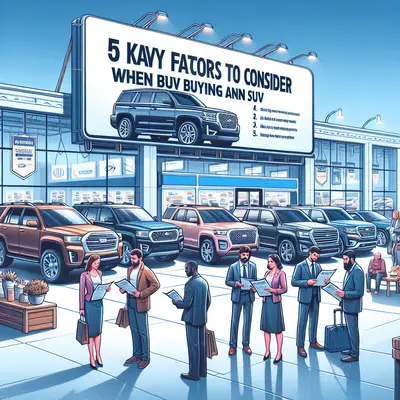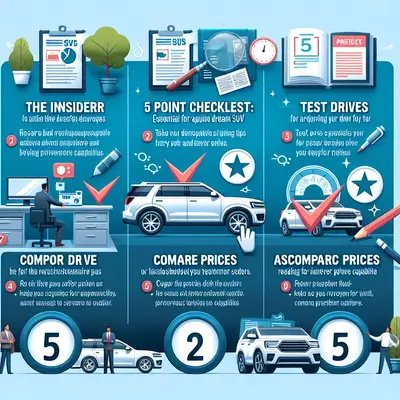
The SUV segment has exploded into a maze of overlapping sizes, powertrains, and tech packages. For buyers and enthusiasts, the challenge isn’t just “Which SUV is best?”—it’s “Which SUV actually fits my real-world use, budget, and expectations for the next decade?” This guide walks through the core decisions that matter now: from how you’ll really use the vehicle to what kind of tech and powertrain will age well. Instead of chasing marketing buzzwords, we’ll focus on the underlying engineering and ownership realities that separate a smart purchase from an expensive regret.
1. Start With Use-Case Engineering, Not Just Size Labels
“Compact,” “midsize,” and “full-size” don’t tell the whole story anymore. The same size label can cover wildly different engineering priorities, so you need to anchor your search in how the SUV is built to be used.
For urban commuters and small families, a unibody crossover (built like a car, with a single integrated body and frame) usually makes the most sense. These models typically offer better ride comfort, lower weight, and superior fuel efficiency than traditional body-on-frame SUVs. If you spend time on deteriorated roads or tight parking structures, look for a shorter wheelbase and smaller turning radius—these directly impact maneuverability.
Buyers who tow, haul heavy loads, or frequently travel on unpaved or corrugated roads should prioritize SUVs with more robust underpinnings. Body-on-frame platforms (common on truck-based SUVs) handle vertical loads and twisting forces better over time, at the cost of weight and ride comfort. Look closely at gross vehicle weight rating (GVWR) and payload capacity, not just towing figures; these determine how much you can safely carry with passengers and cargo onboard.
Cargo area packaging also differs dramatically. Some three-row SUVs offer third-row seating but minimal luggage space with those seats up. Examine actual cargo volume behind the third row and how flat the load floor is when seats are folded. Enthusiasts should also consider suspension type: multi-link rear suspensions generally offer more sophisticated ride and handling than simple torsion beams, especially when the vehicle is loaded.
2. Powertrain Choices: Matching Engine, Transmission, and Drivetrain to Your Driving
Under the hood, SUVs now span everything from small turbocharged four-cylinders to plug-in hybrids and high-output electrics. The key is not just horsepower; it’s how the powertrain delivers torque for your specific driving profile.
If you spend most of your time in city traffic, low-end torque matters more than peak power. Turbocharged engines and electric motors excel here because they deliver strong torque at low RPMs. Pay attention to the torque curve and transmission pairing: an engine that makes good torque early, combined with an intelligently programmed automatic or dual-clutch transmission, can feel far more responsive than a higher-horsepower engine with peaky power delivery.
For highway cruisers and long-distance drivers, look at engine refinement, gearing, and noise, vibration, and harshness (NVH) control. A taller top gear or multi-speed automatic (8- or 10-speed) can keep engine revs low at freeway speeds, improving both comfort and fuel economy. Hybrids shine in mixed driving but offer the biggest efficiency gains in stop-and-go conditions; plug-in hybrids can dramatically cut fuel use if you reliably charge and stay within the electric range for daily errands.
All-wheel drive (AWD) and four-wheel drive (4WD) systems are not interchangeable. Many crossovers use on-demand AWD that sends power to the rear wheels only when slip is detected, prioritizing efficiency over continuous traction. In contrast, traditional 4WD systems with a low-range transfer case and locking differentials are built for sustained off-road use, but they add weight and complexity. Evaluate your climate (snow, heavy rain, unpaved roads) and be honest: is advanced 4WD hardware a necessity or just an expensive, rarely used feature?
3. Chassis, Suspension, and Tires: The Hidden Drivers of Comfort and Control
The way an SUV rides and handles is determined as much by chassis tuning and tire choice as it is by size or brand. Enthusiasts who care about steering feel and body control should dig past brochure language and look at the fundamentals.
Suspension design is critical. Independent rear suspensions typically provide better ride quality and keep the rear wheels planted more effectively over bumps, which matters for both comfort and stability at speed. Adaptive dampers—electronically controlled shock absorbers that adjust firmness on the fly—can bridge the gap between comfort and performance, but they add cost and potential repair complexity beyond the warranty period. Serious off-road buyers should look at suspension travel, approach/departure angles, and underbody protection rather than purely cosmetic “rugged” styling.
Wheel and tire choices have a bigger impact than many buyers realize. Larger-diameter wheels with low-profile tires may look aggressive but can hurt ride comfort, increase wheel damage risk on poor roads, and sometimes worsen braking and wet-weather performance. For mixed-use daily driving, moderately sized wheels with higher sidewall tires often provide a better balance of comfort, grip, and noise. Off-road–oriented all-terrain tires improve traction on dirt and gravel but generally increase road noise and can slightly reduce fuel economy.
Chassis stiffness and weight distribution also contribute to feel and safety. A stiffer structure allows the suspension to do its job effectively and helps with crash energy management. While this data isn’t always advertised, crash test scores and professional road tests can give indirect clues. If you routinely drive with a full load of passengers or heavy gear, consider how the SUV behaves when loaded—some models remain composed, while others feel soft and underdamped, especially in the rear.
4. Safety, Driver Assistance, and Tech Stacks: What Actually Matters Long-Term
Advanced driver assistance systems (ADAS) are now central to the SUV buying decision, but the value lies in how well they’re implemented, not just in the presence of features. Start with fundamental safety: crash test ratings from bodies like the IIHS and NHTSA, standard airbag coverage, and structural performance. Look for not only top overall scores but also strong results in specific tests like small overlap front impacts and side impacts.
On the active safety front, lane-keeping assist, adaptive cruise control, and automatic emergency braking are becoming standard across more trims and brands. The real differentiator is how natural and predictable these systems feel. Overly aggressive lane interventions or inconsistent braking can irritate drivers and cause them to switch systems off. If possible, test these features yourself or consult detailed evaluations from independent testers who focus on system behavior, not just feature lists.
Infotainment and connectivity now influence day-to-day satisfaction as much as mechanical performance. A responsive, intuitive interface with physical controls for critical functions (volume, temperature, defrost) is often more practical than a fully touchscreen-centric setup. Wireless Apple CarPlay and Android Auto, multiple USB-C ports, and over-the-air (OTA) software update capability can help keep the system current and compatible with future devices. Be cautious of paywalled features that require ongoing subscriptions—factor these into your long-term ownership costs.
Lastly, consider how repairable and updatable the tech is. Complex, proprietary systems may age poorly if the manufacturer discontinues support or if replacement parts are costly. Vehicles with widely used platforms and strong aftermarket or dealer networks tend to fare better over a 8–10 year ownership horizon, particularly as screens, sensors, and cameras become central to operation.
5. Total Cost of Ownership, Resale, and Future-Proofing Your Choice
Sticker price only tells part of the story. A smart SUV purchase accounts for fuel or energy costs, insurance, maintenance, repairs, depreciation, and potential incentives or tax credits. Fuel economy ratings (or electric efficiency, measured in MPGe or kWh/100 miles) have a direct impact on your annual outlay, especially for high-mileage drivers. Hybrids and efficient turbos can significantly reduce operating costs, but factor in any premium you’re paying upfront and how long you plan to keep the vehicle.
Depreciation is a major, often underestimated component. Models with strong brand reputation, high demand in the used market, and proven reliability typically retain value better. Look at historical data for similar models and powertrains; aggressive discounts on new vehicles can foreshadow steeper depreciation curves. If you’re considering an EV or plug-in hybrid SUV, also assess how battery warranties, charging infrastructure, and local incentives could influence both your costs and future resale appeal.
Maintenance and reliability considerations go beyond simple service intervals. Direct-injection turbo engines, dual-clutch transmissions, air suspensions, and complex four-corner adaptive systems can offer performance advantages but may carry higher long-term repair risk once out of warranty. Extended warranties or prepaid maintenance plans can sometimes make sense for higher-tech models, but read the fine print on what’s covered. Enthusiasts who keep vehicles long-term should pay attention to brand reliability data and specific model-year issues.
Future-proofing involves both regulatory and practical factors. Emissions regulations, low-emission zones in urban areas, and tightening fuel economy standards may affect the desirability of certain powertrains over time. Access to at-home or workplace charging can make electrified SUVs more viable and enhance their daily convenience. Finally, think about life changes—family size, commute distance, and even hobbies. An SUV that just fits your needs today but leaves no margin for change may push you into another purchase sooner than planned.
Conclusion
Choosing the right SUV in today’s market is less about chasing the highest trim and more about aligning engineering realities with your daily life. Focus on how the platform is designed to be used, how the powertrain and chassis will feel in your real driving, and how the safety and tech features will age over the years you plan to own it. When you evaluate total cost of ownership and future-proofing alongside performance, comfort, and versatility, the noise of the crowded SUV segment starts to clear. The best choice isn’t the most advertised model—it’s the one whose underlying design, technology, and long-term costs make sense for you.
Sources
- IIHS – SUV Crash Test Ratings - Independent crashworthiness and safety evaluations for various SUV classes
- U.S. Department of Energy – Fuel Economy Guide - Official fuel economy data for gasoline, hybrid, and electric SUVs
- NHTSA – 5-Star Safety Ratings - Federal safety ratings and recall information for SUVs and other vehicles
- EPA – Green Vehicle Guide - Information on emissions, environmental impact, and efficiency of different vehicle types
- Consumer Reports – Car Reliability and Owner Satisfaction - Long-term reliability trends, owner-reported issues, and road-test impressions
Key Takeaway
The most important thing to remember from this article is that following these steps can lead to great results.