Shopping for a new SUV today is less about picking a size and color and more about making a series of technical decisions that will affect your costs, comfort, and resale value for years. Between electrified drivetrains, complex driver-assistance systems, and increasingly software-driven interiors, the modern SUV has become a rolling technology platform as much as a people- and cargo-hauler.
This guide breaks down five core decision areas—each one framed to help you move beyond marketing language and into objective, spec-based choices. Whether you’re upgrading from an older model or cross-shopping segments, these points will help you treat your next SUV purchase like a long-term investment, not an impulse upgrade.
1. Powertrain Choices: Matching Engine Technology to Your Real-World Driving
Under the hood, the most consequential decision is no longer simply “four vs. six cylinders.” Today’s SUV market spans naturally aspirated engines, turbocharged and twin-turbo options, mild hybrids (MHEV), full hybrids (HEV), plug-in hybrids (PHEV), and fully electric drivetrains (BEV). Each has distinct trade-offs in performance, complexity, and operating cost.
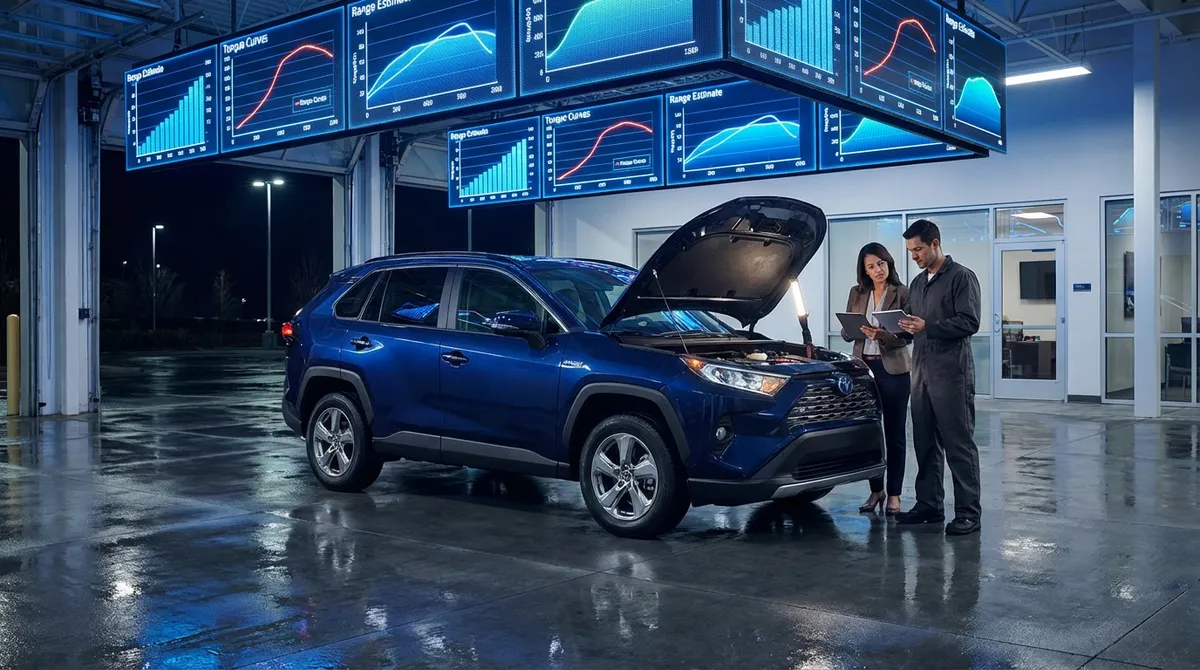
Turbocharged 4-cylinder engines are now common even in midsize SUVs, often replacing V6s. They provide strong low- and mid-range torque thanks to forced induction, but may have narrower efficiency “sweet spots.” When comparing these engines, focus on torque curves and peak torque rpm, not just horsepower. For example, an engine that delivers peak torque at 1,600–2,000 rpm will feel stronger in daily driving than one that peaks at 4,500 rpm, even if the horsepower ratings are similar.
Hybrid and plug-in hybrid SUVs layer electric motors and battery packs onto internal-combustion engines. Full hybrids typically optimize efficiency in city traffic through regenerative braking and electric assist, while PHEVs offer limited all-electric range (often 20–50 miles) before the engine engages. Look closely at:
- Battery capacity (kWh) – Larger capacity typically means more electric-only range, but also more weight.
- System output – Total system horsepower/torque, not just the engine rating, as electric motors add significant low-speed punch.
- Onboard charger capacity (kW) – Determines how quickly you can recharge a PHEV from Level 2 home charging.
For fully electric SUVs, range and charging are the core metrics, but dig deeper:
- Battery chemistry and pack configuration – Some models use nickel-rich chemistries for higher energy density; others use LFP (lithium iron phosphate) for better longevity and thermal stability.
- DC fast charge curve – It’s not just peak kW; how long the vehicle sustains high charge speeds from 10–80% matters more on road trips.
- Thermal management – Liquid-cooled battery packs handle fast charging and extreme temps better, preserving long-term capacity.
Align your choice with your driving profile. High highway mileage favors diesels (where still available), efficient turbo-gas engines, or well-engineered hybrids. Urban, short-distance use is ideal for PHEVs and EVs, where regenerative braking and home charging maximize savings. If towing or mountain driving is frequent, pay extra attention to continuous power output and cooling capacity, not just brochure numbers.
2. Chassis, Drive Systems, and Ride Quality: Reading Between the Specs
Many SUV buyers focus on cabin space and tech but overlook the components that define how the vehicle actually feels on the road: the platform, suspension architecture, and drive system. These underpin both daily comfort and long-term durability.
Start with the platform type. Most modern crossovers sit on unibody platforms shared with passenger cars, providing better ride comfort and efficiency than traditional body-on-frame SUVs. Body-on-frame designs, still used for many full-size and off-road-oriented models, excel in towing and durability under heavy loads but tend to ride more stiffly and feel less agile on pavement.
Suspension design directly affects handling, ride comfort, and tire wear. Key details to look for:
- Rear suspension type – Multi-link or independent rear suspensions offer superior ride isolation and handling compared to torsion beam or solid axle setups, especially on uneven surfaces and during cornering.
- Adaptive or semi-active dampers – Electronically controlled dampers can tailor firmness based on drive modes or road conditions, blending comfort and control. Check whether the system is standard or tied to an expensive package.
- Air suspension – Often available on higher-end models, it can adjust ride height for highway efficiency, off-road clearance, and easier ingress/egress. However, it introduces more complexity and potential long-term repair costs.
Drive system choices—FWD, RWD, AWD, or 4WD—aren’t just about traction. Rear-wheel-drive platforms generally offer better weight distribution and towing stability, while front-wheel-drive-based crossovers optimize packaging and fuel economy. For all-wheel drive and 4WD, look beyond the badge:
- Type of AWD/4WD – Some systems are primarily front- or rear-biased with on-demand engagement, while others are full-time with center differentials or twin-clutch rear units that can vector torque between wheels.
- Low-range transfer case – Essential for true off-roading and heavy-duty towing; often absent on car-based crossovers.
- Drive modes and terrain management – Check for modes that alter throttle mapping, transmission logic, and traction control for snow, mud, or sand.
During test drives, evaluate ride and chassis behavior deliberately. Drive over imperfect roads, expansion joints, and at highway speeds to listen for body creaks, suspension harshness, and wind noise. Notice body roll in corners and how the SUV responds to quick lane changes. This is where structural rigidity, suspension tuning, and sound insulation come together—and these factors will influence your comfort every single day more than a marginally larger touchscreen will.
3. Interior Architecture, Seating, and Cargo: Thinking Beyond “Three Rows”
Interior packaging in SUVs has become a complex balancing act among passenger capacity, cargo flexibility, and in-cabin tech. Don’t assume that all “three-row” SUVs offer practical third rows, or that a two-row model can’t satisfy family-duty needs if configured smartly.
Begin with an honest assessment of how often you need each row. Many buyers choose three-row models for occasional use, then live with compromised cargo space and larger exterior dimensions year-round. If your third-row use is rare, consider:
- Two-row midsize SUVs with generous rear legroom and larger cargo bays.
- Models with sliding second rows that can temporarily donate space to the third row when needed.
- Removable or flat-folding third rows that preserve a usable load floor when stowed.
Seat design matters as much as count. Examine:
- Seat structure and bolstering – Firmer, multi-density foam and adjustable lumbar support reduce fatigue on long drives. Check for extendable thigh supports in the front row if you’re taller.
- Second-row options – Bench vs. captain’s chairs affects both comfort and access to the third row. Captain’s chairs usually improve comfort and third-row access but reduce maximum passenger count.
- Third-row ergonomics – Look at hip point height, knee angle, and headroom for adult occupants. If knees are pushed high toward the chest, it’s really a child-focused space.
Cargo metrics require more scrutiny than a single cubic-foot figure:
- With all seats up vs. seats folded – Many flashy “max cargo” numbers assume all rear seats folded. If you frequently travel with passengers and luggage, volume behind the second row (or behind the third row, if you’ll use it often) is the critical spec.
- Load floor height and shape – A low, flat floor is far more useful than a larger but uneven space with intrusions from wheel arches or sloped liftgates.
- Seat-fold mechanisms – Power-folding seats are convenient but add weight and complexity. Manual systems should be one-hand operable and fold flat without removing headrests.
Don’t ignore cabin materials and layout. Soft-touch surfaces on high-contact areas (door tops, console sides, armrests), robust seat fabrics or quality leather, and logical placement of physical controls contribute heavily to perceived quality and durability. If you plan to keep the SUV long-term, prioritize robust materials over trendy design flourishes that can age quickly or show wear.
4. Tech, Safety, and Software: Evaluating the “Digital” Lifespan
Today’s SUVs are increasingly defined by their infotainment, connectivity, and driver-assistance capabilities. But tech features age far faster than steel and upholstery, so you want an SUV that can stay current for as long as you own it.
For infotainment, avoid judging solely by screen size. Assess:
- Operating system responsiveness – Lag, choppy animations, and long boot times will become daily irritants.
- Physical vs. touch controls – Essential functions (temperature, fan speed, volume, defrost) are safer and easier to use with dedicated buttons or knobs. Full touch control may look modern but can be distracting in motion.
- Smartphone integration – Wireless Apple CarPlay and Android Auto capabilities, along with wireless charging and multiple USB-C ports, are increasingly worth having for cable-free daily use.
Software update strategy is now a key differentiator. Ask the dealer and consult manufacturer documentation on:
- Over-the-air (OTA) update capability – Can the SUV receive core infotainment and driver-assistance updates remotely, or does everything require a dealer visit?
- Feature unlocks – Some brands offer paid software unlocks for features like navigation, performance modes, or driver assists. Consider long-term costs and whether key features are truly included or effectively “subscribed.”
On the safety side, examine both crash protection and advanced driver assistance systems (ADAS):
- Crash test ratings – Look up scores from organizations like the IIHS and NHTSA rather than relying on generic “5-star” marketing statements. Pay attention to small-overlap crash performance and side-impact ratings, which better reflect real-world scenarios.
- Standard vs. optional ADAS – Systems like automatic emergency braking (AEB), lane-keeping assist, blind-spot monitoring, rear cross-traffic alert, and adaptive cruise control may only be standard on higher trims. Check what’s included at your price point.
- System behavior – During a test drive, engage adaptive cruise and lane-centering (if available). Evaluate whether the system is smooth or “twitchy,” how it responds to curves, and how well it recognizes lane markings and cut-in vehicles.
Also consider long-term cyber and hardware support. Vehicles with well-documented security patching practices and widely used platforms are more likely to receive updates that keep infotainment, navigation, and connectivity features functional as smartphones and networks evolve.
5. Total Cost of Ownership: Looking Past the Monthly Payment
Price tags and monthly payments are only the visible portion of an SUV’s financial footprint. To make a truly informed purchase, model your total cost of ownership (TCO) over at least 5–7 years, incorporating fuel or electricity, maintenance, insurance, depreciation, and potential incentives.
Start with energy costs:
- Fuel economy / energy efficiency – Use EPA fuel-economy or equivalent testing data as a baseline, but adjust based on your driving mix. Highway-heavy commuting may reduce the relative efficiency advantage of hybrids, while stop-and-go city use may accentuate it.
- Electricity vs. fuel pricing – For EVs and PHEVs, compare local electricity rates (preferably off-peak) to gasoline or diesel prices. Consider whether you can install Level 2 home charging and what that cost will be upfront.
- Real-world vs. rated range – EVs in particular can see lower range in cold weather, at high speeds, or when towing. Use independent range tests and owner data for a more realistic estimate.
Maintenance and reliability also shift with technology:
- Service intervals and consumables – Oil changes, transmission service, and consumables like brake pads and tires vary widely by vehicle weight, drivetrain, and regenerative braking strength. EVs often need fewer mechanical services but may have higher tire wear due to weight and torque.
- Warranty coverage – Pay attention to powertrain and hybrid/EV component warranties. Battery warranties commonly cover 8 years/100,000 miles or more, often with minimum capacity guarantees. Evaluate warranty terms against how long you plan to own the SUV.
- Predicted reliability – Use independent reliability data and technical service bulletins (TSBs) to identify known issues with engines, transmissions, or electronic systems on specific models or platforms.
Depreciation and resale value are often overlooked but can outweigh minor differences in sticker price. Historical data shows that some brands and models hold value significantly better than others, particularly those with strong reputations for reliability, fleet demand, or enthusiast interest. For EVs and PHEVs, consider the pace of technology improvement; early-generation models may depreciate faster as newer options with better range and charging emerge.
Finally, include tax credits and incentives in your calculations if you’re considering a plug-in hybrid or EV. Federal and state-level incentives, as well as local utility rebates for home chargers, can tilt the math significantly—provided the specific trim and assembly origin of your chosen SUV qualify under current regulations. Factor these benefits in alongside your projected fuel/energy savings and maintenance costs to build a realistic multi-year cost model.
Conclusion
The modern SUV landscape rewards buyers who approach the purchase with a technical, long-horizon mindset. Instead of being swayed solely by styling, brand prestige, or a single headline feature, anchor your decision on how the powertrain, chassis, interior packaging, technology stack, and total ownership costs intersect with your actual driving life.
When you test drive candidates, bring a checklist aligned with these five areas and treat the process like an engineering evaluation rather than a quick demo. The payoff is an SUV that not only feels right during the first week of ownership, but remains efficient, comfortable, and technologically relevant long after the initial new-car excitement fades—turning your next SUV into a well-optimized tool instead of an expensive experiment.
Sources
- U.S. Department of Energy – Fuel Economy Guide - Official EPA fuel economy data for gas, hybrid, PHEV, and EV SUVs to compare efficiency and energy use
- National Highway Traffic Safety Administration (NHTSA) - Crash-test ratings and safety information for SUVs, including frontal, side, and rollover tests
- Insurance Institute for Highway Safety (IIHS) - Independent crashworthiness and crash-avoidance ratings, plus detailed data on SUV safety performance
- U.S. Department of Energy – Alternative Fuels Data Center - Technical information on EVs, PHEVs, charging infrastructure, and relevant incentives
- Consumer Reports – Car Reliability & Owner Satisfaction - Aggregated reliability and ownership-cost data for various SUV models and brands
Key Takeaway
The most important thing to remember from this article is that this information can change how you think about Buying Guide.