The SUV world is shifting faster than at any point in the last decade, and 2024–2026 is shaping up as a defining period for electric and electrified SUVs. Supply-chain realignments, evolving government incentives, changing consumer demand, and rapid software innovation are reshaping what will be in dealer showrooms—and what it will cost. For enthusiasts and serious shoppers, following these industry moves is no longer optional; it’s the only way to anticipate which models will still make sense five to ten years from now.
This industry news roundup breaks down five pivotal developments that are quietly redefining the SUV landscape, from battery sourcing deals to plug-in hybrid resurgence and software-driven revenue models.
1. Automakers Race to Lock In Battery Supply for Next-Gen SUVs
The biggest story behind the scenes of every new electric or plug-in SUV is battery supply. Automakers are racing to secure long-term contracts and build regional battery plants to control costs, qualify for incentives, and stabilize production.
In North America, companies like General Motors, Ford, Stellantis, Hyundai-Kia, and Toyota are pouring tens of billions into joint-venture battery factories with partners such as LG Energy Solution, SK On, and Panasonic. These facilities, often in the U.S. Midwest and South, are being designed around high-nickel NMC chemistries and increasingly around lithium iron phosphate (LFP) for lower-cost trims. For SUV buyers, this matters because the chemistry mix will directly impact range, towing capability, cold-weather performance, and price.
Battery localization is also about tax credits. Under the U.S. Inflation Reduction Act (IRA), certain electric SUVs can qualify for up to $7,500 in federal tax credits, but the rules increasingly require that critical minerals and battery components come from the U.S. or free-trade partners. That is driving manufacturers to reengineer supply chains and, in some cases, slightly revise platforms or pack configurations to ensure compliance. Expect some models to quietly adjust battery capacities or sourcing in mid-cycle refreshes just to remain incentive-eligible.
For enthusiasts, the key takeaway is that future flagship SUVs—whether from legacy brands or startups—will be heavily influenced by who secures stable battery partnerships now. Delays or cancellations of announced models often trace back to battery constraints, and conversely, early access to next-gen cells (with higher energy density or faster charging) can give certain brands a multi-year performance and range advantage.
2. Plug-In Hybrid SUVs Stage a Strategic Comeback
While pure EVs grabbed early headlines, industry data over the past 18–24 months shows a noteworthy rebound in plug-in hybrid (PHEV) SUVs. Facing consumer concerns about charging infrastructure, range anxiety, and cold-weather performance, many automakers are doubling down on plug-in models as a “bridge technology” strategy.
In markets like the U.S. and Europe, PHEV SUVs are evolving rapidly. Electric-only ranges are creeping closer to 40–60 miles (64–96 km) on the EPA and WLTP cycles, enough for many daily commutes to be fully electric. At the same time, improved thermal management and more sophisticated energy management software allow these SUVs to blend combustion and electric power more seamlessly, particularly under heavy loads or at highway speeds.
Industry announcements show several manufacturers repositioning plug-in SUVs not as eco-compromises, but as high-torque, premium-focused offerings. Think dual-motor all-wheel drive, boost modes, and performance-tuned suspensions that leverage the instant torque of electric motors while using the combustion engine for sustained high-speed travel and towing. For buyers who frequently drive long distances, tow trailers, or live in areas with sparse charging infrastructure, this strategy offers a realistic decarbonization pathway without a full lifestyle change.
Regulatory frameworks are also influencing this comeback. In the EU, stricter fleet CO₂ targets make PHEVs valuable compliance tools, provided real-world usage leans heavily on the electric side. Some cities are even experimenting with geofenced “zero-emission zones” where plug-in hybrids automatically switch to electric operation. For North American drivers, expect more generous all-electric ranges and tighter integration with home chargers and utility rate programs as manufacturers pitch PHEVs as a practical step into electrification rather than a technological dead end.
3. Charging Infrastructure and Policy Shifts Reshape EV SUV Viability
No matter how advanced the batteries or powertrains become, electric SUV adoption hinges on charging infrastructure and policy stability. Over the last two years, several key developments have materially changed the outlook for EV SUVs in major markets.
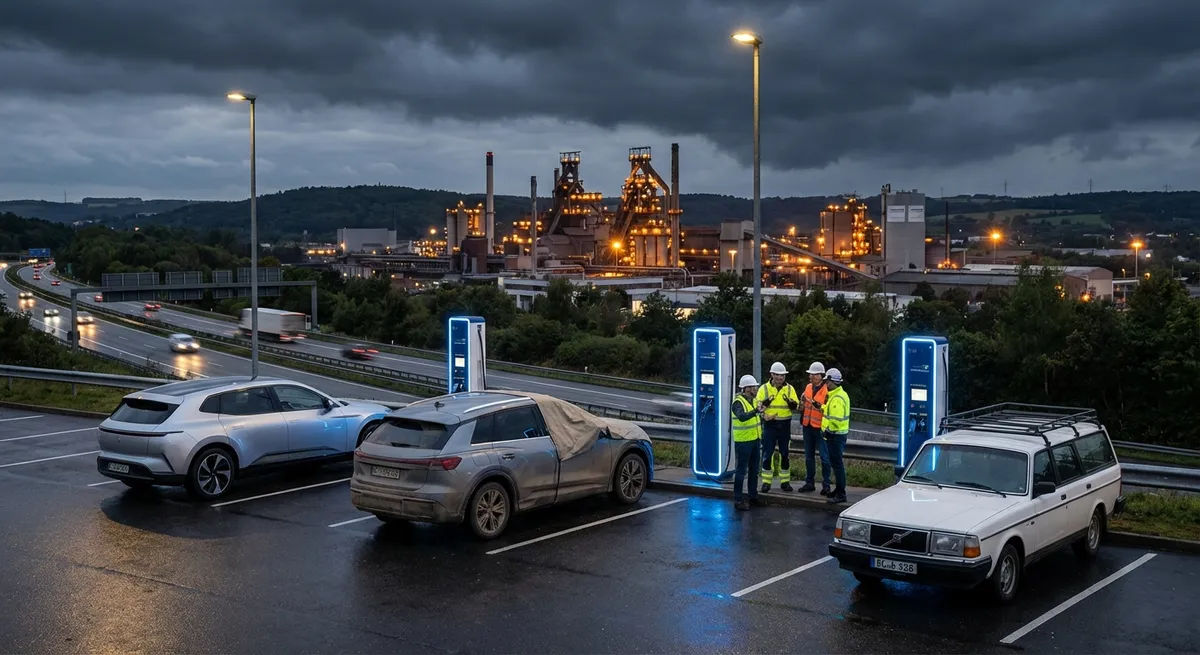
In the U.S., the Bipartisan Infrastructure Law set aside billions for a national fast-charging network, with a particular emphasis on interstate corridors. States are rolling out DC fast chargers along primary highways under the National Electric Vehicle Infrastructure (NEVI) program, aiming to provide chargers every 50 miles along designated routes. For larger, heavier SUVs—which consume more energy per mile than compact EVs—dense fast-charging coverage is crucial to making long road trips viable without excessive stop times.
Simultaneously, the rapid industry migration toward the NACS (North American Charging Standard) connector—initially developed by Tesla—means that many upcoming electric SUVs will be designed from day one to use both CCS and NACS, or ship with adapters. This is more than a convenience tweak: it gives new SUV EV owners access to the extensive Tesla Supercharger network, historically known for good reliability and strategic placement. That materially improves the ownership experience for those transitioning from long-range gasoline SUVs.
On the policy side, evolving incentive rules and emissions regulations mean the financial equation for electric SUVs is in flux. Tax credit eligibility can change year to year based on where the vehicle is assembled and where its battery materials come from. Some states and countries are layering additional rebates, while others are phasing them out in favor of infrastructure investments. Shoppers looking at a three- to five-year purchase horizon should watch not only the vehicle announcements but also the regulatory calendars; the SUV that looks marginal today may become far more attractive if a planned factory or sourcing adjustment makes it credit-eligible mid-cycle.
4. Over-the-Air Updates Turn SUVs Into Rolling Software Platforms
One of the most consequential shifts in the SUV industry has nothing to do with horsepower or ground clearance: it’s the pivot toward software-defined vehicles and over-the-air (OTA) updates. Many new SUVs now ship with high-bandwidth connectivity and centralized computing architectures that allow automakers to push not just infotainment tweaks, but core powertrain and driver-assistance updates remotely.
From an industry perspective, this changes the product lifecycle. Instead of hardware alone defining the capabilities of an SUV at launch, manufacturers increasingly view vehicles as platforms that can gain new features, performance enhancements, or safety upgrades years after sale. This mirrors the smartphone model, and it’s rapidly altering how carmakers forecast revenue and design hardware.
For enthusiasts, OTA and software-defined architectures open intriguing possibilities—and some new concerns. On the upside, we’re seeing real-world improvements to range estimation, adaptive suspension tuning, regenerative braking profiles, and even thermal management, all delivered without a dealer visit. In performance-oriented models, software updates may unlock temporary “track modes,” power boosts, or launch-control refinements that previously would have required a new model year.
On the downside, subscription-based features are becoming a central part of many business models. Heated seats, advanced driver-assistance functions, or enhanced navigation might be locked behind monthly fees, even if the hardware is already installed in the SUV. Industry-watchers are paying close attention to consumer and regulatory pushback here; some regions are evaluating whether essential safety systems can legally be paywalled after purchase.
From a technical standpoint, the shift to centralized, zonal vehicle architectures with powerful domain controllers is what makes deep OTA possible. That means upcoming SUVs are increasingly being designed with “headroom” in compute power and memory, so that future software loads and feature sets can be accommodated. Buyers who plan to keep an SUV for 8–10 years should pay attention not only to what features are included today, but how robust the underlying electronics platform is and how long the automaker commits to software support.
5. Global Production Realignments and Trade Tensions Reshape SUV Pricing
A final, less visible but highly impactful trend is the realignment of global SUV production in the face of shifting trade policies, tariffs, and geopolitical risks. Where an SUV is built—and where its key components come from—has a growing influence on its pricing, availability, and even lineup strategy.
In recent years, automakers have rebalanced production footprints, creating more regionalized manufacturing hubs to hedge against tariffs and logistics disruptions. For example, several brands have announced or expanded SUV and EV production in North America and Europe to reduce exposure to cross-border trade disputes and long-distance shipping costs. At the same time, some markets are imposing or considering additional tariffs on imported electric vehicles, particularly from low-cost manufacturing centers, which may limit the number of budget-oriented electric SUVs available in certain regions.
These moves affect more than sticker prices. Platform sharing and flexible factories allow companies to tweak product mixes quickly in response to demand. If consumer interest shifts from compact crossovers to three-row family SUVs, or from pure EVs to plug-in hybrids, factories designed around modular platforms can pivot more rapidly. That means some previously announced models may be delayed, consolidated, or rebadged depending on how market forecasts collide with trade realities.
For buyers, this production reshuffling can translate into longer wait times for certain trims, periodic dealer shortages of high-demand configurations, or localized “orphan” models that don’t receive global support if they’re produced only for a single region. Conversely, SUVs manufactured in or near major sales markets may enjoy more consistent supply, stronger parts availability, and better long-term support networks.
Watching where an SUV is built, which platform it rides on, and how widely that platform is shared across markets can give enthusiasts and shoppers valuable clues about long-term viability, resale value, and the likelihood of future variants or performance editions.
Conclusion
The SUV segment is no longer just about size, power, and styling; it’s a complex intersection of battery strategy, software capability, infrastructure development, and global trade policy. Battery supply deals will determine which electric SUVs thrive, while plug-in hybrids are being repositioned as sophisticated, long-range solutions rather than transitional curiosities. Charging network expansions and evolving incentives will reshape the ownership math, even as over-the-air updates turn SUVs into dynamic, upgradeable platforms. Meanwhile, production realignments and trade tensions will quietly influence which models make it to your driveway—and at what price.
For enthusiasts and prospective buyers, staying informed about these industry-level shifts is now as important as reading a spec sheet. The SUVs that feel like the safest bets over the next decade will be the ones backed by solid battery partnerships, robust software roadmaps, resilient production footprints, and a clear regulatory strategy.
Sources
- U.S. Department of Energy – Electric Vehicles and Charging Infrastructure – Overview of federal EV initiatives, charging programs, and technical background on infrastructure development
- U.S. Department of Transportation – National Electric Vehicle Infrastructure (NEVI) Program – Details on the rollout of nationwide fast-charging corridors and funding allocations
- International Energy Agency – Global EV Outlook – Data-driven analysis of global EV adoption trends, including SUVs, policy impacts, and market projections
- European Commission – CO₂ Emission Performance Standards for Cars and Vans – Regulatory background shaping EV and plug-in hybrid SUV strategies in Europe
- General Motors – Ultium Cells Joint Venture Overview – Example of large-scale battery production partnerships influencing future SUV electrification strategies
Key Takeaway
The most important thing to remember from this article is that this information can change how you think about Industry News.