The SUV market is no longer just about size, style, and badge prestige. In 2025, the most important changes are happening under the skin: batteries, chips, software platforms, and new business models are redrawing the competitive map. For shoppers, this creates both opportunity and confusion. For enthusiasts, it signals a new era where performance and efficiency increasingly come from code and kilowatt-hours rather than displacement and cylinders. This overview breaks down five pivotal industry shifts affecting electric and electrified SUVs now, and what they actually mean if you’re planning your next purchase.
1. Battery Tech Is Redefining Range, Weight, and Price
The biggest story in electric SUVs is no longer simply “more range.” It’s how automakers are getting there—and at what cost in weight, packaging, and longevity.
The industry is moving from traditional nickel manganese cobalt (NMC) chemistries toward a mix of lithium iron phosphate (LFP) and emerging solid‑state designs. LFP packs are increasingly being used in mainstream and entry luxury SUVs because they’re cheaper, more durable in daily cycling, and less dependent on high-cost materials like cobalt and nickel. This allows manufacturers to offer competitive base-range models at lower prices, even if LFP’s energy density is typically lower than NMC. In contrast, high-performance and long-range SUVs still lean on NMC or nickel cobalt aluminum (NCA) cells for greater energy density, enabling 300+ mile ranges without ballooning battery size.
At the same time, the industry is investing heavily in cell-to-pack and cell-to-chassis architectures, which remove intermediate modules to save weight and space. This is especially important in taller SUV bodies, where engineers fight both mass and aerodynamic drag. Structural integration of the pack into the vehicle’s floor can improve chassis stiffness, ride, and crash performance while giving designers more flexibility in cabin layout. It also makes future upgrades more complex: once the battery is part of the structure, retrofitting a different pack generation becomes difficult, which is worth considering if you expect to keep an SUV past its warranty window.
Solid-state batteries remain largely in the prototype and pilot-production phase, but they’re central to every major manufacturer’s 2030s roadmap. For SUV buyers in 2025, what matters now is how quickly today’s chemistries enable fast charging. The latest platforms support 800‑volt architectures that can take advantage of high‑power DC fast chargers to add 150–200 miles of range in 15–20 minutes, provided the charging infrastructure is adequate. Potential buyers should pay close attention not just to headline range, but to usable battery capacity, typical consumption (kWh/100 miles or kWh/100 km), and peak/average charging speeds over a realistic state-of-charge window (for example, 10–80%).
2. Software‑Defined SUVs Are Turning Features Into Subscriptions
The SUV is rapidly becoming a rolling computing platform, and that changes both how vehicles are engineered and how they’re sold. Software‑defined vehicle (SDV) architectures centralize processing power in a few high‑performance domain controllers rather than distributing it across dozens of isolated ECUs. For buyers, this has three major implications: updatability, feature flexibility, and total cost of ownership.
Updatability is the positive headline. Over‑the‑air (OTA) updates now routinely deliver bug fixes, efficiency improvements, and new features without a dealer visit. This software-centric approach lets automakers refine traction and stability control, adaptive dampers, torque vectoring logic, and energy management after the SUV leaves the factory. In some high-performance electric SUVs, software updates have meaningfully altered 0–60 mph times and real-world range, effectively giving owners a second-generation powertrain without a hardware swap.
The second implication is feature flexibility—sometimes controversial. Automakers are increasingly decoupling hardware from its full capability at the time of sale. A mid-spec SUV may ship with all the sensors and computing power needed for advanced driver-assistance, but only offer partial functionality out of the box. Additional capabilities—enhanced lane centering, adaptive cruise with automated lane changes, or advanced parking maneuvers—may be unlocked through one-time payments or monthly subscriptions. The same logic is spreading to performance boosts, premium audio processing, and even off-road drive modes.
This leads to the third implication: long-term cost and resale value. A software‑heavy SUV might stay more relevant for longer, because its technology can evolve. But it can also lock core capabilities behind paywalls that extend beyond the warranty period. Prospective buyers should scrutinize three details: which functions are permanently included in the purchase price, which are subscription-based, and whether those subscriptions transfer to a second owner. In a used market increasingly aware of software features, permanently unlocked capabilities could become a key differentiator in residual values.
3. SUV Emissions and Efficiency Standards Are Forcing a New Powertrain Mix
Regulatory pressure is reshaping the SUV lineup globally, with emissions and efficiency standards pushing manufacturers toward a three‑part mix: hybrids, plug‑in hybrids (PHEVs), and full battery electric vehicles (BEVs). Traditional naturally aspirated V6 and V8 gasoline SUVs are being squeezed by ever-tightening fleet-average CO₂ and fuel economy targets, especially in North America, Europe, and parts of Asia.
Manufacturers are responding by electrifying almost every segment. Mild hybrids, which use a 48‑volt system and small motor/generator to assist the engine, are proliferating in midsize and full‑size SUVs. They offer modest efficiency gains and smoother start-stop operation, but they don’t provide electric-only driving. Full hybrids go further by enabling short-range low-speed electric operation and significantly improved city-cycle fuel economy. These systems require more complex power-split devices or multi‑clutch transmissions but yield real benefits in traffic-heavy commutes.
Plug‑in hybrid SUVs sit at the center of the transition, particularly in premium and performance segments. They combine a traditional combustion engine with a larger battery and more powerful electric motor(s) capable of 20–50+ miles of electric‑only range, depending on the model. For buyers, this can mean doing the majority of daily driving on electricity while retaining long-range capability and fast refueling for road trips. The tradeoffs are cost, mass, and packaging: PHEVs can be heavier and may sacrifice fuel tank volume or cargo space to fit the battery.
Full electric SUVs are expanding quickly but must contend with consumer concerns about charging access, cold-weather range, and towing capacity. Regulations are nudging manufacturers to make BEVs more attractive through improved efficiency and better thermal management. Heat pumps, advanced battery preconditioning, and active aero are becoming standard features on newer electric SUVs, especially in colder markets where winter range can drop 20–40% without careful engineering.
For buyers, the practical question is no longer whether SUVs will be electrified, but which form of electrification best matches their use case. Daily commuting patterns, home charging availability, and expected towing or off-road use should drive the decision between hybrid, PHEV, and BEV—not just the sticker price or advertised electric range.
4. Charging and Hydrogen Infrastructure Are Quietly Rewriting Long‑Distance SUV Travel
Infrastructure is the make-or-break factor for SUVs expected to cover long distances, tow trailers, or support outdoor lifestyles. While EV charging networks are expanding, coverage and reliability still vary widely by region, and hydrogen fuel cell SUVs remain limited by sparse refueling options.
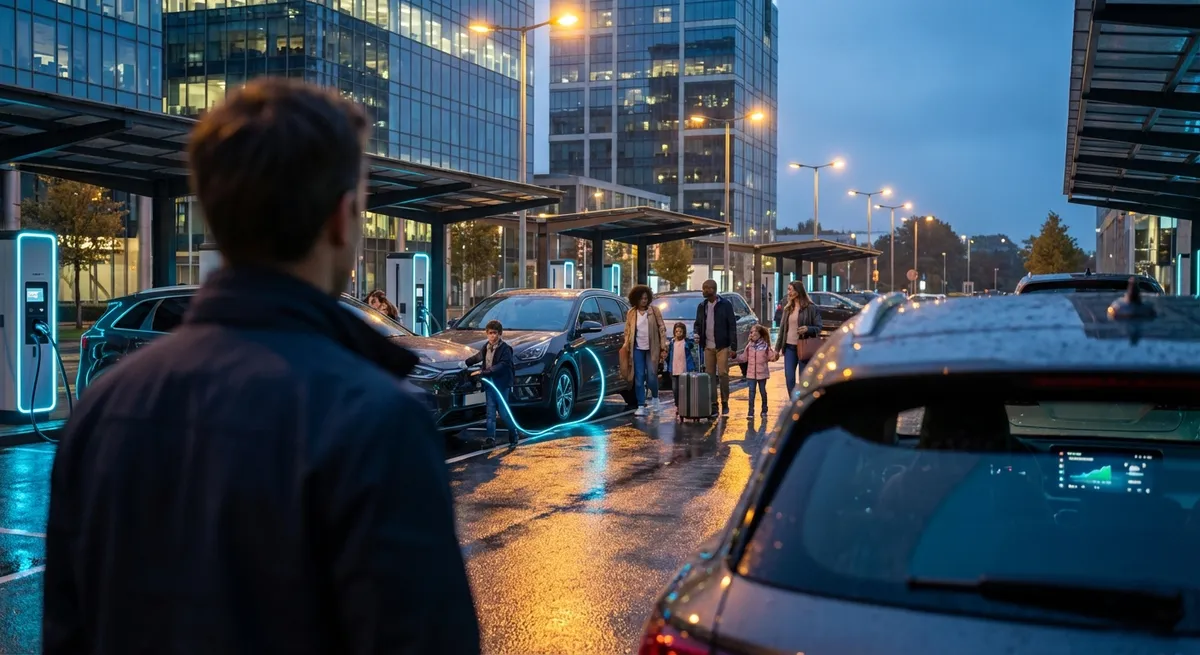
On the charging front, there are two overlapping trends: network build‑out and standardization. High‑power DC fast chargers capable of 150–350 kW are being deployed along major highway corridors, making intercity electric SUV travel increasingly practical. However, average charge power over a full session—not just peak kW—remains critical to real-world trip time. Some SUVs hold near-peak power over a wide state-of-charge window, while others taper quickly. As a result, two vehicles with similar battery capacities and advertised peak charging can deliver noticeably different time‑to‑80% figures on the same charger.
Standardization is the other key development. In North America, the industry is coalescing around the North American Charging Standard (NACS) connector originally introduced by Tesla, with multiple major automakers planning to adopt it. This is likely to simplify public charging over the next several years, but in the short term buyers should understand exactly which adapters and network memberships their SUV will need. Integrated route planning that accounts for charger availability, power level, and real-time status is becoming a genuine differentiator, particularly for families or frequent long-distance drivers.
Hydrogen fuel cell SUVs remain a niche, constrained by the limited number of hydrogen stations and the complexity of storing and distributing the fuel. In regions with established hydrogen corridors, fuel cell SUVs can offer quick refueling and long range with zero tailpipe emissions, but outside those pockets, practical usability plummets. For most buyers in 2025, hydrogen is more of a technology to watch than a mainstream option.
A related but often overlooked factor is how infrastructure policy interacts with incentives. Public funding is accelerating the build‑out of fast-charging corridors, especially along interstate highways and key freight and travel routes. These investments are aimed at enabling heavier and larger vehicles—including SUVs and light trucks—to electrify without sacrifice in practicality. As infrastructure becomes denser and more reliable, electric SUVs will increasingly compete directly with traditional gasoline crossovers for cross-country usability.
5. Global Supply Chains and New Entrants Are Reshaping SUV Competition
The SUV segment is not only changing technologically; it’s also being reshaped by new players and reconfigured supply chains. Startups from China, the U.S., and Europe are challenging established brands with aggressively priced, highly connected SUVs that often debut the latest battery and infotainment technologies. At the same time, traditional automakers are reevaluating how and where they source critical components.
Battery material supply is central to this shift. Governments and manufacturers are working to secure more localized supply chains for lithium, nickel, cobalt, and manganese, as well as to increase recycling capacity. For consumers, this may affect both pricing stability and the environmental footprint of their vehicles over time. SUVs built on platforms designed around regionally sourced materials and higher recycled content could see reduced lifecycle emissions—a growing part of regulatory metrics, not just a marketing claim.
New entrants are particularly disruptive in the mid-size and compact electric SUV segments, where price sensitivity is highest and tech features are most visible. These brands often differentiate with large, high-resolution displays, smartphone-like user interfaces, and advanced driver-assistance systems that rival or surpass those from long-established OEMs. They also tend to move faster in rolling out new battery chemistries and high-voltage architectures. However, questions remain about long-term durability, after-sales support, and software update policies, making it critical for buyers to consider warranty terms, service networks, and crash-test performance alongside spec sheets.
Established brands are responding by consolidating platforms globally. A single modular architecture might now underpin dozens of SUV variants across different markets, helping to amortize R&D cost and enabling quicker adoption of new motors, inverters, and battery packs. This can be a win for buyers: technology that debuts in a flagship model often filters down more quickly to mainstream SUVs when the underlying platform is shared.
Trade policies, tariffs, and localization requirements add another layer. They can influence which SUVs are cost-competitive in a given market and where they’re built. Production shifts may affect delivery times, pricing, and eligibility for regional incentives. For potential buyers, it’s worth understanding not just the vehicle’s specs, but how policy and supply chain factors might influence long-term parts availability, resale value, and the likelihood of mid-cycle updates.
Conclusion
The SUV landscape in 2025 is far more dynamic than a simple transition from gasoline to electric might suggest. Battery chemistry choices, software‑defined architectures, tightening emissions rules, evolving charging infrastructure, and shifting global supply chains are all converging to redefine how SUVs are designed, built, and experienced. For enthusiasts, this era offers unprecedented levels of performance tuning and feature evolution through software, along with new forms of electrified powertrains that keep capability intact. For everyday buyers, it raises new questions about charging access, subscription features, and long-term costs that go beyond traditional fuel economy and towing ratings.
Understanding these five industry shifts provides a stronger framework for evaluating the next wave of SUVs—whether your priorities are long-distance comfort, off-road ability, sustainability, or cutting-edge technology. The models arriving in showrooms now are the first generation of truly software-centric, electrification-native SUVs, and the choices made in this cycle will shape the segment for the next decade.
Sources
- U.S. Department of Energy – Alternative Fuels Data Center - Data and analysis on EV charging infrastructure, fuel types, and vehicle technologies
- International Energy Agency – Global EV Outlook 2024 - Comprehensive overview of global electric vehicle trends, including SUVs and infrastructure
- U.S. EPA – Regulations for Greenhouse Gas Emissions from Passenger Cars and Trucks - Details on emissions and fuel economy standards influencing SUV powertrains
- BMW Group – The Software-Defined Vehicle - Automaker perspective on SDV architecture and over-the-air capabilities
- Toyota – Electrified Vehicles Technology Overview - Technical explanations of hybrid, plug-in hybrid, battery electric, and fuel cell systems
Key Takeaway
The most important thing to remember from this article is that this information can change how you think about Industry News.