The SUV market is entering a period of rapid restructuring, and electric SUVs are at the center of it. After a few years of hype, reality is forcing automakers to adjust strategies, rethink pricing, and invest in next‑generation platforms. For shoppers and enthusiasts, the result is a market that will look very different by the 2025–2027 model years—especially in terms of performance, charging, incentives, and long‑term ownership costs.
This overview breaks down five pivotal shifts in the electric SUV space that are already influencing product plans, dealership inventories, and what you’ll see on the road over the next few years.
1. New EV Platforms Are Redefining What an “Electric SUV” Can Be
Automakers are rapidly moving from “converted” gasoline SUVs to dedicated EV architectures, and the difference is more than marketing. Legacy models built on shared ICE (internal combustion engine) platforms often carry compromises: taller floor height due to underfloor batteries, limited frunk space, and suboptimal weight distribution. The new wave of skateboard-style platforms is designed around a flat battery pack and compact electric drive units, allowing for longer wheelbases, short overhangs, and more interior volume in a similar footprint.
From a technical perspective, these dedicated EV platforms are enabling 800‑volt electrical architectures on more models, improving DC fast‑charging speeds and supporting thinner high‑voltage cabling for weight reduction. Brands like Hyundai-Kia (E-GMP), GM (Ultium), and Volkswagen Group (MEB/SSP) are also using modular battery and motor “building blocks” to scale from compact crossovers to three-row family SUVs with shared components. Expect tighter turning circles from rear‑steer options, lower centers of gravity than body‑on‑frame SUVs, and chassis tuning that narrows the gap between traditional performance SUVs and electric ones. For buyers, this means more usable space, better efficiency, and driving dynamics that feel purpose-built instead of retrofitted.
2. Charging Networks and Speeds Are Becoming a Core Differentiator
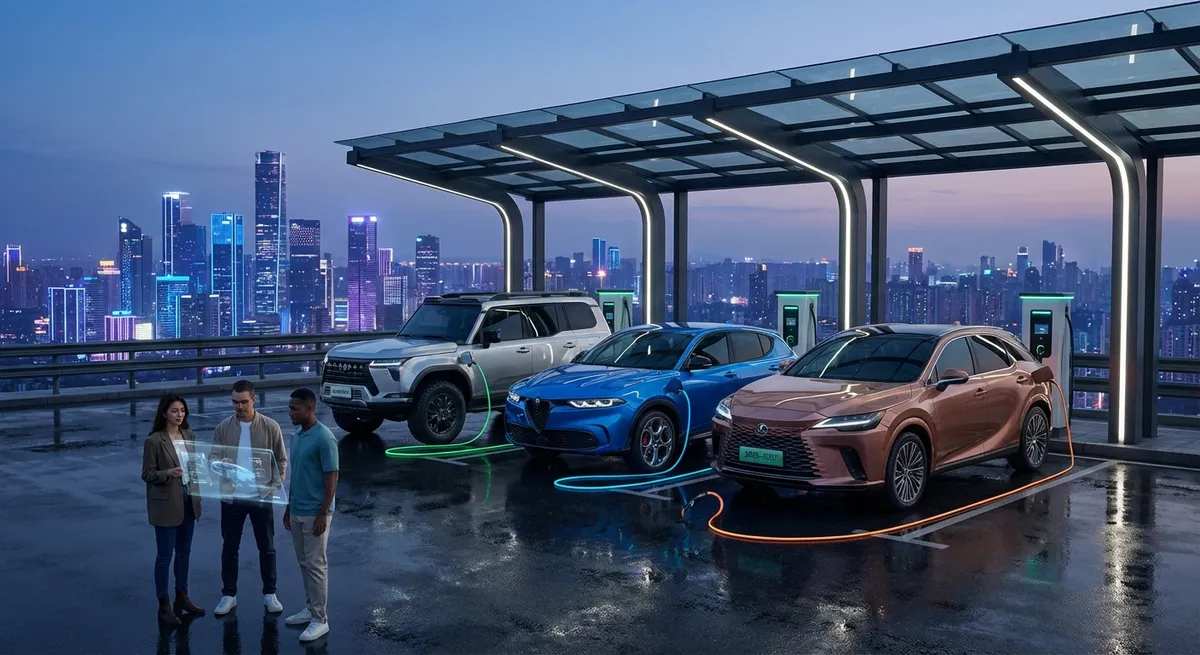
Until recently, electric SUVs were often judged primarily on battery size and advertised range. That’s changing quickly as charging curves, network access, and plug standards become major purchase criteria. Many new and upcoming SUVs are engineered to sustain higher charge rates over a longer portion of the battery’s state-of-charge window, which is more important than a single “peak kW” number for real-world road-trip usability.
At the same time, the North American Charging Standard (NACS)—initially developed by Tesla—is being adopted broadly, which will give future SUV buyers access to a more dense and generally reliable high-speed charging network, alongside existing CCS infrastructure. This shift is driving design decisions: thermal management systems are being upgraded to keep battery temperatures in the optimal range during repeated fast charges, and onboard navigation is being integrated with real-time charger availability and routing. Expect upcoming electric SUVs to compete heavily on “time from 10–80%” and “miles added in 15 minutes,” rather than just total range. This is particularly relevant for heavier, all-wheel-drive SUVs that are often used for long-distance family travel or towing, where charging strategy is critical.
3. Hybrid and Plug-In Hybrid SUVs Are Evolving, Not Disappearing
Despite attention on full EVs, hybrid and plug-in hybrid (PHEV) SUVs are entering a pivotal technical phase of their own. Stricter global CO₂ and fleet-average fuel economy regulations are pushing manufacturers to refine powertrain efficiency, increase battery capacity, and improve real-world electric range. Modern PHEV SUVs now commonly offer 30–50 miles of EPA-rated electric range, which, for many owners, covers most daily usage without gasoline—yet still retains long-distance flexibility and familiar refueling.
The underlying technology is also maturing. Higher-voltage hybrid systems (often 400V), improved power electronics, and more compact e-axles are reducing weight penalties while allowing stronger electric-only performance. Some systems now support true electric all-wheel drive by powering one axle solely with an electric motor, reducing the need for complex mechanical driveline components. As full EV charging infrastructure scales unevenly across regions, PHEV SUVs are being positioned as a bridge technology in North America, Europe, and parts of Asia. For enthusiasts, the potential upside is notable: combined system outputs that rival traditional performance SUVs, with significantly better efficiency in mixed driving.
4. Software-Defined SUVs and Over-the-Air Updates Are Changing Ownership
The shift to “software-defined vehicles” has particular significance in electric SUVs, where software tightly manages battery health, range prediction, thermal systems, and driver-assist features. Over-the-air (OTA) updates, once limited to infotainment tweaks, are increasingly being used to refine energy management algorithms, adjust regenerative braking strategies, and even unlock additional performance or range through paid upgrades. This means the SUV you buy in 2025 may not drive exactly the same in 2027—often in a positive way.
From a technical standpoint, centralized computing architectures are replacing numerous discrete control modules, allowing automakers to roll out deeper changes without replacing hardware. For buyers, this raises both opportunities and considerations: some SUVs may improve charging speeds or gain new driver-assist capabilities post-purchase, while others may place important features behind subscription models. Connectivity also ties into predictive maintenance—data from battery usage, charging patterns, and motor temperatures can inform service alerts or warranty decisions. Enthusiasts should pay attention not only to horsepower and torque figures, but also to a brand’s long-term software support track record, data policies, and how open or locked-down the vehicle ecosystem is.
5. Battery Chemistry, Range Realism, and Resale Values Are Converging
Battery technology is undergoing a quiet but crucial diversification that will shape the electric SUV lineup. Many manufacturers are strategically mixing lithium iron phosphate (LFP) and nickel manganese cobalt (NMC) chemistries within their portfolios. LFP packs, typically used in standard-range models, offer reduced cost, higher cycle life, and better tolerance for frequent 100% charges—making them attractive for daily-driven crossovers with modest range requirements. NMC packs, with higher energy density, are being reserved for long-range and performance-oriented SUVs where weight and packaging constraints are tighter.
At the same time, regulatory pressure for more realistic consumption figures—such as WLTP in Europe and more detailed EPA disclosures in the U.S.—is encouraging automakers to converge on more honest range estimates. As more independent testing data accumulates and public DC fast-charging experiences are documented, the market is gaining a clearer picture of real-world range at highway speeds, in cold climates, and under towing conditions. This is likely to influence depreciation trends: electric SUVs whose range and charging performance hold up well in independent reviews may maintain stronger resale values, while early models with slow charging, outdated chemistries, or limited software support may see steeper declines. Shoppers comparing 2025–2027 electric SUVs should therefore focus not just on initial MSRP and range figures, but on battery type, warranty terms (especially for capacity retention), and how transparent the manufacturer is about degradation expectations.
Conclusion
The electric SUV landscape is transitioning from first-wave experimentation to a far more disciplined, technically sophisticated phase. Dedicated EV platforms, maturing charging ecosystems, advanced hybrid strategies, software-defined architectures, and evolving battery chemistries are collectively reshaping what these vehicles can do—and what ownership will feel like over a decade. For enthusiasts and buyers alike, paying attention to these underlying trends will matter as much as comparing horsepower or screen size. The models arriving between now and 2027 will set the template for the segment’s next decade, and the most informed shoppers will be looking beneath the surface specs to understand how these industry shifts translate into daily use, long-term costs, and driving enjoyment.
Sources
- U.S. Department of Energy – Electric Vehicle Basics - Overview of EV fundamentals, including powertrains, charging, and efficiency
- International Energy Agency – Global EV Outlook 2024 - Industry-wide data on EV adoption, technology trends, and policy impacts
- Hyundai Motor Group – E-GMP Platform Overview - Technical explanation of a dedicated EV platform used for multiple SUVs and crossovers
- U.S. Environmental Protection Agency – Fuel Economy & Environment: Electric Vehicles - Details on how EV range and efficiency are measured and reported in the U.S.
- National Renewable Energy Laboratory – Battery Lifespan and Degradation - Research-based insights into battery chemistry, degradation, and long-term performance
Key Takeaway
The most important thing to remember from this article is that this information can change how you think about Industry News.