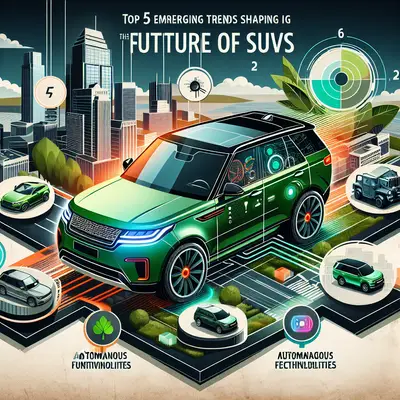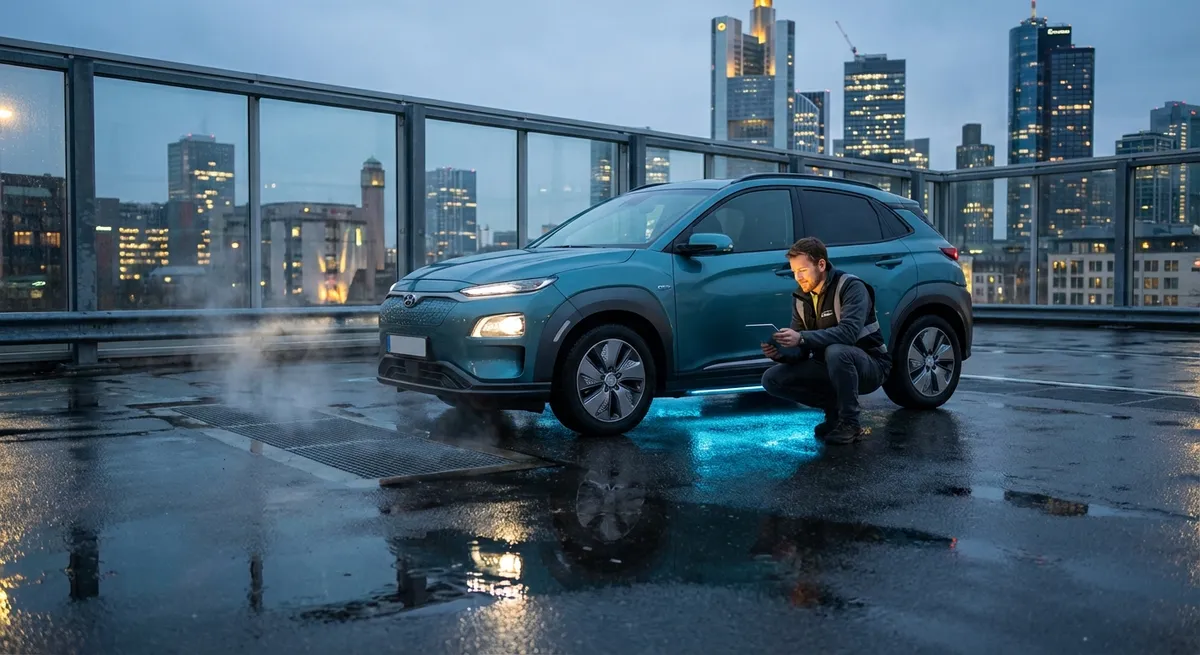
The SUV segment is entering a quietly radical phase. While headlines often chase the latest super-EV or ultra-luxury flagship, the most consequential changes are happening in mainstream and upper‑mainstream SUVs slated for the 2026 model year. From 800‑volt architectures migrating downmarket to new safety regulations that reshape vehicle design, the next wave of SUVs will look familiar—but behave very differently on the road, at the charger, and on your monthly bill.
For enthusiasts and serious shoppers, understanding what’s happening under the sheet metal is the difference between buying a future-proof SUV and getting stuck with a short-lived stopgap. Below are five industry shifts already in motion that will directly affect how you choose, drive, and own your next SUV.
1. 800‑Volt Architectures Move Mainstream: Faster Charging, Cooler Running
High-voltage architectures, once reserved for six‑figure EVs, are heading into the heart of the SUV market for the 2026 model year. Expect more midsize crossovers—from both legacy brands and newer entrants—to adopt 800‑volt (or 700–900V-class) systems in place of today’s dominant 400‑volt setups.
From an enthusiast and owner’s perspective, this matters for three reasons:
1. Much faster DC charging.
Higher system voltage reduces current for a given power level (P = V × I), so a pack can safely accept more kilowatts without overheating cabling or connectors. On 800‑volt systems, peak fast‑charging rates in the 220–350 kW range are becoming realistic on compatible chargers. That translates to:
- Roughly 10–30 minutes for a 10–80% top‑up on many 70–100 kWh packs (conditions and BMS strategy depending).
- Shorter dwell times on road trips, which also improves station throughput—an underrated benefit as charging queues grow.
2. Higher efficiency in power electronics.
Lower current means lower I²R (current‑squared) losses in cables, inverters, and onboard chargers. Expect modest but real gains in:
- Highway efficiency, especially at sustained higher speeds where inverter load is constant.
- Thermal stability, allowing for more repeatable acceleration runs without aggressive derating.
3. New hardware tradeoffs.
Brands transitioning to 800‑volt systems are revising key components:
- Inverters and onboard chargers increasingly use silicon carbide (SiC) MOSFETs for reduced switching losses and smaller packaging.
- Battery modules may be reconfigured to optimize cell string count for higher voltage while keeping similar capacity (kWh).
For buyers, the key questions when comparing 2026 EV SUVs will be:
- Does the vehicle use 400V or 800V architecture?
- What is the real 10–80% charge time on a 150 kW and a 250–350 kW charger?
- Is there an 800V‑to‑400V “booster” onboard so it can still charge efficiently at legacy stations?
Manufacturers are betting that better charging and thermal behavior will mitigate range anxiety more effectively than simply chasing ever‑larger battery packs.
2. The Hybrid Sweet Spot: “Right‑Sized” Batteries and Downsized Engines
While full EVs grab attention, hybrid SUVs—both conventional and plug‑in—are being aggressively re‑engineered for the 2025–2027 cycle. The emerging industry consensus: the most efficient route to mass adoption is not a 90 kWh battery in every driveway, but a carefully sized pack paired with an optimized combustion engine.
Key technical trends buyers will see in 2026 hybrids:
1. More efficient Atkinson/Miller‑cycle engines.
Manufacturers are pushing compression ratios and expanding use of Miller‑cycle timing with turbocharging and cooled EGR. This:
- Increases thermal efficiency closer to 40% (and in some cases beyond), especially in the typical low‑to‑mid load range where SUVs spend most of their time.
- Makes hybrids less thirsty on long highway runs—historically a weak point for some early systems tuned for city use.
2. “Right‑sizing” plug‑in hybrid battery packs.
Instead of swinging between small 10–13 kWh packs and big 25–35 kWh units, many incoming PHEV SUVs are targeting:
- 17–25 kWh usable capacity
- 35–60 miles of EV range (EPA estimates), depending on vehicle size and aero
This range band is based on telematics data showing that a large share of daily U.S. and European trips fall under 35 miles. A mid‑sized pack:
- Reduces weight vs. large PHEVs, improving handling and braking.
- Lowers cost and preserves scarce battery materials.
- Still allows many owners to commute on electricity while keeping combustion for long trips.
3. More powerful electric motors with smarter blending.
New generations of hybrid transaxles can deliver higher combined torque with smoother transitions between electric and combustion drive. Expect:
- Quicker 0–60 mph times relative to non‑hybrid trims, sometimes even outperforming pure gasoline performance variants.
- More robust regenerative braking capabilities thanks to higher maximum regen levels and improved brake‑by‑wire calibration.
For shoppers, the strategic choice will shift from “hybrid vs PHEV vs EV” to “how much daily electric range do I truly need, and in what driving pattern?” Powertrain transparency (clear EV range, usable battery capacity, and charging speed) will be vital when reading spec sheets.
3. Safety and Crash Regulations Are Reshaping SUV Front Ends and Visibility
Global and regional safety regulations coming into force through the late 2020s are already redirecting SUV design. While U.S., EU, and other jurisdictions differ in detail, a few shared themes are influencing how 2026 SUVs will be engineered:
1. Pedestrian and cyclist protection standards.
European NCAP protocols and similar frameworks increasingly emphasize:
- Softer, more energy‑absorbing front structures and hoods
- Reduced “aggressivity” of bumpers and grille surrounds
- Active hood systems that pop up to create more deformable space above engine components in a collision
For enthusiasts, this means front fascias that may be more rounded and taller, with carefully tuned crumple behavior. Expect more discussions around:
- Hood and bumper energy absorption metrics
- Use of aluminum, thermoplastics, and composite reinforcement rather than purely rigid steel designs
2. Height, mass, and driver visibility concerns.
Criticism of tall, heavy SUVs with poor forward visibility has filtered into both regulatory and design responses. Automakers are reacting with:
- Reprofiled A‑pillars and lower cowl lines where possible, aided by compact HVAC units and low‑mounted displays.
- More aggressively sloped hood designs combined with 3D camera systems that generate a “transparent hood” view.
For buyers, this aligns tech with safety: advanced camera and LiDAR packages aren’t just about autonomy; they are becoming central to visibility and collision‑avoidance strategies.
3. Advanced driver‑assistance systems (ADAS) as de‑facto standards.
Upcoming protocols from organizations like Euro NCAP and IIHS are making it effectively impossible to achieve top safety ratings without robust ADAS. Expect many 2026 SUVs—regardless of trim level—to include:
- Forward collision warning with automatic emergency braking (AEB) for vehicles, pedestrians, and often cyclists
- Lane‑keeping assistance and adaptive cruise as part of “base” safety suites
- Junction‑assist AEB and enhanced blind-spot detection in upper trims
For enthusiasts who prefer to drive without intrusive electronics, calibration quality will be the differentiator. Brands that allow detailed customization (adjustable lane assist intensity, configurable alerts, and clear off‑switch logic) will be more appealing to engaged drivers who still want top-tier safety hardware.
4. New Battery Chemistries and Pack Designs: The End of “One Chemistry Fits All”
Behind the scenes, battery R&D is moving quickly, and 2026 SUVs will start reflecting a more sophisticated, application‑specific approach to chemistries and pack layouts. Instead of one universal pack per model, expect more segmentation by trim and region.
1. LFP vs NMC/NCMA: chemistry by use case.
Many automakers are now deploying:
- LFP (lithium iron phosphate) packs in entry and mid‑range trims where:
- Total pack capacity is moderate (e.g., 55–75 kWh).
- Cost and cycle life are prioritized.
- Slightly lower energy density is acceptable due to adequate packaging space.
- NMC or NCMA (nickel‑rich) packs in long‑range or performance versions where:
- Higher energy density is critical for extended range.
- Higher cost is justified by performance or premium positioning.
- Mid‑tier LFP-based SUVs may offer robust lifespans and more tolerant charging behaviors (e.g., frequent 100% charges with less degradation concern).
- Long‑range nickel‑rich packs provide extra miles but may incur higher costs and stricter thermal management requirements.
For buyers, this creates a new decision layer:
2. Cell‑to‑pack and structural pack architectures.
To offset weight growth and packaging challenges, manufacturers are pushing:
- Cell‑to‑pack (CTP) designs that omit traditional modules, packing cells directly into the pack enclosure and raising volumetric efficiency.
- Structural packs that double as part of the vehicle’s floorpan or body structure, improving torsional rigidity.
These approaches produce:
- Better cabin space for a given wheelbase (flatter floors, more legroom).
- Lower center of gravity and improved NVH as pack integration stiffens the chassis.
However, they may complicate heavy collision repairs and pack replacement. Enthusiasts who plan long-term ownership should watch how individual brands handle structural pack serviceability and crash repair protocols.
3. Thermal management goes sophisticated.
As pack designs evolve, so do cooling strategies:
- More SUVs will use dedicated liquid cooling plates or “cold plates” integrated beneath or between cells, with zoned temperature control.
- Heat pump systems will be tuned not just for cabin comfort but for preconditioning packs before DC fast charging, dramatically affecting real‑world charge times in cold climates.
When comparing spec sheets, look beyond just “liquid‑cooled battery” claims. Key questions include:
- Does the vehicle support automatic DC fast‑charge preconditioning based on navigation routing?
- How does range and charge speed change at low temperatures, according to independent testing?
5. Software as a Revenue Layer—and What It Means for Enthusiasts
Even without revisiting the “software-defined vehicle” conversation, the monetization of software in SUVs is accelerating. By 2026, many new models will embed tiered feature structures in their electronics, with hardware often over‑provisioned relative to the default software configuration.
1. Hardware‑ready, software‑locked features.
You will increasingly see:
- All trims shipping with the same radar, camera, or lidar hardware, but differing levels of ADAS and automation enabled via software.
- Audio, ambient lighting, suspension, and performance modes that can be upgraded post‑purchase through digital stores.
From an enthusiast perspective, the critical question is: are you buying the full capability of the hardware at delivery, or just a baseline that you may be asked to unlock later?
2. Performance and handling “profiles” sold over the air.
Some manufacturers are experimenting with:
- Optional power bumps delivered via ECU recalibration within safe margins of drivetrain components.
- Alternate steering, damping, and torque‑vectoring maps available as one‑time purchases or time‑limited trials.
While this opens interesting possibilities for tailoring an SUV’s character over time, it raises long‑term ownership questions:
- How are these software changes documented for resale and warranty?
- Do subscriptions or time‑limited functions meaningfully affect residual values?
3. Data ecosystems and long‑term support.
SUVs are becoming rolling data platforms. In practice:
- Telematics and usage data shape future calibrations, maintenance algorithms, and even insurance products.
- Over‑the‑air (OTA) update strategies differ widely—some brands deliver frequent, incremental improvements; others focus on occasional, larger updates.
For serious buyers, the issue is less about novelty and more about support horizon:
- How long will critical software (HV battery management, brake‑by‑wire, ADAS) receive updates?
- Are security patches guaranteed for the realistic lifespan of the vehicle (10–15 years), or only for the initial warranty period?
These questions should become part of the purchase checklist, alongside warranty length and corrosion protection.
Conclusion
The 2026 SUV landscape will not be defined by one single “killer feature,” but by a stack of overlapping technical shifts: higher‑voltage EV platforms, more sophisticated and right‑sized hybrids, evolving safety and visibility standards, diversified battery chemistries and pack architectures, and software that increasingly defines what your SUV can actually do.
For enthusiasts and informed buyers, this is an opportunity. Those who understand the underlying technologies—800V vs 400V, LFP vs NMC, structural pack vs conventional, hybrid architecture, and software policy—will be able to separate marketing gloss from engineering substance. As order books open for the next wave of SUVs, the winning choice won’t just be about horsepower and screen size; it will be about choosing a platform that’s efficient, safe, upgradeable, and aligned with how you genuinely use your vehicle.
Sources
- U.S. Department of Energy – Alternative Fuels Data Center – Technical overview of EV components, charging, and battery fundamentals
- National Highway Traffic Safety Administration (NHTSA) – Details on U.S. crash-test ratings, safety standards, and evolving requirements for light trucks and SUVs
- Euro NCAP – Future Safety Requirements – Explains upcoming European safety and ADAS protocols influencing SUV design
- International Energy Agency – Global EV Outlook – Market and technology trends for EVs, including battery chemistries and charging infrastructure developments
- EPA – Green Vehicle Guide – Official U.S. efficiency, emissions, and fuel-economy information for conventional, hybrid, PHEV, and EV vehicles
Key Takeaway
The most important thing to remember from this article is that this information can change how you think about Industry News.