Electric SUVs are no longer niche experiments; they’re parked in the same driveways as traditional gasoline models and competing for the same buyers. But spec sheets, marketing claims, and online opinions don’t always align with how these vehicles perform in everyday use. For enthusiasts and serious shoppers, the question isn’t just “electric or gas?”—it’s which setup genuinely fits your driving, budget, and expectations.
This comparison breaks down electric and gasoline SUVs across five critical dimensions that matter once you leave the showroom: performance, energy costs, long‑trip usability, ownership complexity, and long‑term value. The goal is not to crown a universal winner, but to clarify what you gain and what you give up with each choice.
1. Performance and Power Delivery: Instant Torque vs High-Rev Punch
From a driving dynamics standpoint, the most dramatic difference between electric and gasoline SUVs is how they deliver power.
Electric SUVs use one or more electric motors with peak torque available from zero RPM. In practice, this means immediate response off the line and during low- to mid-speed passing. A dual-motor all-wheel-drive (AWD) electric SUV typically uses a motor on each axle, with software continuously modulating torque front-to-rear and side-to-side. This allows very fine traction control, often quicker and smoother than mechanical AWD systems with clutches or differentials.
Gasoline SUVs rely on internal combustion engines, generally with turbocharging in modern models to boost low-end torque. However, peak torque usually arrives higher in the rev range, and the engine needs a moment to build boost and RPM. Power delivery is also filtered through a multi-speed automatic, dual-clutch, or continuously variable transmission. Performance-oriented gasoline SUVs can still be very quick—especially with high-output turbocharged six- or eight-cylinder engines—but they rarely match the instantaneous feel of a strong electric motor off the line.
Weight is an important nuance. Electric SUVs carry heavy battery packs—often 1,000 lb (450+ kg) or more—mounted low in the chassis. That low center of gravity improves cornering stability and reduces body roll compared with a similarly sized gasoline SUV, but the overall mass can lengthen braking distances and increase tire wear under aggressive driving. Gasoline SUVs, while generally lighter, place more mass in the engine bay, raising the center of gravity and contributing to more pronounced weight transfer in corners.
For enthusiasts, this creates a trade-off:
- Electric SUVs: Sharper throttle response, smooth single-gear acceleration, precise traction control, and a planted feel through corners—at the expense of heavier curb weight and reduced “analog” engine character.
- Gasoline SUVs: More traditional performance feel with gear shifts, engine sound, and often better sustained performance on long mountain drives thanks to quick refueling and lower thermal stress on the battery—but with more variability in response due to turbo lag and transmission behavior.
If you value instant, seamless torque and high-speed stability, electric powertrains are compelling. If you prioritize engine sound, shifting, and long-duration spirited drives without range penalties, a well-tuned gasoline SUV still holds appeal.
2. Energy Cost per Mile and Efficiency in Different Conditions
Running costs depend far more on your driving pattern and energy prices than on a generic “EVs are cheaper” slogan. To compare realistically, it’s useful to think in energy per mile rather than just MPG or kWh/100 miles.
A typical compact or midsize electric SUV consumes roughly 28–38 kWh per 100 miles in mixed driving. At a residential electricity price of $0.15/kWh, that translates to about $4.20–$5.70 per 100 miles, or roughly $0.04–$0.06 per mile. Fast-charging on the road is often more expensive—around $0.30–$0.45/kWh in many areas—pushing road-trip costs closer to $0.10–$0.15 per mile, sometimes approaching or exceeding gasoline costs depending on local fuel prices.
A comparable gasoline SUV might average 22–28 mpg combined. At $3.75 per gallon, 25 mpg works out to about $15 per 100 miles, or $0.15 per mile. Larger or performance-focused SUVs can dip into the mid-teens, raising cost per mile significantly. However, gasoline prices vary regionally and can sometimes narrow the gap with home-charged electricity, especially where electricity rates are very high.
Efficiency also shifts with conditions:
- High-speed driving: At 75–80 mph, aerodynamic drag dominates. Electric SUV consumption can rise significantly, cutting real-world range compared with EPA ratings. Gasoline SUVs also suffer at higher speeds, but relative degradation may be less noticeable because their EPA highway ratings already assume sustained-speed operation.
- Cold weather: Batteries are temperature-sensitive. Electric SUVs often see substantial range drops in cold climates due to battery chemistry, cabin heating demands, and energy used to condition the battery. Gasoline SUVs also lose efficiency in cold weather, but the impact is usually smaller, and waste engine heat can warm the cabin with less relative energy penalty.
- Urban stop-and-go: Electric powertrains excel in city use, leveraging regenerative braking to recapture energy. Many owners find real-world consumption in urban conditions can match or beat highway figures. Gasoline SUVs, on the other hand, tend to be least efficient in stop-and-go traffic because idling and frequent acceleration increase fuel usage.
For buyers, the key is to map your actual driving profile: high-mileage commuting with home charging strongly favors electric SUVs on cost; low-mileage, mixed-use driving with inconsistent charging access narrows or even reverses the advantage, especially if relying on expensive public fast charging.
3. Long-Distance Usability: Range, Refueling Speed, and Charging Reality
On paper, range and refueling are among the most visible differences between electric and gasoline SUVs; in practice, they directly shape how you plan trips.
Gasoline SUVs routinely offer 350–500 miles of highway range per tank, depending on tank size and efficiency. Refueling takes around five minutes plus a short detour off the highway. Infrastructure is dense and largely standardized worldwide, so spontaneous long-distance trips are straightforward. The downside is straightforward too: more frequent fuel stops on long commutes and higher cumulative emissions if the vehicle is used heavily.
Electric SUVs are evolving rapidly, but several real-world factors apply:
- Usable range: An electric SUV with an EPA-rated 280–320 miles of range will often deliver less on fast highway runs, in cold weather, or with roof boxes, bikes, or trailers attached. Planning with a 20–30% buffer is realistic for most conditions, particularly in winter.
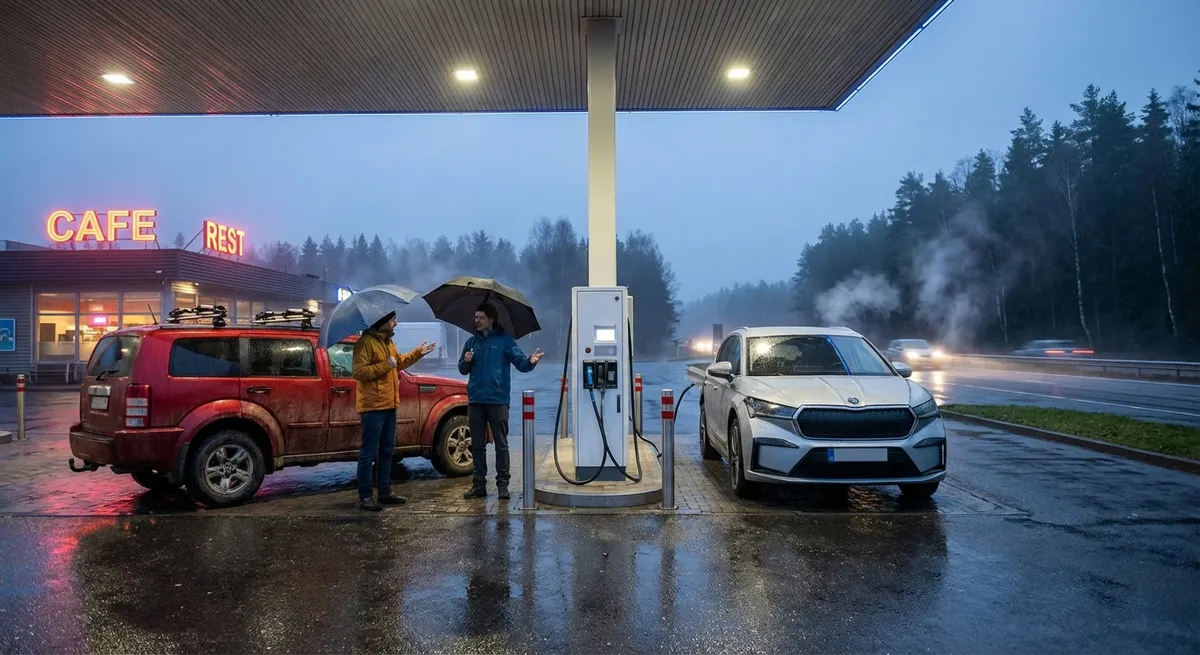
- Fast-charging curves: Charging speed isn’t just the headline “up to 250 kW” figure; it’s the entire curve from low state of charge (SOC) to 80% or 90%. Modern electric SUVs may charge from 10–80% in 20–35 minutes under ideal conditions, but speeds can drop if the battery is cold, crowded stations limit power, or software caps peak rates.
- Charging networks: Access and reliability vary by brand and region. Some electric SUVs integrate native routing that includes charger availability and dynamically plans stops. Others rely on third-party apps and require more manual planning. In regions with dense DC fast-charging networks, highway travel is feasible but structured around charger locations and charging windows, not pure range.
From a driving-enthusiast standpoint, this shapes how you use the vehicle. An electric SUV excels as a daily driver and regional-trip vehicle with predictable charging access. If you regularly do back-to-back 500–700 mile days in remote areas, a gasoline SUV still offers fewer constraints and shorter total travel time.
For many households, a realistic strategy is role specialization: an electric SUV for daily and regional use, supplemented by a gasoline or hybrid vehicle for long-distance or towing-intensive trips.
4. Ownership Complexity: Maintenance, Reliability, and Systems to Watch
Once you look past the powertrain, electric and gasoline SUVs share many components—suspension, brakes, HVAC, steering systems, infotainment—but differ substantially in maintenance and potential failure points.
Gasoline SUVs have:
- Engines with hundreds of moving parts: pistons, valves, timing chains/belts, turbochargers, fuel pumps, injectors.
- Complex emissions systems: catalytic converters, particulate filters, exhaust gas recirculation (EGR) systems, oxygen sensors.
- Multi-speed transmissions or CVTs with clutches, torque converters, and associated control units.
Routine maintenance includes oil and filter changes, coolant flushes, transmission service (on some models), spark plug replacement, belt inspections, and potentially more frequent brake service because there is no regenerative braking to reduce wear. Long-term, issues like turbo failures, carbon buildup on intake valves (in some direct-injected engines), or transmission problems can appear as mileage climbs.
Electric SUVs simplify some major systems:
- No engine oil, spark plugs, or exhaust system.
- Single-speed reduction gear in most models rather than a multispeed transmission.
- Regenerative braking that significantly reduces pad and rotor wear, especially in urban use.
However, they introduce different concerns:
- Battery health: Modern battery management systems protect packs from abuse, but calendar aging and high cumulative fast-charging can gradually reduce capacity. Warranty coverage (often 8 years/100,000+ miles) typically guarantees a minimum remaining capacity threshold.
- High-voltage components: Inverters, on-board chargers, DC/DC converters, and electric drive units are sophisticated and expensive to replace out of warranty, although failure rates so far have been generally low for mainstream brands.
- Thermal management systems: Electric SUVs use intricate liquid cooling and heating loops for batteries, motors, and cabin comfort. While conceptually similar to engine cooling systems, they can involve additional valves, pumps, and heat exchangers.
Both types of SUVs share modern vulnerabilities: complex infotainment, advanced driver-assistance systems (ADAS), and extensive sensor suites. Radar, cameras, ultrasonic sensors, and LiDAR (on some models) all rely on robust software integration. Whether you choose electric or gasoline, you should evaluate:
- Software update strategy: Are updates over-the-air, and how frequently does the manufacturer fix bugs or add features?
- Service network competency: Does your local dealer have genuine experience diagnosing EV systems or advanced turbocharged engines and modern transmissions?
- Repairability and parts availability: Are critical components widely used across the model line, or unique and scarce?
From a pure mechanical-maintenance standpoint, electric SUVs usually present a lower routine burden: tire rotations, brake fluid intervals, cabin filters, and occasional coolant changes. But they concentrate more value in the battery and high-voltage systems, making it essential to understand warranty terms and typical degradation patterns for the specific model you’re considering.
5. Long-Term Value, Resale Trajectory, and Regulatory Headwinds
Choosing between electric and gasoline SUVs is increasingly about anticipating where policy, technology, and consumer demand are headed over your ownership window.
For gasoline SUVs, several trends are converging:
- Regulatory pressure: Many jurisdictions are tightening CO₂ and pollutant standards. Some have announced future restrictions or bans on new internal-combustion-vehicle sales in specific timeframes. While implementation details vary, this trajectory can influence depreciation, especially for less efficient models.
- Fuel price volatility: Global events and policy shifts can drive fuel price spikes, affecting operating cost perceptions and used-market desirability for thirsty SUVs.
- Electrification of competitors: As more buyers acclimate to electric and hybrid options, demand may gradually shift away from pure gasoline-only models—particularly in urban regions with strong charging infrastructure and zero-emission incentives.
Electric SUVs, as a relatively newer category, face different uncertainties:
- Technology pace: Each new generation of batteries and power electronics brings higher range, faster charging, and better efficiency. Early electric SUVs may depreciate faster if their capabilities lag newer models by a large margin, particularly in markets where shoppers compare range and charging speed directly.
- Battery warranties and perception: Strong warranty coverage can support residual values, but used buyers often scrutinize battery health reports more than odometer readings, especially for higher-mileage vehicles.
- Incentives and policy: Tax credits, rebates, and preferential access (e.g., HOV lanes, congestion-charge exemptions) can boost demand for electric SUVs in some regions. Over time, as incentives taper and adoption increases, the used market may stabilize, but transitional volatility is likely.
For enthusiasts and serious buyers, a practical approach is to align expected ownership length and usage with where the market is heading:
- Short- to medium-term (3–6 years): Electric SUVs can offer strong value for commuters and tech-forward buyers, especially where incentives and cheap home charging are available. Depreciation risk is offset by low operating costs and growing mainstream acceptance.
- Long-term (8–12+ years): Robust, simpler gasoline SUVs with proven drivetrains may still be attractive where refueling infrastructure is guaranteed and regulatory constraints remain light. Conversely, electric SUVs with strong reliability records and generous battery warranties may appeal if your region is aggressively moving toward electrification and investing heavily in charging.
Whichever route you choose, it’s wise to:
- Check regional policy roadmaps that could affect fuel costs, urban access, or registration fees.
- Study historical depreciation trends of comparable models from brands with similar technology maturity.
- Consider total cost of ownership, not just purchase price—factoring in realistic energy cost per mile, maintenance, incentives, and potential resale value.
Conclusion
The real-world gap between electric and gasoline SUVs is no longer about basic capability—both can serve as competent daily drivers, family haulers, and long-distance cruisers. The differences now lie in how they deliver performance, how predictable and affordable they are to operate, and how well they align with your driving patterns and local infrastructure.
Electric SUVs excel in immediate torque, low routine maintenance, and low per-mile energy costs when home charging is available, with the trade-off of more structured long-distance travel and dependence on charging networks. Gasoline SUVs offer unrivaled refueling convenience, familiar performance character, and well-understood long-term behavior, while carrying higher routine maintenance demands and exposure to fuel price and regulatory shifts.
For enthusiasts and serious shoppers, the right answer is not universal. It comes from matching the technical realities of each platform to the way you actually drive—today and several years from now. Evaluate your daily mileage, access to charging or fueling, appetite for software-centric vehicles, and regional policy direction. Then choose the SUV that fits not just the current market narrative, but the life you’ll actually live with it.
Sources
- [U.S. Department of Energy – Fuel Economy: Electric Vehicles](https://www.fueleconomy.gov/feg/evs.jsp) - Explains EV energy use metrics, cost comparisons, and how EV efficiency is measured
- [U.S. Department of Energy – Fuel Economy: Gasoline Vehicles](https://www.fueleconomy.gov/feg/findacar.shtml) - Official MPG data for gasoline SUVs and tools for comparing fuel costs and efficiency
- [International Energy Agency – Global EV Outlook](https://www.iea.org/reports/global-ev-outlook-2024) - Provides global data on EV adoption, policy trends, and technology developments relevant to electric SUVs
- [U.S. Environmental Protection Agency – Regulations for Emissions from Vehicles](https://www.epa.gov/regulations-emissions-vehicles-and-engines) - Details regulatory trends affecting gasoline and electrified vehicles in the U.S.
- [National Renewable Energy Laboratory – Battery Lifetimes and Degradation](https://www.nrel.gov/transportation/battery-lifespan.html) - Technical overview of lithium-ion battery aging, factors affecting EV battery health, and long-term performance considerations
Key Takeaway
The most important thing to remember from this article is that this information can change how you think about Comparisons.