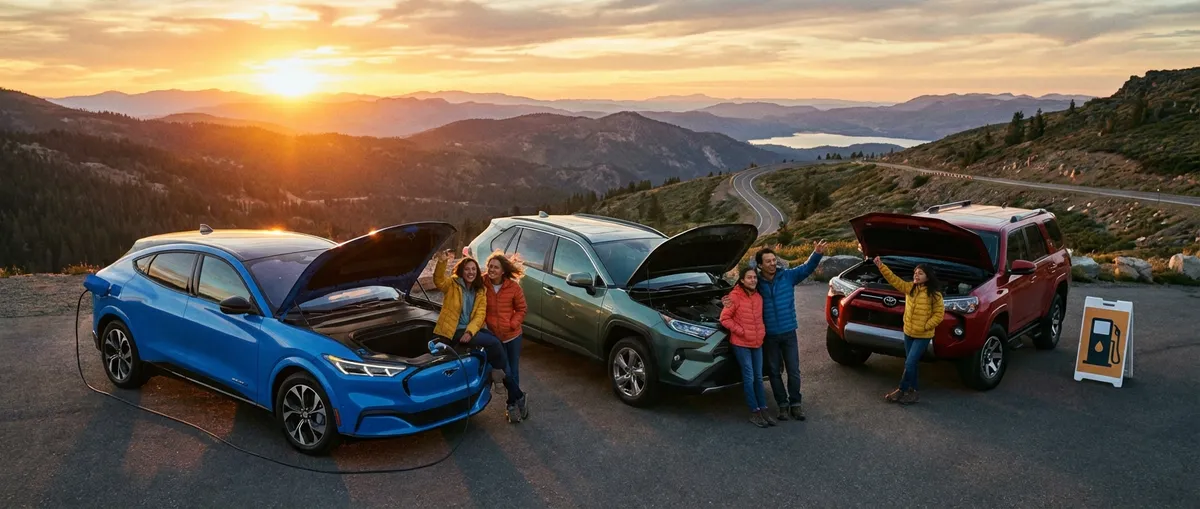
SUV buyers today aren’t just picking a size and a badge—they’re choosing an entire propulsion philosophy. Whether you lean toward fully electric, hybrid, or traditional gasoline power, the decision now has long-term implications for performance, running costs, resale value, and even where you can conveniently drive and refuel. This comparison dives beyond surface-level pros and cons to examine how each SUV powertrain behaves in the real world, and which best matches specific use cases.
Power Delivery and Driving Feel
The most immediate difference among electric (EV), hybrid (HEV/PHEV), and gasoline SUVs is how they deliver power.
Electric SUVs use one or more electric motors that produce maximum torque from 0 rpm. This results in brisk off-the-line acceleration and smooth, linear power—especially noticeable in city driving and highway merges. Dual‑motor setups (often with one motor per axle) can provide precise all‑wheel drive without mechanical driveshafts, improving traction control and response.
Conventional hybrids pair a combustion engine with one or more electric motors and a small battery; they typically prioritize efficiency over outright power. The electric motor fills torque gaps at low rpm, masking gear changes and making stop‑and‑go traffic smoother. Plug‑in hybrids (PHEVs) go further with a larger battery, giving 20–50+ miles of electric-only range in many models. When the battery is charged, a PHEV SUV can feel very EV‑like at urban speeds, then revert to hybrid mode at higher loads.
Gasoline SUVs rely solely on internal combustion, often turbocharged four‑ or six‑cylinder engines. Their power builds with engine speed, so they feel more “traditional,” with gear shifts, engine noise, and a torque curve that rises and falls. Modern turbos, variable valve timing, and advanced transmissions (8–10‑speed automatics or dual‑clutches) have narrowed the performance gap with EVs in some scenarios, but you won’t get the instant torque “surge” of an electric motor.
For enthusiasts, the choice is subjective: EVs offer instantaneous thrust and seamless acceleration; hybrids balance punch and refinement; gasoline engines often deliver the most “mechanical” engagement—sound, shifting, and engine character—especially in performance‑tuned SUVs.
Real-World Efficiency, Range, and Refueling
Headline MPGe or mpg numbers only tell part of the story. How an SUV’s powertrain behaves in your actual use case matters more than lab-cycle ratings.
Electric SUVs are generally most efficient in urban and suburban driving where regenerative braking recovers energy from deceleration. Highway efficiency can be lower than expected, especially at high speeds where aerodynamic drag dominates and there’s less braking to recapture energy. Cold temperatures can further reduce range due to battery chemistry and cabin heating loads. However, energy cost per mile is often significantly lower than gasoline—especially if you can charge at home with off‑peak or fixed‑rate electricity.
Conventional hybrids excel in mixed driving, using electric assist at low speeds and shutting the engine off when coasting or stopped. Their advantage is consistency: no plugging in, no range anxiety, and very good fuel economy relative to comparable gas-only SUVs. PHEVs can dramatically cut fuel use if driven mostly within their electric range and charged daily. If not regularly plugged in, though, a PHEV essentially becomes a heavier hybrid with somewhat diminished efficiency.
Gasoline SUVs have the simplest energy model: miles per gallon is your primary metric. They are typically less efficient in city traffic and more competitive on the highway, especially with modern turbocharged engines and tall gearing. Refueling is fast and convenient almost everywhere, which is still a major advantage for long-distance or rural drivers.
When comparing options, look beyond EPA or WLTP figures. Consider:
- Your typical daily mileage (is it within PHEV EV range?).
- Access to home or workplace charging (critical for EV and PHEV value).
- Climate (cold or very hot regions can affect both EV range and HEV/PHEV behavior).
- Rural vs urban use (charging and fuel access, stop‑and‑go vs steady‑state driving).
Ownership Costs: Purchase Price, Maintenance, and Resale
Initial price is only one part of the total cost of ownership; different powertrains have different cost profiles over 5–10 years.
Electric SUVs usually have higher upfront MSRPs due to battery costs but benefit from reduced mechanical complexity. There’s no engine oil, spark plugs, or exhaust system; regenerative braking can extend brake pad life; and there are fewer rotating assemblies to service. However, long‑term battery health and out‑of‑warranty replacement costs remain a concern for some buyers, even though most manufacturers offer 8–10‑year battery warranties. Electricity tends to be cheaper per mile than fuel, especially with home charging, but public fast‑charging can be more expensive.
Hybrids and PHEVs add components—electric motors, power electronics, and a battery pack—on top of a combustion engine. Maintenance resembles a gasoline SUV plus additional hybrid systems (inverters, cooling loops, high‑voltage components). That said, hybrid systems from established manufacturers have built strong reliability records, with many high‑mileage examples in taxi and fleet service. PHEVs can offer excellent running costs when charged frequently, but if used mostly as gas vehicles, you pay the price premium without fully leveraging the efficiency benefits.
Gasoline SUVs often have the lowest entry price and widest selection in every size and class. Maintenance is familiar territory for service centers and independent shops. However, fuel costs can accumulate quickly, especially with larger engines or frequent high‑speed driving. Over longer time horizons, regulatory changes could affect resale values for some high‑consumption models, particularly in regions tightening CO₂ or emissions rules.
For cost‑focused shoppers, it makes sense to:
- Calculate your annual mileage and energy prices (fuel vs electricity).
- Factor in tax credits or incentives for EVs/PHEVs where available.
- Consider how long you plan to keep the vehicle and expected depreciation.
- Verify battery and hybrid component warranty terms and limitations.
Packaging, Space, and Towing Capability
The powertrain layout significantly influences interior space, cargo flexibility, and towing performance—critical SUV considerations that often get overlooked when focusing only on power and economy.
Electric SUVs can benefit from a “skateboard” architecture: flat battery pack in the floor, motors near axles, and no front engine. This can yield a more spacious cabin relative to exterior size, with improved legroom, flat floors, and sometimes a front trunk (“frunk”). The downside is weight; battery packs are heavy, and while mass low in the chassis improves stability, it can limit payload and towing ratings. Some EV SUVs cap towing capacities below comparable gas models to preserve range and thermal margins under heavy load.
Hybrids often package their battery under the rear seats or cargo floor, slightly eating into storage or altering the load floor height. In many modern designs, this impact is minimal, but it’s critical to check actual cargo measurements and test loading bulky items. Conventional hybrids may have modest towing capacities, while some PHEVs are engineered with stronger drivetrains and cooling systems to support higher tow ratings—though heavy towing drastically reduces their EV range.
Gasoline SUVs, especially body‑on‑frame designs and those with robust turbocharged or V6/V8 engines, still dominate maximum towing figures. Traditional layouts also simplify fitting auxiliary coolers, hitches, and aftermarket towing hardware. For buyers regularly pulling boats, campers, or horse trailers, the established towing infrastructure and well‑known performance of gas SUVs remain strong advantages, though a few EVs are beginning to challenge in this space.
When comparing candidates, look closely at:
- Official towing and payload ratings (and how they vary by powertrain).
- Battery placement and impact on cargo area shape/height.
- Roof load limits (for cargo boxes, bikes, or overlanding gear).
- Suspension type and potential load‑leveling or air suspension options.
Future-Proofing: Regulations, Infrastructure, and Use Case Fit
Beyond immediate needs, it’s increasingly important to consider how policy, infrastructure, and your lifestyle may evolve over the next decade.
Electric SUVs are aligned with many governments’ long‑term emissions strategies, low‑emission zones, and planned combustion engine phase‑out timelines. In some cities, EVs benefit from preferential parking, access to restricted districts, or reduced road charges. Public charging networks are expanding, but regional disparities remain pronounced; in some areas, long‑distance EV travel is now routine, while in others, limited fast‑charging options can be a real constraint.
Hybrids and PHEVs can act as transitional technologies. They reduce fuel use and emissions without relying entirely on charging infrastructure. In regions where future bans target new pure combustion vehicles but exempt hybrids or plug‑ins, they may remain viable for longer. However, as regulations tighten, the advantage of having a true zero‑tailpipe‑emissions mode (as in EVs and PHEVs operating electrically) could become more significant for urban users.
Gasoline SUVs are still the most flexible and least infrastructure‑dependent option today, especially in remote or developing regions where charging networks are sparse and fuel availability is critical. Yet regulatory and taxation pressures could increasingly target high‑emissions vehicles, affecting operating cost and long‑term desirability in certain markets, particularly dense cities and regions with ambitious climate targets.
To “future‑proof” your purchase, weigh:
- Local and regional policy trajectories (low‑emission zones, ICE phase‑out dates).
- Growth trends in public charging infrastructure where you live and travel.
- Your likelihood of moving to a different region or changing commute patterns.
- How often you truly need long‑range, high‑towing, or off‑grid capability versus how you drive 90% of the time.
Conclusion
Choosing among electric, hybrid, and gasoline SUVs is no longer just about fuel type—it’s about selecting the entire operating profile of your vehicle for years to come. Electric SUVs deliver unmatched smoothness and low running costs where charging is accessible and daily mileage suits their range. Hybrids and PHEVs bridge efficiency and flexibility, rewarding owners who plug in regularly or drive significant mixed‑cycle miles. Gasoline SUVs continue to offer robust towing, fast refueling, and wide model variety, especially in rugged and performance‑oriented segments.
The best choice comes from matching powertrain characteristics to your real‑world use: daily distances, access to charging or fuel, climate, towing and cargo needs, and how regulations might shape your driving environment. By looking beyond brochure figures and understanding these deeper trade‑offs, buyers can select an SUV that feels right today and remains practical and competitive well into its service life.
Sources
- U.S. Department of Energy – Fuel Economy: Electric Vehicles – Explains EV efficiency, range factors, and how electric drivetrains differ from combustion engines
- U.S. Department of Energy – Hybrid and Plug-In Electric Vehicles – Technical overview of hybrid and plug‑in hybrid systems, benefits, and use cases
- International Energy Agency – Global EV Outlook – Provides global data on EV adoption, infrastructure growth, and policy trends
- European Environment Agency – CO₂ Emission Performance Standards for Cars – Details regulatory pressures influencing future SUV powertrain development in Europe
- U.S. Environmental Protection Agency – Vehicle Emissions and Fuel Economy Trends – Offers data on efficiency, emissions, and technology trends across gasoline, hybrid, and electric vehicles
Key Takeaway
The most important thing to remember from this article is that following these steps can lead to great results.