The next wave of SUVs arriving for the 2025–2026 model years isn’t just “more of the same” with bigger screens and new grilles. Under the sheet metal, core technologies—powertrains, chassis systems, and safety electronics—are shifting fast. For enthusiasts and serious buyers, understanding these changes is no longer optional; it’s the difference between buying into a platform that will feel current for a decade and one that’s dated the day you sign the papers.
This industry news briefing breaks down five major technical shifts shaping the SUV landscape through 2026, with a focus on what they actually mean for real-world performance, ownership costs, and long‑term value.
1. High-Voltage Architectures: 800V Moves From Supercar to Family SUV
Until recently, 800‑volt electrical systems were reserved for high-end EVs and performance cars. That’s changing quickly as mainstream SUV platforms adopt high‑voltage architectures to support faster charging, higher efficiency, and more robust performance.
From a technical standpoint, doubling system voltage from 400V to 800V allows the same power to be delivered at half the current. Lower current means thinner cables, less heat, and improved efficiency—critical advantages for large, heavy SUVs. Architectures like Hyundai Motor Group’s E‑GMP (used in the Kia EV9), Porsche and Audi’s PPE platform, and emerging 800V systems from GM and Mercedes-Benz are setting the template.
For buyers, the headline benefit is DC fast‑charging. Properly designed 800V SUVs can add roughly 150–200 miles of range in around 15–20 minutes on high-output chargers—close to a long fuel stop rather than a full meal break. This has direct implications for road‑trippers and families who routinely drive long distances. Importantly, many 800V-capable vehicles can also “split” to run on 400V chargers through clever onboard electronics, preserving compatibility with existing infrastructure.
Enthusiasts should also note the performance potential. With higher system voltage and improved thermal management, electric SUVs can sustain peak power longer without derating due to heat. That means more consistent acceleration runs, better high‑speed passing capability, and less power fade in demanding conditions like mountain driving or towing. As more 2026 models move to 800V (or 500–800V flexible architectures), the old “EVs are quick once, then slow down” complaint will become less relevant—especially in the SUV segment.
2. Hybrid and Plug‑In Powertrains Go Torque‑First, Not Eco‑First
The hybrid conversation in SUVs is changing from “How many mpg can we squeeze out?” to “How much torque and usable range can we deliver?” Automakers are deploying a new generation of hybrid and plug‑in hybrid (PHEV) systems that prioritize power delivery and towing confidence alongside fuel economy.
Instead of small displacement engines working hard, you’re seeing larger or more robust engines paired with higher‑output electric motors and bigger battery packs. Toyota’s turbo-hybrid systems in vehicles like the Tundra and Sequoia preview this torque‑centric approach, and the same philosophy is spreading across midsize and full-size SUVs from multiple brands. Expect more systems where electric motors provide the low-end grunt—instant torque from zero rpm—while the combustion engine handles sustained high load, such as towing up grades or cruising at highway speeds.
For buyers, the key specs to watch are combined system torque and continuous power ratings, not just peak horsepower. A modern PHEV SUV with 300–400+ hp and abundant low‑rpm torque can outperform older V8s in real-world driving while delivering vastly better efficiency in city use. The typical 30–50 mile electric‑only range sweet spot for PHEVs means many owners can handle daily commuting and errands on electricity alone, cutting fuel use dramatically without committing to a full EV.
Technically, you’ll also see more advanced clutch and gearset strategies that allow multiple operating modes: fully electric drive at low loads, parallel hybrid drive on the highway, and blended modes under heavy acceleration. These systems rely on sophisticated software to choose the most efficient configuration in milliseconds. By 2026, expect hybrid and PHEV SUVs where the “feel” is dominated by smooth, electric‑like torque—and the combustion engine fades into the background except when you’re working the vehicle hard.
3. Battery Chemistry and Thermal Management: The New Durability Battleground
As SUVs grow heavier and more powerful, battery packs are carrying greater energy density and facing higher thermal loads. Battery chemistry and cooling are no longer obscure engineering topics—they’re central to performance, charging speed, and long-term value.
Most 2026‑era electric SUVs will still use lithium‑ion chemistries, but with more strategic deployment of different types. Nickel manganese cobalt (NMC/NMC811) cells offer high energy density and strong performance, while lithium iron phosphate (LFP) cells trade some energy density for lower cost, superior cycle life, and greater tolerance for frequent fast‑charging. Some automakers are beginning to mix chemistries across trims or even within a lineup (e.g., LFP for standard‑range packs, NMC for long‑range or high‑performance variants).
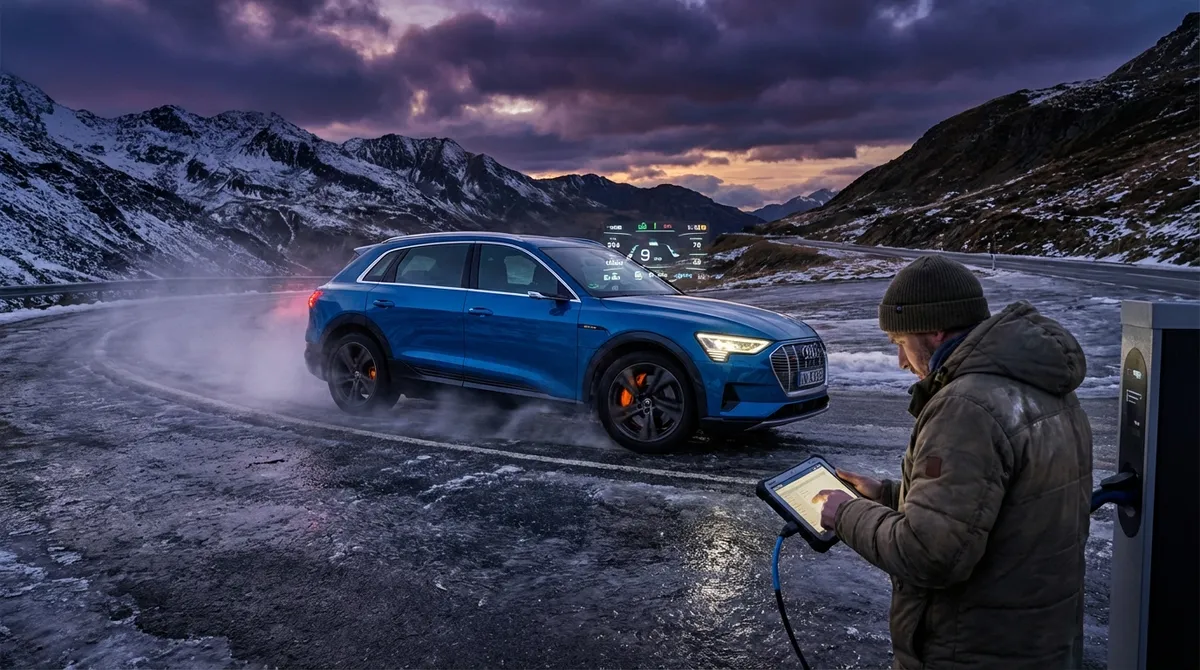
For SUVs, where weight, towing, and climate exposure are magnified, thermal management is critical. The direction of travel is clear: pack‑level liquid cooling, active preconditioning before fast charging, and tightly integrated battery management systems (BMS) that monitor cell health in real time. Preconditioning—warming or cooling the pack en route to a DC fast charger—can dramatically cut charging times and reduce battery stress, especially in extreme temperatures.
From a buyer’s perspective, this is where warranty terms and thermal design converge. Detailed coverage (e.g., 8–10 years, 100,000–150,000 miles on battery components) and published degradation thresholds provide clues to how confident the manufacturer is in its pack design. If you plan to keep an electric SUV for a long time, or frequently tow with it, paying attention to battery chemistry, cooling layout (cell‑to‑pack, structural packs, coolant plate design), and official charging recommendations is increasingly important. Industry‑wide, expect 2026 SUVs to deliver more consistent range retention over time, with the most advanced platforms targeting low double‑digit degradation after hundreds of fast‑charge cycles.
4. Chassis Tech: Air Suspensions, Rear‑Steer, and Active Anti‑Roll Go Mainstream
The classic SUV trade‑off—ride comfort vs. handling vs. off-road capability—is being rebalanced by chassis electronics. What used to be found only in six-figure luxury models is rapidly filtering down into premium and even upper‑mainstream 2026 SUVs: multi‑chamber air suspensions, rear‑axle steering, adaptive dampers, and active roll control.
Air suspension paired with adaptive damping allows substantial variation in ride height and stiffness. For highway use, SUVs can drop to a lower, more aerodynamic stance, reducing drag and improving stability. For trail riding or snow, they can raise ground clearance significantly. Add in automatically adjustable spring rates and damping curves, and the vehicle can remain surprisingly composed despite the high center of gravity inherent to SUVs.
Rear‑axle steering is another tech migrating from performance sedans to larger SUVs. At low speeds, the rear wheels turn opposite the front wheels, shrinking the turning circle—hugely helpful in tight urban parking and narrow trails. At higher speeds, they turn in phase with the fronts, enhancing lane-change stability and confidence. For three‑row and full‑size SUVs, this can make a vehicle feel one size smaller in daily driving.
Active anti‑roll systems—electronically controlled stabilizer bars or even fully independent actuators—are increasingly tied into drive mode selectors. In comfort mode, the system can decouple or soften roll resistance for a plush ride over uneven pavement; in sport mode, it can stiffen dramatically to control body lean. For enthusiasts, the net result is that a 5,000‑ to 6,000‑pound SUV can corner flatter and feel more precise without sacrificing long‑distance comfort. By 2026, a growing number of performance‑oriented SUVs will rely on these systems to deliver sports‑sedan‑like composure despite their size and mass.
5. Standards and Regulations: Safety, Emissions, and Data Shape SUV Development
Behind the scenes, regulatory and standards changes are heavily influencing SUV design and feature sets heading into 2026. Tightening emissions rules in the U.S., Europe, and China, along with evolving safety and data requirements, are pushing automakers toward more efficient powertrains and more advanced driver‑assist suites—even in segments where customers historically prioritized brute force over tech.
On the emissions front, stricter fleet-average CO₂ targets in the EU and upcoming U.S. EPA standards are making traditional large-displacement engines harder to justify without electrification. This is a key driver behind the rapid rollout of turbocharged downsized engines, 48‑volt mild hybrids, full hybrids, and PHEVs across SUV lineups. Manufacturers are balancing regional strategies—e.g., more plug‑ins in Europe, more hybrids and flex‑fuel options in North America—but the net result is the same: fewer pure internal‑combustion, non‑electrified SUVs at the top of the power ladder.
Safety and driver assistance are also moving from optional to expected. New Car Assessment Programs (NCAPs) and regulations in multiple markets are increasingly focused on active safety, including autonomous emergency braking, cyclist and pedestrian detection, lane‑keeping support, and intelligent speed assistance. For 2026 SUVs, Level 2 driver assistance (adaptive cruise + lane centering) will be common, with more robust hands‑free systems on major highways in higher trims, backed by HD maps and driver‑monitoring cameras.
There’s a parallel shift happening around vehicle data and cybersecurity. As SUVs become more connected—supporting over‑the‑air updates, app‑based control, and integrated payment systems—regulators are zeroing in on privacy, data ownership, and hacking resilience. For buyers, this means you’ll see more explicit disclosures about what data is collected, how it’s stored, and how long it’s retained, as well as more frequent software updates addressing both features and security vulnerabilities. Savvy enthusiasts should factor software support timelines and update policies into their purchase decisions, especially for tech‑heavy 2026 platforms that will evolve significantly after launch.
Conclusion
The SUV segment entering 2026 is defined less by sheet‑metal redesigns and more by deep structural and electronic changes: 800V architectures enabling genuinely fast charging, hybrid and PHEV systems tuned for torque and towing, more durable and thermally sophisticated battery packs, advanced chassis electronics that tame mass and height, and a regulatory environment that effectively mandates efficiency and safety innovation.
For enthusiasts, this is a rare convergence of performance and technology—where the most capable SUVs are often the most efficient and the most software‑defined. For buyers planning a long-term purchase, paying attention to these underlying platforms and standards can help you choose an SUV that won’t feel obsolete halfway through its life. The 2026 model year will mark a point where the technical foundation matters as much as the badge on the grille.
Sources
- [Hyundai Motor Group E-GMP Platform Overview](https://www.hyundai.com/worldwide/en/eco/e-gmp) - Technical outline of an 800V EV platform used in modern SUVs, including charging and performance details
- [U.S. Environmental Protection Agency – Light-Duty Vehicle Standards](https://www.epa.gov/vehicle-and-engine-emissions/standards-light-duty-vehicles-and-trucks) - Background on evolving emissions regulations influencing SUV powertrain strategies
- [European Commission – CO₂ Emission Performance Standards for Cars and Vans](https://climate.ec.europa.eu/eu-action/transport/emissions-road-vehicles/co2-emission-performance-standards-cars-and-vans_en) - Explains EU fleet-average CO₂ targets driving electrification in SUVs
- [NHTSA – New Car Assessment Program (NCAP)]https://www.nhtsa.gov/ratings - Describes safety evaluation criteria impacting active safety and driver-assistance features in future SUVs
- [U.S. Department of Energy – Alternative Fuels Data Center: Batteries](https://afdc.energy.gov/vehicles/electric_batteries.html) - Technical primer on EV battery chemistries, thermal management, and durability considerations
Key Takeaway
The most important thing to remember from this article is that this information can change how you think about Industry News.