Electric SUV discounts, tightening regulations, and a surge of Chinese competitors are colliding to reshape the global SUV market faster than most shoppers realize. What looked like a gradual, predictable shift from gasoline to hybrid and electric is now a full-blown strategic reset, with automakers rethinking everything from battery sourcing to trim packaging.
For SUV buyers and enthusiasts, the result is a market where incentives, model lifecycles, and even brand priorities are moving targets. Understanding the key industry shifts playing out in 2024–2026 can help you time your purchase, interpret the headlines, and see which SUVs are most likely to hold their value and their place in the lineup.
EV Price Pressure Is Rewiring SUV Profit Strategies
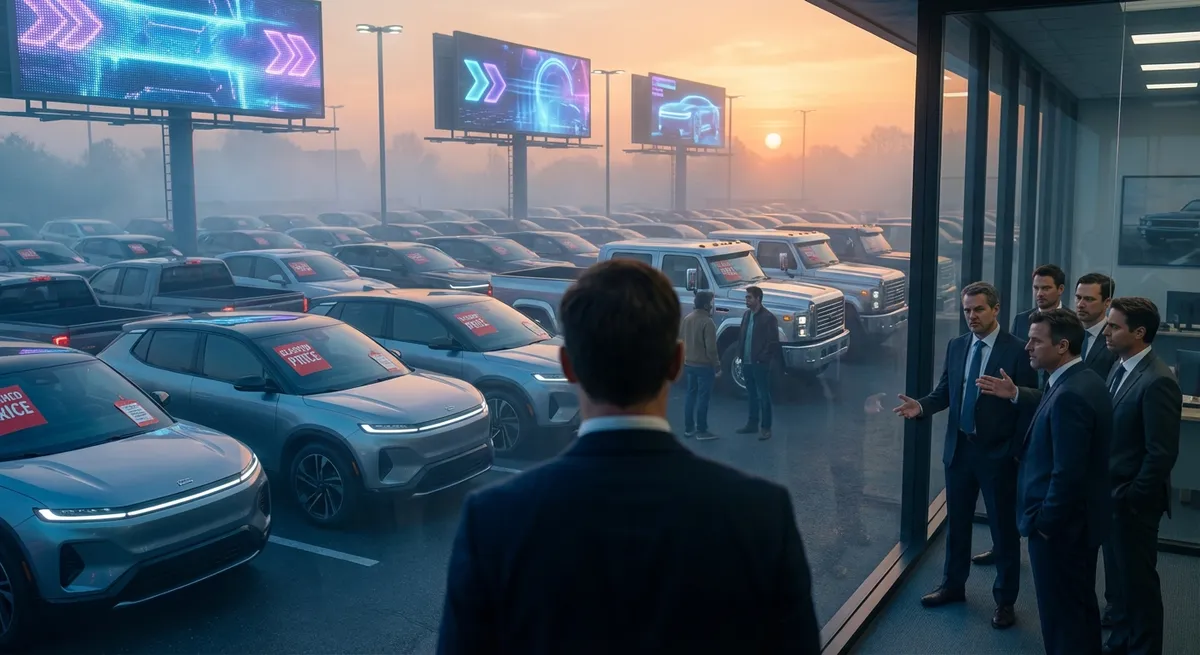
The last 18 months have turned the EV SUV segment from a premium-priced niche into a brutal price war. Tesla’s aggressive price cuts on the Model Y triggered a chain reaction across mainstream and luxury brands, forcing discounts, richer lease programs, and in some cases quiet decontenting to protect margins.
Underneath the headlines, the core issue is cost structure. Battery packs still make up a large portion of an EV’s bill of materials, especially for larger SUVs with long-range packs. When automakers cut prices to chase volume, they’re often compressing already-thin margins. That’s why you’re seeing some manufacturers scale back stand‑alone EV development and shift toward flexible platforms that can host internal combustion engine (ICE), hybrid, and EV variants.
For SUV shoppers, this is translating into unusually aggressive lease offers and financing on electric crossovers and midsize SUVs, particularly outgoing model years or early platform iterations. However, some brands are responding by reducing standard equipment or bundling formerly standard features into optional packages. Enthusiasts should pay attention to model-year changes in battery chemistry, thermal management, and charging curves: newer revisions may offer faster charging and better cold-weather performance without obvious marketing fanfare.
Longer term, the scramble to make EVs pencil out financially is pushing automakers to localize battery production, lock in raw material contracts, and prioritize scalable architectures. Expect more “family” platforms where a compact or midsize SUV shares core components across multiple brands within a group, enabling faster refresh cycles and incremental improvements in range and efficiency.
Stricter Emissions and Fuel Rules Are Quietly Targeting Large SUVs
Regulators in the U.S., Europe, and key Asian markets are tightening emissions and fuel economy standards in ways that hit larger SUVs disproportionately. In the United States, updated EPA greenhouse-gas rules and NHTSA fuel-economy standards are raising the compliance bar through the early 2030s, forcing automakers to either sell more efficient vehicles or buy credits at a cost. Europe’s Euro 7 framework and fleet CO₂ targets are heading in the same direction, even as local politics influence the pace of implementation.
For big body-on-frame SUVs and high-output performance models, the regulatory squeeze is already visible. Several brands are downsizing engines, adding mild-hybrid systems, or limiting availability of high-displacement powertrains to fewer trims and markets. Others are introducing “compliance” variants, like plug‑in hybrid (PHEV) versions of popular SUVs, to pull down fleet averages. These models often pack substantial battery capacity and electric-only range, not just for consumer appeal, but to maximize their credit value under regional rules.
Buyers planning to keep an SUV for a decade or more should pay attention to where a model sits relative to upcoming standards. A large, purely gasoline-powered SUV launched late in this decade may face higher ownership costs if fuel-economy penalties are indirectly passed on through pricing or if future local low‑emission zones penalize higher‑emitting vehicles. Conversely, well-executed hybrids and PHEVs may become sweet spots—offering towing and utility with significantly reduced official CO₂ numbers, making them a strategic priority for brands and a hedge for owners against policy shifts.
Chinese Brands and Supply Chains Are Reshaping the SUV Competitive Map
Chinese automakers and suppliers are now central to the global SUV story, even in markets where Chinese-branded vehicles are only beginning to appear. Domestically, China has become the world’s largest auto and EV market, giving local players scale and experience in high-volume electric SUV production that rivals are still building toward. Companies like BYD and others are aggressively expanding exports, particularly in Europe, Latin America, and parts of Asia, often with EV and plug‑in hybrid SUVs positioned at disruptive price points.
At the same time, Chinese battery, materials, and component suppliers are deeply embedded in global supply chains. Many Western-branded electric SUVs on sale today source cells, cathode materials, or key components from Chinese-linked suppliers, even when final vehicle assembly happens elsewhere. This creates strategic tension: governments in the U.S. and EU are trying to reduce dependency on China with subsidies and rules favoring “local” or “friend-shored” content, while automakers still rely on Chinese cost and scale advantages to hit aggressive EV targets.
For enthusiasts and buyers, this means two things. First, expect a wave of competitively priced, feature-rich SUVs—especially compact and midsize EVs—arriving in more markets, either under Chinese brands or as joint ventures and rebadged products. These vehicles often emphasize high energy-density batteries, extensive in-cabin tech, and rapid over‑the‑air update capabilities. Second, policies such as import tariffs, tax-credit eligibility rules, and local content requirements will play a growing role in pricing and availability. An SUV that appears attractively priced on paper may gain or lose key incentives depending on where its batteries and key components are sourced.
Software-Defined SUVs Are Changing Lifecycles and Resale Value
The shift to “software-defined vehicles” is reaching critical mass in the SUV segment. Modern SUVs increasingly rely on centralized computing, high-speed data networks, and over‑the‑air (OTA) update infrastructure. What used to be fixed hardware options—driver-assistance features, infotainment capabilities, even performance parameters—are now partially or fully software-controlled, sometimes behind subscriptions or one-time digital unlocks.
This architecture lets automakers deploy safety and functionality improvements long after an SUV leaves the factory. OTA updates can refine adaptive cruise tuning, enhance lane-centering, adjust battery management for better longevity, or add app integrations and user-interface improvements. It also allows brands to roll out rolling “model year” enhancements without waiting for a physical refresh, blurring the line between early and late production runs of the same model.
From a buyer’s perspective, the upside is that a well-supported software platform can extend the perceived freshness and capability of an SUV for years. The downside is increased complexity in evaluating used vehicles: software feature sets may depend on prior owners’ subscription choices, regional compliance rules, or hardware differences that aren’t obvious from a trim badge alone. Enthusiasts should pay close attention to a model’s underlying electronic architecture (for example, whether it uses a newer centralized compute layout or older domain controllers) and the automaker’s track record on long-term update support.
Resale value is also becoming intertwined with software. SUVs that receive regular, meaningful OTA updates—and whose digital ecosystems remain supported—are likely to age more gracefully in the used market. Conversely, models built on transitional or short-lived platforms may find their advanced driver-assistance systems (ADAS) or infotainment stacks effectively “frozen,” reducing their appeal versus newer software-forward competitors.
Cost Inflation and Materials Shifts Are Influencing What You Touch and Feel
While EVs and software draw the headlines, a quieter but important shift is happening in the physical materials and construction of SUVs. Global inflation, volatile commodity prices, and emissions targets are pushing manufacturers to rethink everything from steel grades to seat foam. Advanced high-strength steels, aluminum, and composites are being used more strategically to reduce weight and meet crash and efficiency targets, while also controlling cost.
Inside the cabin, cost pressures and sustainability goals are driving wider use of synthetic leathers, recycled plastics, and plant-based materials. High-trim SUVs still showcase premium finishes, but the middle of the market is where tradeoffs become visible: thinner sound insulation, simplified seat mechanisms, and fewer physical switchgear elements can all be part of cost-optimization programs. At the same time, regulatory moves to restrict certain chemicals and mandate recyclability are shaping which materials can be used long-term.
For buyers, this means that two model years of the “same” SUV may feel subtly different in build and material quality. It’s worth paying attention to curb weight changes, NVH (noise, vibration, harshness) impressions, and any reported mid-cycle platform revisions. On the upside, smarter use of lightweight materials can improve real-world efficiency, braking performance, and handling response. On the downside, some cost-cut optimization can erode the tactile feel and long-term durability that enthusiasts and high-mileage drivers value.
As circular-economy and end-of-life rules tighten—especially in Europe—design-for-disassembly and material traceability will become more important. SUVs engineered with this in mind may carry hidden advantages in long-term parts availability and regulatory compliance, factors that tend to surface only years into ownership but can materially affect running costs and resale.
Conclusion
SUVs are no longer evolving in a straight line from bigger engines to bigger screens. Instead, the segment is being reshaped by converging forces: EV price pressure, emissions and fuel regulations, the expanding role of Chinese players, the rise of software-defined architectures, and the quiet but significant shifts in materials and manufacturing strategy.
For enthusiasts, this is a rare inflection point where product planning, regulatory policy, and technology roadmaps are all visible in the vehicles reaching showrooms. For buyers, understanding these dynamics can help you read between the lines of spec sheets and incentives: which SUVs are stopgaps, which are strategic flagships, and which are engineered to stay relevant as standards, software, and supply chains keep moving. The most resilient choices will be those built on future-ready platforms, with thoughtful powertrain strategies and a clear long-term support story—regardless of whether they burn fuel, electrons, or a carefully calibrated mix of both.
Sources
- U.S. Environmental Protection Agency – Greenhouse Gas Emissions Standards for Passenger Cars and Light Trucks - Details upcoming U.S. emissions rules that are influencing SUV powertrain strategies
- NHTSA – Corporate Average Fuel Economy (CAFE) Standards - Explains U.S. fuel-economy requirements impacting large and performance SUVs
- International Energy Agency – Global EV Outlook 2024 - Provides data and analysis on EV adoption, price trends, and the role of SUVs in electrification
- European Commission – CO₂ Emission Performance Standards for Cars and Vans - Outlines EU fleet CO₂ targets that are driving hybrid and EV SUV development
- McKinsey & Company – The Software-Defined Vehicle - Analyzes how software-centric architectures and OTA updates are changing vehicle lifecycles and business models
Key Takeaway
The most important thing to remember from this article is that this information can change how you think about Industry News.