The SUV market is no longer just about bigger screens, more torque, and plusher cabins. Behind the scenes, a wave of infrastructure and regulatory change is reshaping what future SUVs will look like, how they’ll be powered, and where they’ll be built. From nationwide fast-charging rollouts to early hydrogen corridors and new battery rules, the foundations of SUV ownership are being rebuilt in real time.
For enthusiasts and serious shoppers, understanding these shifts is quickly becoming as important as comparing horsepower or cargo volume. The vehicles hitting showrooms over the next 3–5 years are being designed around a very different set of assumptions than the SUVs of the 2010s.
1. Fast-Charging Corridors Are Dictating the Next Generation of Electric SUVs
The rollout of high-power DC fast-charging across North America, Europe, and parts of Asia is influencing how automakers engineer and position their next wave of electric SUVs.
In the United States, the National Electric Vehicle Infrastructure (NEVI) program is pushing for DC fast chargers every 50 miles along key highways, with minimum uptime and power standards. This isn’t just a convenience feature; it directly affects SUV architecture. Manufacturers are under pressure to support higher charging rates (often 175–350 kW) to ensure that larger, heavier electric SUVs can reliably re-add significant range in 20–30 minutes instead of an hour or more.
As a result, we’re seeing widespread adoption of 800-volt (and multi-voltage) platforms that reduce charging time and cable thickness, and that can better handle repeated high-power sessions without over-stressing the battery. Thermal management systems—battery chillers, advanced coolant routing, and heat pumps—are being engineered around high-power DC events instead of occasional AC home charging.
The shift to the North American Charging Standard (NACS), initiated by Tesla’s open-connector move and later embraced by major automakers, adds another layer of infrastructure-driven design. Future SUV models sold in North America are increasingly being developed with NACS ports from the factory, simplifying access to high-reliability networks and reducing the need for bulky adapter solutions.
For buyers, the critical takeaway is that “charging curve” and “peak rate” are becoming as important as official range figures. Two SUVs with similar EPA range can deliver very different real-world road-trip experiences if one can sustain 200+ kW over a broad state-of-charge window while the other tapers heavily after 30–40%.
2. Battery Supply Chains and New Rules Are Reshaping What’s Under the Floor
Batteries are no longer just a spec sheet line item—they’re the center of a geopolitical and industrial tug-of-war that directly affects pricing, incentives, and even which trim levels are offered in certain markets.
In the U.S., evolving rules on critical mineral sourcing and battery component manufacturing (tied to federal EV tax credit eligibility) are pushing automakers to localize battery production and re-think chemistry choices. Qualifying for full incentives often requires minimum thresholds of materials (like lithium, cobalt, nickel, and manganese) to be sourced from approved countries and the cell and pack assembly to occur in North America.
This is accelerating investment in regional battery plants and encouraging chemistries that rely less on constrained or politically sensitive materials. For SUVs, that’s translating into broader adoption of LFP (lithium iron phosphate) packs in lower-range trims and NCM/NCA chemistries reserved for long-range, performance, or towing-focused variants. LFP offers cost stability and excellent cycle life, while higher-nickel chemistries provide superior energy density, which is crucial in large SUVs with demanding performance or towing targets.
At the same time, European regulations under the EU Battery Regulation introduce lifetime carbon footprint declaration and recycling targets, compelling automakers to consider not only the pack’s capacity, but its entire lifecycle impact. That’s showing up in marketing—but also in engineering decisions such as pack modularity, easier disassembly, and integration with second-life energy storage systems.
For enthusiasts, this means that the spec sheet is becoming more nuanced: chemistry type, cell format (pouch, prismatic, cylindrical), thermal architecture, and recyclability are increasingly relevant differentiators in the SUV segment, not just background details.
3. Hydrogen Highways and Fuel-Cell SUVs: Early Experiments with Long-Term Stakes
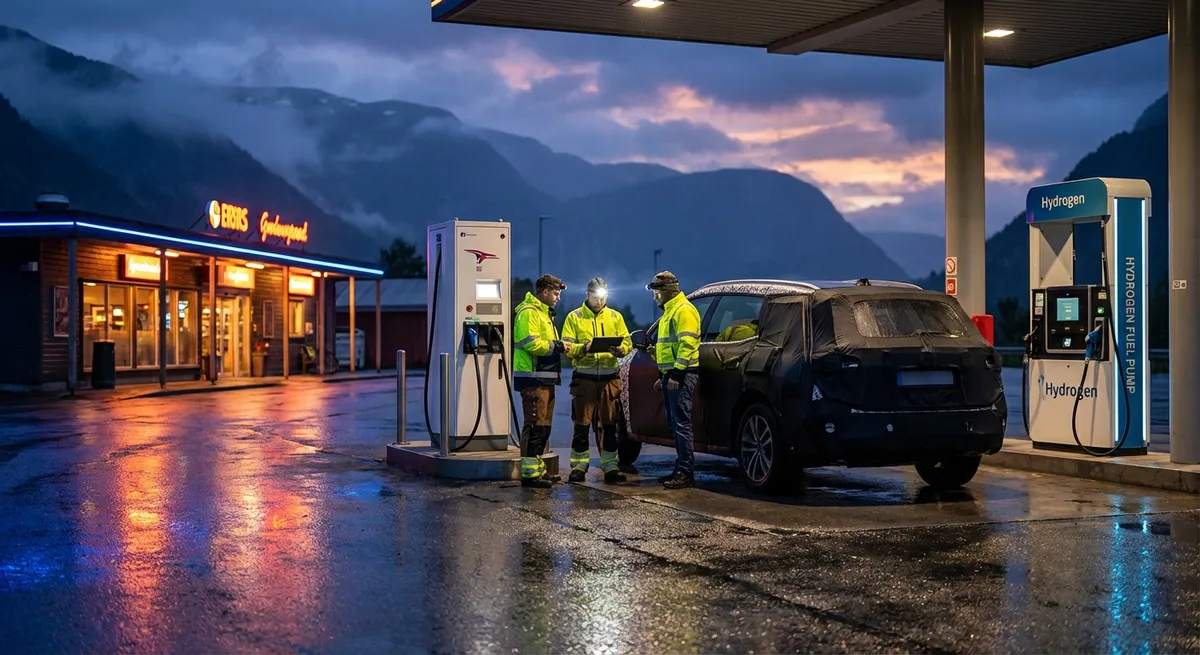
While battery-electric SUVs dominate headlines, hydrogen fuel-cell vehicles remain an important technical and policy experiment—especially for heavier platforms and long-range duty cycles.
Japan and South Korea continue to invest heavily in hydrogen refueling infrastructure and fuel-cell R&D. South Korea, in particular, has positioned hydrogen as a cornerstone of its long-term energy strategy, with targets for hydrogen vehicles and fueling stations to support both passenger cars and commercial fleets. In Europe, early “hydrogen corridors” are being established along key freight and passenger routes, primarily targeting trucks and buses but potentially paving the way for niche SUV applications.
From an engineering standpoint, fuel-cell SUVs can offer some compelling attributes: fast refueling times comparable to gasoline, stable range in cold climates, and a powertrain layout that can be tuned for smoothness and quiet operation. However, the energy and infrastructure cost of producing, transporting, and compressing hydrogen—especially green hydrogen—remains a significant barrier.
For most private SUV buyers today, hydrogen is not yet a practical mainstream option, given limited station density and higher total cost of ownership in most regions. But for enthusiasts watching the medium- to long-term future, developments in hydrogen infrastructure and fuel-cell stack durability are worth tracking. If green hydrogen production scales and pipeline distribution becomes more economical, we could see a second wave of larger hydrogen SUVs and crossovers optimized for range and towing where battery mass becomes a limiting factor.
Understanding where hydrogen stations are being planned or built—and which governments are offering subsidies for hydrogen deployment—gives early visibility into where fuel-cell SUVs might realistically gain traction first.
4. Software, Data, and Regulation: Why Connectivity Now Shapes SUV Design
SUVs are rapidly becoming rolling data centers, and a mix of safety, privacy, and cybersecurity regulations is forcing automakers to rethink onboard electronics in ways that directly impact buyers.
New vehicle cybersecurity frameworks in the EU (UNECE R155 and R156), along with similar initiatives in other regions, are pushing manufacturers to adopt more robust software architectures, secure over-the-air (OTA) pipelines, and continuous monitoring of potential vulnerabilities. This is changing how control units are networked, with many new SUVs moving toward domain or zonal architectures—bundling functions (like powertrain, chassis, body, and infotainment) into fewer, more powerful controllers instead of dozens of separate ECU boxes.
Beyond security, data privacy and usage regulations are coming under scrutiny. In the U.S., the Federal Trade Commission (FTC) and various state-level privacy laws are increasing oversight of how vehicle and telematics data can be collected, shared, and monetized. In the EU, GDPR and related frameworks heavily constrain cross-border data flow and mandate clearer consent mechanisms.
For buyers, this has multiple knock-on effects:
- Expect more standardized security features (such as encrypted key fobs, secure boot, and intrusion detection systems) even in mainstream SUVs.
- OTA update capability is becoming a design baseline, which can materially affect long-term ownership—enabling feature upgrades, bug fixes, and even powertrain refinements without a dealer visit.
- Some optional features may move to subscription or “feature-on-demand” models (heated seats, advanced driver-assist features, or premium navigation), explicitly regulated by consumer protection authorities in certain markets.
Enthusiasts should pay attention to how transparent each manufacturer is about data collection, as well as how long they commit to OTA support and security updates. The regulatory environment is starting to reward brands that treat software support like a core responsibility rather than an afterthought.
5. Emissions and Safety Rules Are Converging Globally—and SUVs Are in the Crosshairs
SUVs have been central to debates about emissions, safety, and urban planning, and regulators are steadily tightening the framework that defines what an acceptable SUV looks like.
On the emissions front, the U.S. Environmental Protection Agency (EPA) has issued increasingly strict greenhouse gas and tailpipe standards for light-duty vehicles, projected to significantly raise the share of electrified models (hybrids, plug-in hybrids, and full EVs) required in manufacturer lineups. In the EU, the Euro 7 emissions standard and the 2035 phase-out date for new combustion car sales (with some carve-outs) are steering automakers toward rapid electrification of their SUV ranges.
This has direct technical consequences: more widespread adoption of 48-volt mild-hybrid systems, sophisticated exhaust aftertreatment (including gasoline particulate filters), and highly efficient turbocharged downsized engines for markets that still rely heavily on internal combustion. Plug-in hybrid SUVs are seeing larger battery packs to minimize CO₂ per kilometer, particularly where tax benefits or company-car rules depend on electric-only range.
On safety, regulations like the EU’s General Safety Regulation (GSR) mandate features such as intelligent speed assistance, driver drowsiness detection, and enhanced crashworthiness—changes that automakers must design into platforms from the ground up. Some cities are also examining speed limiters, higher parking fees, or restricted zones for heavier vehicles, trends that could gradually influence SUV size, weight, and frontal design, especially in dense urban markets.
The unifying trend is convergence. While regional specifics differ, the direction is clear:
- More electrification across every SUV size class
- Tighter control of emissions and fuel consumption
- More active and passive safety tech as standard, not just optional
For buyers, this means that SUVs launched in the late 2020s will almost universally involve some form of electrification, more advanced driver-assistance systems, and tighter integration between safety and software.
Conclusion
Infrastructure and regulation used to be background noise for SUV fans—important, but distant. That era is ending. High-power charging networks are dictating electrical architectures. Battery sourcing rules are reshaping chemistries and incentives. Hydrogen corridors, while nascent, signal potential alternative paths for long-range SUVs. Data, software, and cybersecurity mandates are fundamentally altering the electronics backbone of every new model. And emissions and safety standards are pushing the entire segment toward cleaner, smarter, and more connected vehicles.
For enthusiasts and serious shoppers, this is an opportunity. Those who understand the infrastructure and policy landscape can better anticipate which SUV technologies will have staying power—and which are short-lived stopgaps. As the market moves through its most significant transformation in decades, the smartest move is to watch not only the showroom, but also the charging maps, regulatory timelines, and factory investment announcements that will define the SUVs of tomorrow.
Sources
- [U.S. Department of Transportation – National Electric Vehicle Infrastructure (NEVI) Formula Program](https://www.fhwa.dot.gov/environment/nevi/) – Overview of federal fast-charging corridor funding and requirements in the United States
- [U.S. Department of Energy – Alternative Fuels Data Center](https://afdc.energy.gov/fuels/electricity_infrastructure.html) – Detailed data and maps on public EV charging infrastructure and policy context
- [European Commission – New Rules on Batteries and Waste Batteries](https://environment.ec.europa.eu/topics/waste-and-recycling/batteries-and-waste-batteries_en) – EU battery regulation framework, including lifecycle, sourcing, and recycling requirements
- [International Energy Agency – Global EV Outlook](https://www.iea.org/reports/global-ev-outlook-2024) – Analysis of global electrification trends, infrastructure developments, and policy drivers affecting SUVs and other segments
- [U.S. Environmental Protection Agency – Multi-Pollutant Emissions Standards for Light-Duty Vehicles](https://www.epa.gov/regulations-emissions-vehicles-and-engines/multi-pollutant-emissions-standards-model-years-2027-and) – Details on upcoming U.S. tailpipe and greenhouse gas standards influencing future SUV powertrain strategies
Key Takeaway
The most important thing to remember from this article is that this information can change how you think about Industry News.