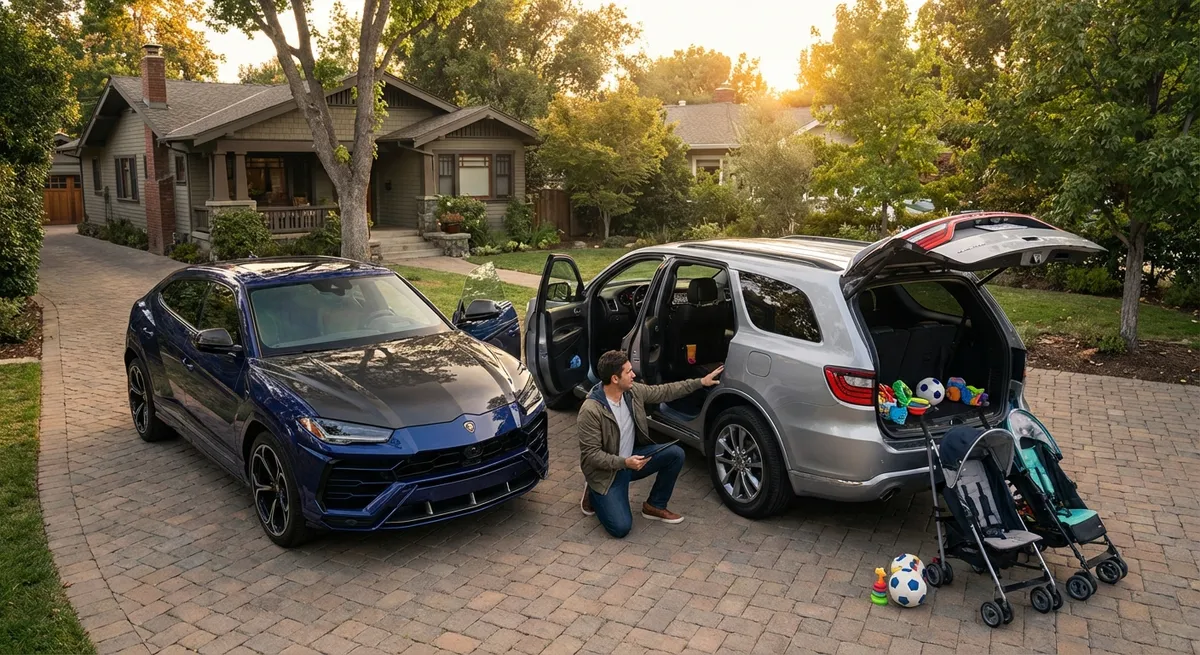
Modern SUVs may share similar silhouettes, but what’s underneath can feel completely different on the road. For shoppers who care about both practicality and driving dynamics, simply choosing “an SUV” is no longer specific enough. Platform layout, suspension design, power delivery, and even interior packaging all play a major role in how an SUV behaves, how much it can carry or tow, and how it will age over 100,000+ miles.
This comparison-focused guide breaks down the key technical differences between popular SUV configurations and highlights what actually changes for owners. Instead of looking at model‑by‑model rankings, we’ll compare design choices that cut across brands, with five detailed points enthusiasts and serious buyers can use to separate a family appliance from a genuinely satisfying driver’s SUV.
Drivetrain Layout: FWD‑Based vs. RWD‑Based Architectures
Most mainstream crossovers are built on front‑wheel‑drive (FWD)–based platforms shared with sedans or hatchbacks, while many premium and performance SUVs use rear‑wheel‑drive (RWD)–based architectures derived from traditional cars or trucks. This foundational decision shapes everything from steering feel to towing capacity.
FWD‑based SUVs typically mount the engine transversely across the engine bay and integrate a compact transaxle. This keeps weight and cost down, improves packaging, and frees interior space, especially in compact and midsize segments. It also tends to be more efficient in city driving, as there are fewer driveline losses than on some longitudinal setups. However, under hard acceleration, especially in powerful turbocharged variants, torque steer and front‑end push (understeer) can become noticeable, even when all‑wheel drive (AWD) is added.
RWD‑based platforms use a longitudinal engine layout and send power to the rear wheels first, with AWD systems often adding a front transfer case. This configuration naturally balances weight front to rear more effectively and allows the front wheels to focus on steering, not both steering and primary propulsion. In practice, the result is crisper turn‑in, better stability during high‑speed lane changes, and more confident power delivery when exiting corners. Enthusiast‑oriented SUVs from BMW, Mercedes‑Benz, and some U.S. brands rely heavily on this layout for that reason.
For towing and payload, RWD‑based architectures generally win. Their stronger rear axles and more robust cooling and driveline components are better suited to frequent towing or hauling. Buyers who plan to tow close to the maximum rating, or who care about long‑term durability under load, should prioritize SUVs with a RWD‑based or truck‑derived platform over compact FWD‑based crossovers designed primarily for commuting.
Suspension Strategy: Comfort Bias vs. Handling Focus
Suspension tuning can transform an SUV from softly sprung family transporter into a vehicle that feels unexpectedly athletic. Beyond just “independent vs. solid axle,” the details—bushing stiffness, damper tuning, and available adaptive systems—drive how an SUV behaves when pushed or when roads turn rough.
Many family‑focused SUVs use a comfort‑biased setup: relatively soft spring rates, compliant bushings, and damper tuning meant to absorb expansion joints and potholes with minimal harshness. This approach works well at moderate speeds and in urban environments, but it can lead to body roll in fast corners, nose‑dive under heavy braking, and a somewhat “floaty” feel on undulating highways. Buyers who prioritize maximum ride comfort and who rarely drive aggressively may find this ideal, especially on 18‑inch wheels or smaller with higher‑profile tires.
Handling‑focused SUVs, by contrast, increase roll stiffness with firmer springs, thicker anti‑roll bars, and more aggressively valved dampers. Some add adaptive or semi‑active dampers that adjust in milliseconds based on sensor input, allowing a “Comfort” mode for daily use and a “Sport” or “Dynamic” mode for spirited driving. This complexity raises cost and can introduce more components to service over time, but it also narrows the traditional gap between SUVs and sports sedans. Enthusiasts should pay attention not just to whether adaptive suspension is available, but how it’s tuned and whether ride height is adjustable.
Rear suspension design is also a key differentiator. Multi‑link rear setups, common in higher‑end crossovers, better control wheel camber and toe through suspension travel, improving both grip and stability. Simpler torsion‑beam or semi‑independent designs seen in some entry‑level models reduce cost and complexity but can limit refinement and handling precision, particularly on uneven pavement. If you care about both composure at highway speeds and predictable cornering, a fully independent suspension with a well‑tuned multi‑link rear is worth seeking out.
AWD Systems Compared: Reactive, Predictive, and Performance‑Oriented
“All‑wheel drive” can mean dramatically different hardware and software strategies. Many crossover buyers assume AWD is a binary feature—either you have it or you don’t—but real‑world performance in snow, on wet pavement, and on light trails depends heavily on how power is apportioned and managed.
Entry‑level, reactive AWD systems are typically front‑biased. Under normal driving, they operate almost entirely in FWD to minimize fuel consumption, only sending torque rearward after detecting front wheel slip. This is usually achieved via electronically controlled clutches in the rear differential or coupling. These systems improve traction when a front tire hits ice or a wet paint line, but because engagement is reactive, there can be a slight delay before full traction is restored, and they rarely allow significant rear‑bias in dry conditions.
More advanced, predictive systems integrate additional sensors, including steering angle, yaw rate, and throttle position, as well as weather and road‑condition data in some high‑end models. These AWD setups can pre‑emptively adjust torque split before slip occurs, sending power rearward or even to individual wheels to reduce understeer, improve launch performance, and increase stability on variable surfaces. Some systems can hold a rear‑biased torque split in Sport modes, providing a driving character closer to a RWD performance vehicle.
Performance‑oriented and off‑road‑focused SUVs may add selectable modes (Snow, Sand, Mud, Rock) with distinct mapping for throttle response, transmission logic, traction control thresholds, and differential locking strategies. In this space, twin‑clutch rear differentials or torque‑vectoring by brake can significantly improve corner exit grip, while mechanical limited‑slip differentials or locking differentials shine in low‑speed off‑road conditions. Enthusiasts and buyers in harsh climates should look beyond the AWD badge and evaluate whether a system is reactive or predictive, front‑biased or rear‑biased, and whether it has dedicated calibration for their use case.
Interior Packaging: Three‑Row Utility vs. Driver‑Focused Cabins
Interior layout is another dimension where SUVs diverge sharply. The same exterior footprint can yield a minivan‑like three‑row family shuttle or a two‑row configuration with generous cargo space and more supportive seating for front occupants. Understanding how packaging choices affect both day‑to‑day comfort and driving ergonomics helps shoppers match a vehicle to their actual usage.
Three‑row SUVs prioritize seating count and flexibility. Sliding and reclining second‑row benches, fold‑flat third rows, and easily accessible LATCH points for child seats all define this category. To make room, designers often raise the floor, thin the seat cushions, and compact rear suspension components, which can compromise both third‑row comfort and the driving position. Taller drivers may find themselves sitting more upright with limited thigh support in the front row, and the steering wheel position may be optimized around a wide range of occupants rather than a performance‑oriented driving posture.
Two‑row SUVs with similar exterior lengths can devote more space to the front and second rows, with deeper cushions, more aggressive seat bolstering, and more adjustability, including extendable thigh supports and multi‑way lumbar adjustments. This matters not only for long‑distance comfort but also for control: a lower, more “legs‑out” driving position helps enthusiastic drivers better sense chassis movements and apply steering and pedal inputs precisely. Wide‑ranging steering wheel reach adjustment is a key, often overlooked factor—some mass‑market SUVs still fall short here compared with dedicated driver’s vehicles.
Cargo area design also varies. Family‑oriented SUVs may prioritize a low load floor, multiple small storage cubbies, and under‑floor bins to stow cargo covers and emergency gear. Driver‑focused or off‑road‑oriented SUVs sometimes sacrifice under‑floor storage for a full‑size spare tire, higher‑capacity jack, and tie‑down points for larger items like bikes or track gear. Potential buyers should consider whether they regularly carry people, bulky cargo, or both—and whether the seat shapes, driving position, and visibility match their priorities.
Power Delivery and Transmission Behavior: Character Beyond Horsepower
Engine and transmission choices do more than just set 0–60 mph times. The way power arrives—how linear the torque curve is, how the transmission responds to inputs, and how powertrains behave when loaded or at highway speeds—can sharply differentiate a “family hauler” SUV from a driver’s SUV, even with similar spec‑sheet numbers.
Turbocharged four‑cylinder engines now dominate the segment, favored for their combination of output and fuel economy. Many deliver peak torque at relatively low rpm, making city driving and on‑ramp merges feel effortless. However, throttle calibration and turbo response are critical. In some crossovers, throttle mapping is tuned to feel punchy off the line but quickly softens, which can be disheartening for enthusiasts. Others maintain a more linear response, giving the driver better modulation in corners and during passing maneuvers.
Transmission type and programming are equally important. Traditional torque‑converter automatics with 8, 9, or 10 speeds can deliver crisp, quick shifts when programmed aggressively in sport modes, yet remain smooth in daily use. Continuously variable transmissions (CVTs), often used in efficiency‑focused SUVs, can feel elastic under heavy throttle and may dull driver engagement, though they can keep the engine in its optimal efficiency band. Dual‑clutch transmissions (DCTs) offer rapid gear changes and a more direct connection between engine and wheels but can be less smooth in stop‑and‑go traffic if not well tuned.
Enthusiasts should look at not only the headline horsepower numbers but also torque curves, gear ratios, and whether the SUV offers a “manual” mode with genuine control (and whether the transmission will hold a chosen gear near redline). Potential buyers who tow or frequently drive in hilly areas should note whether the transmission tends to hunt between gears and whether there are dedicated tow/haul or performance modes that alter shift points and torque converter lockup behavior. These subtleties often separate SUVs that feel composed and responsive from those that simply move the numbers on paper.
Conclusion
Under the surface, today’s SUVs are far from interchangeable. Platform layout, suspension philosophy, AWD architecture, interior packaging, and powertrain character combine to create distinct personalities—ranging from soft, people‑moving appliances to machines that genuinely reward an engaged driver. Shoppers who take the time to understand these technical differences can make more confident decisions, aligning their purchase with how they actually drive and what they really carry.
For car enthusiasts and serious buyers, the key is to look past simple labels like “AWD,” “three‑row,” or “turbocharged” and focus on how each system is implemented. Evaluating drivetrain layout, suspension type, AWD strategy, driving position, and transmission behavior will help you choose not just an SUV that fits your lifestyle, but one that you continue to enjoy long after the new‑car smell has faded.
Sources
- National Highway Traffic Safety Administration (NHTSA) – Vehicle Types and Safety - Background on vehicle types, stability, and safety considerations relevant to SUV layout and dynamics
- SAE International – Fundamentals of Vehicle Dynamics - Reference text explaining how drivetrain layout, suspension, and weight distribution affect handling (book overview)
- BMW Group – xDrive and Chassis Technology Overview - Manufacturer explanation of predictive AWD and chassis systems in performance‑oriented SUVs
- U.S. Department of Energy – Fuel Economy and Powertrain Technology - Technical overview of powertrain types, efficiency, and their impact on real‑world performance
- IIHS – Crashworthiness and Vehicle Size/Type - Research on how vehicle size, structure, and design choices influence safety outcomes, relevant to SUV configuration choices
Key Takeaway
The most important thing to remember from this article is that this information can change how you think about Comparisons.