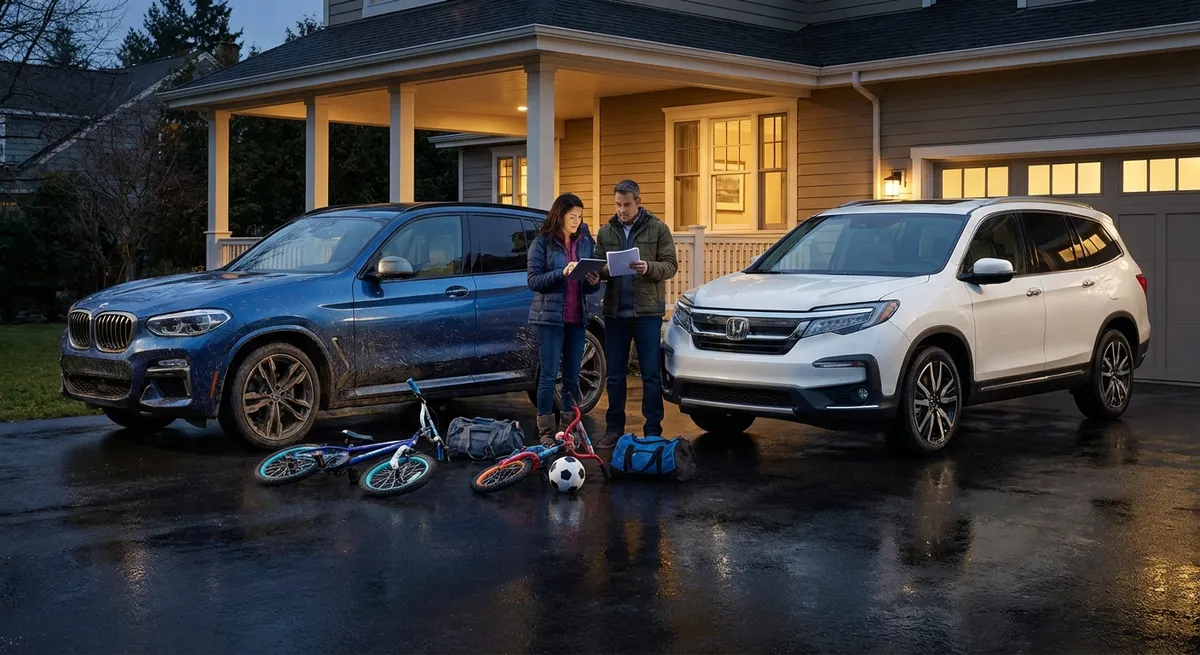
Today’s SUVs are no longer just rugged trucks with extra seats. The modern lineup splits into two clear personalities: family haulers focused on comfort and practicality, and “driver’s SUVs” engineered to be engaging from behind the wheel. For many buyers, the best choice lives somewhere between these extremes. Understanding how to compare them—beyond just price and horsepower—can make the difference between a purchase you tolerate and a vehicle you genuinely enjoy.
This guide focuses on five high‑impact comparison points that matter to enthusiasts and practical shoppers alike. Whether you’re cross‑shopping a sporty compact crossover against a three‑row family SUV, or weighing a performance trim against a comfort‑oriented model, these technical and real‑world metrics will help you choose with confidence.
1. Platform and Drivetrain Layout: The Architecture Behind the Badge
One of the most overlooked comparisons between SUVs is what sits under the sheet metal: the platform and drivetrain layout. These two factors heavily influence how a vehicle drives, feels, and even ages.
Many compact and midsize crossovers use a front‑wheel‑drive (FWD)–based unibody platform derived from passenger cars. This architecture tends to maximize interior space, improve efficiency, and deliver a more compliant ride. It’s ideal for family haulers that spend most of their time on pavement, prioritizing packaging, quietness, and predictable behavior in bad weather when equipped with all‑wheel drive (AWD).
By contrast, some “driver’s SUVs” and off‑road‑oriented models use a rear‑wheel‑drive (RWD)–based platform, sometimes shared with performance sedans or even sports coupes. RWD bias typically improves weight distribution and allows for more sophisticated torque delivery under acceleration. Enthusiasts will notice better steering feel and more neutral cornering behavior, especially when combined with a mechanical limited‑slip differential or advanced torque‑vectoring rear axle.
When comparing two SUVs, look beyond the marketing terms and confirm whether the vehicle is FWD‑based or RWD‑based, and what type of “AWD” it truly offers. Some systems are essentially on‑demand FWD setups that route power rearward only when slip is detected. Others are rear‑biased systems capable of continuously sending more torque to the rear for a sportier feel. For heavy towing or spirited driving, a robust RWD‑based platform with a rear‑biased AWD system usually offers better thermal durability and more engaging dynamics than a light‑duty, FWD‑biased configuration.
2. Powertrain Character: Beyond Horsepower Headlines
Horsepower figures dominate SUV marketing, but they rarely tell the whole story. For shoppers who care how the vehicle actually responds in real‑world driving, comparing torque delivery, transmission behavior, and engine technology can be more revealing than peak numbers alone.
Modern SUVs increasingly offer downsized, turbocharged four‑cylinders, naturally aspirated V6 engines, and, in some cases, high‑output turbocharged sixes or V8s. Turbocharged engines often produce strong low‑to‑midrange torque, which feels excellent in city and highway merging, but can suffer from heat soak or lag if not well engineered. Naturally aspirated engines may feel more linear and predictable, especially at higher revs, but can require more RPM to access their power, which some drivers love and others find tiring.
Transmission choice also separates family‑focused from enthusiast‑focused SUVs. Continuously variable transmissions (CVTs) are often tuned for smoothness and fuel economy, making them common in commuting and family applications. Traditional automatic transmissions, especially those with 8–10 gears and fast shift logic, can feel noticeably more responsive in sport modes and permit better use of an engine’s power band. Dual‑clutch transmissions (DCTs), when offered, provide crisp shifts and a more “connected” feel but may be less smooth in stop‑and‑go traffic.
When comparing models, pay attention to torque curves (where peak torque occurs in the RPM band), gearbox type, and drive mode calibration. SUVs advertised with “sport modes” should be evaluated for how aggressively they hold gears, how quickly they respond to throttle inputs, and whether they alter AWD torque distribution. Enthusiast‑oriented trims often feature revised engine mapping, more aggressive shift logic, or even overboost functions for short bursts of extra torque—features that can fundamentally change the driving experience without altering the headline horsepower figure.
3. Chassis Tuning and Suspension: The Real Difference Between Comfortable and Capable
Chassis tuning is where two similar‑looking SUVs can feel entirely different on the road. Families usually prioritize compliance and isolation, while enthusiasts want body control, steering precision, and feedback. The best modern SUVs attempt to balance both, often with complex suspension hardware and adaptive systems.
Start by comparing suspension types. Many mainstream SUVs use MacPherson struts in front and a multi‑link setup in the rear. This arrangement, when well tuned, can provide a solid mix of comfort and performance. Higher‑end or performance‑oriented SUVs may add adaptive dampers, air suspension, or active anti‑roll systems. Adaptive dampers allow the vehicle to vary its firmness in real time based on road conditions or drive mode, letting a single SUV behave like a soft cruiser in Comfort mode and a more buttoned‑down sports crossover in Sport or Sport+.
Off‑road‑capable family haulers might use longer‑travel suspensions, softer spring rates, or specialized dampers with more robust internal valving. This improves articulation and impact absorption on rough surfaces but can introduce more body roll and pitch under hard braking or cornering. Driver’s SUVs, on the other hand, may use stiffer spring rates, thicker anti‑roll bars, and performance‑oriented bushings. These changes tighten body control and sharpen turn‑in response but can transmit more road texture and expansion joints into the cabin.
When cross‑shopping, pay attention to three technical details: the presence of adaptive suspension, wheel and tire sizing, and any mention of dynamic chassis control systems. Large‑diameter wheels with low‑profile tires might look aggressive, but they reduce sidewall compliance and can worsen ride quality, especially over broken pavement. Performance trims may also feature unique alignment settings (such as increased negative camber) to improve grip at the expense of tire longevity or even straight‑line stability on rough roads. Understanding this trade‑off helps you decide whether a particular “sport package” genuinely suits your daily use.
4. Interior Packaging, Seating, and Cargo: Usability You Feel Every Day
While powertrains and chassis tuning matter to enthusiasts, interior packaging is often what determines whether an SUV works long‑term for families—especially when comparing two‑row and three‑row options or different body sizes. Here, the smartest comparison is not just total cubic feet of cargo volume, but how that space is shaped and accessed.
Look closely at rear‑seat legroom measurements and the height and length of the cargo floor with seats up and folded. Some ostensibly “midsize” SUVs sacrifice rear headroom to achieve a more coupe‑like profile, which may be a worthwhile trade‑off for style‑driven buyers but a liability for taller passengers or rear‑facing child seats. Third rows can vary dramatically: some are intended for occasional use and are best suited to children, while others offer adult‑usable knee and foot room, higher hip points, and dedicated rear air vents.
Seat design also matters more than many buyers realize. Enthusiast‑oriented models may feature more aggressive bolstering, extendable thigh supports, and firmer padding for better long‑distance support. These seats can be excellent for spirited driving but might feel confining for broad‑shouldered occupants or those frequently loading and unloading young children. Family haulers commonly opt for softer cushions and easier ingress/egress, sometimes including second‑row captain’s chairs that simplify access to the third row at the expense of maximum seating capacity.
Compare not only the numbers, but the mechanisms: how flat do the seats fold, how high is the lift‑over height at the tailgate, and does the vehicle use clever storage solutions such as under‑floor bins or adjustable load floors? For families, power‑folding seats and hands‑free liftgates can be daily quality‑of‑life upgrades. For enthusiasts, verify whether performance trims compromise cargo usability with items like structural rear bracing or larger spare tire wells, which can reduce overall cargo volume or increase floor height.
5. Braking, Tires, and Heat Management: The Enthusiast’s Durability Check
Performance isn’t just about acceleration figures; sustained capability under load is where many SUVs distinguish themselves. For buyers who tow, drive in mountainous regions, or regularly push their vehicles on challenging roads, comparing braking systems, tire specifications, and cooling capacity is critical.
Braking hardware is the first checkpoint. Larger‑diameter rotors, multi‑piston calipers (especially in front), and high‑friction pad compounds all improve stopping power and resistance to fade. However, they can also increase brake dust and, in some cases, noise. Many performance‑oriented SUVs offer upgraded brake packages as part of sport trims. If you see ventilated rear rotors, aluminum calipers, or manufacturer claims of shorter stopping distances, that’s usually a sign of a more robust setup. Family‑focused trims may use smaller, simpler hardware that performs adequately in everyday conditions but can overheat more quickly on steep descents or when towing.
Tires are the only part of the SUV that actually touch the road, and they define a vehicle’s grip envelope more than most buyers realize. Touring‑oriented, all‑season tires prioritize ride comfort, tread life, and low rolling resistance. While they improve fuel economy and noise levels, they limit the ultimate braking and cornering performance. Performance‑oriented SUVs often mount summer or performance all‑season tires with stickier compounds and stiffer sidewalls, dramatically improving steering response and lateral grip at the expense of tread life and winter capability.
Finally, consider thermal management and cooling, especially if you plan to tow or drive aggressively in hot climates. Heavy‑duty cooling packages may include larger radiators, additional transmission coolers, and higher‑capacity fans. These systems help maintain stable fluid temperatures under sustained load, preserving performance and component longevity. In published specs or brochures, look for towing‑specific or performance packages that mention enhanced cooling, larger alternators, or “track‑ready” or “tow‑ready” hardware—clear signals that an SUV is designed to handle more demanding use cases than the average family runabout.
By comparing these braking, tire, and cooling details between models and trims, you gain a much more accurate sense of how each SUV will behave not just in a single test drive, but after years of real‑world use.
Conclusion
When you strip away marketing language, the difference between a family hauler and a driver’s SUV comes down to engineering priorities and how well they align with your life. Platform layout shapes character, powertrain tuning dictates responsiveness, chassis and suspension define confidence, packaging determines daily usability, and braking and thermal systems reveal how an SUV will perform under stress.
Approach your comparison with these five lenses, and you’ll see past surface‑level similarities to the real trade‑offs that matter. The right SUV isn’t simply the one with the biggest screen or the highest horsepower—it’s the one whose underlying architecture, tuning, and packaging match how you and your passengers actually drive, travel, and enjoy the road.
Sources
- Fuel Economy Guide – Light-Duty Trucks and SUVs – U.S. Department of Energy resource comparing fuel economy by vehicle class, including SUVs and crossovers
- NHTSA Vehicle Safety Ratings – Official crash-test ratings and safety details for new SUVs and other vehicles
- IIHS Ratings for SUVs – Insurance Institute for Highway Safety evaluations of crashworthiness, headlights, and crash-avoidance tech for various SUV classes
- SAE International – Vehicle Dynamics and Chassis Systems – Technical reference on vehicle dynamics terminology relevant to chassis and suspension comparisons
- Consumer Reports – Guide to Car Seating and Cargo – Practical overview of how to assess seating usability and cargo space in SUVs and other vehicles
Key Takeaway
The most important thing to remember from this article is that following these steps can lead to great results.