Choosing an SUV today means navigating a crowded market with overlapping segments, dense spec sheets, and marketing buzzwords that often obscure what actually matters in day-to-day driving. Instead of chasing the latest hype, smart buyers step back and ask how an SUV will perform in the realities of commuting, hauling, family duty, and weekend trips. This guide focuses on five high‑value areas that separate a merely “nice” SUV from one that genuinely fits your life for years to come.
Understanding Platform and Drivetrain: What’s Underneath Matters
Beneath every SUV is a platform that largely defines how it will drive, tow, and age over time. Most modern SUVs use unibody construction (shared with cars or crossovers), which integrates the body and frame into a single structure. This design improves rigidity, lowers weight, and typically delivers better ride comfort, fuel economy, and handling. Traditional body‑on‑frame SUVs—built more like pickup trucks—offer superior durability under heavy loads, higher towing capacity, and better resistance to frame damage when used off‑road, but they tend to ride less smoothly and feel heavier in everyday driving.
Understanding drivetrain layout is equally important. Front‑wheel drive (FWD) platforms dominate compact and midsize crossovers, providing packaging efficiency and lower production costs. FWD is generally sufficient for on‑road use and light weather, but it can struggle with traction under heavy acceleration or in deep snow and mud. Rear‑wheel drive (RWD) or rear‑biased platforms, more common in luxury and performance SUVs, offer better weight distribution and towing dynamics, and often feel more composed when loaded or driven briskly. All‑wheel drive (AWD) and four‑wheel drive (4WD) sound similar but function differently: AWD systems are typically on‑demand and optimized for on‑road traction, while traditional 4WD systems (often with low range and a transfer case) are designed for serious off‑road use and heavy-duty operation.
Buyers should look beyond marketing labels like “Intelligent AWD” or “xDrive” and read how power is distributed. Is the system primarily FWD that sends power rearward only when slip is detected, or is it rear‑biased with a center differential or clutch pack that actively manages torque? Also note whether the system includes selectable drive modes (e.g., Snow, Sand, Mud) that adjust throttle response, shift mapping, and traction control. These details directly affect how secure the SUV feels on a wet highway, how confidently it pulls a trailer uphill, and how stable it remains when fully loaded. Finally, examine the official tow rating, gross vehicle weight rating (GVWR), and payload, ensuring they align with your real-world needs rather than just headline numbers in ads.
Evaluating Space the Right Way: Beyond Listed Cargo Volume
Manufacturers love advertising maximum cargo volume, but these numbers often assume the rear seats folded to the floor and cargo stacked to the roof. This is rarely how owners actually use their SUVs. Instead of fixating on a single cubic‑foot figure, evaluate space by configuration and usability: seats up versus folded, two‑row versus three‑row, and floor shape and height. A wide, low, flat load floor is more valuable than a few extra cubic feet that require awkward loading angles. Pay attention to the height of the load lip, the presence of a step between the tailgate and the cabin floor, and whether the wheel wells significantly intrude into the space.
Rear seating flexibility is crucial, especially for families or those who frequently transport adults in the back. Look for sliding and reclining second-row seats, as they allow you to balance legroom and cargo space. If considering a third row, physically sit in it and test the process of getting in and out. Many three‑row SUVs have “emergency‑only” third rows that are usable by children for short trips but uncomfortable for adults on longer drives. Check headroom, knee room, and seat height; low-mounted third-row cushions force a “knees‑up” posture that quickly becomes tiring.
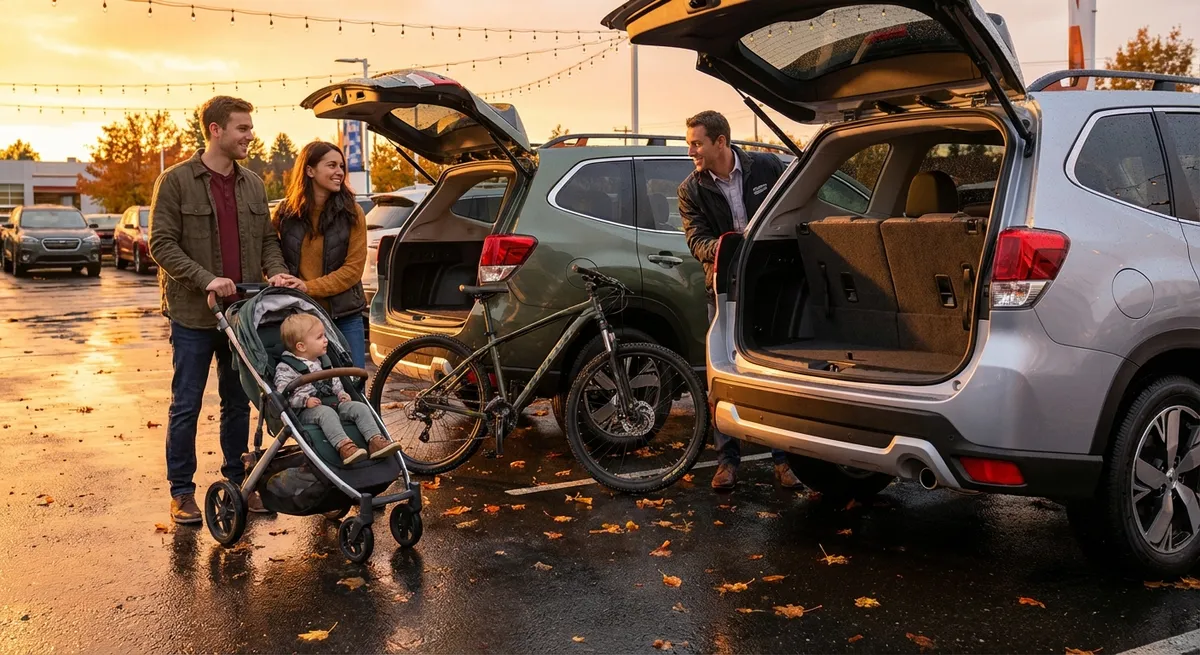
Small-item storage is another underrated aspect. Center-console volume, door pockets that hold large bottles, under‑floor compartments, and secure spots for phones, tablets, and charging cables all impact daily usability. If you plan to carry strollers, golf bags, pet crates, or camera equipment, bring them to the dealership and test-fit them with the seats arranged as you’ll normally use them. Also consider roof load ratings if you plan on using roof boxes, bike racks, or overlanding gear. A slightly smaller interior may be acceptable if the roof can safely support the gear you intend to mount.
Ride, Handling, and Noise: Reading the Suspension and Tire Choices
An SUV’s ride and handling are shaped by suspension design, damper tuning, and tire selection more than any marketing term like “sport-tuned” or “off-road capable.” Many modern SUVs use MacPherson struts in front and multi-link setups at the rear, offering a good balance of comfort and control. Higher-end models may use adaptive dampers, air suspension, or active anti-roll systems. While these technologies can significantly improve ride quality and versatility (e.g., raising the vehicle for off‑road use or lowering it for easier cargo loading), they also introduce long-term complexity and potential maintenance costs once the vehicle is out of warranty.
Wheel and tire choices can transform how an SUV feels. Large-diameter wheels (20–22 inches) wrapped in low-profile tires look good in photos but reduce sidewall height, which is a critical component of ride compliance. Shorter sidewalls transmit more road imperfections into the cabin and increase the risk of wheel damage over potholes. Conversely, slightly smaller wheels (17–19 inches) with taller sidewalls often ride more comfortably, provide better winter performance, and are cheaper to replace. If you live in an area with poor roads, aggressive freeze‑thaw cycles, or frequent construction, this tradeoff is particularly significant.
Noise, vibration, and harshness (NVH) characteristics can only be judged during a thorough test drive, but you can set expectations from spec sheets. Look for laminated front glass, additional acoustic insulation, and engine mounts designed for reduced idle vibration—features more common on premium trims and luxury brands. Investigate whether the model uses active noise cancellation through the audio system to reduce specific frequencies, especially from the engine or tires. On the road, test the SUV on a variety of surfaces: smooth pavement, coarse concrete, and rough patches. Pay attention not only to road roar and wind noise, but also to how the suspension responds to expansion joints and broken asphalt—does it feel tightly controlled or jittery and unsettled?
Dynamic safety is tied to these characteristics as well. An SUV with well-tuned suspension, predictable body roll, and linear steering will be easier to control in emergency maneuvers. Pay attention to brake feel; a firm, progressive pedal inspires more confidence than an over‑boosted or mushy one, especially when the SUV is loaded or towing. Also consider whether the vehicle offers features like brake-based torque vectoring, which can subtly improve cornering stability by modulating individual wheel brakes. These systems don’t turn a tall SUV into a sports car, but they can tighten responses and improve confidence on twisty roads or during evasive maneuvers.
Technology and Safety Systems: Separating Gimmicks from Useful Tools
SUVs have become rolling technology platforms, and the challenge is distinguishing genuinely useful features from flashy options that add complexity without real benefit. Start with the advanced driver-assistance systems (ADAS), which now commonly include automatic emergency braking (AEB), forward collision warning, blind-spot monitoring, lane-keeping assistance, and adaptive cruise control. Verify whether these systems are standard or tied to a specific trim or package. Look at independent safety evaluations from organizations like the IIHS and NHTSA to confirm how effective the systems are in real-world testing and crash scenarios.
The execution of these safety aids matters as much as their presence. Some lane-keeping systems apply gentle steering input and clearly show lane status in the instrument cluster, making them useful on long highway drives; others are overly intrusive or inconsistent, prompting drivers to disable them. In your test drive, engage adaptive cruise and lane-centering on a multilane road to see how naturally the SUV maintains distance, responds to cut-ins, and handles curves. Evaluate whether the driver-monitoring alerts (for hands on wheel or eyes on road) are reasonable or excessively nagging.
Infotainment and connectivity warrant careful scrutiny. Large touchscreens are now common, but user interface design varies widely. Check for physical knobs and buttons for key functions like volume, tuning, and climate controls—purely touch-based systems can be distracting in motion. Evaluate response speed, menu depth, and the quality of voice recognition. Wireless Apple CarPlay and Android Auto are increasingly standard and can significantly improve day-to-day usability compared to proprietary navigation systems. Also pay attention to the number and type of USB ports (USB‑A vs. USB‑C), availability of 12V outlets, and the strength and coverage of the in‑vehicle Wi‑Fi hotspot if offered.
Over-the-air (OTA) update capability is another key factor. Manufacturers that support OTA updates can improve software functionality, address bugs, and even enhance certain performance or safety features without requiring a dealership visit. However, this also means features may change over time, and some brands have begun experimenting with subscription-based access to certain options (e.g., advanced driver aids, connected services). Read the fine print on connected services, trial periods, and long-term subscription costs so you understand what will remain functional without ongoing fees. Strong, reliable tech integration can be a genuine ownership benefit, but poorly executed or heavily paywalled systems may become a source of frustration.
Long-Term Ownership Costs and Reliability: Looking Past the Sticker
The purchase price is only one part of an SUV’s real cost. Long-term ownership involves fuel or energy expenses, insurance, maintenance, repairs, depreciation, and potential financing costs. Before committing, estimate fuel consumption using EPA ratings and cross-check them with owner-reported data on forums or consumer sites—some turbocharged engines and heavier trims may deviate significantly from official figures in real-world use, especially when loaded or driven aggressively. If you’re considering a hybrid or plug-in hybrid SUV, evaluate not just the advertised fuel economy but also how far you can drive in electric mode and whether your typical daily route allows you to maximize that capability.
Maintenance schedules and service intervals vary by brand and powertrain. Some manufacturers specify longer oil-change intervals with synthetic oil and extended coolant and transmission fluid service intervals, while others are more conservative. Ask for a printed maintenance schedule and estimate costs over five to eight years, including wear items like brakes, tires, and suspension components. Complex features such as air suspension, continuously variable damping, or intricate all‑wheel drive systems can be excellent when new but may incur higher repair costs once out of warranty. Understand the length and coverage of the basic and powertrain warranties, and whether hybrid or battery components carry longer protection.
Reliability history is critical. Consult multiple sources—consumer surveys, reliability ratings, and owner forums—to identify patterns of issues with particular engines, transmissions, or model years. Some SUVs share platforms and powertrains across several models or even brands, so learning about one vehicle’s track record can inform your expectations of another. Also consider parts availability and dealer network coverage: niche models or low-volume brands may offer a great driving experience but be slower or more expensive to service in certain regions.
Depreciation can significantly alter the “real” cost of ownership. Strong resale value is often associated with brands known for reliability, robust demand in the used market, and conservative fleet sales to rental agencies. Research historical residuals and certified pre-owned (CPO) pricing to gauge how the SUV you’re considering might hold its value. CPO programs themselves can be a smart middle-ground choice, offering extended warranties and multi-point inspections at a discount compared to new, especially for buyers who prioritize long-term durability over having the latest model year. By combining these data points—fuel, maintenance, reliability, and resale—you can move beyond emotional appeal and assess which SUV will truly be the most cost-effective and satisfying to live with.
Conclusion
The right SUV is not simply the one with the largest touchscreen, the most aggressive grille, or the highest advertised horsepower. It’s the one whose underlying platform, space efficiency, ride and handling, technology suite, and long-term costs align with your actual needs and driving patterns. By digging a layer deeper into drivetrain architecture, interior usability, suspension and tire choices, driver-assistance execution, and ownership economics, you can cut through the noise of marketing and spec-sheet overload. Approach your purchase with this structured lens, and you’re far more likely to end up with an SUV that not only looks good in the driveway, but also delivers confidence, comfort, and value over the many miles to come.
Sources
- IIHS – Vehicle Ratings – Independent crash-test data and safety evaluations, including information on crashworthiness and crash avoidance features for SUVs
- NHTSA – 5-Star Safety Ratings – U.S. government safety ratings and recall information for new vehicles, including many popular SUV models
- EPA – Fuel Economy Guide – Official fuel economy ratings and energy consumption data for gasoline, hybrid, and plug-in hybrid SUVs
- Consumer Reports – New & Used Car Reliability – Aggregated reliability and owner-satisfaction information across brands and SUV segments
- Edmunds – True Cost to Own – Detailed projections of depreciation, fuel, maintenance, insurance, and other ownership costs for specific SUV models
Key Takeaway
The most important thing to remember from this article is that this information can change how you think about Buying Guide.