Choosing the right SUV isn’t just about size, price, or brand image anymore. Modern sport-utility vehicles blend complex powertrains, layered electronic systems, and increasingly sophisticated chassis setups—making “good on paper” very different from “good for you.” If you’re an enthusiast or a serious buyer, learning to read beyond the brochure can be the difference between owning a perfectly matched SUV and regretting a rushed choice in six months.
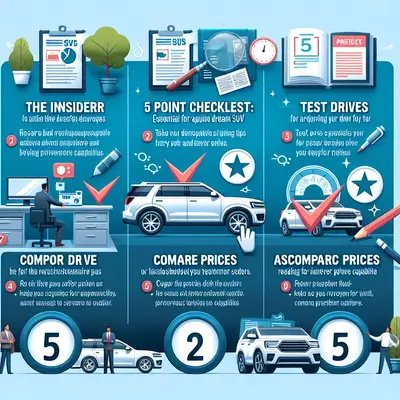
This guide walks you through five critical dimensions of SUV evaluation that go deeper than the usual “features and options” talk. It’s designed to help you interpret specs, ask sharper questions at the dealership, and understand how engineering decisions translate into real-world driving and ownership.
1. Interpreting Powertrain Specs Beyond Horsepower
Horsepower numbers sell cars, but they don’t tell the whole story of how an SUV will feel to drive or what it will cost to own. To evaluate powertrains properly, you need to look at torque, its delivery curve, and how the transmission uses that output.
Start with torque, measured in lb-ft or Nm. For a family SUV that frequently hauls passengers and cargo, the availability of torque at low RPM (often called “low-end torque”) matters more than peak horsepower at high RPM. Turbocharged engines typically deliver strong torque early in the rev range, which is why a 2.0-liter turbo four can feel punchier in daily driving than a naturally aspirated V6 with higher peak horsepower.
Look at the torque peak RPM. If maximum torque arrives around 1,600–2,000 rpm and holds flat to 4,000 rpm, expect relaxed acceleration without frequent downshifts. Electric SUVs take this further: near-instant torque from zero RPM can mask higher curb weight, but repeated hard acceleration can trigger thermal limits that reduce power output temporarily.
The transmission pairing is just as critical. An 8- or 10-speed conventional automatic can keep a gasoline engine in its sweet spot, improving both responsiveness and efficiency. Continuously variable transmissions (CVTs) prioritize efficiency and smoothness, but some performance-oriented buyers dislike their “rubber band” feel under hard acceleration. Dual-clutch transmissions (DCTs) offer quick shifts and efficiency but can feel jerky at low speeds if not well tuned.
If towing is on your radar, pay attention to the combination of torque, cooling capacity, and axle ratio. A higher numerical axle ratio (e.g., 3.73 vs. 3.21) can improve towing performance and off-the-line punch at the expense of highway fuel economy. Manufacturer towing packages often add upgraded cooling, wiring, and sometimes shorter final drive ratios—worth seeking out if you plan to use the rated capacity regularly.
2. Evaluating Ride, Handling, and Suspension Technologies
Many shoppers reduce “handling” to “does it feel firm or soft,” but modern SUV suspension setups are more nuanced. Understanding the basics helps you choose between comfort-biased family hauler and an SUV with genuinely engaging dynamics.
Start with suspension type. A front MacPherson strut with a rear multi-link layout is common in crossovers; multi-link rears allow engineers to better balance comfort, grip, and packaging. Solid rear axles are still seen in serious off-roaders and some body-on-frame SUVs; they handle heavy loads and rough terrain well but typically sacrifice some on-road refinement and independent wheel control.
Next, identify whether the SUV offers adaptive dampers, air suspension, or active roll control. Adaptive dampers vary their stiffness in real time based on road conditions and drive mode, allowing a single vehicle to deliver both comfort and sportiness. Air suspension can adjust ride height and spring rate; it’s beneficial for load-leveling, aerodynamics at highway speeds (by lowering the vehicle), and improving approach/departure angles off-road by raising it.
Chassis stiffness and center of gravity also matter. SUVs built on dedicated unibody platforms optimized for electrification or on-road performance often have very rigid structures, which allow the suspension to do its job more precisely. Battery-electric SUVs place mass low in the chassis, reducing body roll but still requiring careful damper tuning to control that extra weight over bumps and during quick maneuvers.
Wheel and tire choices significantly affect both handling and comfort. Large-diameter wheels with low-profile tires look aggressive and can improve steering response on smooth roads, but they reduce sidewall compliance and can magnify harshness over broken pavement. If you drive regularly on rough roads or in snow, slightly smaller wheels with higher-profile all-season or all-weather tires can provide a better real-world experience than the biggest wheel option in the brochure.
3. Cabin Design, Ergonomics, and Real-World Usability
It’s easy to be distracted by big touchscreens and ambient lighting, but ergonomics and layout will determine whether your SUV feels like a well-designed tool or an ongoing compromise. Approach the cabin like you’re doing a usability test, not just admiring materials.
Begin with driving position. Check adjustment ranges for the seat and steering wheel—reach and rake adjustment on the steering column is essential for tall and short drivers alike. Enthusiasts should look for adequate thigh support, firm but not hard seat bolstering, and pedals aligned with the steering wheel to avoid a twisted seating posture. If you plan long highway trips, test lumbar support across all available settings, not just “on or off.”
Control interfaces are increasingly dominated by touchscreens, but important functions should still be usable by feel. Evaluate climate controls: are there physical buttons or knobs, or do you need to dive into menus to adjust fan speed or temperature? Laggy or overly nested infotainment systems can be a daily frustration, even if they impress during a quick showroom demo.
For families or frequent passengers, inspect the second and third rows closely. Measure knee room and foot space under the front seats, not just headline “legroom” numbers. Check the seat-back angle adjustment range and whether the second row slides fore-aft independently (useful to balance legroom with cargo space). In three-row SUVs, confirm that adults can realistically access and sit in the third row for more than a short trip—some layouts are effectively child-only.
Cargo area usability is often more important than just volume in cubic feet. Look for a low load floor, minimal intrusion from wheel wells, and tie-down points that can safely secure gear. A power tailgate is convenient, but how fast does it operate, and can it be opened partially or programmed to stop short in low garages? Split-folding rear seats (40/20/40 rather than 60/40) offer greater flexibility if you frequently carry long items like skis while seating rear passengers.
Small details—such as the number and placement of USB-C vs USB-A ports, wireless charging pad size and device retention, and the presence of rear seat ventilation and sunshades—can materially influence day-to-day satisfaction, especially for tech-heavy families.
4. Ownership Costs, Maintenance, and Long-Term Durability
Sticker price and fuel economy estimates are only part of the cost equation. The underlying engineering decisions—engine type, materials, complexity of electronic systems—directly influence running costs, reliability, and depreciation.
First, consider the maintenance schedule. Engines with direct injection only can be prone to intake valve carbon buildup over time; some modern designs mitigate this with dual (port and direct) injection, but others may require periodic cleaning that isn’t obvious from the brochure. Turbocharged engines and high-output powertrains often demand high-quality synthetic oil and more stringent service intervals, which increases cost over a decade of ownership.
Complex suspension systems—like air springs, adaptive dampers, and active anti-roll bars—provide outstanding comfort and control but can be more expensive to repair out of warranty. If you’re buying a used premium SUV with these features, it’s wise to investigate extended warranties or budget for possible replacement of air struts and electronic components in the 8–12 year timeframe.
Brake and tire wear is another hidden cost. Heavier SUVs, particularly battery-electric models, consume tires and brakes more quickly than lighter vehicles. Regenerative braking in EVs and hybrids can offset brake wear, but only if tuned aggressively; test this during your drive and ask specifically about typical pad and rotor life in real-world use rather than idealized lab conditions.
For reliability insight, blend multiple data points: third-party reliability ratings, recall history, and technical service bulletin (TSB) trends. Pay attention to patterns with specific engines or transmissions across model years rather than assuming every issue is random. A powertrain that’s been in service for several years with minor issues may be a safer bet than an all-new, unproven design, especially if you keep vehicles long term.
Finally, think about resale and depreciation. SUVs with configurable seating, strong towing credentials, and widely available parts tend to retain value better. Niche, high-performance variants or heavily optioned luxury trims may depreciate faster despite their higher initial price. Evaluate total cost of ownership calculators where available, but sanity check them with actual market listings of 3–5 year-old examples of the model and trim you’re considering.
5. Connectivity, Driver Assistance, and Software Over the Vehicle’s Life
Today’s SUVs are as much rolling computers as they are mechanical machines. Connectivity and driver assistance systems (ADAS) can dramatically improve comfort and safety, but they also introduce new layers of complexity and long-term considerations.
Start by mapping out the ADAS suite: adaptive cruise control, lane keeping assist, blind-spot monitoring, rear cross-traffic alert, automatic emergency braking, and more advanced hands-free or lane-centering systems. Understand what each feature actually does and its operating limits. For example, some hands-free highway systems only work on pre-mapped roads, while others require continuous driver monitoring via an in-cabin camera.
The quality of execution matters more than the length of the feature list. Overly intrusive lane-keeping systems that ping-pong within the lane or misread faded markings can lead owners to disable them entirely. During a test drive, activate each relevant system on appropriate roads and assess how naturally they integrate with your driving style.
Infotainment and connectivity now have multi-year lifecycles. Check which smartphone integrations are supported (Apple CarPlay, Android Auto, wireless vs wired) and whether the brand has a history of providing software updates that add features or fix bugs. Embedded navigation may be less critical with ubiquitous phone mirroring, but integration with the vehicle’s energy or range prediction (especially in EVs and plug-in hybrids) can still be valuable.
Subscription models are a new piece of the puzzle. Some manufacturers gate features like advanced driver assistance, connected services, remote start, or even additional performance behind recurring fees. Understand what’s included for how long (e.g., a three-year connectivity trial) and what becomes a paid service afterward. Over a 7–10 year ownership period, these subscriptions can rival the cost difference between trim levels.
Finally, consider data privacy and long-term support. Connected SUVs generate data on driving behavior, location, and vehicle usage. Research how the manufacturer handles data, whether you can opt out of certain services, and how long they commit to providing critical safety and connectivity updates. For buyers planning to keep an SUV into its second decade, a brand’s track record in supporting older infotainment and telematics systems is increasingly relevant.
Conclusion
Choosing an SUV today is less about chasing the highest specs and more about understanding how the engineering, technology, and design choices will shape your daily experience and long-term costs. When you move beyond headline horsepower and screen size to examine powertrain behavior, chassis setup, cabin ergonomics, lifetime maintenance, and software support, you start to see clear differences between models that initially appear similar.
Approach the buying process like an engineer and a driver: interpret the numbers in context, stress-test the tech, and picture your real-world use cases—towing, commuting, road trips, or light off-roading. With that mindset, the SUV you select is far more likely to feel like a tailored solution rather than a compromise dictated by marketing.
Sources
- U.S. Department of Energy – Fuel Economy Guide - Official fuel economy data and comparisons for new SUVs, including hybrid and EV models
- National Highway Traffic Safety Administration (NHTSA) - Crash test ratings and safety evaluations for SUVs, plus information on recalls and safety technologies
- Insurance Institute for Highway Safety (IIHS) – Vehicle Ratings - Independent crashworthiness, crash avoidance, and headlight ratings, useful for assessing safety beyond marketing claims
- Consumer Reports – New & Used SUV Reliability and Owner Costs - Long-term reliability trends, owner satisfaction, and projected maintenance costs for a wide range of SUVs
- SAE International – Technical Papers and Standards - In-depth engineering references on powertrains, chassis, and ADAS technologies that underpin many modern SUV designs
Key Takeaway
The most important thing to remember from this article is that this information can change how you think about Buying Guide.