Shopping for an SUV today means navigating a crowded field of trims, tech packages, and powertrain options—all while prices, interest rates, and fuel costs keep moving. To make a confident decision, you need more than a quick checklist; you need a structured way to compare vehicles, filter marketing claims, and see how an SUV will perform in your real life over years, not days.
This guide breaks the buying journey into five strategic focus areas. Each point is designed for shoppers who care about engineering details, long‑term cost, and day‑to‑day usability—not just the paint color and touchscreen size.
1. Start with a Use-Case Profile, Not a Feature Wish List
Before you look at a single window sticker, define exactly how your SUV will be used. This use-case profile will prevent you from overbuying (or underbuying) based solely on features and brand image.
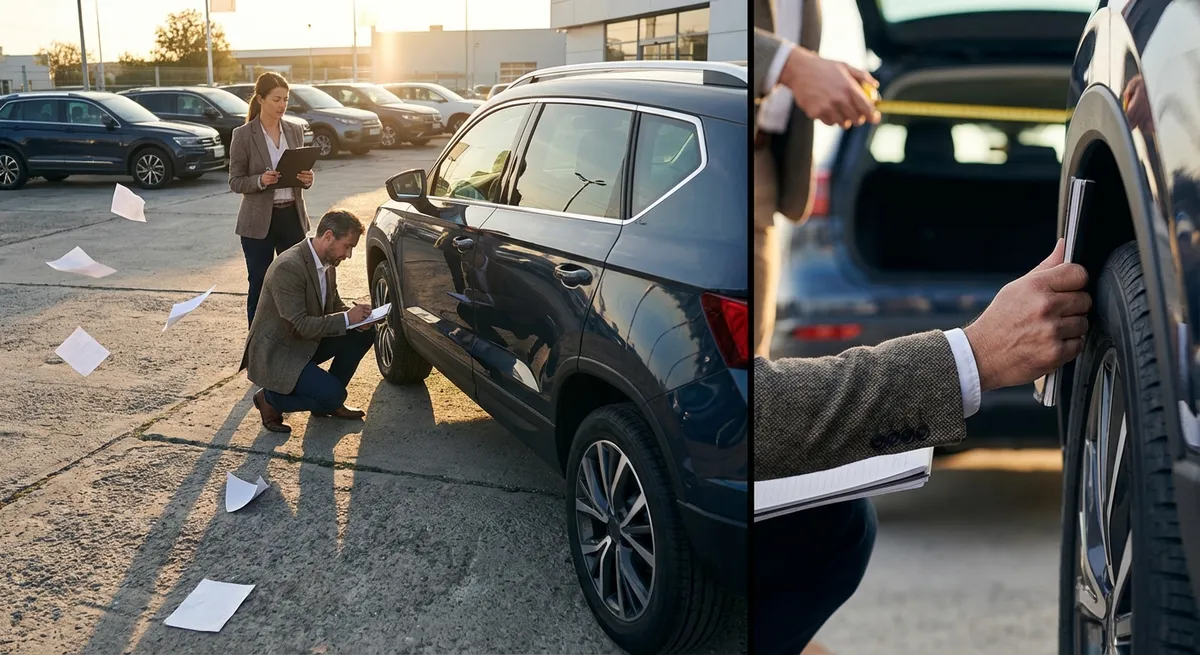
First, identify your typical drive cycle. Estimate your daily commute distance, highway versus city split, and how often you take long road trips. This helps determine whether a conventional gas engine, hybrid, plug‑in hybrid (PHEV), or full EV makes practical sense based on your access to charging and fuel prices in your region. Next, map your passenger and cargo needs: how many child seats you mount now, whether you routinely carry adults in the third row, and how often you load bulky items like strollers, sports gear, building materials, or pets in crates. Look at published cargo volumes with seats up and folded, but also check real-world photos and measurements of the cargo opening height and width.
Consider your usage environment: frequent snow or unpaved roads may justify all‑wheel drive (AWD), higher ground clearance, and dedicated all‑weather tires, whereas mostly urban driving might favor smaller footprints and tighter turning circles. Also factor in where you park—tight city garages and narrow driveways can make a full-size SUV impractical despite its space advantages. Finally, write down your non‑negotiables (e.g., must fit two rear‑facing car seats without crushing front legroom, must tow a 3,000 lb boat twice a month, must have roof rails for cargo boxes). This written profile will be the reference point that keeps your decisions disciplined and grounded when sales perks and option packages start to blur together.
2. Evaluate Powertrain and Drivetrain with Real-World Metrics
Power figures and “0–60 mph” times are only one piece of the puzzle. The optimal powertrain choice balances performance, efficiency, reliability, and your specific driving pattern.
Begin with engine architecture. Turbocharged 4‑cylinders often deliver strong low‑rpm torque and better fuel economy, but can be more sensitive to maintenance and fuel quality. Naturally aspirated V6 engines may feel smoother and more linear, at the expense of higher fuel consumption. Hybrids pair an internal-combustion engine with electric motors to recapture braking energy and assist acceleration, which can significantly boost city mileage and reduce engine wear in stop‑and‑go driving. Plug‑in hybrids add a larger battery and can handle daily commutes on electric power alone if your one‑way trip is shorter than their electric‑only range.
Examine the transmission type: traditional torque‑converter automatics (6‑, 8‑, or 10‑speed) are generally well‑sorted and durable; dual‑clutch transmissions can shift more quickly but may feel less smooth at low speeds; continuously variable transmissions (CVTs) provide efficiency benefits but not all drivers like their “rubber‑band” feel. When comparing AWD versus front‑wheel drive (FWD) or rear‑wheel drive (RWD), look beyond marketing labels: review whether the system is on‑demand (engaging the rear wheels only when slip is detected) or full‑time, and whether it offers selectable drive modes or a locking center coupling for rough conditions.
Use independent fuel economy data—such as EPA ratings and third‑party testing—to gauge what you can expect in real use, then apply your own mileage: if you drive 15,000 miles per year, a 5 mpg difference can translate into hundreds of dollars annually at current fuel prices. Also, research known powertrain issues for the specific engine and transmission combinations you’re considering, since some variants have far better long‑term track records than others.
3. Scrutinize Space, Seating, and Towing Beyond the Brochure Numbers
On paper, many SUVs look similar: three rows, decent cargo volume, and “up to” a certain towing capacity. In reality, packaging details and engineering choices heavily influence how usable that space and capability are day to day.
Start with seating geometry. Legroom measurements alone don’t tell you how comfortable a seat is for full‑size adults. Look at seat cushion length, thigh support, and the angle of knees in the second and third rows. If you use child seats, study whether the second‑row doors open wide enough, how many LATCH anchor positions are available, and whether the third row remains accessible with seats installed. Pay attention to second‑row adjustability—sliding and reclining 60/40 or 40/20/40 benches, or captain’s chairs—since these determine whether you can prioritize space for third‑row passengers or cargo on the fly.
For cargo, compare floor height (especially relevant if lifting heavy items), whether the floor is flat when seats fold, and how much space is lost to sloping rear glass or intrusive wheel arches. Roof load capacity is critical if you plan to mount cargo boxes, kayaks, or bike racks; check the manufacturer’s static and dynamic roof ratings, not just the presence of roof rails.
On towing, treat the headline “maximum towing capacity” as a best‑case scenario, usually with a lightly optioned model and a dedicated tow package. Examine the gross vehicle weight rating (GVWR) and gross combined weight rating (GCWR), and understand how passengers, cargo, and tongue weight all subtract from those limits. Also, verify whether trailer brake controllers, trailer sway control, and additional cooling (transmission and engine oil coolers) are included in the tow package or need to be added. If you tow frequently in hilly terrain or high temperatures, prioritize SUVs with robust cooling systems and torque‑rich powertrains rather than those that just meet a paper rating.
4. Prioritize Safety Tech and Structural Integrity, Not Just Gadgets
Safety in modern SUVs is a combination of crash structure, passive restraints, and active driver‑assist technology. While nearly every new SUV offers a suite of advanced safety features, not all implementations are equal in capability or refinement.
Begin with crash test results from independent organizations. Look at both overall ratings and sub‑scores for frontal, side, and small‑overlap impacts, as well as roof strength and head restraint performance. Pay attention to pedestrian safety ratings if you drive frequently in urban areas. Some models also undergo additional “plus” evaluations for headlight performance and advanced driver assistance systems (ADAS) effectiveness; these can reveal meaningful differences between trims with different lighting or sensor packages.
For ADAS, don’t just check off feature names. Investigate how adaptive cruise control behaves in traffic (does it handle stop‑and‑go smoothly?), whether lane centering is available in addition to lane keeping assist, and how configurable the alerts and steering interventions are. Read owner impressions of false positives (for example, overly sensitive forward collision warnings) and phantom braking episodes, which can make systems annoying enough that drivers turn them off.
Structurally, consider whether the SUV rides on a unibody or body‑on‑frame platform and how that aligns with your usage. Unibody designs typically offer better crash energy management and car‑like handling, while body‑on‑frame SUVs can be more robust for off‑road and heavy towing but may ride more stiffly and feel less controlled in emergency maneuvers. Also look at airbag coverage, including side‑curtain airbags for all three rows if applicable, and the availability of a center airbag between front occupants in certain collisions. Treat safety engineering and ratings as a first‑tier decision criterion, not an afterthought behind infotainment and wheel size.
5. Analyze True Cost of Ownership and Long-Term Support
The purchase price is the beginning, not the full story. A smart SUV buyer looks at total cost of ownership (TCO) across the likely ownership span, including depreciation, insurance, maintenance, repairs, fuel or electricity, tires, and financing costs.
Start with reliability and durability data from independent surveys and long‑term tests. Certain SUVs develop patterns of issues—such as premature transmission wear, complex infotainment failures, or turbo/oil consumption—that can significantly increase costs after the warranty expires. Study warranty coverage itself: length and mileage for basic (bumper‑to‑bumper), powertrain, corrosion, hybrid/EV components, and roadside assistance. For plug‑in hybrids and EVs, pay particular attention to high‑voltage battery warranties and any capacity retention guarantees.
Estimate running costs using published fuel economy or energy consumption numbers multiplied by your annual mileage and local fuel or electricity prices. Remember that large, heavy SUVs often require more expensive tires that may wear faster, especially performance‑oriented or off‑road‑oriented models. Contact your insurer for quotes on the specific models you’re comparing; advanced driver‑assist systems can sometimes lower premiums, but repair costs for complex sensors and cameras can push them the other way.
Finally, consider the brand’s dealer network, service reputation, and parts availability in your area. A less common brand with sparse dealerships could mean longer waits for warranty work or parts. Review historical resale value trends for the nameplates you’re considering—strong residuals can offset a higher initial price if you plan to sell or trade in within 3–6 years. By running these numbers and weighing them against your planned ownership horizon, you turn an emotional purchase into a disciplined financial decision without sacrificing the enjoyment of driving the SUV you really want.
Conclusion
Choosing an SUV in today’s market isn’t about chasing the newest screen or the largest grille; it’s about aligning engineering realities with your daily life and long‑term plans. A clear use‑case profile defines what you truly need, detailed powertrain and drivetrain analysis ensures you get the right performance and efficiency balance, and careful scrutiny of space, towing, and safety separates marketing claims from real‑world capability. When you layer on a rigorous look at total ownership costs and long‑term support, you gain the confidence to walk into any showroom with a strategy instead of a guess.
The result is not just an SUV that impresses on delivery day, but one that continues to fit your family, your budget, and your driving style for years to come—and that is the real measure of a successful SUV purchase.
Sources
- [U.S. Department of Energy – Fuel Economy Guide](https://www.fueleconomy.gov/feg/findacar.shtml) - Official EPA fuel economy ratings and energy consumption data for comparing gas, hybrid, PHEV, and EV SUVs
- [National Highway Traffic Safety Administration (NHTSA)](https://www.nhtsa.gov/ratings) - New Car Assessment Program (NCAP) crash test ratings and safety information
- [Insurance Institute for Highway Safety (IIHS)](https://www.iihs.org/ratings) - Independent crashworthiness, crash avoidance, and headlight performance ratings for SUVs
- [Consumer Reports – Car Reliability & Owner Satisfaction](https://www.consumerreports.org/cars/) - Long-term reliability data, owner surveys, and road tests across SUV models and powertrains
- [Kelley Blue Book – 5-Year Cost to Own](https://www.kbb.com/new-cars/5-year-cost-to-own-awards/) - Depreciation, insurance, maintenance, and fuel cost estimates to understand total ownership costs
Key Takeaway
The most important thing to remember from this article is that this information can change how you think about Buying Guide.