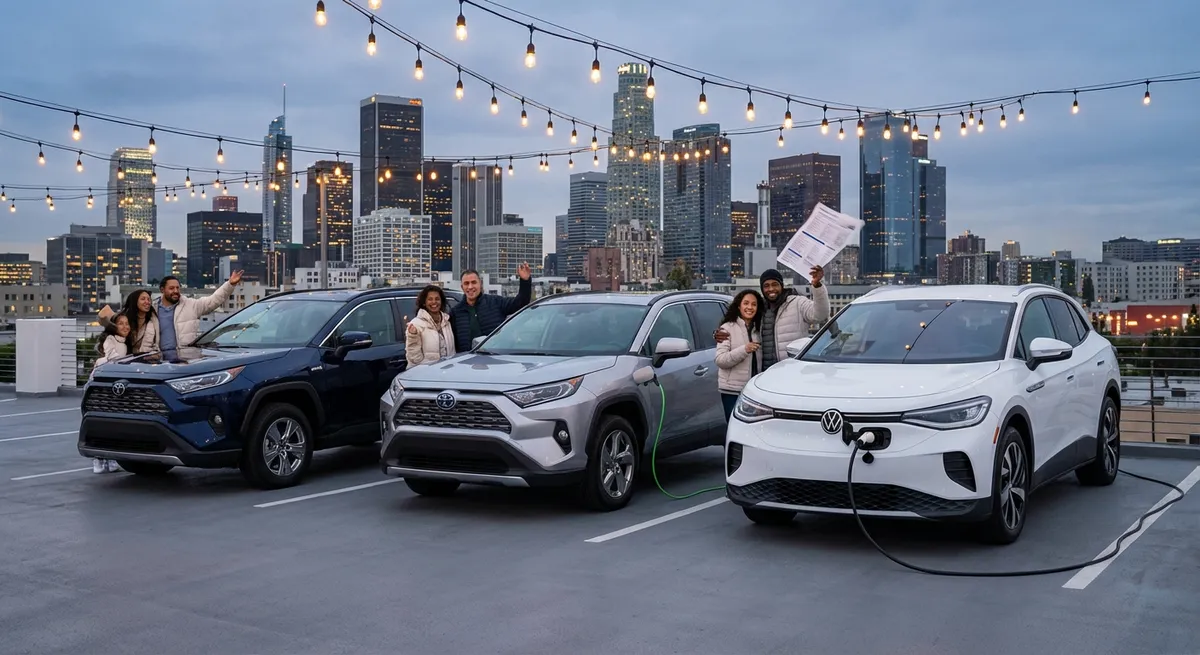
Choosing your next SUV is no longer just about size, price, and badge. The real decision now starts under the skin: conventional gas, hybrid, plug-in hybrid (PHEV), or fully electric. Each powertrain delivers a very different ownership experience in performance, running costs, and day-to-day usability.
This comparison walks through five core areas where these choices truly diverge, using real-world data and technical detail to help you decide which route fits your driving, budget, and long-term plans.
Powertrain Anatomy: How Each SUV Type Actually Works
Understanding what’s happening mechanically and electrically is the foundation for making a smart comparison.
A conventional gas SUV uses an internal combustion engine (ICE) as its only propulsion source. Power goes from the engine through a transmission (often an 8–10 speed automatic or CVT) to the wheels. Modern direct-injected turbo engines can produce high torque at low rpm, but efficiency drops sharply in stop‑and‑go driving and at highway speeds.
A hybrid SUV adds at least one electric motor and a small battery (typically 0.8–2.0 kWh). It cannot usually be plugged in. The battery is charged by the engine and regenerative braking. In a typical Toyota-style “series-parallel” hybrid, the electric motor can drive the wheels alone at low speeds and assist the engine under load. The power-split device (a type of planetary gear set) blends power from the motor and engine as needed, often eliminating a traditional stepped gearbox.
A plug-in hybrid (PHEV) SUV features a larger battery (often 10–25 kWh) and more powerful motors, enabling 20–50+ miles of electric-only range. You plug it in to recharge, but there’s still a full gasoline engine on board. The vehicle can operate in all-electric, hybrid, or engine-dominant modes, with control software constantly deciding how to use the battery and engine torque.
A battery-electric SUV (BEV) deletes the engine entirely and uses one or more electric motors powered by a high-voltage lithium-ion or lithium iron phosphate (LFP) battery (commonly 60–120 kWh). A single-motor setup is usually front- or rear-wheel drive; dual- or tri-motor setups can deliver sophisticated torque vectoring and instant all-wheel drive. Power is routed through a single-speed reduction gear—there’s no multi-ratio transmission—reducing mechanical complexity and driveline losses.
This architecture difference shapes everything that follows: real-world acceleration, towing, range, maintenance, and even how you plan road trips.
Performance and Driving Dynamics: Torque, Weight, and Use Case
From behind the wheel, SUV powertrain differences are clearest in three areas: torque delivery, weight distribution, and thermal management under sustained load.
Gas SUVs typically offer a broad power band, but acceleration is gated by engine revs and transmission shifts. Turbocharged 4‑cylinders and V6s can deliver strong peak torque, yet they often need gear changes to stay in the power band. For towing or repeated highway passes, heat buildup in the transmission and engine oil requires robust cooling systems, which many body-on-frame and heavy-duty crossovers prioritize.
Hybrids trade outright top-end power for smooth, efficient torque at low speed. Electric assist can mask turbo lag and help the engine stay in its most efficient operating range. In urban environments, this can make a hybrid feel more responsive than a similar gas-only SUV, even when the spec sheet suggests similar horsepower. However, under full load (mountain grades, heavy towing), the smaller batteries can’t deliver assist indefinitely, and the SUV behaves more like a traditional ICE vehicle once the system prioritizes preserving the state of charge.
PHEV SUVs often feel the quickest in everyday driving because the electric motor(s) handle initial acceleration. You get electric-like response off the line with the security of a gas engine for sustained high-speed travel. But battery size and thermal limits matter: once the pack is depleted or the system heats up, performance will trend toward that of a conventional hybrid or gas model. Enthusiasts should look beyond 0–60 mph claims and pay attention to repeatability and how the SUV behaves with a low battery.
Electric SUVs dominate in instantaneous torque. A dual-motor BEV SUV can deliver full torque from 0 rpm, making highway merges and two-lane passes straightforward. Advanced traction and stability systems can modulate power at each wheel within milliseconds, improving grip in poor conditions. The tradeoff is weight: a 90–100 kWh pack can add 1,000+ pounds versus a comparable ICE platform. This influences brake sizing, tire wear, and handling on rough roads. For sustained high-speed driving (e.g., German autobahn or hot desert climates), BEVs can experience power derating as the system manages battery and motor temperatures; this is highly platform-dependent and worth checking in independent tests.
For buyers who care about dynamics, the decision often comes down to drive profile:
- Short, intense bursts (city sprints, tight backroads): EVs and PHEVs shine.
- Mixed, long-distance with towing or heavy loads: gas or robust hybrid systems remain strong contenders.
Range, Refueling, and Charging: Real-World Usability Differences
Rated range and MPG equivalence don’t tell the whole story; how you replenish energy is just as important as how much you use.
Gas SUVs benefit from mature infrastructure and predictable refueling times. Even a large tank (18–24 gallons) can be refilled in 5–10 minutes nearly anywhere in North America or Europe. On long trips, this predictability is the primary advantage over electrified options. Range varies widely: compact crossovers may see 25–32 mpg highway; larger 3‑row or off-road-oriented SUVs often fall into the 18–24 mpg range, with towing cutting that significantly.
Hybrids extend range by using the battery to capture energy that would be wasted in braking and by keeping the engine in efficient load zones. Many midsize hybrid SUVs achieve real-world combined figures in the mid‑30 mpg range, with some compact models exceeding 40 mpg in urban use. Since they refuel like any gasoline vehicle, there’s no change to your fueling routine, just longer intervals between stops.
PHEV SUVs rely heavily on how frequently you plug in. A driver who charges nightly and has a 30–40 mile commute might see months between gas station visits, effectively driving an EV during the week with ICE flexibility on weekends. However, once the battery is depleted, PHEVs often behave like heavier, less efficient hybrids due to the extra mass of the battery and electric drive components. On long road trips where you’re not regularly charging, a PHEV’s advantage over a good hybrid can shrink to just a few mpg.
Electric SUVs shift the conversation to charging networks and power levels. Home Level 2 charging (typically 7–11 kW) is the backbone: adding roughly 20–40 miles of range per hour, depending on efficiency and charger capacity. DC fast charging at 150–350 kW can add 150–200 miles of range in 20–30 minutes under ideal conditions, but charging curves, temperature, and station reliability matter. Long-range BEV SUVs (250–350+ miles EPA-rated) are practical for many drivers, but frequent long-distance travelers must plan routes around reliable fast chargers and accept longer stop durations versus fueling a gas or hybrid SUV.
Cold weather and high-speed driving affect all powertrains but are most visible in BEVs, where range can drop 20–40% in harsh conditions without preconditioning or heat-pump HVAC systems. Gas and hybrid SUVs also see winter economy drops, though they’re less range-constrained because of quick refueling.
From a usability standpoint:
- Urban and suburban drivers with home charging: EV or PHEV often minimizes hassle and cost.
- Rural drivers or those without reliable charging: hybrid or efficient gas SUVs reduce range anxiety.
- Frequent interstate travelers: hybrids and high-efficiency gas SUVs still offer the most time-efficient long-haul experience today.
Total Cost of Ownership: Purchase Price, Energy, and Maintenance
Upfront price tells only part of the story; depreciation, fuel or electricity, maintenance, and incentives can flip the equation over a 5–10 year span.
Gas SUVs usually have the lowest initial purchase price for a given size and feature set. However, they carry higher fuel costs per mile, particularly for larger displacement or performance-oriented models. Maintenance involves oil changes, spark plugs, belts, exhaust components, and potentially complex turbocharging systems. Over 100,000+ miles, these items add up, especially if ownership extends beyond the warranty period.
Hybrid SUVs typically cost more upfront than their gas-only counterparts but offset that with improved fuel economy and minimal changes to driver habits. The high-voltage battery is a long-term concern for some buyers, but modern hybrid packs are engineered for extended life, often with 8–10 year / 100,000–150,000 mile warranties in many markets. Routine maintenance is similar to gas SUVs, but regenerative braking can extend brake pad and rotor life substantially.
PHEV SUVs sit at the intersection: their components (larger battery, more powerful electric motors, dual energy systems) make them more complex and often more expensive to purchase than either hybrids or many BEVs. When used as intended (regular charging, mostly electric commuting), fuel expenditure can be very low, and electricity typically costs less per mile than gasoline, even accounting for regional variance. However, if the SUV is rarely plugged in, owners pay the complexity and purchase premium without realizing the operating cost benefits.
Electric SUVs invert the conventional cost structure. Purchase prices can be higher, but federal, state, or local incentives (where available) can narrow the gap. Operating costs are often significantly lower due to cheaper “fuel” and reduced maintenance: no oil changes, no exhaust system, fewer moving parts in the drivetrain, and less brake wear thanks to aggressive regeneration. Insurance costs can be higher for some models due to repair complexity, and tire replacement intervals may be shorter because of weight and torque. Battery longevity is a major component of long-term value; thermal management and conservative fast charging habits help preserve capacity and resale value.
When comparing total cost of ownership, prospective buyers should:
- Model 5–10 year fuel vs electricity usage based on realistic annual mileage.
- Factor in local electricity rates, time-of-use pricing, and gas price volatility.
- Investigate tax credits or rebates for EVs, PHEVs, and home charging equipment.
- Consider warranty coverage and expected service items (e.g., hybrid battery, transmission, turbo systems).
The “cheapest” option often depends less on sticker price and more on how closely your driving pattern aligns with the strengths of each powertrain.
Use-Case Matching: Towing, Cargo, Off-Road, and Long-Term Strategy
Beyond daily commuting, SUVs are often used for family hauling, towing, and off-pavement travel. Powertrain choice has practical implications here as well.
Gas SUVs, especially body-on-frame models with robust cooling and traditional 4WD, remain the default recommendation for frequent heavy towing (boat trailers, campers, car haulers). Published tow ratings of 6,000–8,000+ pounds are common, and refueling while towing is simple. However, fuel economy can drop into the single digits under heavy loads, greatly increasing operating costs.
Hybrids can tow respectably, though many are rated lower than their gas-only siblings. The benefit is better economy when not towing, plus smoother low-speed maneuvering with electric assist. Some hybrid systems are optimized for efficiency rather than sustained high-load towing, so buyers planning regular heavy trailering should study tow ratings and real-world test data carefully, including cooling performance and transmission behavior on long grades.
PHEV SUVs are attractive for owners who tow occasionally but spend most of their time running errands or commuting. Electric-only operation around town drastically cuts fuel use, while the engine provides range and energy density when the full family and trailer are on board. A key consideration is that towing slashes EV range in PHEVs and BEVs, making engine usage the default under load for PHEVs. If your camping trips are far from fast-charging infrastructure, a PHEV can be a more practical bridge than a BEV.
Electric SUVs can tow substantial loads in terms of rated capacity, and their instant torque is well suited for getting trailers moving. The challenge is energy consumption: towing can easily double Wh/mile usage, and some BEVs see real-world highway towing ranges under 150 miles, depending on pack size and trailer aerodynamics. This demands careful trip planning around DC fast chargers that can accommodate trailers, or frequent un-hitching. For buyers who tow only occasionally and mostly within a modest radius of home, this may be acceptable; for cross-country RVers, it may be a deal-breaker today.
Off-road and adventure use also differ by powertrain:
- Gas and hybrid SUVs benefit from quick refueling in remote areas and established aftermarket support (skid plates, lifts, recovery gear compatibility).
- PHEVs can provide silent electric operation on trails for limited distances, which some overlanders value for noise and emissions in sensitive environments, but they still rely heavily on gasoline away from charging.
- Electric SUVs offer exceptional low-speed control and torque modulation off-road, but range can drop quickly in technical terrain, and public charging near remote trailheads is still limited.
Long-term, regulatory trends and urban low-emission zones may increasingly favor hybrids, PHEVs, and BEVs. Buyers planning to keep a vehicle a decade or more should weigh not just today’s fuel prices and charging networks, but also evolving emissions standards, potential congestion charges, and the improving resale profile of electrified SUVs.
Conclusion
Gas, hybrid, PHEV, and electric SUVs each represent a distinct engineering philosophy, and none is “universally best.” The right choice depends on how you actually drive, where you live, and how long you plan to keep the vehicle.
- Choose a gas SUV if you prioritize purchase price, towing in remote areas, and fast refueling with minimal infrastructure reliance.
- Opt for a hybrid SUV if you want a familiar ownership experience with much better efficiency and range, especially in mixed or urban driving.
- Consider a PHEV SUV if you can plug in regularly and want EV-like commuting with ICE flexibility for long trips and occasional towing.
- Go fully electric if you have home charging, mostly predictable routes, and value low running costs, quiet operation, and instant torque—while accepting some planning for long-distance travel.
Matching your use case to the strengths of each powertrain will do more for your satisfaction than any marketing claim or spec-sheet headline. The most capable SUV for you is the one whose engineering assumptions best mirror your real-world life.
Sources
- U.S. Department of Energy – Fuel Economy Guide - Official fuel economy data and comparisons for gasoline, hybrid, PHEV, and electric SUVs
- U.S. Department of Energy – Hybrid and Plug-In Electric Vehicles - Technical overview of how hybrid and plug-in hybrid systems work, including benefits and limitations
- U.S. Department of Energy – Charging Your EV - Detailed explanation of Level 1, Level 2, and DC fast charging, including charging times and considerations
- U.S. Environmental Protection Agency – Green Vehicle Guide - EPA resources debunking common EV myths and explaining efficiency and emissions metrics
- Consumer Reports – Hybrid vs. Electric vs. Gas: What to Know - Independent comparison of costs, reliability, and practicality across powertrain types
Key Takeaway
The most important thing to remember from this article is that this information can change how you think about Comparisons.