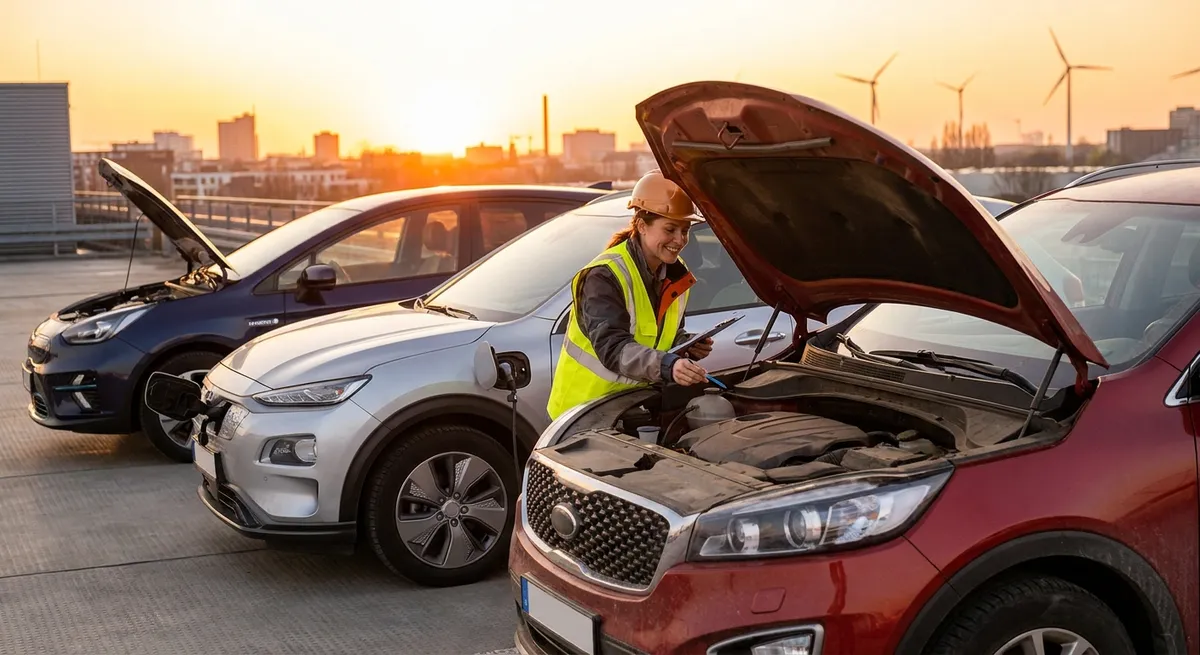
For SUV shoppers and enthusiasts, the toughest decision is no longer “compact or full-size” — it’s what’s under the hood. Gasoline, hybrid, and fully electric SUVs now coexist in almost every segment, from city-friendly crossovers to three-row family haulers. But spec sheets, marketing claims, and headline range figures rarely tell the whole story. This guide breaks down the most meaningful comparison points so you can match the right propulsion type to your real-world driving, ownership costs, and performance expectations.
Powertrain Architecture: How Each SUV Type Actually Works
Gasoline SUVs rely on internal combustion engines (ICE) alone, burning fuel to generate power and route it through a transmission (traditional automatic, CVT, or dual-clutch) to the wheels. Their engineering focus is often on balancing displacement, turbocharging, and gearing to deliver acceptable torque and efficiency while meeting emissions standards. Thermal efficiency for modern gas engines typically lands in the 30–40% range, meaning most fuel energy is lost as heat.
Hybrid SUVs blend a combustion engine with one or more electric motors and a high-voltage battery. In parallel hybrids (common in Toyota, Ford, Honda), both the engine and motor(s) can drive the wheels, with software choosing the optimal mix. Series-parallel systems can operate in electric-only mode at low loads, then add the engine when more power or range is needed. Plug-in hybrid SUVs (PHEVs) simply add a larger battery and charging port, enabling 20–50+ miles of electric-only driving in many models.
Electric SUVs use one or more electric motors powered exclusively by a traction battery, often between 60–120 kWh. Dual-motor and tri-motor setups can independently control torque at each axle (and sometimes each wheel), yielding instant response and sophisticated traction management. No fuel tank, exhaust system, or multi-gear transmission is needed; a single-speed reduction gear is common, simplifying mechanical complexity but increasing the importance of battery and thermal management software.
Real-World Efficiency: Beyond EPA Labels and Marketing Claims
When you compare SUVs, official efficiency ratings are a starting point, not the final word. Gasoline SUVs listed in miles per gallon (mpg) can vary widely in real use, especially with turbocharged engines that suffer when pushed hard or heavily loaded. A compact gas SUV rated at 30 mpg combined might drop into the low 20s with aggressive driving, frequent short trips, or towing. Idle time and cold starts also disproportionately hurt efficiency.
Hybrid SUVs shine most in mixed and urban driving, where regenerative braking recovers kinetic energy that would otherwise turn into heat at the rotors. Stop-and-go traffic, which punishes gas-only models, often benefits hybrids, allowing electric motors to handle low-speed work. Conventional (non-plug-in) hybrids can deliver a consistent 30–45 mpg in real conditions for many midsize models, while PHEVs can look extraordinarily efficient if most daily miles stay within their electric range and the battery is charged regularly.
Electric SUV efficiency is measured in miles per kWh or MPGe (miles per gallon equivalent). Real-world range depends heavily on speed, temperature, and load. At steady highway speeds, aerodynamic drag dominates, and boxy SUV shapes are at a disadvantage compared with sedans. Winter temperatures can knock 20–40% off range due to battery chemistry limitations and cabin heating demands. However, EVs maintain high drivetrain efficiency (often above 85–90%) across a wide load range, and urban driving typically improves range thanks to low-speed operation and regen.
For a fair comparison, evaluate:
- Energy cost per mile: Use local gas prices vs. kWh rates (including time-of-use pricing if available).
- Efficiency under your typical driving: Highway-biased, urban, mountainous, or mixed.
- Accessory loads: HVAC, towing, and roof racks impact all types, but are particularly visible in EV range.
Performance and Drivability: Torque Curves, Weight, and Tuning
Traditional gas SUVs often prioritize a blend of comfortable cruising and occasional passing power. Turbocharged four-cylinders have become dominant, offering decent peak power and torque with smaller displacement. However, turbo lag, narrow torque bands, and gear hunting under load can affect drivability, particularly in entry-level powertrains. Naturally aspirated V6 engines still appear in some midsize and larger SUVs, delivering smoother linear response at the cost of higher fuel consumption.
Hybrid SUVs use electric motors to fill in torque gaps, smoothing acceleration and masking downshifts. Electric assist at low rpm can make a hybrid feel stronger than a similarly sized gas-only model, especially during city driving and short highway merges. However, total system power is limited by both engine output and battery/motor capabilities, and sustained high-load situations (long steep grades, track use, or heavy towing over time) may show the hybrid’s reliance on the combustion engine.
Electric SUVs change the comparison entirely. Instant torque from 0 rpm, combined with sophisticated traction control, often results in brisk or even sports-car-like acceleration in mainstream models. Dual-motor setups with torque vectoring can dramatically improve stability and cornering confidence. The main trade-offs are:
- Weight: Large battery packs add 800–1,500+ lb compared with gas counterparts, influencing braking distances, tire wear, and ride behavior.
- Thermal limits: Repeated high-speed runs or heavy towing can trigger power derating if cooling systems hit their thresholds.
- Top speed and sustained power: Some EVs limit top speed or sustained output to protect components and range.
If you value straight-line punch and responsive city driving, EVs and well-tuned hybrids usually outclass equivalent gas SUVs. Enthusiasts who care about engine character (sound, rev behavior, manual gear control) may still prefer ICE or hybrid setups that preserve more traditional driving feel.
Ownership Costs and Maintenance: Looking Beyond the Sticker Price
Purchase price often favors gasoline SUVs, especially in base trims. However, incentives, fuel savings, and maintenance can narrow — or reverse — that gap over a typical 5–10 year ownership window. Gasoline SUVs tend to have the lowest entry price but the highest lifetime spend on fuel, oil changes, and mechanical services (transmission fluid, exhaust components, belts, pumps, and occasionally more complex failures like turbo or emissions-system repairs).
Conventional hybrids add upfront cost but reduce fuel spend and wear on certain components. The combustion engine often runs at more efficient points, and regenerative braking extends pad and rotor life. Hybrid battery packs are engineered for longevity, and many automakers back them with 8–10 year warranties. Still, out-of-warranty high-voltage battery replacement can be costly, so long-term keepers should verify both manufacturer coverage and real-world durability data.
Electric SUVs shift the cost structure significantly:
- Energy: Per-mile energy costs can be substantially lower than gasoline, especially if you can charge at home on off-peak rates. Public DC fast charging is more expensive and can approach or exceed gas parity in some regions.
- Maintenance: No oil changes, fewer moving parts, and simplified drivetrains reduce routine service. Brake wear is typically lower due to regenerative braking.
- Tires and suspension: Extra weight and higher torque can increase tire wear. Heavier curb weights may require more attention to suspension bushings and dampers over time.
- Depreciation: EV resale values can be sensitive to tech obsolescence, battery health perceptions, and tax-credit structures. Conversely, regulatory trends and growing acceptance may support long-term demand.
To compare realistically, build a total cost of ownership estimate for each candidate SUV: include fuel or charging, insurance, expected maintenance, tax credits or rebates, and your planned ownership duration. The “cheapest” option on day one often isn’t the lowest-cost solution over 100,000+ miles.
Use Case Matching: Towing, Range, Climate, and Infrastructure
The right SUV format depends heavily on how and where you drive. For regular long-distance highway travel without reliable high-speed charging infrastructure, a gasoline or hybrid SUV still offers the most flexibility. Fast refueling, wide availability of fuel, and predictable range under most conditions remain their primary strengths. Hybrids are especially compelling for high-mileage drivers who still need long range but want to reduce fuel spend and emissions.
For suburban and urban drivers with consistent daily mileages under 40–60 miles, plug-in hybrids and EVs can dramatically reduce or eliminate gasoline use. A PHEV SUV can run nearly all local errands electrically while retaining a gas engine for road trips or towing. Fully electric SUVs excel when you have:
- Reliable home or workplace charging
- Predictable routes and daily distance
- Access to a growing DC fast-charging network for occasional long trips
Towing and payload also affect the comparison. Gas and hybrid SUVs usually maintain more consistent range when towing, though fuel economy will drop significantly. Electric SUVs can tow impressive loads thanks to high torque, but range can be cut in half or more when pulling a sizable trailer at highway speeds. Planning routes around public fast chargers and allowing for longer stops becomes essential.
Climate is another critical factor. Very cold regions challenge all powertrains, but EVs take the biggest relative hit in usable range and charging speed. Heat pump HVAC systems and battery preconditioning can mitigate some losses, but buyers in harsh climates should prioritize larger battery packs, robust thermal management, and proven cold-weather performance data. Hybrids offer a middle path, using electric assistance when optimal while retaining the security of a combustion engine in extreme conditions.
Conclusion
Comparing gasoline, hybrid, and electric SUVs is no longer as simple as lining up horsepower and sticker prices. The best choice depends on your driving patterns, access to charging, appetite for performance, and long-term ownership horizon. Gas SUVs still provide proven versatility, hybrids strike a compelling balance of efficiency and familiarity, and EVs redefine performance and operating costs for the right use cases. By focusing on powertrain architecture, real-world efficiency, drivability, ownership costs, and use-case fit, you can cut through the hype and select an SUV that genuinely aligns with how — and how much — you drive.
Sources
- [U.S. Department of Energy – Fuel Economy](https://www.fueleconomy.gov/feg/hybrid.jsp) - Explains how hybrid systems work and compares fuel economy across powertrains
- [U.S. Department of Energy – Electric Vehicle Basics](https://afdc.energy.gov/vehicles/how-do-all-electric-cars-work) - Technical overview of how battery-electric vehicles operate, including efficiency considerations
- [Environmental Protection Agency – Green Vehicle Guide](https://www.epa.gov/greenvehicles/electric-vehicle-myths) - Provides data and clarifies common myths about EV range, emissions, and ownership
- [Consumer Reports – Hybrid vs. Electric vs. Gasoline Cars](https://www.consumerreports.org/hybrids-evs/hybrid-vs-ev-vs-gasoline-a7880071694/) - Comparative analysis of costs, reliability, and suitability for different drivers
- [International Energy Agency – Global EV Outlook](https://www.iea.org/reports/global-ev-outlook-2024) - Offers broad market context and technical trends for electric vehicles worldwide
Key Takeaway
The most important thing to remember from this article is that this information can change how you think about Comparisons.