SUV buyers are no longer just comparing horsepower, cargo space, and screen size. Around the world, regulators and safety organizations are rewriting the rulebook on how SUVs must protect occupants, pedestrians, and even other drivers. These changes are already influencing which models automakers bring to market, what tech becomes standard, and how future resale values might look. Understanding this evolving safety landscape isn’t just interesting industry news—it’s becoming a core part of making a smart purchase.
A New Era of Crash Testing: Why Star Ratings Are Getting Tougher
In the last three years, several major safety programs have either tightened their test protocols or announced plans to do so, directly impacting SUV development cycles:
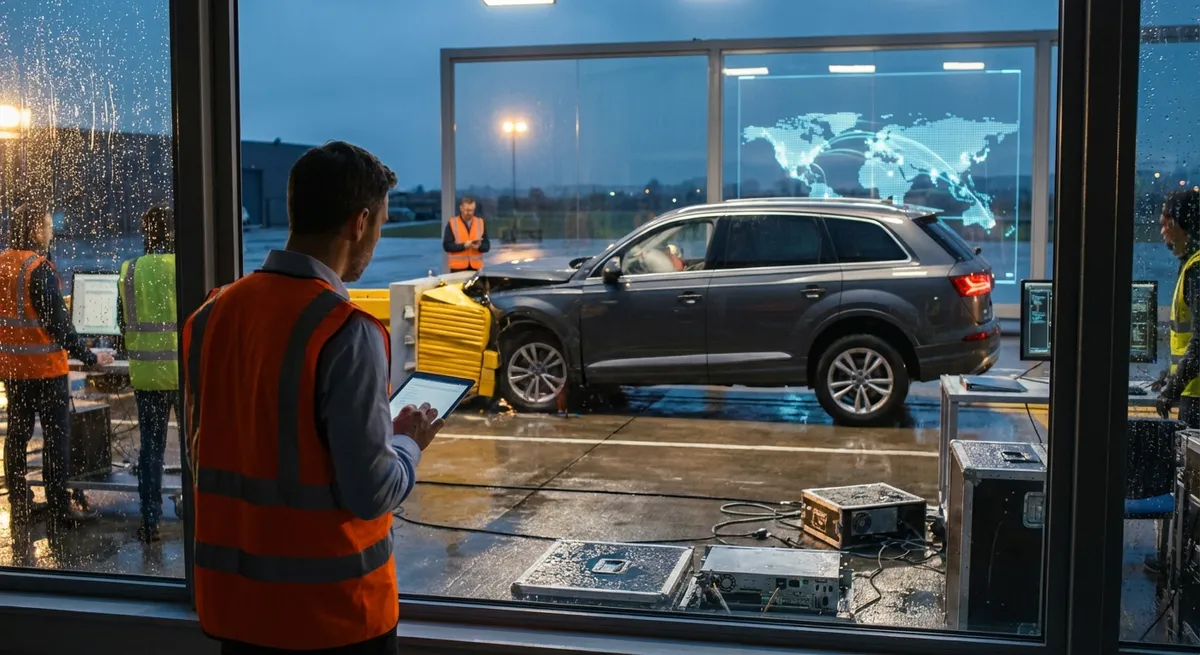
- IIHS (U.S.) introduced a more demanding moderate overlap frontal test with a second dummy in the rear seat, and a more stringent side-impact test with a heavier barrier traveling at higher speed. SUVs that previously aced safety tests have, in some cases, lost top ratings under these updated conditions.
- Euro NCAP (Europe) has progressively implemented tougher criteria, adding scoring for vulnerable road user protection, active safety systems, and post-crash rescue and extraction.
- Markets in Asia and Latin America are expanding independent programs like Global NCAP, pressuring OEMs to standardize higher structural integrity and more airbags even in “emerging market” SUVs.
For buyers, the key shift is this: a 5-star SUV from 2018 is not the same as a 5-star SUV in 2024+ in terms of real-world protection. Automakers are responding with:
- Stronger B- and C-pillar structures and more use of hot-stamped, ultra-high-strength steel in SUV body shells.
- Redesigned side sills and door beams to cope with heavier, higher-riding SUVs impacting one another.
- More advanced seatbelt load limiters and pretensioners, especially for rear seats, to meet new test metrics.
When cross-shopping, look not just at the rating, but the test year and protocol behind that rating. A newer test cycle with a slightly lower star rating may indicate a safer SUV than an older 5-star under outdated procedures.
Pedestrian and Cyclist Protection: Front-End Design Comes Under the Microscope
Until recently, most SUV safety talk focused on what happens to people inside the vehicle. Regulators and consumer advocates are now directing attention to those outside the cabin—particularly pedestrians and cyclists who face greater risk from tall, heavy SUVs.
Several developments are reshaping front-end design:
- Euro NCAP and UN regulations specifically evaluate head impact, upper leg, and lower leg protection when a pedestrian collides with a vehicle’s front.
- To achieve good scores, manufacturers are using deformable front structures, energy-absorbing bumpers, and more compliant hood designs with engineered “crush zones.”
- Some high-end SUVs deploy active hood systems that pop the hood up a few centimeters on impact, creating extra space between the hood and hard engine components to reduce head injury risk.
In markets like the EU and UK, these requirements are not just nice-to-have—they are effectively gatekeepers for strong safety ratings and, in some cases, homologation. This is pushing even performance-oriented SUVs to:
- Reduce overly rigid front bumpers and under-bumper structures that used to prioritize cosmetic damage protection.
- Reevaluate hood height and front fascia styling to balance “rugged” looks with compliant pedestrian zones.
For buyers, it’s worth examining not only crash ratings but also “vulnerable road user” or “pedestrian” scores. An SUV that scores well here is more likely to reflect a brand’s broader safety engineering depth, which often translates into better structural behavior in other crash modes as well.
ADAS Is Moving From Optional Extra to Regulatory Requirement
What recently looked like upscale options—automatic emergency braking and lane-keeping assistance—are on track to become basic expectations, driven by both regulation and safety ratings.
Key regulatory and industry changes:
- In the U.S., the NHTSA and major automakers have agreed that automatic emergency braking (AEB) will be standard on nearly all light vehicles in the coming years; NHTSA has proposed a formal rule setting performance minimums for AEB and pedestrian AEB.
- The European Union’s General Safety Regulation (GSR) now mandates a suite of advanced driver assistance systems (ADAS) on new vehicle types, including:
- Intelligent speed assistance
- Lane keeping systems
- Advanced emergency braking
- Driver drowsiness and attention warning
- Safety rating agencies increasingly withhold top scores from SUVs that lack robust ADAS suites or that demonstrate weak real-world performance in their tests.
Technically, this is pushing SUV makers to standardize:
- Forward-facing radar and/or lidar combined with high-resolution cameras for AEB, adaptive cruise control, and lane-centering.
- 360-degree camera systems with better dynamic range and software that can detect vulnerable road users even in low-light or bad weather.
- More sophisticated sensor fusion algorithms, which merge radar, camera, and sometimes ultrasonic inputs to reduce false positives and missed detections.
From a buyer’s perspective, two practical implications stand out:
- Standard safety content is rising, particularly on base trims. The price gap between a minimally equipped SUV and a well-equipped one may narrow on safety, even if luxury and infotainment still climb with price.
- Resale values are likely to favor SUVs with comprehensive ADAS, especially those certified to meet or exceed future regulatory baselines. A model lacking standard AEB or lane-keeping in today’s market may feel “obsolete” sooner.
Weight, Height, and Crash Compatibility: The Uncomfortable Physics of Big SUVs
One of the more contentious debates in the industry centers on “crash compatibility”: how a large SUV interacts with smaller vehicles in multi-vehicle crashes. As SUVs have grown heavier—with widespread adoption of high-capacity batteries in plug-in hybrids and EVs—the stakes have risen.
Safety researchers and regulators are increasingly focused on:
- Vehicle mass and ride height differences between SUVs and compact cars, which can lead to override/underride scenarios where an SUV rides over a smaller car’s crash structures.
- Front-end stiffness and geometry, which determine how energy is absorbed and distributed in a two-vehicle collision.
- The growing number of electric SUVs that weigh significantly more than equivalent combustion models but can accelerate faster, introducing different crash dynamics.
In response, automakers are revising SUV platforms and crash structures to improve compatibility:
- Incorporating lower cross-members designed to line up better with the crumple zones of sedans and smaller hatchbacks.
- Tuning front longitudinal rails and subframes to absorb more crash energy rather than transmitting it directly to a smaller vehicle’s cabin.
- For EV SUVs, engineering large battery packs into stiff but energy-absorbing structures, while carefully managing overall impact stiffness.
Regulators and safety bodies are watching this closely, and some are considering additional test scenarios to better represent mismatched collisions. For an SUV buyer, the nuance is:
- Bigger is not automatically safer in all situations, especially when considering total societal risk and potential regulatory backlash.
- Future rules could incentivize or even require designs that balance occupant protection with lower aggressivity toward other road users, affecting how “rugged” or overbuilt certain SUVs can be.
Car enthusiasts who prioritize large, powerful SUVs should pay attention to how brands speak about crash compatibility in technical briefings and safety documentation; those that address it proactively are likely preparing for the next wave of regulation.
Data, Privacy, and “Safety Scores”: The Quiet Policy Battle Around Connected SUVs
Modern SUVs are effectively networked computers on wheels, constantly collecting and transmitting data. While many of these capabilities were introduced under the banner of safety—automatic crash notification, telematics for maintenance, real-time hazard alerts—they have invited increasing regulatory scrutiny on data use and driver privacy.
Emerging trends include:
- Proposals in multiple jurisdictions to define clear consent and transparency rules for how in-vehicle data is collected, stored, and shared with third parties (insurers, advertisers, fleet operators).
- Concerns that telematics-derived “driving behavior scores” might be used for insurance pricing or employment screening without sufficient oversight or fairness protections.
- Moves toward standardized cybersecurity requirements, such as UNECE WP.29 regulations for connected vehicle cybersecurity and software updates, already mandatory in some regions for new vehicle type approvals.
Technically, this is pushing SUV manufacturers to:
- Implement more robust in-vehicle firewalls, encrypted communication, and secure OTA update frameworks, justified partly as safety-critical—if braking or steering systems can be compromised, cybersecurity is a direct safety issue.
- Provide clearer data control interfaces within infotainment systems, allowing drivers to opt in or out of certain data-sharing functions.
- Design event data recorders (EDRs) and telematics modules that comply with evolving legal standards on what must be recorded and who can access it.
For buyers, particularly those drawn to high-tech SUVs, it’s becoming important to ask:
- What safety-related data does this SUV collect (e.g., speed, steering, braking, ADAS interventions)?
- How long is it stored, who can access it (law enforcement, insurers, OEM, third parties), and under what conditions?
- Does the manufacturer comply with or exceed recognized standards like UNECE cybersecurity rules or region-specific privacy regulations (e.g., GDPR in Europe, evolving state-level protections in the U.S.)?
As regulators tie cybersecurity and data integrity directly to safety compliance, SUVs that are engineered with a strong security architecture today may stay regulatory-compliant and insurable for longer, which is a subtle but important factor in long-term ownership.
Conclusion
Global safety rules are no longer an abstract backdrop to the SUV market; they are directly influencing which models get built, how they drive, what technologies are standard, and how long they remain desirable. Tougher crash tests are reshaping structure and restraint systems, pedestrian-protection standards are altering front-end design, ADAS is rapidly shifting from premium option to baseline requirement, and new scrutiny of mass, compatibility, and data practices is forcing automakers to rethink what a “safe” SUV means.
For enthusiasts and serious shoppers, the opportunity is clear: treat safety regulation and rating updates as core buying criteria, not fine print. When you understand the tests, the tech, and the trajectory of upcoming rules, you can choose SUVs that not only feel solid today, but are better positioned for tomorrow’s expectations, resale market, and—most importantly—real-world protection.
Sources
- [IIHS – Vehicle Ratings and Test Protocol Updates](https://www.iihs.org/ratings) – Details on recent changes to frontal and side-impact crash tests, plus SUV safety ratings and criteria
- [NHTSA – 5-Star Safety Ratings & Proposed AEB Rule](https://www.nhtsa.gov/ratings) – U.S. government safety ratings and information on mandated automatic emergency braking performance standards
- [Euro NCAP – Assessment Protocols and Roadmap 2030](https://www.euroncap.com/en/vehicle-safety/) – Technical documentation on evolving crash, pedestrian, and active safety testing for SUVs in Europe
- [European Commission – General Safety Regulation for Vehicles](https://transport.ec.europa.eu/transport-themes/road/road-safety/vehicle-safety_en) – Overview of mandatory ADAS and safety equipment required on new vehicles in the EU
- [UNECE – Vehicle Cybersecurity and Software Update Regulations](https://unece.org/transport/vehicle-regulations) – International rules (WP.29) governing cybersecurity and over-the-air updates for connected vehicles, including SUVs
Key Takeaway
The most important thing to remember from this article is that this information can change how you think about Industry News.