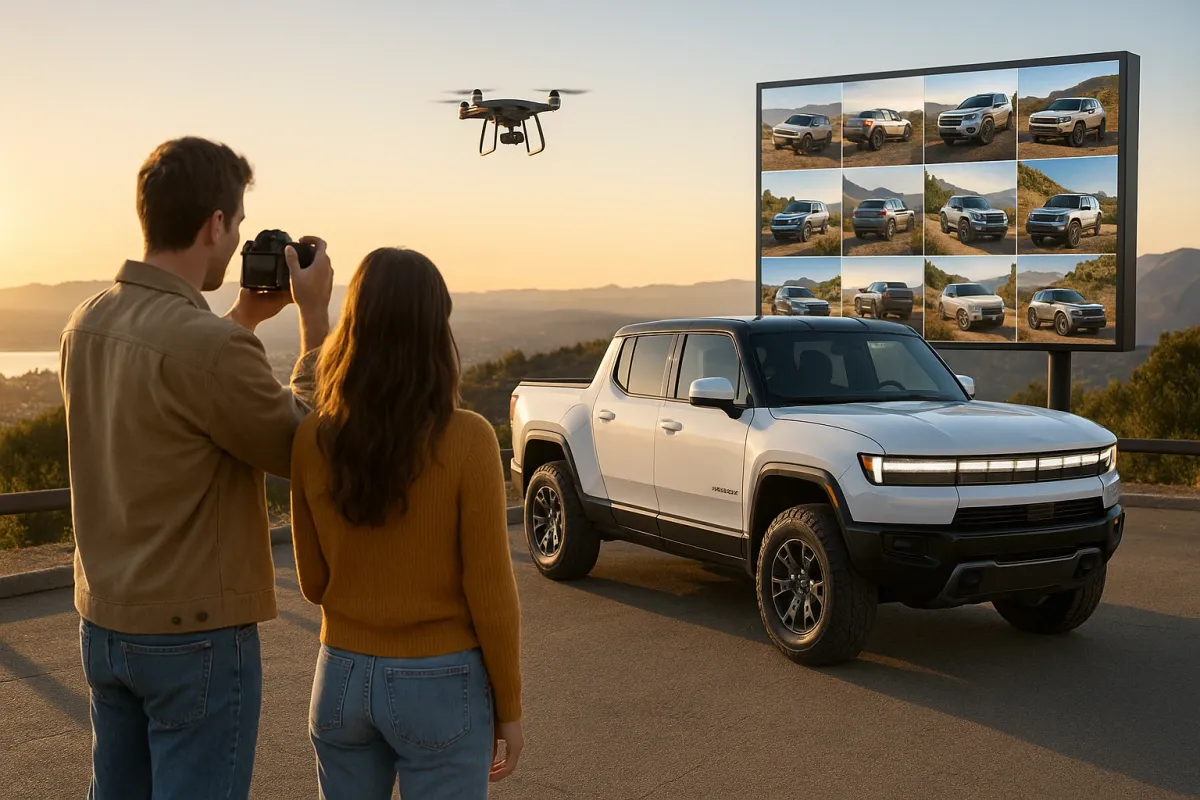
In 2025, some of the most-shared content online isn’t about cars at all—it’s about images. From the Nature Photographer of the Year 2025 winners to viral Wikimedia Commons wildlife shots and city-photo communities documenting everything from Istanbul’s street cats to historic architecture, high-impact visual storytelling is dominating social feeds. That shift isn’t just changing how people scroll; it’s also changing how automakers design and market SUVs.
Major brands from Ford and Hyundai to Mercedes-Benz and Volvo are increasingly building SUVs for a camera-first culture—vehicles that look striking in a landscape shot, photograph cleanly for Instagram and TikTok, and integrate seamlessly into the workflows of serious and semi-pro photographers. Below, we break down how the global boom in photography and visual content is already influencing the SUV industry in 2025—and what it means if you’re considering your next purchase.
1. Exterior Design Is Now Engineered To “Read” Perfectly On Camera
As contests like Nature Photographer of the Year 2025 and Wikimedia’s Picture of the Year showcase ultra-clean, high-resolution images, automakers are learning a hard truth: if a vehicle looks awkward in a 4K photo taken on a modern smartphone or mirrorless camera, it will look awkward everywhere online.
To address this, design studios at brands like Hyundai, Kia, BMW, and Toyota now routinely evaluate new SUV concepts under simulated photography conditions—varied lighting, common smartphone focal lengths (24–28mm equivalent), and social-media-friendly aspect ratios (9:16 vertical, 1:1 square). Long, unbroken body lines are being replaced with sharper creases and more intentional surfacing that casts predictable shadows. This is why you see more “sculpted” doors and fenders on models like the Hyundai Ioniq 5, Kia EV9, and BMW iX: the design language ensures the car “reads” as bold and three-dimensional even in compressed, phone-shot images.
Color strategy is also evolving. Instead of only classic silvers and blacks, manufacturers are rolling out photogenic paint options optimized for digital sensors—muted matte blues, satin greens, and warm off-whites that don’t blow out under harsh daylight. These colors respond better to HDR algorithms in modern phones, meaning a well-exposed SUV photo requires fewer edits before someone posts it. Expect paint marketing to lean more heavily on terms like “camera-friendly finishes,” “low-reflectivity clear coats,” and “optimized contrast tones” over the next few model years.
2. Cargo Areas Are Being Quietly Optimized For Camera Gear And Tripods
If you browse the winning sets from Nature Photographer of the Year 2025, a pattern emerges: many of those remote shots required not only skill and patience, but also a vehicle capable of safely hauling heavy, sensitive equipment into wild locations. That’s exactly the use case SUV engineers are now studying.
Modern mid-size and full-size SUVs increasingly feature flat-fold rear seats, squared-off openings, and low lift-over heights specifically designed to handle bulky items like hard cases, light stands, and tripods. Automakers have seen internal data showing that a growing share of adventure-oriented buyers—especially those cross-shopping models like the Subaru Outback/Forester, Toyota RAV4, Ford Bronco Sport, and Hyundai Santa Fe/XRT trims—list “photography/videography” as a key hobby. In response, more brands are:
- Reinforcing rear cargo floors to handle high point loads from cases and metal stands.
- Offering adjustable load floors that sit level with folded seats, allowing longer lenses and sliders to lay flat.
- Integrating tie-down points and cargo rails better positioned for securing camera bags and Pelican-style cases.
- Designing dual-position cargo covers that can sit lower to clear tall gear while still obscuring it from outside view.
Some manufacturers are also experimenting with factory accessory modules—sliding drawer systems, modular dividers, and padded bins that can double as camera-equipment organizers. While they may be marketed generically as “camping and sports” accessories today, the layout and dimensions are often informed by how photographers actually pack gear for long weekends and remote shoots.
3. Built-In Power And Connectivity Are Now Designed Around Field Creators
The spread of high-powered mirrorless cameras, drones, and gimbals has changed the electrical demands of road trips. If you’ve watched behind-the-scenes content from landscape photographers featured in contests and community galleries, you’ll notice vehicles being used as mobile charging stations and data hubs. Automakers noticed too.
Many 2024–2025 SUVs now include:
- Multiple USB-C PD ports (often 45W+ in the front and at least 27W in the rear), capable of charging cameras, tablets, and lightweight laptops at practical speeds.
- 120V/230V AC outlets in the cargo area or rear seats—critical for topping off drone batteries or running fast chargers for camera systems. Examples include trucks and SUVs from Ford (Pro Power Onboard in F-150, power outlets in Bronco), Hyundai/Kia (vehicle-to-load in Ioniq 5, EV6, EV9), and Rivian (R1S).
- Higher-capacity 12V systems and inverters, especially in EVs and plug-in hybrids, where large traction batteries can support sustained accessory use.
On the connectivity side, integrated 5G modems, Wi-Fi hotspots, and robust over-the-air update platforms are no longer just about streaming music. They let creators:
- Upload image backups to cloud storage from remote parking spots.
- Transfer files quickly to tablets for editing on the go.
- Use connected car apps to check remaining range or battery status while working at a shooting location away from the vehicle.
For serious or aspiring content creators, this effectively turns SUVs into rolling production bases. If you’re evaluating a new model, examine power specs carefully: maximum inverter wattage, number and type of USB-C ports, and whether the vehicle supports bi-directional charging (V2L/V2X), which dramatically expands off-grid options for long photo expeditions.
4. Panoramic Roofs And Cabin Layouts Are Built For Shooting And Storytelling
Look through the winning collections of 2025’s top photography contests and you’ll see two recurring interior perspectives: upward shots through glass roofs and framed interior scenes capturing people interacting with their environment. SUV interiors are being engineered to support both.
Panoramic glass roofs—found on everything from the Tesla Model Y and Kia EV9 to the Mercedes-Benz EQE SUV and Volvo EX90—have evolved from simple design flourishes into storytelling tools. Engineers now pay attention to:
- Glass tint and color neutrality, ensuring skies remain true-to-life in photos and don’t pick up unwanted green or bronze casts.
- Cross-member placement, pushing structural supports out of the camera’s natural field of view for cleaner upward compositions.
- Reflection control, using subtle frit patterns, coatings, and interior materials to reduce glare artifacts in images and videos.
Seating layouts and ambient lighting are following suit. Split rear benches, sliding second rows, and fold-flat front passenger seats offer more angles to shoot from inside the cabin—whether you’re documenting a family road trip or creating content for YouTube. OEM ambient lighting systems, like those in Mercedes, BMW, Genesis, and Audi models, now feature multi-color, dynamic patterns that photograph well and can be synced to driving modes. This not only enhances perceived luxury, it also gives content creators more visually interesting interiors straight out of the box.
If you care about in-car photography—portraits framed by windows, time-lapse sequences through a glass roof, or product shots on the road—add the following to your test-drive checklist:
- Roof glass size and crossbar visibility in both front and rear seating rows.
- Whether interior LEDs flicker or band under your preferred shutter speeds or frame rates.
- The presence of flat, non-reflective surfaces that work as quick product-shoot stages (dash top, cargo floor, folded seatbacks).
5. Marketing Strategies Now Treat Every Buyer As A Potential Content Partner
The explosion of photo contests and visual communities—Wikimedia’s annual highlights, city-based cat-photo hubs in places like Istanbul, Instagram pages for landscape and wildlife shots—has forced automakers to rethink how they advertise SUVs. Instead of traditional campaigns focused on specs alone, brands increasingly treat customers as distributed media producers.
You can see this in a few clear industry shifts:
- User-generated content (UGC) campaigns: OEMs and dealers now actively encourage owners to tag brand and model-specific hashtags, sometimes with monthly or seasonal photo themes. Expect tie-ins with outdoor brands, national parks, or even local tourism boards that mirror the style and storytelling of online photography communities.
- Photographer partnerships: Automakers sponsor trips with respected nature and adventure photographers—many of whom also participate in contests like Nature Photographer of the Year—producing co-branded content that focuses on real-world shooting scenarios: long-range drives, off-grid campsites, quick-charging sessions between locations.
- Spec sheets that talk visuals: Beyond horsepower and cargo volume, marketing materials now highlight “ideal for creators” points: 4–6 USB-C ports, dual 12.3" screens for editing previews, multiple 120V outlets, or stabilizing adaptive suspensions framed as ideal for in-car shooting and on-the-go editing.
- Dealer experiences: Some high-volume metropolitan and adventure-oriented dealers are adding “creator days” or photography-centric test events, where customers can drive specific SUV trims along scenic routes and capture content with guidance from local photographers.
For buyers, this shift has two practical implications. First, you can often glean real-world usage insights from brand-sponsored photographer content, seeing how interior space, ride quality, and power systems hold up over multi-day trips. Second, your own photos and short clips may carry outsized value: automakers are actively hunting for authentic, location-rich content to repurpose (with permission) across their channels. If you’re comfortable with that, owning the right SUV can open the door to collaborations, features, and sometimes even compensation or trip invites.
Conclusion
The sudden prominence of visual storytelling in 2025—from global photo contests and Wikimedia showcases to hyper-local cat and street-photo communities—has become a powerful, if indirect, driver of SUV evolution. Design teams are tuning exteriors to look right through a smartphone lens, engineers are optimizing cargo and power systems for photographers’ real needs, and marketing departments are quietly recasting every SUV owner as a potential co-creator.
If you’re shopping for a new SUV this year and photography or content creation plays any role in your life, don’t just look at the advertised towing capacity or 0–60 time. Evaluate how the vehicle will function as a mobile studio, charging hub, and visual subject: Does it photograph well? Can it power your gear? Is the interior laid out for the way you actually shoot? As the 2025 photography boom continues, the best SUVs won’t just get you to the shot—they’ll become an integral part of the story you’re capturing and sharing.
Key Takeaway
The most important thing to remember from this article is that this information can change how you think about Industry News.