The SUV market is quietly undergoing one of its biggest powertrain resets in decades—and it’s not pure EVs leading the charge. Plug‑in hybrid SUVs (PHEVs) are rapidly becoming the strategic center of many brands’ 2026–2028 product plans. For shoppers, this shift means very different ownership trade‑offs, new incentives, and a rethinking of what “efficient” and “capable” actually look like. This article walks through the most important industry developments shaping the next wave of plug‑in SUVs, and what they mean for enthusiasts and serious buyers.
Plug‑In Hybrids Are Becoming the “Bridge” Strategy, Not a Side Show
Automakers once treated plug‑in SUVs as compliance specials; that’s changing fast. Under tightening U.S. and EU emissions targets and looming Euro 7 rules, global brands are re‑allocating R&D and factory capacity toward PHEV variants of core SUV models.
Instead of a binary “ICE vs EV” roadmap, manufacturers are using PHEVs as a bridge to meet near‑term CO₂ targets while they solve charging‑network gaps, battery‑material supply, and consumer hesitation around range and resale. Many new SUV families are being engineered from day one with three parallel versions: traditional ICE, PHEV, and full BEV, all on the same vehicle architecture. That lowers development cost per variant and allows brands to flex production toward whichever drivetrains regulators, fleets, and private buyers demand most in a given region.
For shoppers, the practical outcome is more plug‑in SUV choices with less compromise. Expect to see mainstream and premium brands advertise long electric‑only range for weekday commutes, paired with petrol/diesel backup for road‑trip flexibility, rather than pitching PHEVs as a quirky niche. Fleet and company‑car buyers, who often drive SUVs, are a key lever here: tax frameworks in Europe and Asia are heavily favoring low‑CO₂ plug‑ins, pushing volumes higher and making it viable for manufacturers to bring more variants to North America as well.
Electric‑Only Range and Battery Specs Are Being Pushed Much Higher
Early plug‑in SUVs often delivered 15–25 miles (24–40 km) of electric‑only range—barely enough for many commutes. Industry announcements for 2025–2027 products show a clear target: 35–60 miles of real‑world EV range for mid‑size SUVs, and 25–40 miles even for large, three‑row models.
Technically, this is happening through:
- Larger battery packs: Many upcoming PHEV SUVs are moving into the 20–30 kWh usable‑capacity range, compared with 8–14 kWh in previous generations. That’s a similar battery size to early full EVs like the first‑gen Nissan Leaf, but with improved chemistry and packaging.
- Higher‑energy‑density cells: Carmakers are shifting to more advanced NMC and, in some cases, LFP chemistries with better cycle life. The improved gravimetric and volumetric energy density allows more kWh to be installed without killing cargo space or towing capacity.
- Optimized electric‑only drive modes: Software now more aggressively keeps the engine off in city driving, and some models add an EV‑priority mode that will run fully electric up to highway speeds, as long as there’s charge available.
- Improved thermal management: Liquid‑cooled battery packs and integrated heat‑pump systems extend usable EV range in cold and hot climates where older PHEVs often defaulted to engine use.
For buyers, the line between “mainly a gas SUV that can run electric for a bit” and “mainly an electric SUV with a long‑range backup” is blurring. If your daily mileage sits under 30–40 miles, many next‑generation PHEV SUVs will realistically let you operate as an EV most of the week, while still refueling normally on long drives.
Charging Speed, Hardware, and Real‑World Usability Are Being Standardized
One of the biggest frustrations with earlier plug‑in SUVs was painfully slow charging—sometimes limited to 3.3 kW AC—meaning a nearly empty battery could take several hours to refill, even at home. The next wave of PHEV SUVs responds to this with more serious charging hardware and better integration into public networks.
Key trends include:
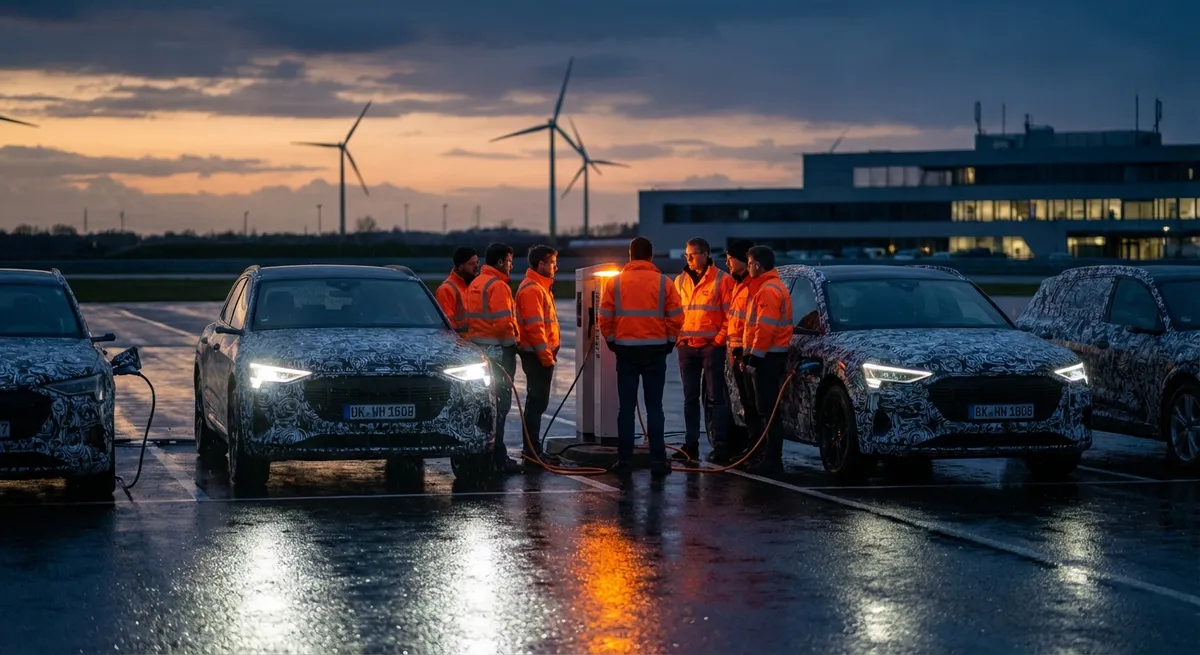
- 7.2 kW and 11 kW onboard chargers: Many new plug‑in SUV platforms are standardizing on at least 7.2 kW AC charging. On a 240‑V Level 2 home setup, that can refill a 20 kWh pack from nearly empty to full in about 3 hours. Higher‑end models with 11 kW can do it in roughly 2 hours—shorter than a typical evening.
- DC fast‑charging support on select models: Though still not universal, some manufacturers are adding modest DC fast‑charging capability (e.g., 30–60 kW peaks) to PHEV SUVs. This isn’t meant for frequent use but can be a solid convenience feature on road trips when you want to top off the battery quickly between legs.
- Unified charging standards and connectors: With major industry players converging on fewer connector types and adopting common standards, plug‑in SUVs will increasingly share connectors and apps with full EVs, simplifying life for multi‑vehicle households and fleets.
- Smarter charging software: Integration with home‑energy management systems, utility “time‑of‑use” rates, and over‑the‑air updates allow SUVs to automatically charge when electricity is cheapest or cleanest. Owners can schedule charging windows through phone apps, pre‑condition the cabin off the grid, and monitor energy cost per mile.
From a buyer’s perspective, the practical question shifts from “Can I charge this at home?” (usually yes) to “How fast will this recharge between daily trips, and how clean/cheap is the energy where I live?” In markets with robust Level 2 infrastructure in workplaces and multi‑unit housing, plug‑in SUVs will become far more convenient day‑to‑day than their first‑generation predecessors.
Performance and Towing Are Moving to Electrified All‑Wheel‑Drive Layouts
PHEV SUVs are no longer just about efficiency; they’re increasingly the performance and towing flagships in their lineups. Automakers are using electric motors not only to save fuel but to significantly boost combined horsepower and torque, and to enable new forms of all‑wheel‑drive (AWD) and torque vectoring.
Industry‑wide, several technical patterns are emerging:
- Rear‑axle e‑motors for AWD: Many plug‑in SUVs pair a front ICE (often turbocharged) with an electric motor driving the rear axle. This creates an e‑AWD setup without a mechanical driveshaft, improving packaging and allowing precise independent control of rear torque.
- Combined system outputs surpassing ICE‑only models: It’s increasingly common to see PHEV SUVs offer more power and faster 0–60 mph times than their top non‑hybrid trims. The instantaneous torque of the electric motor fills in turbo lag and supports rapid launches.
- Trailer and off‑road calibration: Some brands are calibrating hybrid control units to prioritize engine torque when towing or off‑road, while still using the electric motor for low‑speed control and hill starts. Towing ratings for PHEV SUVs are now often comparable to, or only slightly below, their ICE equivalents.
- Regenerative braking tuned for heavy loads: With the added mass of batteries and trailers, brake systems and regen strategies are being upgraded. Stronger regen can reduce brake‑pad wear and improve downhill control, especially when paired with selectable “tow/haul” modes.
Enthusiasts should pay close attention to how each manufacturer implements these systems. Not all PHEV SUVs are tuned alike: some prioritize smoothness and efficiency, others provide aggressive electric boost and sport‑oriented calibration. Test‑drive both EV and hybrid drive modes with and without load if you regularly tow or drive in challenging terrain.
Policy, Incentives, and Resale Value Are Diverging by Region
Behind the scenes, government policy is playing an enormous role in how quickly plug‑in SUVs proliferate—and how they’ll hold value on the used market. Emissions regulations, corporate average fuel‑economy rules, and purchase incentives are all pushing automakers and buyers toward low‑emission SUVs, but not uniformly.
A few key dynamics enthusiasts and shoppers should watch:
- Eligibility rules for tax credits and rebates: In some countries, PHEV SUVs only qualify for incentives if they achieve a minimum electric‑only range or fall under a specific CO₂‑per‑km threshold. These rules are nudging manufacturers to prioritize longer‑range plug‑ins over “short‑range” variants.
- Company‑car taxation and fleet rules: Europe, in particular, heavily influences SUV mix through benefit‑in‑kind taxation and low‑emission zones in major cities. Plug‑in SUVs with verifiable low CO₂ and real‑world EV usage can be significantly cheaper to operate as company vehicles, boosting demand.
- Charging and parking policy: Municipalities are starting to differentiate parking, tolls, and congestion‑charge discounts among full EVs, PHEVs, and traditional ICE SUVs. Plug‑in owners who don’t regularly charge may find fewer benefits over time as authorities tighten criteria.
- Resale value implications: In regions where cities plan to restrict internal‑combustion access, a PHEV SUV with sufficient electric range and charging compliance (e.g., geofenced EV‑only zones) may hold value better than comparable ICE‑only models. Conversely, in areas with little charging infrastructure, buyers may prefer conventional hybrids or efficient ICE SUVs, affecting resale differently.
When evaluating a plug‑in SUV purchase, it’s no longer enough to compare fuel‑economy stickers. Consider local and regional policies over the next 5–10 years, including low‑emission zones, tax changes, and infrastructure build‑out. These factors will meaningfully shape your total cost of ownership and future trade‑in value.
Conclusion
Plug‑in hybrid SUVs are evolving from a transitional curiosity into a central pillar of global SUV strategy. Larger batteries, faster charging, more sophisticated AWD layouts, and policy‑driven demand are creating a generation of vehicles that can credibly function as electric commuters during the week and long‑range adventure rigs on the weekend. For car enthusiasts and serious buyers, understanding how these technical and regulatory shifts interact will be critical to choosing the right SUV in the second half of this decade. Watching factory announcements, range specifications, charging hardware, and local incentive frameworks now can help you land on an SUV that stays relevant—and desirable—well into the 2030s.
Sources
- U.S. Department of Energy – Plug‑In Hybrid Electric Vehicles – Technical overview of PHEV architectures, charging, and efficiency characteristics
- International Energy Agency – Global EV Outlook – Data and forecasts on electrification trends, including PHEV market developments and policy impacts
- European Commission – CO₂ Emission Performance Standards for Cars and Vans – Details on EU regulatory targets driving automaker powertrain strategies
- U.S. Environmental Protection Agency – Regulations for Greenhouse Gas Emissions from Passenger Cars and Trucks – Background on U.S. fuel‑economy and emissions rules affecting SUV lineups
- ICCT – Plug‑in Hybrid Electric Vehicles: Market Development and Environmental Performance – Independent analysis of PHEV real‑world usage, emissions, and policy design considerations
Key Takeaway
The most important thing to remember from this article is that this information can change how you think about Industry News.