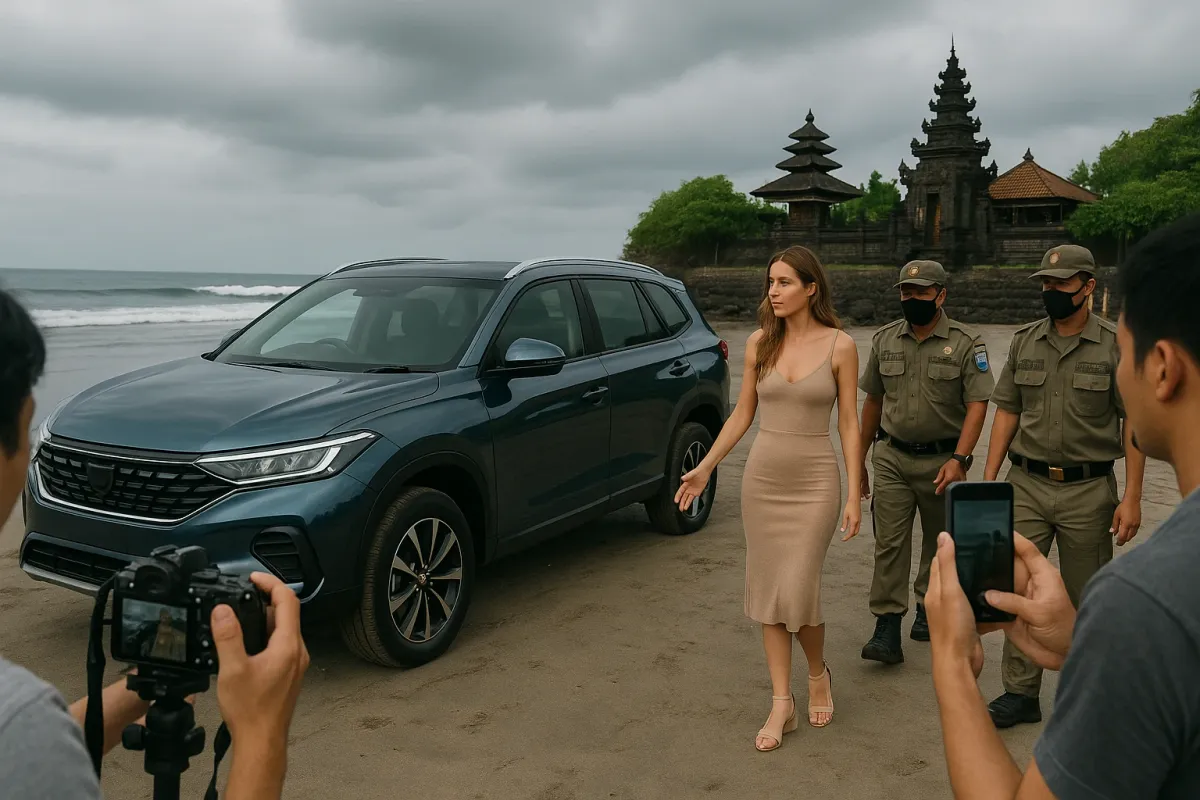
The headlines out of Bali this week aren’t about cars—but they should be on the radar of every major SUV brand. Adult content creator Bonnie Blue now faces up to a 15-year sentence after allegedly filming explicit material in violation of Indonesia’s strict decency and cyber laws. On the surface, it’s a social‑media controversy. Underneath, it’s a warning shot for any global automaker that leans heavily on influencer marketing, location‑based shoots, and edgy brand storytelling.
For the SUV industry, where lifestyle imagery, travel narratives, and “aspirational” content now drive as much engagement as horsepower and torque figures, the Bali case is more than gossip. It’s an industry‑relevant stress test of how fast the rules of digital content—and the risks surrounding it—are changing in real time.
Below, we break down how this case intersects with SUV marketing, what it signals for upcoming launches and campaigns, and why buyers and enthusiasts alike should care.
1. Influencer-Driven SUV Campaigns Are Entering a Legal Minefield
The Bonnie Blue case underscores an uncomfortable reality for automakers: social‑media‑first campaigns are now tightly bound to local law, even when the content feels “borderless.” Indonesia’s regulations around explicit material are strict, and enforcement is increasingly aggressive. While this case involves adult content, the precedent is clear—authorities are watching social media, and they are willing to act.
Major SUV brands routinely fly influencers, journalists, and creators to exotic locations for global reveals and lifestyle shoots: think launch drives in Bali, the UAE, Thailand, or Mediterranean islands. These activations often include drone footage, beach scenes, and “off‑duty” vlogs that extend beyond the tightly scripted official content. If a creator crosses a cultural or legal line—even unintentionally—brands can be pulled directly into the spotlight.
From an industry perspective, that means:
- PR and legal teams will have to pre‑clear not just what they publish, but what invited influencers are likely to post around the event.
- Host country rules on drones, public decency, protected areas, and data privacy suddenly matter as much as emissions and safety for campaign planning.
- Future SUV launch events in regions with strict content laws (including parts of Asia and the Middle East) may shift to more controlled environments, reducing the spontaneity that often drives viral appeal.
In short, the Bonnie Blue case accelerates a trend we were already seeing: SUV marketing is being forced to look less like free‑form “travel vlogs with a car in the background” and more like tightly governed media productions with legal guardrails.
2. Location-Based Storytelling Will Get Safer—But Also More Technical
Automakers love to match SUVs to “bucket list” destinations. A rugged midsize SUV might be launched on volcanic roads, a luxury 3‑row on a private resort driveway, an EV SUV weaving through dense historic streets. The Bali controversy makes that approach riskier, and the response is likely to be more controlled, technically focused content that still feels aspirational—but stays well inside legal lines.
Expect to see:
- More closed-course and private‑property shoots
Instead of filming on public beaches or near religious sites where dress codes and conduct rules are strict, SUV reveals will increasingly rely on test facilities, dedicated off‑road parks, and rented estates. That gives brands control over permits, airspace, and who else appears in frame.
- Deeper technical segments woven into lifestyle content
To maintain engagement without leaning on edgy imagery, brands will spotlight diagnostic readouts, drive‑mode logic, and chassis behavior on controlled terrain—especially for SUVs with advanced off‑road or semi‑autonomous systems. For example, an off‑road sequence might highlight real‑time torque vectoring, sump clearance visualization, and electronic locking differential status in the instrument cluster, rather than relying on dramatic drone sweeps near restricted areas.
- Stronger separation between “official” and “creator” footage
OEMs will provide pre‑approved B‑roll with clear geographic, legal, and model‑spec metadata. Influencers are encouraged—or even contractually required—to build their content mainly from these assets, reducing the odds of unlawful incidental filming.
For enthusiasts, the upside is more substantial, technically rich content from global launches. You’ll see less vague “vacation energy” and more exposure to the exact steering calibrations, suspension setups, and traction-control logic that differentiate one SUV from another—because that’s the safest storytelling OEMs can fully own.
3. Contracts, Conduct Codes, and the New Rules of SUV Brand Collabs
Bonnie Blue’s situation also shines a light on something that has already been shifting beneath the surface: brands are rewriting contracts with creators to manage risk across jurisdictions. For SUV makers, whose vehicles are often marketed as tools of freedom, adventure, and boundary‑pushing, that creates a tension between image and reality.
Behind the scenes, OEMs and agencies are now standardizing:
- Location-specific compliance clauses
Influencers attending an SUV launch in a country like Indonesia may face explicit obligations to follow local laws on public dress, filming restrictions, and online conduct—even outside official program hours. Contract breaches can mean withheld payment and permanent blacklisting.
- Content review windows
Instead of “post as you go,” there’s increasing use of short mandatory review periods—24 to 72 hours—where brand and legal teams can flag issues before content goes live. That’s particularly important when SUVs are filmed near sensitive infrastructure, indigenous lands, or protected wildlife zones.
- Clear distancing mechanisms
Brands will specify that off‑platform content (such as OnlyFans, adult pages, or highly controversial channels) may disqualify creators from campaigns involving family‑oriented SUVs, three‑row crossovers, or models built around safety and child‑friendly branding.
The practical effect: SUV campaigns will be built around fewer, more vetted creators with cleaner risk profiles—especially for mass‑market and family‑oriented models. That can reduce reach but increase brand safety, and it may open slots for more technically literate automotive voices rather than purely lifestyle figures.
For buyers, this will subtly change who you see behind the wheel in official or brand‑adjacent content. Expect more test‑driver‑style walkarounds, more in‑depth feature breakdowns, and fewer borderline‑provocative “travel with me” SUV posts shot in sensitive destinations.
4. Data, Geofencing, and Telemetry: How SUVs Themselves Enter the Content Debate
An underappreciated angle is that today’s SUVs are rolling data centers. With precise GPS logs, cloud‑linked drive modes, and live telematics, they can technically prove where, how, and sometimes even why they were driven. As content enforcement ramps up, governments and platforms could lean more heavily on hard vehicle data in investigations.
Here’s how that intersects with the current climate:
- Telematics as evidence
If authorities in a country like Indonesia suspect unlawful activity, telematics from a connected SUV—time, place, speed, drive mode selection—can corroborate location data embedded in videos. This already matters in crash investigations; the Bonnie Blue case shows how quickly digital trails can become central to non‑traffic cases as well.
- Geofenced features and recording zones
Automakers already geofence certain functions (for example, preventing hands‑free “BlueCruise”‑style systems in unsupported regions). As content rules tighten globally, you could see geofencing extended to embedded cameras or dash‑cam‑like features in some markets—automatically disabling recording in or around sensitive zones.
- In‑vehicle disclaimers and local content warnings
Expect more context‑aware warnings in infotainment systems: if the SUV detects entry into a region known for strict content or drone laws, an on‑screen alert could remind occupants about local filming and privacy rules. That’s a small software change but could help keep brand‑hosted events—and their footage—on the right side of the law.
For tech‑savvy SUV shoppers, this is part of a broader trade‑off: powerful, connected features versus tighter digital oversight. The Bali case doesn’t create that tension, but it accelerates the conversation about how vehicle data and user content intersect under different legal regimes.
5. What This Means for SUV Shoppers and Enthusiasts in 2025–2026
While the Bali controversy is primarily a legal and cultural story, the ripple effect lands squarely in the SUV space—because SUVs have become lifestyle platforms as much as transport tools. The way they’re marketed influences buyer expectations, and those expectations feed back into product planning.
Here’s how this is likely to surface for you:
- More “realistic” campaigns, fewer hyper‑provocative narratives
As brands pull back from legally risky shoots, SUV marketing will lean into road trips, family use, and tech demonstrations that can be executed safely almost anywhere. You may see fewer campaigns built purely around nightlife, remote beaches, or culturally sensitive landmarks.
- Heavier emphasis on safety, responsibility, and respect
OEMs will align SUV branding with a broader narrative of “responsible adventure.” Messaging about respecting local laws, environments, and communities will sit comfortably next to off‑road modes, trail maps, and overlanding features. Vehicles with advanced driver‑assistance systems, dual‑chamber air suspension, and adaptive terrain management can be positioned as tools to explore correctly—not recklessly.
- Clearer separation between factory specs and creator fantasies
The industry knows regulators are scrutinizing how vehicles are portrayed. Expect more explicit on‑screen disclosures about tires, load, modified parts, and legal speed limits in official videos. When a creator shows a lifted SUV on a cliff edge, you’ll be more aware that this is not factory‑approved behavior—and brands will be quicker to distance themselves if trouble arises.
For enthusiasts, this is both a constraint and an opportunity. While some of the wildest, most shareable SUV content may get harder to produce around official events, the spotlight will turn to high‑quality, technically accurate reviews, off‑road tests, and deep dives. That’s exactly the kind of information serious buyers need as powertrains diversify (ICE, hybrid, BEV), suspensions become more adaptive, and software defines how an SUV performs in the real world.
Conclusion
Bonnie Blue’s legal troubles in Bali may seem worlds apart from the launch of your next favorite SUV, but they’re connected by a shared reality: global content no longer floats above local law. For an industry that increasingly sells vehicles through aspirational, influencer‑driven storytelling, that’s a structural shift.
Over the next few model years, expect SUV brands to recalibrate how and where they shoot, who they work with, and how clearly they separate legal, real‑world capability from click‑driven spectacle. That means more controlled shoots, more technical transparency, and sharper boundaries between brand and creator behavior.
For buyers and enthusiasts, the upside is meaningful: less noise, more substance. The SUVs won’t be any less capable—but the way their stories are told will have to grow up fast.
Key Takeaway
The most important thing to remember from this article is that this information can change how you think about Industry News.