The global SUV market is being reshaped in real time—and Chinese electric vehicle (EV) manufacturers are at the center of the disruption. What began as a price war in China is now pushing legacy automakers in North America and Europe to rethink everything from platform strategy to dealer operations. For SUV shoppers and enthusiasts, this isn’t just industry drama; it directly affects pricing, technology features, and what models will be available in the next 3–5 years. This article breaks down the key forces at play and what they mean for anyone eyeing a new SUV in the near future.
The New Price Baseline: How Chinese EVs Are Reshaping SUV Affordability
Until recently, electric SUVs were positioned as premium products with price tags to match. Chinese automakers—led by brands like BYD, NIO, XPeng, and Geely’s Zeekr—have reset that expectation by pairing competitive range and tech with aggressive pricing, especially in compact and midsize SUV segments.
In China, battery-electric SUVs are already available at price points that undercut many global competitors’ combustion models, largely due to localized supply chains and scale in battery manufacturing. BYD, for example, produces its own LFP (lithium iron phosphate) batteries and integrates them in “Blade Battery” packs, reducing cost and complexity. As these companies eye exports, they are setting a price anchor that Western automakers cannot ignore—prompting cuts and incentive wars in Europe and, to a lesser extent so far, North America.
For shoppers, the consequence is twofold. First, ongoing price pressure is likely to make EV SUVs more attainable, especially in entry and mid-trim levels, as incumbents respond or risk losing share. Second, automakers may reduce slow-selling niche variants or luxury trims to preserve margins, narrowing some build-to-order customization but increasing value in core models. The practical takeaway: expect more “feature-rich standard equipment” packages at prices that would have bought you a base model just a few years ago.
Platform Strategy Under Pressure: Dedicated EV SUVs vs. Flexible Architectures
The rise of competitive Chinese EV SUVs is forcing global brands to accelerate their platform decisions. Chinese manufacturers have mostly embraced dedicated EV architectures—such as BYD’s e-platform 3.0 or Geely’s SEA (Sustainable Experience Architecture)—that allow flat battery floors, long wheelbases, and short overhangs. These enable more interior space, better packaging for third-row layouts, and optimized aerodynamics without ICE packaging compromises.
Western automakers are split between dedicated EV platforms and multi-energy architectures. Volkswagen’s MEB and upcoming SSP, Hyundai-Kia’s E-GMP, and GM’s Ultium-based platforms mirror Chinese EV-first designs, while others still adapt ICE platforms for EV variants. As competitive pressure grows, mixed architectures can become a liability: heavier curb weights, compromised cabin space, and less efficient cooling layouts for battery and power electronics.
For buyers, this platform race will increasingly show up in real-world usability. Dedicated EV SUVs typically offer flatter floors, more rear legroom, better frunk or underfloor storage options, and improved efficiency per kWh. When comparing models, it will be more important than ever to look past the badge and ask: is this SUV on a clean-sheet EV platform, or is it adapted from an ICE or hybrid architecture? That answer will influence not just driving range, but also long-term flexibility for software and hardware upgrades.
Tech Leapfrogging: Software, ADAS, and Infotainment as Core Differentiators
Chinese SUV makers are not just competing on price—they’re competing on software and user experience, and in some areas they’re a generation ahead of many Western rivals. High-resolution dashboards spanning multiple screens, advanced HUDs, and integrated voice assistants tuned for natural language are already common in China’s domestic market.
Many of these vehicles feature domain controllers and centralized computing architectures that allow over-the-air (OTA) updates not only for infotainment, but also for powertrain, suspension, and driver-assistance systems. This mirrors or surpasses what Tesla pioneered and what some European and U.S. brands are still rolling out. In advanced driver-assistance systems (ADAS), Chinese SUVs are increasingly shipped with L2+ features—hands-on supervised driving, automated lane changes, and detailed traffic-jam assistance—thanks to sensor-heavy setups using high-resolution cameras, LiDAR on some models, and high-performance compute platforms.
For enthusiasts and tech-focused buyers, this raises the bar on what “standard equipment” should include in future SUVs. Expect accelerated deployment of:
- Centralized electrical/electronic (E/E) architectures to support richer OTA updates
- More robust ADAS feature sets out of the box, not just in top trims
- Higher display resolutions, more responsive UIs, and smartphone-level UX expectations
- In-cabin AI features for navigation, energy planning, and predictive maintenance
This software race also has a downside: brand ecosystems and subscription models will become more prevalent. As Western automakers try to match Chinese software sophistication while protecting margins, more advanced functions may be paywalled, from enhanced navigation to performance modes.
Geopolitics, Trade Barriers, and Where SUVs Get Built Next
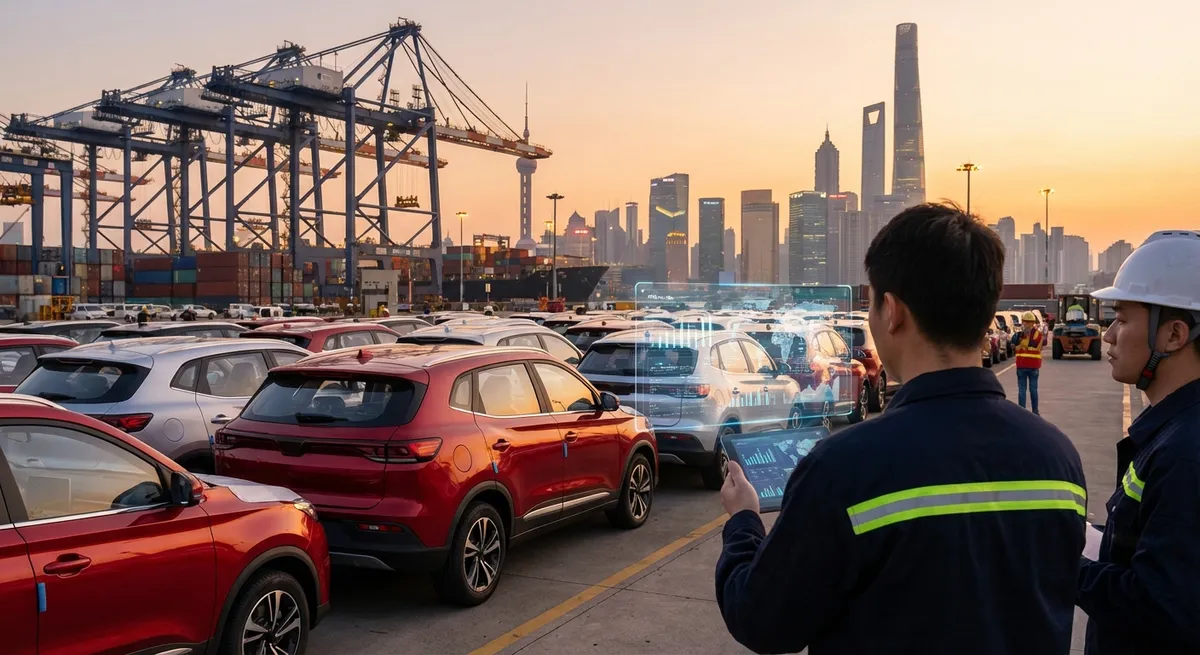
The global SUV landscape is not just shaped by technology—it’s increasingly governed by trade and industrial policy. The surge of Chinese EV exports to Europe has already triggered formal investigations into subsidies and discussions of potential tariffs. In the U.S., existing import tariffs on Chinese vehicles, plus EV tax credit rules favoring North American production and critical mineral sourcing, limit straightforward market entry.
Instead, Chinese brands and their joint-venture partners are exploring local production or assembly in markets like Europe, Southeast Asia, and potentially Mexico to access the U.S. under different trade terms. At the same time, Western automakers are localizing more EV SUV production to qualify for incentives and avoid geopolitical risk in their supply chains. Battery plants, in particular, are being planned or built in North America and Europe at a rapid pace, often in partnership with Asian cell suppliers.
For buyers, this reshoring and diversification of production will influence:
- Which SUV models qualify for local EV incentives or tax credits
- Availability and lead times, as plants ramp up or retool from ICE to EV production
- Perceived build quality and spec differences between regional production sites
- Long-term parts availability for first-wave EV SUVs
You’ll increasingly see the “final assembly location” and battery origin become major discussion points in SUV reviews and spec sheets, especially in markets where incentives are tied to local content.
The Coming Wave of “Export-Tuned” Chinese SUVs and What to Watch For
Even as political resistance builds in some regions, Chinese automakers are methodically preparing SUV lineups tailored for export markets. These vehicles will not be identical to domestic Chinese versions: they’re being tuned for local regulations, safety standards (such as Euro NCAP or NHTSA/IIHS in the U.S.), and regional customer preferences for ride, handling, and interior materials.
Expect export-focused SUVs to emphasize:
- Global crash and safety compliance, including advanced airbag strategies and structural reinforcements
- Calibration for higher sustained highway speeds, NVH refinement, and steering feel suited to European and North American roads
- Infotainment systems with local app ecosystems, mapping providers, and language support
- Battery chemistries balanced between cost, energy density, and cold-weather performance, especially for northern markets
For early adopters considering these new entrants once they appear in local showrooms, the evaluation checklist should go beyond range and price. Key technical aspects to scrutinize will include thermal management (how well the SUV maintains performance and charging speeds in extreme temperatures), warranty terms and service networks, software update policies, and real-world charging curve behavior—critical for long-distance SUV use.
As traditional brands step up their response, this competition will likely translate into faster product cadence, more adventurous SUV designs, and accelerated trickle-down of high-end EV tech to mainstream price points. The global SUV market is shifting from a slow, generational replacement cycle to something closer to the smartphone model: frequent updates, constant software improvements, and more rapid obsolescence for older tech stacks.
Conclusion
Chinese EV manufacturers have triggered a structural reset of the global SUV market. Their influence is visible in aggressive pricing, EV-first platforms, software-centric designs, and the rapid globalization of battery supply chains. For enthusiasts and buyers, this isn’t a distant macro story—it will dictate what kind of SUVs you can buy, at what price, and with which capabilities over the next decade.
As trade policies evolve and export-focused Chinese SUVs begin arriving in more markets, legacy brands will respond with bolder EV strategies, more competitive standard equipment, and accelerated timelines for retiring outdated platforms. Staying informed about where vehicles are built, what platforms they use, and how their software is supported will be as important as traditional metrics like horsepower and cargo volume. The SUV of the near future is not just a body style—it’s a frontline product in a rapidly changing global technology and trade landscape.
Sources
- International Energy Agency – Global EV Outlook 2024 - Provides data on EV adoption trends, including China’s dominant role in EV sales and production
- European Commission – Anti-Subsidy Investigation into Battery Electric Vehicles from China - Details the EU’s response to increasing imports of Chinese-made EVs and potential trade measures
- BYD Official Website – Technology Overview - Explains BYD’s Blade Battery and e-platform 3.0, which underpin many of its SUV offerings
- NHTSA – Corporate Average Fuel Economy (CAFE) and Fuel Economy Trends - Background on regulatory pressures influencing SUV electrification strategies
- McKinsey & Company – The Global Electric-Vehicle Market Is Entering the Next Phase - Industry analysis of EV competition, cost structures, and the impact of Chinese manufacturers on global markets
Key Takeaway
The most important thing to remember from this article is that this information can change how you think about Industry News.