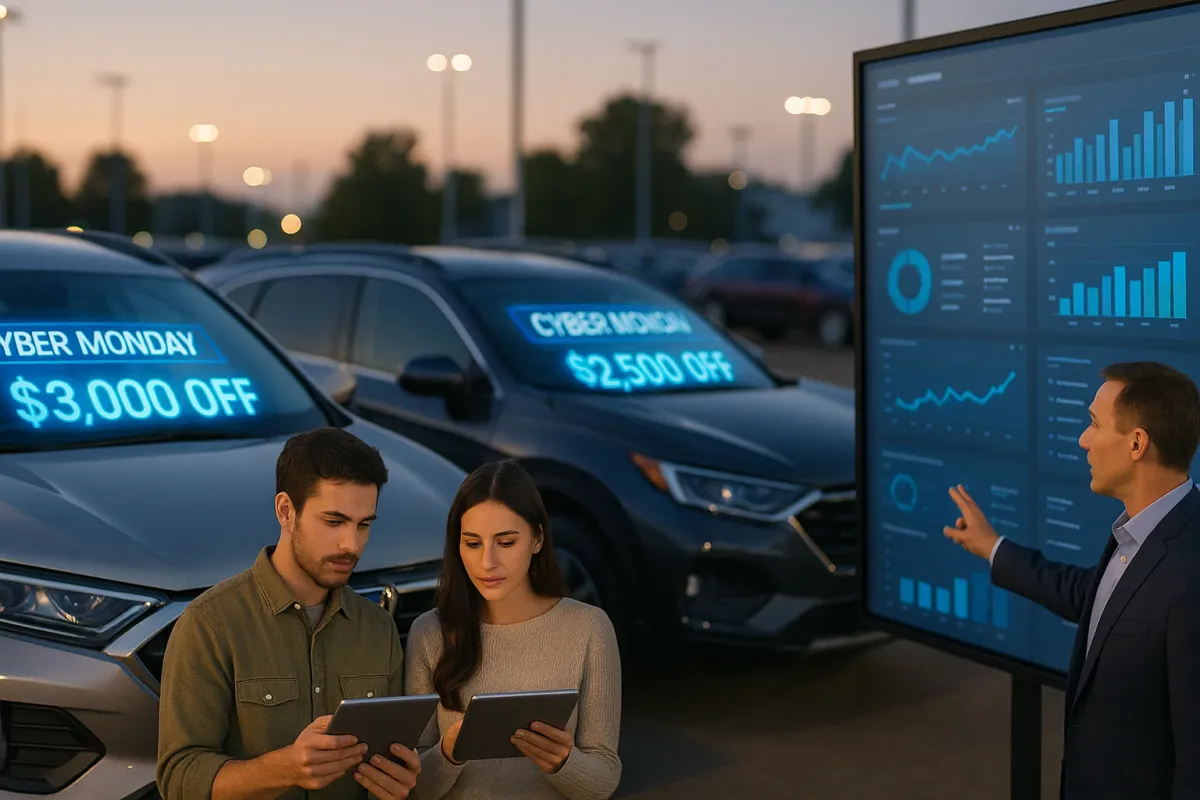
Cyber Monday 2025 isn’t just about snagging a discounted TV anymore—it’s reshaping how you should shop for your next SUV. As tech deal roundups like “19 Cyber Monday Tech Deals So Good, Your Bank Account Might Actually Forgive You” dominate social feeds, automakers and dealers are quietly mirroring many of the same tactics: aggressive online incentives, time‑boxed offers, and heavy discounts on software‑driven features.
If you’re planning to buy or lease an SUV in late 2025 or early 2026, understanding how this “tech deal” mindset is bleeding into the car market can save you thousands of dollars—and help you avoid getting locked into outdated hardware or overpriced subscriptions. Below, we break down how the Cyber Monday tech world is changing SUV shopping right now, and what you should do differently before you sign anything.
1. Think Like a Tech Shopper: Prioritize the “Processor” and Software, Not Just the Sheet Metal
Cyber Monday tech lists obsess over chipsets, RAM, and software support windows—and that’s exactly how you should be evaluating SUVs in 2025.
Modern SUVs are rolling computers. The underlying electronics platform (often referenced as the “vehicle architecture” or “electrical/electronic [E/E] platform”) determines:
- How long you’ll get over‑the‑air (OTA) updates
- Whether you can add features after purchase (navigation, driver assists, even performance boosts)
- How likely it is that today’s infotainment and safety tech will feel current in 5–7 years
Key things to look for, using a tech‑buyer mindset:
- OTA Update Capability
- Ask the dealer: “Which systems in this SUV receive OTA updates, and for how long?”
- Verify if safety systems, maps, and infotainment apps are updated remotely—or if you’re stuck with dealer visits and USB sticks.
- Computing Platform Generation
- Check what “generation” system you’re getting: for example, Ford Sync 3 vs Sync 4, Hyundai’s previous Gen 5 vs ccNC, or Toyota’s older Entune vs the newer Audio Multimedia system.
- Older head units often mean slower response, poorer app support, and shorter update lifespans—similar to buying a discounted laptop with an old processor.
- App and Phone Integration
- Prefer wireless CarPlay/Android Auto if you keep phones several years—it’s becoming the default.
- Confirm whether the vehicle supports Google built‑in (GM, Volvo/Polestar, Honda, Acura on select models) or proprietary ecosystems, and how data plans are priced.
Treat this like you would firmware updates on a smartphone or laptop. Brands such as Tesla, Ford (BlueCruise/Sync 4/4A), GM (Ultifi), Hyundai/Kia (ccNC/OTA-enabled platforms), Mercedes (MBUX with OTA), and Volkswagen Group (E³ architecture in newer EVs) are building ecosystems designed for continuous software improvement.
Just as Cyber Monday shoppers avoid laptops with obsolete CPUs, you should avoid SUVs on outdated infotainment hardware.
Current Cyber Monday tech deals push smart home and ecosystem integration; in SUVs, that’s Apple CarPlay, Android Auto (wired vs wireless), built‑in apps (Spotify, Amazon Music, Google Maps), and voice assistants.
Buying‑Guide Takeaway:
When comparing two similarly priced SUVs, treat the electronics platform like the CPU generation on a laptop: newer, more updatable, and more scalable usually wins—even if the discount on the “older” choice looks tempting on paper.
2. Use Cyber Monday‑Style Price Tracking to Benchmark “Real” SUV Transaction Prices
Tech shoppers know that Black Friday/Cyber Monday prices are just one data point—savvy buyers track price histories and compare across retailers. You should do the same with SUVs, especially as inventory improves and discounts quietly come back in many segments.
In 2025, Cox Automotive, Edmunds, and J.D. Power data all point to:
- Higher dealer inventory for many mainstream SUVs compared to 2021–2023
- Rising incentives on specific models (especially compact and mid‑size crossovers, and some EV SUVs)
- Larger gaps between sticker price (MSRP) and actual transaction price in regions with more inventory
To “tech‑ify” your SUV price research:
- Check Multi‑Month Price Trends
- Use tools like Edmunds, TrueCar, or Kelley Blue Book’s Fair Purchase Price to see what people actually paid for your target model over the last 60–90 days.
- Pay special attention to EV and plug‑in hybrid SUVs (e.g., Ford Mustang Mach‑E, Hyundai Ioniq 5, Kia EV9, Volvo EX30/EX90): incentives and financing offers on these often change more like tech gadgets than traditional vehicles, especially around year‑end.
- Identify “End of Tech Cycle” Models
- A facelift or new generation has been announced (e.g., redesigned interior/infotainment coming next model year).
- A powertrain is being phased out (e.g., older non‑hybrid engines replaced by hybridized ones).
Cyber Monday is when prior‑year laptops and TVs see steep markdowns. In SUVs, similar bargains appear when:
These models can offer strong value if you don’t mind slightly older tech.
- Treat Dealer Add‑Ons Like Useless Bundled Accessories
- Paint packages, nitrogen tires, VIN etching, overpriced window tint, and “protection” bundles.
- Some dealers still attempt to sell $1,000+ “technology packages” that add little beyond what’s standard on competitors.
Just as you ignore inflated “accessory bundles” on electronics, be cautious with:
Buying‑Guide Takeaway:
Before you visit a dealer, treat your preferred SUV like a gaming laptop on sale: check its “normal” transaction price, identify where in its lifecycle it sits, and calculate how steep the discount really is. Don’t be swayed by “today only” language without real market data to back it up.
3. Scrutinize Subscription Plans the Way You’d Evaluate Streaming Bundles
Cyber Monday tech articles are full of warnings about recurring costs: streaming platforms, cloud storage, security suites. SUVs are now catching up—with subscription fees for advanced driver assistance, connectivity, and even heated seats on some brands.
In 2025, several automakers have moved toward “features on demand” and subscription‑based services:
- GM: Pushing its Ultifi software platform with connected services packages.
- BMW & Mercedes: Experimented in various markets with subscription access to comfort or performance features.
- Ford & Hyundai/Kia: Offering subscription‑based hands‑free systems (BlueCruise, Highway Driving Assist upgrades in some regions).
- Tesla: Monthly subscription for Full Self‑Driving (Beta) instead of a one‑time purchase.
When cross‑shopping SUVs:
- Map Out All Recurring Costs Upfront
- Connected services after the free trial (often 1–3 years)
- Advanced driver assist subscription pricing (hands‑free highway driving, advanced navigation, etc.)
- In‑car Wi‑Fi plans and their data caps
Ask for a breakout of:
Build a 5‑year cost of ownership that includes these fees, just as you would tally up Netflix, Spotify, and cloud storage over several years.
- Clarify Which Features Are Permanently Unlocked
- Ensure basics like adaptive cruise control, lane‑keeping assist, and automatic emergency braking are not tied to continued subscriptions once purchased.
- Get in writing whether any features can be deactivated if you decline to renew services.
- Beware “App Lock‑In”
- If you primarily rely on CarPlay/Android Auto, make sure those integrations are robust enough that you won’t feel forced into a subscription nav package.
Some brands are leaning hard into proprietary navigation and voice assistant ecosystems tied to paid services.
Buying‑Guide Takeaway:
Evaluate an SUV’s subscription landscape with the same skepticism you apply to streaming bundles on Cyber Monday. A heavily discounted vehicle can become costly if critical features sit behind recurring paywalls.
4. Treat Driver‑Assist Packages Like High‑End Smart Home Gear, Not Gimmicks
Cyber Monday tech roundups often spotlight smart home ecosystems—security cameras, smart locks, thermostats—where reliability and integration matter more than flashy marketing. Advanced driver‑assistance systems (ADAS) in SUVs should be viewed the same way: as core safety infrastructure that must work seamlessly, not just a buzzword‑laden checkbox.
Current market realities:
- All new SUVs in the U.S. now offer some form of automatic emergency braking and lane‑keeping assistance, but performance varies widely by brand and model.
- Independent testing by IIHS, Euro NCAP, and Consumer Reports consistently finds big differences in real‑world behavior, especially in lane centering, false alerts, and driver monitoring quality.
When evaluating ADAS in the context of 2025 tech trends:
- Look Beyond Brand Names
- Does the system provide hands‑on lane centering or hands‑free on mapped highways?
- Is there driver monitoring via camera, or just steering wheel torque sensors?
- How smoothly does it handle curves, cut‑ins, and lower‑quality lane markings?
- Test Drive with a “QA Engineer” Mindset
- Try lane‑keeping on both high‑quality and mediocre roads.
- See how adaptive cruise reacts to aggressive lane changes by other drivers.
- Check whether the system feels natural or “twitchy” and fatiguing.
- Prefer Systems with a Track Record of Updates
- Tesla, Ford, GM, Hyundai/Kia, and Mercedes have shown clear commitment to refining ADAS via OTA updates.
- Look for brands publishing changelog‑style notes or at least clearly communicating improvements over time.
“BlueCruise,” “Super Cruise,” “ProPILOT Assist,” “Drive Pilot,” “Pilot Assist,” and many others are marketing labels. What matters:
Just as a savvy buyer tests a smart security system with various edge cases:
Cyber Monday device buyers often prefer brands with a solid history of firmware support. In SUVs:
Buying‑Guide Takeaway:
Treat advanced driver‑assist systems like a long‑term smart home investment. Don’t pay extra for systems that feel half‑baked or lack a strong update history, even if they’re part of an attractive year‑end deal.
5. Time Your Purchase Around Tech and Incentive Cycles, Not Just Calendar Holidays
Cyber Monday headlines can give the impression that “this is the only time to buy,” but tech enthusiasts know that deals cluster around product launches, inventory clear‑outs, and fiscal deadlines—not just one specific day. SUVs follow a similar pattern, and in late 2025 and early 2026, several converging timelines matter:
- Model‑Year Changeovers
- Many 2026 SUVs, especially electrified models, will bring upgraded infotainment, new driver‑assist features, and sometimes better battery chemistry or range.
- As those move in, 2025 inventory becomes the “previous‑gen TV” of the showroom—priced to move.
- EV and Plug‑In Incentive Shifts
- Eligibility under the U.S. federal Clean Vehicle Credit (up to $7,500) continues to evolve as battery sourcing and assembly rules tighten.
- Some SUVs qualify only for part of the credit—or lose it altogether—based on calendar‑year changes or mid‑year guidance.
- States (e.g., Colorado, New Jersey, some NE states) also adjust their own rebates periodically, sometimes aligning with budget cycles rather than holiday sales.
- Quarter‑End and Year‑End Targets
- Newly launched EV SUVs where adoption is still ramping
- High‑margin luxury or performance crossovers where incentives can be quietly increased
Automakers and dealers push hard to hit volume targets at the end of quarters and fiscal years—sometimes more aggressively than on Black Friday/Cyber Monday themselves. This is especially true for:
Strategic timing tips for SUV buyers:
- Don’t Overweight the Cyber Monday Hype
- Use November tech deal coverage as a barometer for how aggressive retailers are on big‑ticket items. When TVs and laptops see deeper cuts, automakers often become more flexible on pricing and financing to stay competitive in consumers’ mental “deal” framework.
- But remain open to December and March (year‑end and Q1 end) as potentially better windows for total purchase packages.
- Watch Product‑Launch Announcements
- Major auto shows (Los Angeles, Detroit, New York, CES in Las Vegas) increasingly feature big SUV and EV reveals. Right after a next‑gen model is revealed, outgoing versions tend to become more negotiable—even if formal discounts lag.
- Lock in Incentives in Writing
- All manufacturer rebates, dealer discounts, and any government incentives are documented on the buyer’s order with dates and conditions.
- You understand whether a delayed delivery could affect eligibility (especially relevant for EVs and plug‑ins).
Just as you might screenshot a Cyber Monday checkout page, ensure:
Buying‑Guide Takeaway:
Use Cyber Monday as a reminder to analyze incentive and tech cycles—not as the only day you can get a deal. The best SUV purchase often happens at the intersection of: new tech launches, high inventory, and end‑of‑period sales pressure.
Conclusion
Cyber Monday 2025’s tech frenzy is more than a shopping event; it’s a lens you can use to become a smarter SUV buyer. The same instincts that help you pick the right laptop or streaming bundle—tracking real prices, understanding hardware generations, scrutinizing subscriptions, and timing your purchase around product cycles—now apply directly to modern SUVs.
As automakers push software‑defined vehicles, subscription‑based features, and OTA‑driven updates, your next SUV will behave more like a connected device than a traditional appliance. Approach it like one: evaluate the platform, not just the paint; the long‑term software roadmap, not just today’s discount. Do that, and the “deal” you drive home with will hold its value long after the Cyber Monday headlines disappear from your feed.
Key Takeaway
The most important thing to remember from this article is that this information can change how you think about Buying Guide.