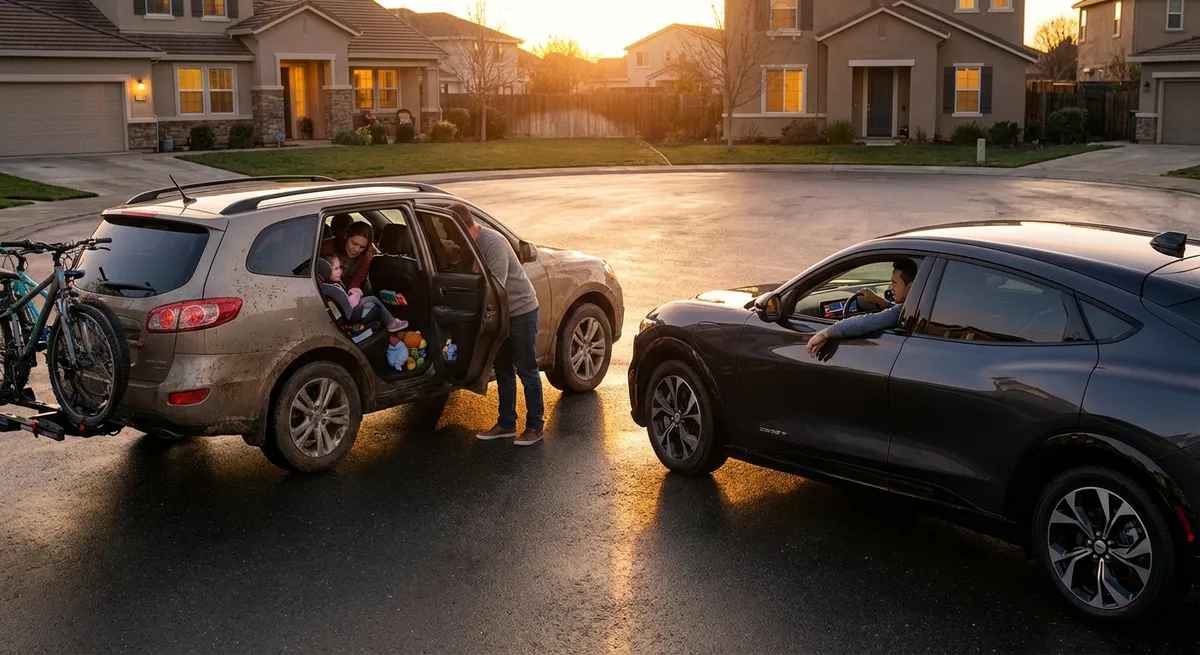
Balancing driving enjoyment with real-world practicality is the core dilemma for many SUV shoppers. On one side are family-focused SUVs built around space, comfort, and safety. On the other are driver-centric crossovers designed to feel closer to sporty sedans while still offering utility. The spec sheets can look similar, but how these vehicles are engineered—and how they behave on the road—differs in meaningful ways. This comparison breaks down the technical and experiential differences in five key areas to help enthusiasts and serious buyers choose the right direction.
Chassis and Driving Dynamics: Comfort Bias vs. Handling Precision
Under the sheet metal, family-oriented SUVs and driver-centric crossovers often start from different engineering philosophies. Many mainstream family SUVs use a longer wheelbase, taller roof, and softer suspension tuning aimed at ride comfort and interior space. Spring rates and damper valving are typically calibrated to absorb rough pavement and reduce motion for rear passengers, especially in the third row. Anti-roll bars may be relatively softer to allow more independent wheel movement over broken surfaces, which improves comfort but increases body roll in corners.
Driver-focused crossovers, even when they share platforms with family SUVs, usually receive firmer suspension tuning, more aggressive steering ratios, and different alignment specs (e.g., slightly more negative camber) to sharpen turn-in and mid-corner stability. Some models add adaptive dampers or dual-valve shock absorbers that vary compression and rebound based on drive mode, allowing a credible compromise between “Comfort” and “Sport.” Steering systems in these crossovers are often tuned for quicker response around center and more linear buildup of effort, which helps them feel more like sporty hatchbacks than tall wagons.
Chassis rigidity also plays a role. Automakers may add structural adhesives, extra bracing, or stiffer subframe mounts in the more performance-oriented variants to reduce flex and improve steering precision. In contrast, family-focused SUVs sometimes prioritize isolation, using softer bushings and more robust subframe mounts to block noise and vibration from the cabin. The result: crossovers can feel more planted and communicative on a winding road, while family SUVs feel calmer and more serene during long highway slogs and around-town errands.
Powertrains and Performance: Tuning for Passengers vs. the Driver
Both segments commonly use similar engine families—turbocharged four-cylinders, naturally aspirated V6s, and increasingly, hybrid or plug-in hybrid systems. However, the way these powertrains are tuned often reveals their intended mission. In family-focused SUVs, engineers typically emphasize low-end torque and smoothness over outright horsepower. Gear ratios are chosen to keep revs low at highway speeds for better fuel economy and cabin quiet. Transmission shift logic is conservative, upshifting early and hesitating to downshift aggressively to avoid jolting passengers.
Driver-centric crossovers often receive higher-output versions of the same engines, with different turbo boost maps, intercooling strategies, or exhaust components that favor stronger midrange and top-end power. Throttle mapping in “Sport” or “Dynamic” modes is more aggressive, compressing more of the available torque into a smaller pedal travel range for a sharper response. Transmissions are programmed with firmer, quicker shifts and more readiness to hold lower gears on twisty roads or during spirited driving. Some performance-oriented crossovers also adopt dual-clutch transmissions or sport-tuned torque-converter automatics with manual shifting logic that feels closer to a hot hatch than a family hauler.
Hybridization exposes the difference even more clearly. In family SUVs, hybrids are typically calibrated for maximum efficiency, using the electric motor to smooth takeoffs and reduce fuel consumption in stop-and-go traffic. Performance crossovers, by contrast, may use hybrid systems as power adders rather than fuel savers, providing instant electric torque for quicker launches and stronger midrange punch. Brake-by-wire systems in these hybrids can be tuned for a more linear, performance-oriented pedal feel in sportier variants, whereas family-focused setups lean toward softer, more progressive engagement that feels natural to casual drivers.
Interior Layout and Ergonomics: Passenger Priority vs. Driver-Centric Cockpits
Inside, the contrast between the two philosophies becomes immediately visible in both layout and design details. Family-focused SUVs maximize passenger space and flexible seating. You’ll often see higher rooflines and more upright seating positions in all rows, along with wide door openings and low step-in heights to simplify child-seat installation and access for older family members. Third-row usability is a priority: seat cushions tend to be thicker, and legroom is optimized through sliding second-row benches. Storage cubbies, cupholders, and USB ports are generous, with a focus on keeping multiple occupants comfortable and connected.
Driver-centric crossovers place more emphasis on the front two seats and the driving environment. Seating bolsters may be more pronounced for lateral support, steering wheels often feature thicker rims and a sportier shape, and the pedal box may be positioned for a more natural heel-and-toe motion in some models. The center console can be higher and more enveloping, creating a “cockpit” feel that wraps around the driver. Rear-seat space is frequently adequate but less generous than in a similarly sized family SUV, particularly in headroom and shoulder room, because of lower rooflines and more aggressively sloped rear glass.
Material choices reflect the intent as well. Family SUVs may prioritize durable, easy-to-clean surfaces, such as textured plastics and stain-resistant upholstery designed to withstand daily abuse. In contrast, sport-oriented crossovers might emphasize tactile quality and ambiance at the front—soft-touch dash materials, contrasting stitching, metal or faux-carbon trim—sometimes at the expense of slightly less rugged finishes in the back. Infotainment and control layouts can also diverge: family SUVs favor large, simple on-screen icons and physical buttons for core climate functions, while driver-centric crossovers may lean into customizable displays, head-up projections, and multi-function steering-wheel controls that keep the driver’s hands and eyes focused forward.
Cargo and Utility: Boxy Practicality vs. Stylish Compromise
From the outside, the most visible difference is profile: family-focused SUVs tend to be boxier, while driver-centric crossovers often adopt sleeker, coupe-like rooflines. That styling choice has measurable impacts on utility. A taller, more squared-off rear section in family SUVs creates a larger, more usable cargo volume with a higher load ceiling. The load floor is usually closer to the ground, easing the task of lifting strollers, sports gear, or large boxes in and out. Roof rails and a relatively flat roofline also improve the practicality of roof boxes, bike racks, and cargo carriers—important for road trips and outdoor adventures.
Performance-oriented or driver-centric crossovers frequently trade some of that vertical space for a lower, more aerodynamic silhouette. While the spec sheet might quote similar liters or cubic feet of cargo volume, the shape of the space can limit the height of what you can actually load, especially when the rear seats are up. Tapered rear windows and sloping tailgates can restrict bulky items and reduce rearward visibility. Rear overhang lengths and bumper designs may also differ, affecting both departure angles and how easy it is to load larger objects flush with the bumper.
Towing is another differentiator to consider. Many mid-size family SUVs are engineered with higher towing capacities—sometimes 5,000 pounds or more—thanks to stronger cooling systems, transmission programming for trailer loads, and optional tow packages with integrated trailer brake controllers. By contrast, driver-centric crossovers frequently prioritize weight savings and sportier suspension setups, which can reduce rated towing capacity. Enthusiast buyers who also need to tow track-day cars, boats, or campers should pay attention not just to tow ratings, but to real-world stability under load, rear suspension design (multi-link vs. torsion beam), and availability of trailer-sway control systems.
Tech, Safety, and Ownership Experience: Different Priorities, Same Tools
Modern SUVs in both categories are packed with advanced driver-assistance systems, but how these features are implemented and integrated often reflects their target buyer. Family-focused SUVs typically put an emphasis on comprehensive safety suites as standard or widely available: automatic emergency braking with pedestrian detection, lane-keeping assistance, blind-spot monitoring, rear cross-traffic alert, and increasingly, junction assist and reverse automatic braking. These vehicles may offer more advanced rear-seat reminder systems, cabin monitoring, and driver-attention alerts—features aimed squarely at parents and caregivers.
Driver-centric crossovers share most of the same safety technologies, but their calibration can differ. Lane-centering systems, for instance, may be tuned to intervene less aggressively to avoid feeling intrusive to enthusiasts who prefer to maintain precise control. Drive modes might influence the sensitivity of traction and stability control systems, allowing a bit more slip in “Sport” while still reining in truly unsafe situations. Some performance-oriented crossovers also add track-oriented data logging, configurable performance pages, and more granular control over steering weight, suspension firmness (where adaptive dampers are fitted), and powertrain response.
On the infotainment side, family SUVs often highlight ease of use and rear-seat entertainment possibilities—think multiple-zone audio, baked-in streaming apps, and built-in Wi-Fi hotspots to keep kids occupied. Driver-centric crossovers are more likely to invest in premium front-seat experiences, such as high-resolution digital instrument clusters, performance gauges, augmented-reality navigation overlays, and branded audio systems with more attention to sound staging. For owners, differences can extend to service and warranty experiences: mainstream family SUVs may emphasize cost-of-ownership tools and long warranties, while premium or performance crossovers lean on brand experience, bespoke accessories, and enthusiast community engagement.
Conclusion
Choosing between a family-focused SUV and a driver-centric crossover is less about which is “better” and more about what kind of life the vehicle needs to support. Family SUVs lead on space, comfort, and all-around practicality, thanks to upright packaging, softer suspension tuning, and a safety- and passenger-first mindset. Driver-oriented crossovers, meanwhile, deliver more engaging dynamics, sharper powertrains, and cockpit-style interiors that appeal to enthusiasts who still need everyday usability. Evaluating chassis tuning, powertrain calibration, interior ergonomics, and real-world utility side by side will help buyers pinpoint which philosophy aligns with how they actually drive—and who (and what) they carry most of the time.
Sources
- NHTSA – 5-Star Safety Ratings – Official crash-test and safety ratings used to compare family SUVs and crossovers
- IIHS – Vehicle Ratings – Independent crashworthiness and crash-avoidance evaluations relevant to safety-focused SUV shoppers
- EPA – Fuel Economy Guide – Federal database for comparing SUV and crossover fuel economy and powertrain options
- SAE International – Vehicle Dynamics Reference – Technical background on chassis, suspension, and handling principles applied in SUV and crossover tuning
- J.D. Power – U.S. Vehicle Dependability Study – Data on long-term reliability and ownership experience across SUV segments
Key Takeaway
The most important thing to remember from this article is that this information can change how you think about Comparisons.